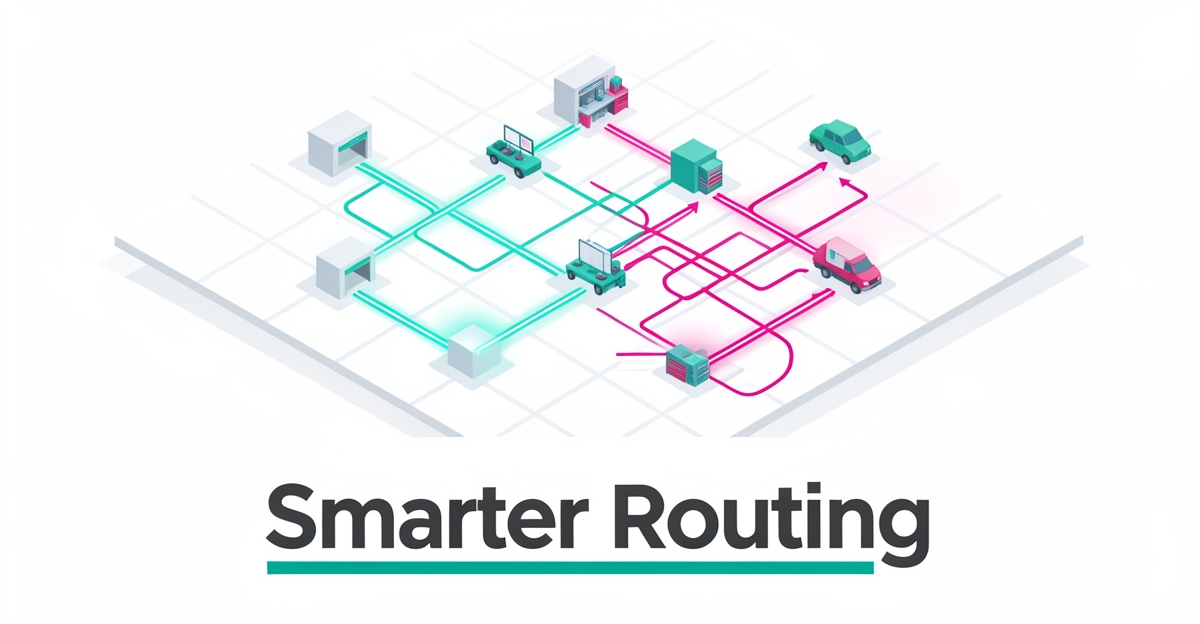
How an AI Dispatcher Can Optimize Service Routing in a Garage Organization Network
Key Facts
- Field service analyses commonly report drive-time reductions of roughly 10 minutes per job with AI-optimized dispatch, which can translate into one or two extra jobs per technician per day according to field service optimization research
- Industry deployment data suggests AI dispatch systems can reduce dispatcher call-handling time by 15%–40% and improve first-time-fix rates by 10%–25% per industry reporting
- As of late 2026, the AI-in-logistics market is in a period of rapid growth, with third-party projections pointing to strong double-digit annual expansion through the 2030s
- A large majority of organizations now deploy AI in at least one business function, with dispatch and operations frequently cited among the top use cases per industry research
- AI dispatch eliminates backtracking and optimizes routes, generating immediate fuel savings in garage organization networks as shown in field service analysis
- AI dispatch systems evaluate thousands of possible technician-job assignments in real time using skills, location, availability, and job priority per AI-powered dispatch system research
- AIQ Labs builds AI Employees, including dispatchers, designed for service-based businesses, with 200+ multi-agent systems deployed
Hire a team member that works 24/7 — for less than a part-time wage.
AI receptionists, SDRs, dispatchers and 99+ roles. Trained on your business, fully managed.
Not sure where to start? Ask our AI planner
Why Manual Dispatch Breaks Down in Garage Networks
Garage networks often rely on manual dispatch, where human dispatchers make real-time routing decisions based on memory and experience. This approach breaks down under pressure, leading to inconsistent technician assignments, unnecessary cross-town backtracking, and overwhelmed dispatch teams. The root issue is cognitive overload, humans simply cannot evaluate thousands of routing scenarios simultaneously, especially when factoring in technician skills, location, availability, and job priority.
As a result, garages lose valuable time and resources. Technicians drive longer distances between jobs, increasing fuel consumption and reducing the number of service calls completed each day. Field service analyses commonly show drive time per job reduced by around 10 minutes through optimization, which can enable a fleet to complete one or two extra jobs per technician daily. Without AI-driven routing, these inefficiencies compound, directly impacting operational costs and service capacity.
- Inconsistent technician assignments due to reliance on dispatcher memory
- Increased drive time from unoptimized routing and backtracking
- Dispatcher overload limiting real-time decision quality
- Reduced daily job completion rates from inefficient routing
- Higher fuel costs from avoidable travel across service zones
AIQ Labs addresses these challenges with AI Employees built for dispatch and logistics in service-based businesses. These AI dispatchers continuously analyze real-time data to match technicians with jobs based on proximity, skill set, and availability, eliminating guesswork and reducing drive time. By automating routing decisions, garage networks can minimize backtracking, improve first-time-fix rates, and increase overall service efficiency without expanding their workforce.
Inside the AI Dispatch Engine: How Routing Decisions Get Made
Manual dispatch breaks down the moment the day gets messy. An AI dispatch engine replaces gut-feel assignments with continuous, data-driven optimization that runs every time a job opens.
The engine ingests real-time and historical signals across the garage network and evaluates thousands of possible assignments before locking the optimal match. It does not rely on a single rule; it weighs competing priorities simultaneously and recalibrates as conditions change.
A software-driven platform uses a machine-learning dispatch engine to autonomously recommend or execute dispatch decisions across fleets, technicians, or responders. According to industry research, these systems ingest historical and real-time data to evaluate thousands of possible scenarios before selecting the optimal course of action.
The decision model pulls from:
- Technician skills, certifications, and first-time-fix history
- Live availability, territory, and current job location
- Job priority, estimated duration, and required parts on hand
- Real-time travel time, traffic, and route efficiency
With that context, the engine balances service speed against technician utilization. Field service analysis commonly reports drive time per job reduced by around 10 minutes, allowing a fleet to complete one or two extra jobs per technician per day. Fuel savings are immediate when the system optimizes routes to avoid backtracking across town.
Autonomous decision-making contrasts sharply with the manual status quo. Traditional dispatch models relied almost entirely on human decision-making supported by basic tools, which led to limitations in consistency and optimization. Dispatchers juggle memory, phone calls, and spreadsheets under time pressure.
AI dispatch systems have been reported to reduce dispatcher call-handling time by 15%–40% and improve first-time-fix rates by 10%–25%, per AI logistics coverage. That reduction in handling time frees staff for exceptions while the engine handles routine matching.
The market momentum reflects this shift. As of late 2026, third-party projections point to sustained rapid growth in the AI-in-logistics market through the 2030s, and a large majority of organizations now deploy AI in at least one business function, with dispatch and operations frequently ranking among the top use cases.
In garage organization networks, this means optimal technician-to-job matching happens in seconds, not minutes, and updates continuously as jobs close, parts arrive, or traffic shifts. AIQ Labs builds AI Employees, including dispatchers, designed for service-based businesses, embedding this kind of autonomous routing into daily operations.
The result is higher capacity, lower travel cost, and more reliable promises to customers without adding headcount.
The Measurable Payoff: Capacity, Fuel, and First-Time Fix
The measurable impact of an AI dispatcher transforms theoretical efficiency into concrete operational gains. By reducing average drive time per job, commonly by around 10 minutes in field service analyses, fleets enable technicians to complete one or two additional jobs daily without extending work hours according to field service optimization research. This capacity increase directly translates to higher revenue potential per technician while maintaining service quality.
Dispatcher efficiency improves substantially as AI handles routine routing decisions. Organizations commonly report a 15–40% reduction in dispatcher call-handling time when implementing intelligent dispatch automation per industry deployment data. Simultaneously, first-time-fix rates often rise by 10–25% due to better technician-job matching based on skills, location, and parts availability as documented in logistics AI studies. These improvements compound to create a more responsive service network.
- Immediate fuel savings from eliminated backtracking and optimized routing
- Increased daily job completion without overtime or additional hires
- Higher customer satisfaction from faster, more reliable service windows
- Reduced technician fatigue from minimized unnecessary travel
These benefits align with the rapid maturation of AI in logistics, where third-party projections as of late 2026 point to strong continued growth through the 2030s. What began as experimental technology has become standard practice for competitive garage organizations seeking to maximize existing resources. For businesses exploring this transformation, AIQ Labs offers AI Employees built for dispatch and logistics functions, delivering these outcomes through continuous route optimization and intelligent technician matching. The shift from manual dispatch to AI-powered coordination now represents a fundamental efficiency requirement rather than an optional upgrade in field service operations.
Implementing an AI Dispatcher Without Disrupting Operations
Garage networks often face the challenge of modernizing dispatch operations without halting daily service flow. An AI dispatcher can be integrated into existing CRM, ERP, and scheduling platforms through secure API connections that pull real-time technician availability, job locations, and parts inventory data. This allows the AI to begin learning operational patterns while human dispatchers continue managing urgent cases, creating a parallel run that validates accuracy before full handoff. Industry deployment data suggests AI dispatch systems can reduce dispatcher call-handling time by 15%–40%, freeing staff to focus on exceptions and complex scheduling conflicts.
Data privacy is addressed by designing the AI dispatcher to process only essential operational data, such as job addresses, technician certifications, and estimated completion times, without accessing personal employee details or customer financial information. All data transmissions use encrypted channels, and the system complies with regional privacy standards by default. For garage organizations handling sensitive vehicle or client information, AIQ Labs operates its AI Employees under strict governance frameworks that include audit trails and role-based access controls, maintaining compliance while enabling intelligent routing decisions.
Change management is critical when introducing automation into teams accustomed to manual dispatch boards. AIQ Labs supports this transition with role-specific training that positions the AI dispatcher as a decision-support tool rather than a replacement, emphasizing how it reduces cognitive load by handling repetitive routing calculations. Dispatch teams retain final authority over high-stakes assignments, such as emergency repairs or jobs requiring specialized equipment, through configurable human-in-the-loop controls. Deployments like this are commonly associated with drive-time reductions of around 10 minutes per job, enabling fleets to complete one or two additional jobs per technician daily. Whether you start with a single dispatcher role or a broader Workflow Build, the rollout is phased so nothing breaks mid-week. By combining seamless integration, privacy-by-design, and team-centered adoption, garage networks can deploy an AI dispatcher that enhances efficiency without disrupting the rhythm of service delivery.
Your Next Step: Mapping the Routing Bottleneck
Understanding where your dispatch process loses time starts with measuring what matters most. Drive time per job, jobs completed per technician, and missed service windows are direct indicators of routing inefficiency that quietly erode profitability. Field service analyses commonly show drive time per job reduced by around 10 minutes through optimized dispatching, allowing a fleet to complete one or two extra jobs per technician per day. Fuel savings also become immediate when routes eliminate unnecessary backtracking across town. These aren't theoretical gains, they're the measurable outcomes AI-powered dispatch systems are built to produce, continuously analyzing technician location, skill set, availability, and job priority to make real-time assignment decisions.
To uncover your highest-impact automation opportunity, begin by quantifying your current performance. Track how many miles technicians travel between jobs, how often service windows are missed due to poor sequencing, and where idle time accumulates in the schedule. Even small improvements in routing efficiency compound across dozens of daily jobs, translating into significant capacity increases without adding headcount. The pattern is consistent: organizations using AI dispatch systems commonly report dispatcher call-handling time reduced by 15%–40% and first-time-fix rates improved by 10%–25%, directly linking smarter routing to better service outcomes and customer retention.
- Measure average drive time per job over one week
- Count completed jobs vs. potential jobs per technician daily
- Log missed service windows and their root causes
- Note frequent backtracking or inefficient route patterns
- Calculate fuel cost variance between actual and optimized routes
Taking two minutes to complete the Fit Check at https://aiqlabs.ai/apply gives you a baseline for comparison. From there, a free 30-minute strategy call with an AI engineer at https://aiqlabs.ai/book helps map your specific routing bottlenecks to the highest-ROI automation opportunity, whether that's an AI dispatcher, a workflow integration, or a broader AI operating system for your whole operation. No obligation, just clarity on where AI can eliminate waste and unlock capacity in your garage organization network.
Still paying for 10+ subscriptions that don’t talk to each other?
We build custom AI systems you own outright. No vendor lock-in. Full control.
Not sure where to start? Ask our AI planner
Frequently Asked Questions
Will an AI dispatcher replace my dispatch team?
How much drive time can AI routing actually save per job?
Does AI dispatch improve first-time fix rates?
How much dispatcher call handling time does AI save?
Can an AI dispatcher integrate with our existing CRM and ERP?
Is AI dispatch just a trend or is adoption growing?
Turn Route Chaos Into Competitive Advantage
Manual dispatch in garage networks creates cascading inefficiencies that drain profitability through excessive drive time, inconsistent assignments, and overwhelmed coordinators. AI dispatchers eliminate these bottlenecks by continuously analyzing technician location, skills, and job requirements to make optimal routing decisions in seconds, commonly reducing average drive time by around 10 minutes per job and enabling one or two additional service calls daily per technician. The measurable impact extends beyond fuel savings to commonly reported 15–40% reductions in dispatcher workload and 10–25% improvements in first-time-fix rates, transforming routing from a daily struggle into a strategic asset. AIQ Labs builds AI Employees designed for dispatch and logistics operations, integrating with your existing systems while your team retains control over critical decisions. Start by measuring your current drive time and job completion rates to establish a baseline, then take the two-minute Fit Check at https://aiqlabs.ai/apply to identify your highest-impact automation opportunity with zero obligation.
Make AI your competitive advantage — not just another tool.
Strategy, implementation and ongoing optimization. One partner, end to end.
Not sure where to start? Ask our AI planner