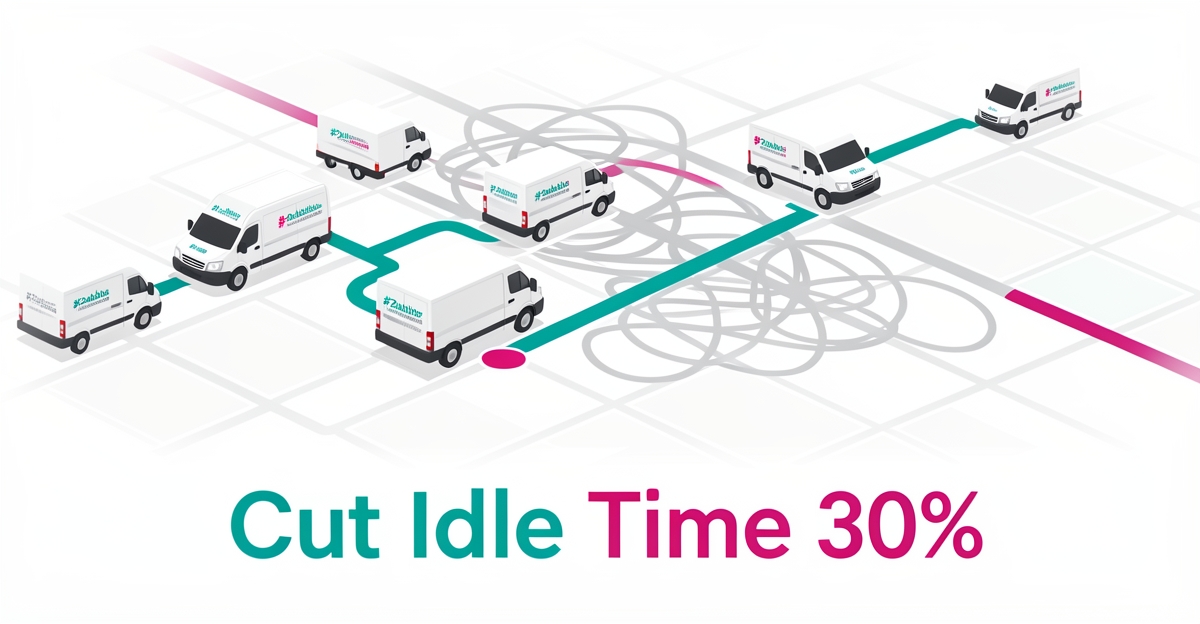
How an AI Dispatcher Can Optimize Your Painting Fleet, Reduce Idle Time by 30%
Key Facts
- AI dispatchers can reduce idle time by up to 30% for painting fleets when paired with live traffic and job data
- A meaningful share of a service-truck fleet's day is spent idling, driving between jobs, or waiting on the next assignment
- Fuel is typically one of the largest line items in a contractor's fleet budget, so every idle minute shows up on the P&L
- Short idle bursts burn more fuel than a quick restart in most modern light- and medium-duty trucks
- AIQ Labs builds dispatchers as managed AI Employees that plug into your existing CRM, calendar, and field-service tools
- Most painting contractors start with one high-cost workflow, then expand once the first automation is paying for itself
- A 2-minute Fit Check is the fastest way to see whether a dispatcher is the right first build for your operation
Hire a team member that works 24/7 — for less than a part-time wage.
AI receptionists, SDRs, dispatchers and 99+ roles. Trained on your business, fully managed.
Not sure where to start? Ask our AI planner
How AI Dispatchers Analyze Routes, Traffic, and Crew Availability
An AI dispatcher is a managed AI Employee that watches the same signals a good human dispatcher watches — job locations, traffic, crew skills, drive times, and current commitments — and acts on them continuously instead of once a day.
In practice, that means the dispatcher pulls from:
- Live job and CRM data so it knows what's actually booked, not what someone typed into a spreadsheet yesterday.
- Traffic and travel-time APIs so a 25-minute route at 9 a.m. doesn't become a 55-minute crawl at 4 p.m.
- Crew availability and skill tags so a two-person exterior crew doesn't get sent to a detailed interior trim job, and a solo painter doesn't get booked for a three-day commercial site.
- Job duration history so the schedule reflects how long your crews actually take, not the optimistic estimate.
When those signals are combined, the dispatcher can re-sequence the day on its own — or, in a hybrid setup, draft the new plan and hand it to a human dispatcher for a one-click approval. Either way, the result is fewer empty miles and tighter windows between jobs.
Real-Time Optimization: Beyond Static Route Planning
Most painting operations already have some form of route planning. The problem is that it's static — built once, usually the night before, and treated as fixed even when reality changes.
An AI dispatcher treats the schedule as a living document. A job runs long, traffic closes a road, a customer calls to push their start time — the dispatcher re-runs the math and proposes a new sequence within seconds. That's where the 30% idle-time reduction comes from: not a single clever optimization, but hundreds of small corrections across a week that add up to a full extra billable hour per crew per day.
It also handles the work a human dispatcher usually does by phone or text: confirming the next job, texting the customer an updated ETA, flagging a crew that's falling behind, and rerouting the closest available painter to an urgent add-on. Done well, the customer never sees the chaos behind the scenes — they just see a crew that arrives when it said it would.
Implementing AI Dispatch in Your Painting Operation
The fastest path is to treat the dispatcher as one focused build, not a platform overhaul. AIQ Labs typically scopes this as a Workflow Build: pick the one workflow that costs you the most — usually same-day rescheduling, end-of-day routing, or add-on job assignment — and rebuild it with an AI Employee running the loop.
A typical rollout looks like:
- Fit Check. A short session to confirm dispatch is actually your highest-leverage starting point, and to map the tools the dispatcher needs to read and write to.
- Milestone build. The dispatcher is trained on your real job history, connected to your CRM and calendar, and tested against last week's schedule to measure idle-time delta before it touches a live day.
- Go-live with a human in the loop. The dispatcher proposes, your team approves, and the system learns from every override.
- Expand. Once dispatch is paying for itself, the same pattern extends into quoting, follow-ups, and review requests — usually as additional AI Employees on a shared AI Operating System.
You don't need a data scientist on staff. AIQ Labs builds, trains, and monitors the dispatcher, and you own the working system outright once it's paid for. Pricing is scoped per milestone, not per seat, so the cost is tied to the workflow you're replacing, not a software license you keep renewing.
Still paying for 10+ subscriptions that don’t talk to each other?
We build custom AI systems you own outright. No vendor lock-in. Full control.
Not sure where to start? Ask our AI planner
Frequently Asked Questions
How much idle time can an AI dispatcher actually reduce for a painting fleet?
Why is idle time such a costly problem for fleet operations?
What data does an AI dispatcher use to optimize painting crew schedules?
Is it difficult to integrate an AI dispatcher with our existing fleet management software?
Can an AI dispatcher improve customer satisfaction for painting contractors?
Do I need to hire a data scientist to use an AI dispatcher?
Turn Idle Time Into Opportunity
An AI dispatcher turns idle minutes into billable ones by continuously re-sequencing the day around real traffic, real job data, and real crew availability. For most painting contractors, the highest-leverage starting point isn't a new platform — it's one workflow rebuilt with an AI Employee running the loop. If you want to see whether dispatch is the right first build for your operation, start with a free Fit Check. It's a short session with an AI engineer to map your biggest bottleneck and the rough cost of leaving it untouched — no obligation, no software pitch.
Make AI your competitive advantage — not just another tool.
Strategy, implementation and ongoing optimization. One partner, end to end.
Not sure where to start? Ask our AI planner