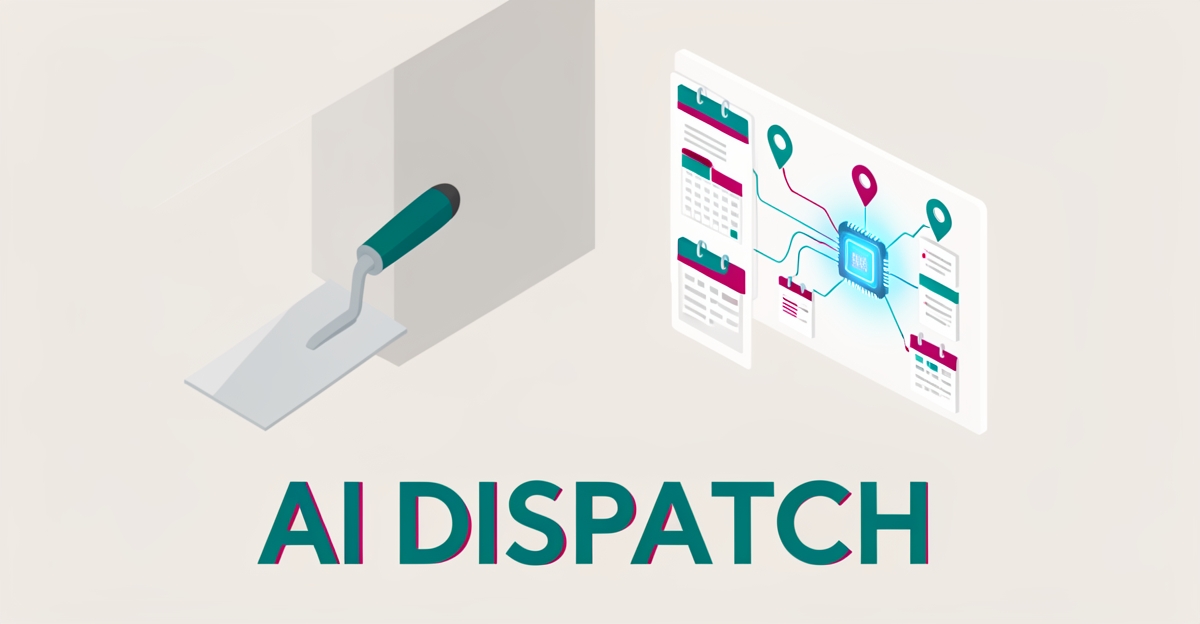
How an AI Dispatcher Can Streamline Job Assignments in Your Plastering Business
Key Facts
- Industry analyses of AI dispatch report daily planning time reductions of 80-95% in typical deployments according to Upper's analysis
- Fleets using AI-powered dispatch have reported 20-35% fewer total miles driven per Supply Chain Dive
- Operations with real-time tracking typically reduce customer support calls by 30-40% per Upper's dispatch comparison
- AI dispatch matches crews to jobs based on location, skills, and availability, cutting scheduling time substantially versus manual boards
- Manual dispatch is typically limited to 10-15 drivers per dispatcher before accuracy drops and response time lags
- AI systems scale from 5 to 500+ drivers with the same oversight as a human dispatcher
- AI Employees cost roughly 80% less than an equivalent human hire while working around the clock
Hire a team member that works 24/7 — for less than a part-time wage.
AI receptionists, SDRs, dispatchers and 99+ roles. Trained on your business, fully managed.
Not sure where to start? Ask our AI planner
The Scheduling Bottleneck Costing Plastering Crews Time and Money
Manual dispatch quietly drains plastering crews before the first trowel hits the wall. The bottleneck starts in the office and ends on the job site as missed stops, late arrivals, and unbalanced loads.
A dispatcher typically spends 2-4 hours daily on planning alone, building routes by intuition and phone check-ins. That manual process is prone to human error, with a high risk of missed stops, wrong addresses, and unbalanced workloads across crews. The result is wasted drive time, overtime, and crews waiting for clarification instead of working.
Scaling makes the pain visible. Manual dispatch is generally limited to 10-15 drivers per dispatcher, according to industry comparisons of manual versus automated dispatch. Beyond that threshold, accuracy drops and response time lags. Historical labor data shows dispatch roles have long been concentrated in transportation and warehousing, where the same planning pressures exist today.
The cost shows up in customer experience. Operations that implement real-time tracking typically reduce customer support calls by 30-40%, per AI dispatch versus manual dispatch analysis. Without live visibility, plastering businesses rely on check-in calls and reactive updates, which erodes trust when jobs slip.
Planning speed is the first lever. Comparative research on dispatch methods finds AI dispatch software can reduce daily planning time by 80-95% in typical deployments, collapsing 2-4 hours of manual work to minutes of automated optimization. That frees a dispatcher to handle exceptions, quality checks, and client relationships instead of spreadsheet juggling.
Manual dispatch pain points specific to plastering include:
- Intuition-based routing that ignores live traffic, material deliveries, and crew skill match
- Address errors and duplicate entries that cause missed stops and return trips
- Unbalanced workloads where one crew is overloaded while another is underutilized
- Scaling ceiling around 10-15 drivers per dispatcher before delays compound
These frictions compound as the business grows. AIQ Labs works with trades and field services to match available crews with client jobs based on location, skills, and availability, whether as a managed AI Employee or a purpose-built workflow build. The shift removes the daily planning tax and creates consistent, auditable assignments that crews can trust.
How AI Dispatch Matches Crews to Jobs by Location, Skills and Availability
Plastering crews lose revenue when the right team isn’t on the right job at the right time. An AI dispatcher removes the bottleneck by continuously matching available crews with client jobs based on location, skills and availability, turning scheduling from a daily scramble into an automated workflow.
Manual dispatch relies on memory, phone calls and spreadsheets. That approach is slow and inconsistent, with planning often taking 2-4 hours daily and error rates rising under pressure. AI dispatch replaces intuition with data, delivering consistent optimization every time with address validation and workload balancing.
Speed is the first gain. AI dispatch software can reduce daily planning time by 80-95% in typical deployments, collapsing routine planning to minutes. The system matches crews to jobs automatically, freeing office staff for higher-value work.
Efficiency follows from smarter routing. Fleets using AI-powered dispatch have reported 20-35% fewer total miles driven. For plastering businesses that means less fuel cost, less wear on vans, and more jobs completed per day without adding crews.
Visibility changes how customers experience service. Operations that implement real-time tracking typically reduce customer support calls by 30-40% according to industry comparisons of AI versus manual dispatch. Live GPS dashboards replace check-in calls, giving clients proactive updates and reducing “where is my crew?” inquiries.
An AI dispatcher evaluates three inputs in parallel to make assignments:
- Location proximity and travel time to minimize dead miles
- Crew skills and certifications matched to job requirements
- Real-time availability, current job status and capacity
The result is consistent optimization every time, not a best-effort decision made at 7am. Manual dispatch scales to about 10-15 drivers per dispatcher; AI systems scale from 5 to 500+ drivers with the same oversight.
AIQ Labs builds custom AI dispatch systems that scale with business growth, as a single automated workflow, or as part of a broader AI operating system that connects scheduling with quoting, invoicing, and client communication. The advantage doesn’t come from knowing more tools, it comes from knowing where they fit in your workflow.
Flexibility remains important. AI handles routine matching and exception flagging, while human judgment covers complex, relationship-driven situations. With live visibility, faster planning and fewer miles, plastering businesses gain a dispatch process that is faster, more scalable and more consistent than manual methods.
From Manual Boards to Intelligent Dispatch Without Losing Human Oversight
The shift from manual job boards to AI-powered dispatch isn't about replacing human oversight, it's about enhancing it. A plastering business still needs experienced judgment for complex client needs or unexpected site conditions, but AI excels at the repetitive optimization that consumes schedulers' time. Manual dispatch often leads to imbalanced workloads, inefficient routing, and address errors that frustrate crews and clients alike. AI dispatchers, by contrast, deliver consistent algorithmic precision in matching crews to jobs based on real-time location, verified skills, and availability, cutting scheduling time substantially while reducing planning inefficiencies.
The trade-offs are clear: AI handles consistent optimization, address validation, and workload balancing with reliability humans can't match over long shifts, but human dispatchers remain essential for nuanced exceptions like last-minute client requests, specialty finish requirements, or weather-related delays. The real advantage comes from knowing where AI fits in your workflow, not treating it as a magic solution but as a capable coworker operating within defined standard procedures. This balance ensures efficiency gains don't come at the cost of service quality or team morale.
To implement this effectively, start by auditing your current dispatch process to pinpoint pain points like excessive planning time or frequent rescheduling. Next, evaluate AI dispatch tools that integrate with your existing scheduling and CRM systems, prioritizing those with proven address validation and dynamic rerouting capabilities. Train your team not just on software mechanics but on when to override AI suggestions, treating the system as a collaborative tool requiring clear SOPs for exception handling. Finally, establish metrics to monitor performance: track reductions in scheduling time, improvements in first-time arrival rates, and crew feedback on workload fairness, adjusting the AI's parameters as your business evolves.
Build an Owned AI Dispatcher That Scales With Your Plastering Business
Most plastering businesses hit a ceiling where scheduling becomes the bottleneck: the owner or office manager spends hours each morning matching crews to jobs, and every new contract adds more complexity. That ceiling disappears when the dispatch system itself is built to scale with you rather than around you.
The numbers behind AI dispatch explain why. AI dispatch software can reduce daily planning time by 80-95% in typical deployments, and crews matched to jobs by location, skills, and availability cut overall scheduling time dramatically. Operations using AI-powered dispatch have also reported 20-35% fewer total miles driven, which translates directly into fuel savings and more billable hours per crew.
The difference between renting generic software and owning a purpose-built system matters here. Off-the-shelf tools force your plastering workflow into their template. A custom-built AI dispatcher, the kind AIQ Labs delivers as a managed AI Employee, learns your crews, your job types, and your service area, then integrates directly with the scheduling, CRM, and job management tools you already use. It books assignments, updates work orders, and confirms schedules around the clock, with monitoring and continuous improvement handled for you.
Owning the system also protects your long-term margins. Subscription dispatch platforms lock your data and workflows behind someone else's login, and costs climb as your crew count grows. With a custom build, the code, agents, and data belong to you, no vendor lock-in, and no per-seat penalty for growth. That matters because scalability is where AI dispatch separates from manual dispatch entirely: a human dispatcher realistically manages 10-15 drivers, while an AI system scales from 5 to 500+.
AIQ Labs offers three ways to engage, depending on where your business sits:
- Start Monthly, an AI Employee on a flat monthly plan that costs roughly 80% less than a human hire, covering the build, training, integrations, monitoring, and improvements, with the ability to pause or adjust anytime.
- Build in Milestones, the dispatch workflow rebuilt in phases at a fixed price, with approval and payment per phase; stop anytime and keep everything built so far.
- Own It Outright, a full AI operating system built in phases and owned outright: code, agents, and data belong to you when complete.
One caveat deserves honesty: AI handles consistent optimization brilliantly, but relationship-driven exceptions, the longtime client who only wants a specific crew, still benefit from human judgment. That's why a well-built system includes human override, not as a fallback but as a design feature.
A dispatcher built around your actual plastering workflows is exactly that: a coworker with SOPs. If you want to see whether this fits your business, the two-minute Fit Check at aiqlabs.ai/apply leads to a free 30-minute strategy call, a working session, not a sales pitch, and if there isn't a clear win, you'll hear that too.
Still paying for 10+ subscriptions that don’t talk to each other?
We build custom AI systems you own outright. No vendor lock-in. Full control.
Not sure where to start? Ask our AI planner
Frequently Asked Questions
How does an AI dispatcher actually decide which plastering crew gets assigned to a job?
How much time can AI dispatch actually save compared to manual scheduling?
Will an AI dispatcher work for my plastering business as it grows, or will I hit a ceiling?
Does AI dispatch mean I lose control over job assignments and crew decisions?
Can AI dispatch actually reduce fuel costs and drive time for my crews?
How does AI dispatch improve the customer experience for my plastering clients?
From Bottleneck to Breakthrough: Your Dispatch Upgrade
Manual dispatch isn’t just slow, it’s a silent drain on your plastering business, costing hours in planning, miles in wasted fuel, and trust when crews run late or jobs get mismatched. As we’ve seen, AI dispatch flips that script by automating crew-to-job matching based on location, skills, and real-time availability, cutting scheduling time substantially and reducing planning from hours to minutes. The result? Less overtime, fewer missed stops, and more billable hours per crew, all while keeping human oversight for the nuanced calls only experience can handle. If you’re ready to stop juggling spreadsheets and start scaling with confidence, the next step is simple: take the two-minute Fit Check at https://aiqlabs.ai/apply to see where AI can unlock real value in your workflow, no pitch, just clarity.
Make AI your competitive advantage — not just another tool.
Strategy, implementation and ongoing optimization. One partner, end to end.
Not sure where to start? Ask our AI planner