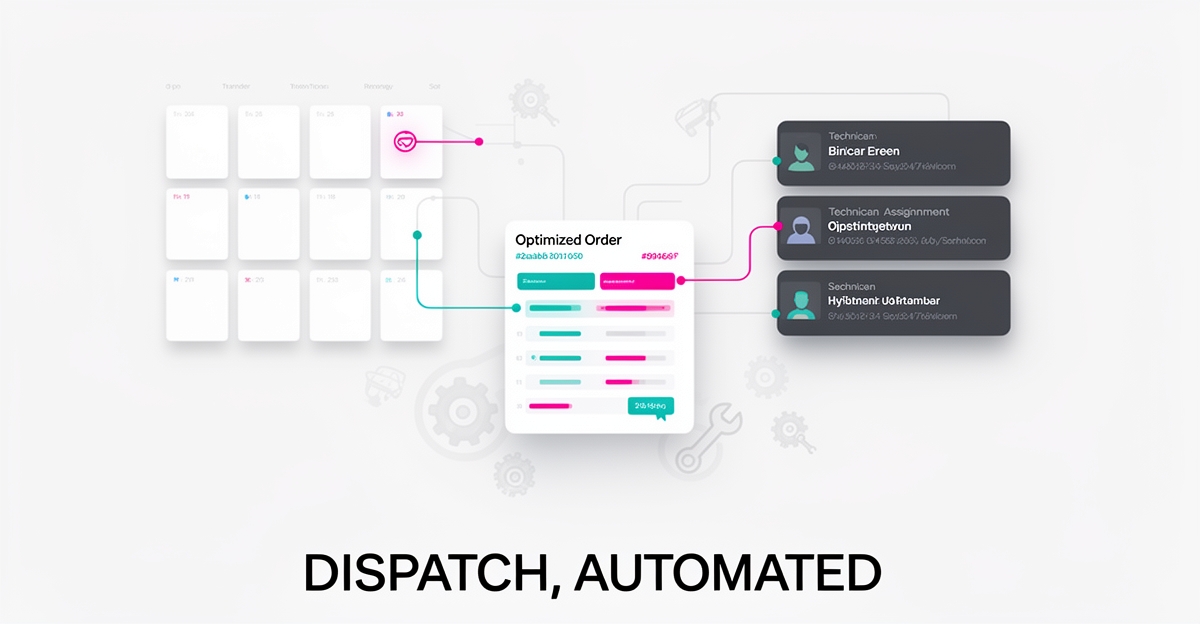
How an AI Dispatcher Can Streamline Service & Maintenance Scheduling for Your Dealership
Key Facts
- Manual dispatching typically consumes 2–4 hours of a service manager's day — time that could go to customers and process improvement.
- AI dispatchers evaluate technician skills, location, availability, and job urgency simultaneously, eliminating guesswork in assignments.
- Real-time ETAs and automated updates reduce missed appointments and inbound "where's my tech?" calls.
- AIQ Labs has deployed 200+ multi-agent systems and runs 4 live SaaS products daily — this is proven, production-grade capability.
- A managed AI dispatcher typically costs far less than a human hire — often around 80% less — and works 24/7 without overtime.
Hire a team member that works 24/7 — for less than a part-time wage.
AI receptionists, SDRs, dispatchers and 99+ roles. Trained on your business, fully managed.
Not sure where to start? Ask our AI planner
The Hidden Cost of Manual Service Dispatching in Modern Dealerships
Service departments in modern dealerships often operate with manual dispatching systems that create hidden costs far beyond simple scheduling errors. These inefficiencies drain technician productivity, inflate labor expenses, and erode customer trust daily. The true cost of manual dispatching isn't just in the time spent assigning jobs—it's in the cascading delays, missed opportunities, and frustrated customers that follow.
Manual dispatching typically consumes 2–4 hours daily for service managers, time that could be spent on customer engagement or process improvement. This planning burden translates directly into financial waste: across a year, those hours add up to tens of thousands of dollars in avoidable labor expense for a mid-sized dealership — before accounting for the downstream costs of poor assignments.
Beyond direct labor costs, manual dispatching creates significant operational drag through technician underutilization. When jobs are assigned without real-time visibility into skill sets, location, or current workload, technicians frequently travel inefficient routes or wait for parts while idle. That non-productive time accumulates quickly, and it's the single largest source of lost capacity in most service departments. The result is a service department operating at a fraction of its potential.
Customer dissatisfaction compounds these internal inefficiencies. Manual systems struggle to provide accurate ETAs or proactive updates, leading to missed appointments, perceived unreliability, and declining retention. In contrast, AI-powered dispatching enables real-time adjustments and transparent communication, directly addressing the frustration customers feel when left waiting without explanation. Dealerships relying on manual processes aren't just losing time—they're losing trust, one delayed service call at a time.
How AI Dispatchers Optimize Technician Assignment and Customer Communication
Service dispatching remains a time-consuming and error-prone process for many dealerships, but AI dispatchers are changing how maintenance tasks are assigned and managed. By analyzing technician skills, location, availability, and job urgency in real time, these systems automate scheduling decisions that once required hours of manual coordination — freeing service managers to focus on higher-value activities like customer engagement and workflow optimization.
The decision-making engine behind an AI dispatcher evaluates multiple variables simultaneously to ensure the right technician is assigned to the right job at the right time. It cross-references certifications, proximity to the service location, current workload, and the urgency of each repair request to generate optimal assignments instantly. This eliminates guesswork and reduces the likelihood of mismatched skills or inefficient routing.
Beyond assignment logic, AI dispatchers enhance customer communication by providing real-time updates and accurate ETAs, which reduces the likelihood of delays and cancellations. Automated notifications keep customers informed at every stage—from technician dispatch to arrival and completion—improving transparency and trust. This level of responsiveness not only boosts satisfaction but also decreases inbound inquiry volume, allowing service advisors to handle more complex interactions. AIQ Labs builds these capabilities into managed [AI Employees](/ai-employees) that operate 24/7, ensuring no service request goes unanswered regardless of time or day.
- Analyzes technician skill sets, location, availability, and job urgency for optimal assignments
- Cuts daily planning time dramatically compared to manual methods
- Provides real-time customer updates and accurate ETAs to improve satisfaction
- Operates continuously to eliminate delays and missed service opportunities
- Integrates with the DMS, CRM, and scheduling tools your team already uses
From Pilot to Production: Implementing an AI Employee as Your Dealership’s Dispatcher
The leap from "interesting concept" to "operational reality" stalls when the path forward feels like a massive, irreversible commitment. A practical alternative is to treat the AI dispatcher like any other critical hire: start with a defined role, a probationary period, and clear performance metrics. As of late 2026, managed AI dispatchers are a maturing, widely deployed capability — not an experiment.
- Discovery workshop to map current dispatch workflows, pain points, and integration touchpoints
- Configuration of the AI Employee with your specific technician skill matrices, bay availability, and priority rules
- Phased deployment starting with after-hours overflow or specific service lanes before full-day autonomy
- Continuous monitoring and retraining handled by the provider, not your internal IT team
This managed approach directly addresses the integration and data-quality hurdles that derail internal projects. AI dispatching only delivers results when it has clean access to the DMS, CRM, and scheduling tools your team already uses — which is why the build phase matters as much as the technology. AIQ Labs offers three ways to engage: the Start Monthly model bundles the build, tool integrations, and ongoing optimization into a flat fee that costs less than a part-time hire, with the flexibility to pause or adjust as seasonal demand shifts. If dispatch is just one of several workflows bleeding time, a focused [Workflow Build](/workflow-builds) targets the single costliest process first. And for dealerships ready to connect service, sales, and back office into one layer, an [AI Operating System](/ai-operating-systems) ties it all together — built in phases and owned outright. Because the AI dispatcher operates 24/7 without overtime, it captures the efficiency manual dispatching leaks every day, while your service advisors stay focused on the customer experience that drives retention.
Still paying for 10+ subscriptions that don’t talk to each other?
We build custom AI systems you own outright. No vendor lock-in. Full control.
Not sure where to start? Ask our AI planner
Frequently Asked Questions
How much time do service managers typically spend on manual dispatching each day?
What does manual dispatching cost a dealership over a year?
How quickly can an AI dispatcher pay for itself?
How does an AI dispatcher improve customer satisfaction in service departments?
Does the AI dispatcher integrate with our existing DMS and scheduling tools?
What does a managed AI dispatcher cost compared to hiring?
Turn Scheduling From Cost Center Into Competitive Advantage
Manual dispatching quietly drains dealership service departments through lost planning hours, underutilized technicians, and eroding customer trust. Automating those decisions with an AI dispatcher changes the equation by matching skills, location, availability and urgency in real time, cutting daily planning time dramatically and delivering accurate ETAs that keep customers informed instead of frustrated. The result is more productive bays, fewer delays, and a service team that can focus on engagement rather than spreadsheets. With a phased pilot starting in after-hours overflow or a specific lane, dealerships can prove value before expanding to full-day autonomy. AIQ Labs deploys managed AI Employees that operate 24/7 and integrate with your DMS and scheduling tools, so the dispatcher works alongside your advisors without adding headcount. Ready to map your biggest bottleneck? Start the [Fit Check](/apply) for a free 30-minute strategy call to identify high-ROI automation opportunities — every month of manual dispatching is a month of capacity you don't get back.
Make AI your competitive advantage — not just another tool.
Strategy, implementation and ongoing optimization. One partner, end to end.
Not sure where to start? Ask our AI planner