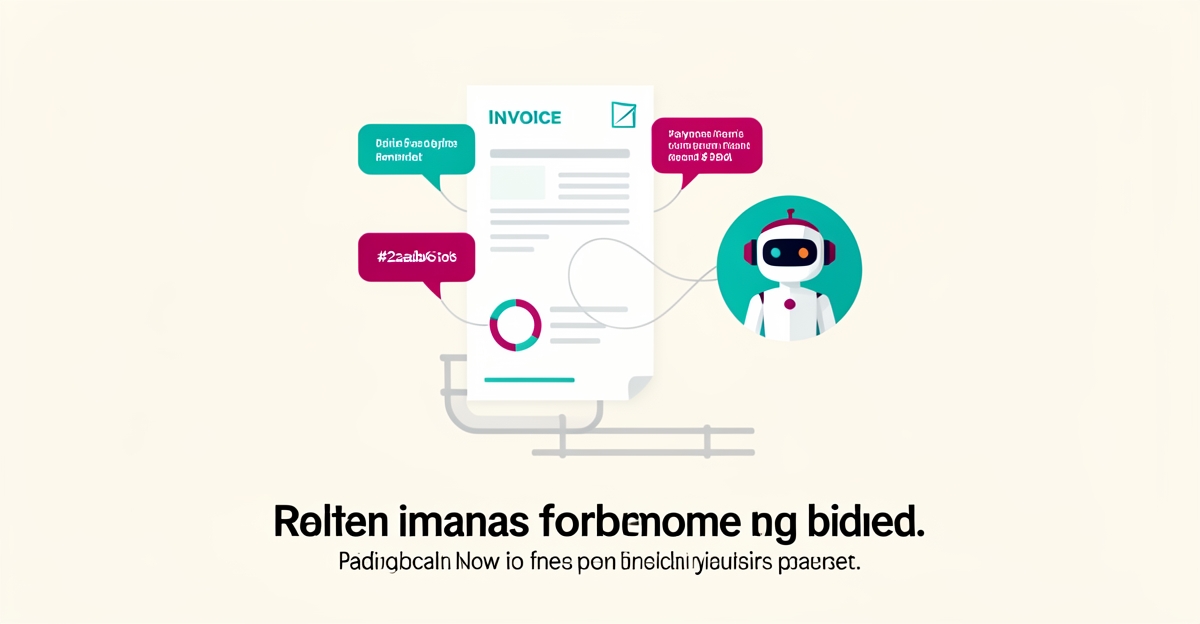
How an AI Employee Can Manage Customer Invoices and Collections for Your Sewer Repair Business
Key Facts
- AI invoice extraction typically achieves high accuracy on standard formats, cutting manual entry errors that slow billing
- Well-scoped agentic AI can resolve the routine majority of billing interactions without human intervention
- Poorly designed AI creates friction, which is why boundaries, human exits, and sentiment tracking matter
- AI employees work 24/7/365 without sick days or vacation as managed AI staff from AIQ Labs
- Automated data capture can cut invoice processing time dramatically compared to manual entry
- AI-powered reminders increase response rates while preserving relationships via smart, context-aware follow-ups
Hire a team member that works 24/7 — for less than a part-time wage.
AI receptionists, SDRs, dispatchers and 99+ roles. Trained on your business, fully managed.
Not sure where to start? Ask our AI planner
The Collections Problem Draining Your Sewer Repair Cash Flow
Late payments quietly erode the cash flow sewer repair businesses rely on to keep crews in the field. When invoices sit unpaid, payroll, parts, and fuel get squeezed while owners and technicians spend billable hours chasing money.
Manual invoice follow-up is the first leak. Technicians finish a job, paperwork gets entered late, and reminders depend on someone remembering to call. That admin time pulls owners and field staff away from revenue-generating work and creates inconsistent follow-up.
Awkward collection calls make it worse. Owners dread chasing residential and commercial customers, so calls get delayed or softened. Delays compound interest on equipment financing and force businesses to absorb the cost of doing nothing.
AI-powered extraction changes the accuracy baseline. Modern AI invoice tools typically extract amounts with high accuracy on standard formats, reducing the manual entry errors that slow billing and trigger disputes.
Automated reminders also remove the human friction. An AI employee can send smart reminders, predict payment timing, and integrate with accounting systems without requiring a technician to pick up the phone. That consistency protects relationships while protecting cash flow.
Agentic capabilities are what make collections work at scale. A well-scoped AI agent can handle the routine majority of billing interactions on its own, but when systems are poorly designed, customers notice and trust erodes. The difference is in the design: clear roles, clear boundaries, and clean human handoffs.
The cost of doing nothing shows up in three places:
- Billable hours lost to admin and follow-up calls
- Delayed cash flow from inconsistent reminder timing
- Customer friction from late, awkward, or missed collections outreach
Sewer repair businesses need predictable cash flow without adding headcount. AIQ Labs deploys managed AI employees that handle billing, send automated reminders, and track payment status as a real team member working 24/7/365.
When collections are handled by a system built for regulated, sensitive conversations, businesses keep technicians on jobs and owners focused on growth instead of chasing invoices.
What an AI Employee Actually Does for Invoicing and Collections
For sewer repair businesses, managing invoices and collections often drains time and disrupts cash flow. An AI employee transforms this process by handling invoicing and follow-ups with precision and consistency, without adding staff. This role combines automated data capture, intelligent communication, and seamless system integration to keep payments flowing.
The AI Accounts Receivable Clerk or Collections Agent begins by capturing invoices from emails, scans, or uploads, typically with high accuracy on standard formats. It then routes these invoices into accounting tools like QuickBooks, eliminating manual data entry and reducing errors that delay payment processing. This automation ensures every bill is recorded correctly and on time, forming the foundation for reliable collections.
Next, the AI employee sends smart payment reminders across voice, SMS, and email, tailored to each customer’s payment history and due dates. Using agentic AI capabilities, it can handle routine billing interactions end-to-end, including answering billing questions, processing partial payments, and proposing payment plans within pre-approved limits. These multi-channel reminders increase response rates while maintaining a professional, empathetic tone that preserves customer relationships.
Finally, the AI employee tracks payment status in real time, flags overdue accounts, and updates accounting systems automatically upon payment receipt. It provides sewer repair businesses with a clear view of outstanding invoices, predicted cash flow, and collection efficiency, all without requiring staff to chase payments manually. By integrating with existing tools and operating 24/7, this AI employee turns invoicing and collections from a reactive chore into a proactive, streamlined process that supports financial stability. For businesses ready to explore this capability, start the 2-minute Fit Check to see how an AI employee can fit your specific workflow.
Why Agentic AI Beats Simple Reminder Tools (and Where Humans Stay Involved)
Sewer repair businesses lose cash flow when invoices sit unpaid and follow-ups are inconsistent. Simple reminder tools send the same message on the same schedule, while an agentic AI employee works like a trained collections teammate.
Rules-based reminder apps are easy to set up and cheap to run. They blast templated emails or texts when a due date passes and stop there. They cannot read a customer’s history, check a payment plan, or adjust tone based on prior calls. That rigidity is why customers so often report that templated automation left their problem unsolved.
Agentic AI connects directly to billing systems, CRMs, and accounting tools. It extracts invoice amounts with high accuracy on standard formats, remembers past tickets and conversation threads, and acts on that context. Instead of repeating a reminder, it can confirm a payment, reschedule a due date, or negotiate a short-term arrangement and log the change back to the source system.
The difference shows up in resolution. A well-scoped agent handles the routine, high-volume majority of collections interactions on its own. For sewer repair, that means 24/7 follow-ups, smart reminders timed to customer behavior, and clean handoffs when a dispute needs a human.
Trust is the constraint that makes or breaks collections. Customers accept automation when it is transparent and bounded. Best practices for AI in customer support include mapping AI roles, setting clear boundaries, and tailoring interactions to customer context and brand guidelines.
Clear boundaries protect relationships and keep AI from eroding trust:
- Define what the AI can do: confirm balances, send reminders, propose payment plans within pre-approved limits
- Define what it cannot do: waive fees, override credit holds, or discuss legal disputes
- Always provide a clear human exit and disclose when a customer is speaking with AI
- Instrument for trust with post-interaction sentiment, repeat contact rate, and escalation tracking
Humans stay involved for high-risk, high-value moments. Complex disputes, angry customers, or requests outside policy are escalated immediately to a billing specialist who already has the full conversation history. That design preserves customer trust while automating the repetitive work.
AIQ Labs deploys managed AI staff that handle billing follow-ups end-to-end, with integrations to accounting and payment systems and human-in-the-loop controls for exceptions. The result is faster cash flow without adding headcount, and collections conversations that feel helpful rather than robotic.
How to Deploy an AI Collections Employee Without Hiring More Staff
Deploying an AI collections employee begins with defining a clear job description that outlines exactly which tasks the AI will handle and when human intervention is required. For sewer repair businesses, this means assigning routine invoice follow-ups, payment reminders, and status tracking to the AI, while reserving complex disputes, negotiation of payment plans, or escalated complaints for human staff. A well-scoped division of labor like this is what makes agentic AI efficient: the routine, high-volume work runs on its own while exceptions go to people.
Integration with existing accounting and CRM tools is essential for seamless operation. The AI employee connects directly to platforms like QuickBooks or Xero to pull invoice data, update payment statuses in real time, and trigger automated reminders based on due dates. It also logs interactions into your CRM so your team has full visibility into customer communication history. This eliminates manual data entry and reduces errors, modern AI extraction is highly reliable on standard invoice formats, ensuring clean data flow across systems.
To build trust and measure success, instrument the AI employee’s performance from day one. Track key metrics including average payment timing before and after deployment, the rate of escalations to human agents, and customer sentiment expressed in follow-up interactions. These insights allow you to refine the AI’s messaging, timing, and decision boundaries, such as when to pause automated reminders after a customer expresses frustration. Designing every AI interaction with a clear human exit prevents customers from feeling trapped in automation loops, preserving relationships while improving efficiency.
AIQ Labs’ Start Monthly model for AI Employees simplifies this deployment by handling the build, training, tool integration, and ongoing optimization, for a monthly cost that typically runs around 80% less than a comparable human hire. There’s no need to hire additional staff or manage complex infrastructure. Instead, you gain a dedicated AI employee that works 24/7, learns from every interaction, and scales with your business. To see how this fits your specific workflow, start with the 2-minute Fit Check, then book a free 30-minute strategy call where we’ll map your bottlenecks and show you exactly where an AI collections employee can drive results without adding headcount.
Still paying for 10+ subscriptions that don’t talk to each other?
We build custom AI systems you own outright. No vendor lock-in. Full control.
Not sure where to start? Ask our AI planner
Frequently Asked Questions
Will an AI employee actually get my sewer repair invoices right, or will it create more errors?
Can an AI really handle collections without sounding robotic and annoying customers?
What if customers hate talking to AI and it makes collections worse?
Do I need to hire someone to manage the AI collections agent?
How is an agentic AI different from the simple reminder tools I already tried?
When should a human still step in on collections?
Keep Crews in the Field and Cash in the Bank
Late invoices and awkward follow-ups are a cash-flow tax sewer repair businesses can’t afford. An AI employee removes that leak by capturing invoices reliably, sending smart reminders across voice, SMS and email, and updating accounting systems in real time without pulling technicians off jobs. Agentic AI handles the routine bulk of collections work while keeping humans for disputes and high-trust moments, protecting relationships and predictable cash flow without adding headcount. The cost of doing nothing shows up in lost billable hours, delayed payments, and customer friction. If you want the same consistency without hiring, map the routine follow-up steps you’d hand to a teammate, define clear boundaries for escalation, and test the workflow with a managed AI employee that works 24/7/365. AIQ Labs deploys real, managed AI staff for billing and collections as a working teammate, not a subscription widget. Start the Fit Check at https://aiqlabs.ai/apply, then book your free 30-minute strategy call to map your bottlenecks and see where an AI employee fits your workflow.
Make AI your competitive advantage — not just another tool.
Strategy, implementation and ongoing optimization. One partner, end to end.
Not sure where to start? Ask our AI planner