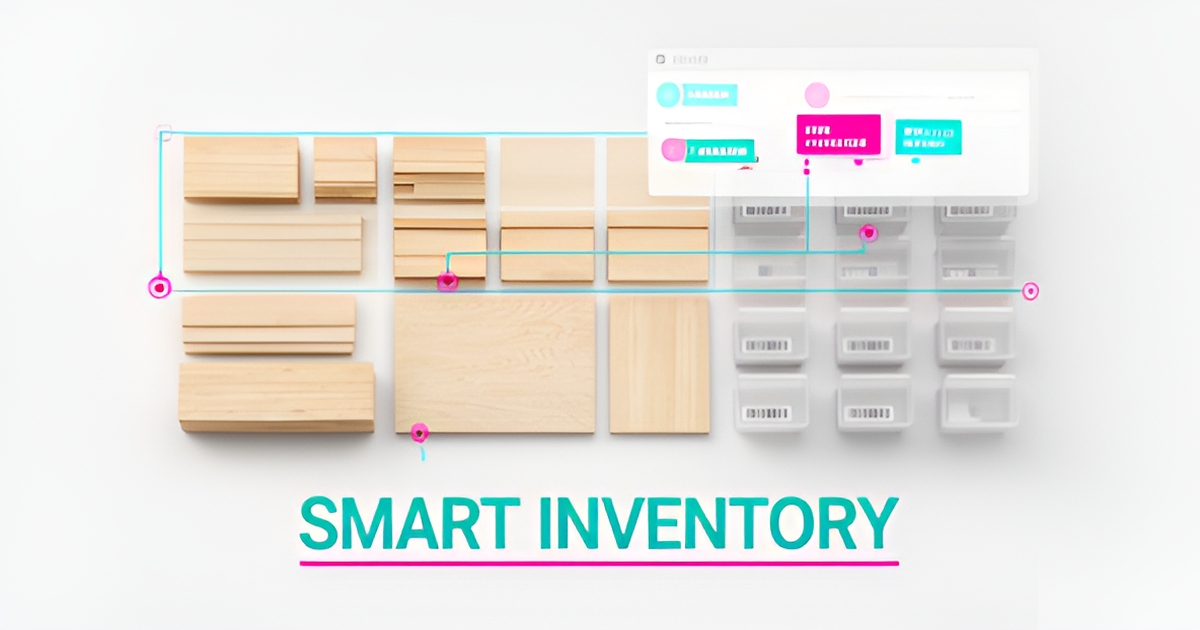
How an AI Employee Can Manage Inventory and Material Tracking in a Woodshop
Key Facts
- AI-assisted production planning has been reported to cut waste significantly in large-scale manufacturing by aligning output with real-time demand according to AI-driven logistics research
- Real-time stock deduction ensures inventory levels keep pace with operations, preventing jobs from starting only to find required wood is already committed based on modular production platform case study
- Predictive reordering analyzes historical usage, supplier lead times, and project pipelines to generate purchase requisitions automatically as shown in AI-driven logistics research
- AI Employees typically cost around 80% less than a human hire and work around the clock without missing alerts or taking vacations per AIQ Labs' AI Employees program
- Barcode integration enables instant logging of material receipts and cuts, updating stock levels the moment a board is scanned per FireFlight Data feature list
- Automated purchase requisitions trigger when projected demand crosses reorder points, eliminating clipboard walks for ordering based on AI-driven logistics research
- Serial number tracking allows precise monitoring of high-value or specialty wood stock across all storage zones as supported by modular production platform capabilities
Hire a team member that works 24/7 — for less than a part-time wage.
AI receptionists, SDRs, dispatchers and 99+ roles. Trained on your business, fully managed.
Not sure where to start? Ask our AI planner
Why Woodshop Inventory Fails Without Automation
Woodshops run on precision, yet most still track expensive lumber with methods built for a slower era. A clipboard tally or spreadsheet updated at day's end cannot capture the reality of a shop floor where every cut changes the math instantly.
The gap between recorded stock and actual inventory creates a silent drain on margins. Research into AI-driven supply chains suggests that intelligent forecasting and real-time visibility can substantially reduce waste in production planning by aligning output with live demand signals rather than stale counts. Without that visibility, shops fall into a cycle of over-ordering premium species to avoid shortages, tying up cash in inventory that sits for months, or halting a job because a critical board count was off by one.
- Inaccurate stock counts trigger unnecessary purchase orders for high-cost hardwoods
- Production delays cascade when material shortages surface mid-project
- Periodic cycle counts miss the real-time consumption rate of active builds
- Capital gets locked in excess stock that could fund growth instead
Spreadsheets lack the context to distinguish between allocated, on-hand, and on-order material. They cannot automatically deduct usage as a CNC nests parts or a craftsman breaks down a sheet. Modern production platforms solve this with real-time stock deduction and barcode scanning designed to keep inventory synchronized with operations at the speed of a scan. AIQ Labs applies this same principle through its AI Workflow Builds — rebuilding the one workflow that costs you the most, which in most shops is material tracking. The AI ingests shop-floor data, logs usage automatically, and triggers procurement alerts before a shortage stalls the line. The shift is not just digitization — it is replacing reactive guesswork with a system that sees consumption as it happens.
How an AI Employee Tracks Material Usage in Real Time
In a woodshop, the gap between a profitable job and a costly mistake often comes down to knowing exactly what material is on hand at any given second. An AI Employee acting as an Inventory Manager eliminates the guesswork by integrating directly with barcode scanners and ERP systems to log every cut, receipt, and movement the moment it happens.
Instead of waiting for end-of-week counts or manual spreadsheet updates, the system captures data at the source. When a worker scans a board before cutting, the AI deducts that material from available stock instantly, updating the central ledger across all storage zones. This real-time stock deduction ensures that inventory levels keep pace with operations, preventing the common scenario where a job starts only to discover the required walnut or maple is already committed to another project.
The system maintains a single source of truth by connecting to your existing ERP infrastructure. Whether materials sit in the main lumber rack, the finishing area, or an off-site storage unit, the AI tracks quantities across all locations simultaneously. According to industry case studies, this approach combines barcode scanning with multi-warehouse support to create error-free inventory control at the speed of a scan.
Key capabilities include:
- Instant logging of material receipts and cuts via barcode integration
- Automated updates to Material Requirements Planning (MRP) systems
- Real-time visibility across multiple storage zones and bin locations
- Serial number tracking for high-value or specialty wood stock
- Automated purchase requisitions when stock hits reorder points
This level of precision mirrors broader trends in AI-driven logistics, where real-time data analysis has helped major manufacturers reduce waste and shorten logistics distances per tonne. While a woodshop operates on a smaller scale, the principle remains identical: accurate, immediate data prevents over-ordering and eliminates the "hidden" stock that ties up cash flow.
AIQ Labs builds these inventory systems to fit your specific workflow, and with the Own It Outright model you keep the code and data — no vendor lock-in. The AI Employee transforms material tracking from a reactive chore into a proactive advantage. When the system detects a discrepancy between physical scans and digital records, it flags the variance immediately, allowing you to address shrinkage or miscounts before they derail production schedules.
Predictive Reordering That Prevents Stockouts and Waste
Most woodshops still order materials based on gut feel — and the result is either a stack of walnut collecting dust or a job delayed because the maple ran out mid-project. An AI Employee replaces guesswork with predictive reordering, analyzing historical usage, supplier lead times, and your active project pipeline to generate purchase requisitions automatically.
The forecasting models behind this aren't experimental. According to AI-driven logistics research, production planning powered by AI has cut waste substantially across large manufacturing operations by aligning output with real-time demand. The same probabilistic forecasting that drives those results applies directly to a woodshop — the AI doesn't just count what's on the shelf, it anticipates what each upcoming project will consume.
Here's how the system works in practice:
- Usage pattern analysis — The AI reviews historical consumption data across species, sheet goods, hardware, and finishes to identify trends and seasonal shifts.
- Lead time integration — It factors in supplier lead times so orders arrive before stock runs dry, not after.
- Pipeline awareness — By connecting to your project schedule, the AI forecasts material needs for confirmed and quoted jobs, adjusting requisitions as the pipeline changes.
- Automated purchase requisitions — When projected demand crosses reorder thresholds, the system drafts purchase orders for review — no clipboard walks required.
Workshop management platforms are already building toward this model. A modular production platform case study highlights the value of real-time stock deduction, material requirements planning, and lead time management as core modules for end-to-end workshop operations. An AI Employee takes this further by closing the loop — not just tracking what's happening, but acting on it before problems surface.
The impact compounds over time. Research on AI-driven demand sensing shows that adjusting inventory positioning before gaps appear — rather than reacting after — creates a structural cost advantage that grows each quarter as the models learn. For a woodshop, that means fewer emergency lumber runs, less capital tied up in overstocked material, and better cash flow across every job.
AIQ Labs builds these predictive reordering systems as custom solutions that integrate with your existing inventory and procurement tools. Because you can own the system outright, there are no per-user subscription fees or platform limitations — just an AI Employee that gets smarter about your shop's material flow with every project it tracks.
Deploying an AI Inventory Manager in Your Shop
Getting an AI Inventory Manager up and running in your woodshop isn't a months-long IT project — it's a structured deployment that connects directly to the tools you already use. The system plugs into your existing QuickBooks, Fishbowl, or custom ERP through standard APIs, pulling your material master data, vendor lists, and historical usage patterns into a unified intelligence layer. Because the AI trains on your actual reorder rules and consumption history, it starts making accurate suggestions from day one rather than forcing you to rebuild workflows from scratch.
The implementation follows a clear sequence: first, we map your current inventory schema — species, dimensions, grades, bin locations — into the agent's knowledge graph. Next, the AI ingests your purchasing history and bill-of-materials data to learn lead times, minimum thresholds, and seasonal demand curves. Finally, the agent goes live with a dedicated phone line, email address, and dashboard access, ready to monitor stock levels, log usage as jobs complete, and trigger purchase requisitions the moment inventory dips below your defined minimums.
- Connects to QuickBooks, Fishbowl, or custom ERP via two-way API integration
- Trains on your material master data, vendor terms, and historical usage patterns
- Deploys with barcode scanning support for fast, error-free inventory control at the speed of a scan
- Manages multi-location tracking across warehouses, bins, and job sites
- Executes automated reorder workflows with vendor-specific lead time management
The result is a managed AI Employee that typically costs around 80% less than a human hire and works around the clock — never missing a low-stock alert, never forgetting to log a cutoff, and never taking a vacation during your busiest season. AIQ Labs handles the build, training, integration, and ongoing optimization under the Start Monthly payment model, so your team stays focused on production while the inventory runs itself. If inventory is just the first gap, the same approach can scale into a full AI Operating System — one connected operating layer for your whole shop, built in phases and owned outright.
Still paying for 10+ subscriptions that don’t talk to each other?
We build custom AI systems you own outright. No vendor lock-in. Full control.
Not sure where to start? Ask our AI planner
Frequently Asked Questions
How does an AI employee actually track material usage on the shop floor?
Can AI really reduce waste and over-ordering in a woodshop?
Will this work with the ERP and tools I already use?
Is real-time stock deduction proven for workshops?
Can the system track inventory across multiple warehouses and job sites?
How quickly can we deploy an AI Inventory Manager?
From Guesswork to Growth: The Inventory Advantage
Woodshops that still rely on clipboards and end-of-day spreadsheets aren't just behind the times — they're leaving margin on the table. Real-time stock deduction, multi-location visibility, and predictive reordering don't just digitize inventory; they replace reactive guesswork with a system that sees consumption as it happens and acts before shortages stall production. Research across large-scale manufacturing suggests this approach can meaningfully cut waste while aligning output with live demand. The same principle scales to the shop floor: fewer emergency lumber runs, less capital locked in overstock, and cash flow that funds growth instead of gathering dust. AIQ Labs builds custom AI Inventory Managers that integrate with your existing ERP, barcode scanners, and procurement workflows — a managed AI Employee that typically costs around 80% less than a human hire and works around the clock. You can own the system outright, with no vendor lock-in or per-user fees. Ready to see what an AI Employee could automate in your shop? Start the two-minute Fit Check at aiqlabs.ai/apply and book a free 30-minute strategy call to map your highest-ROI opportunity.
Make AI your competitive advantage — not just another tool.
Strategy, implementation and ongoing optimization. One partner, end to end.
Not sure where to start? Ask our AI planner