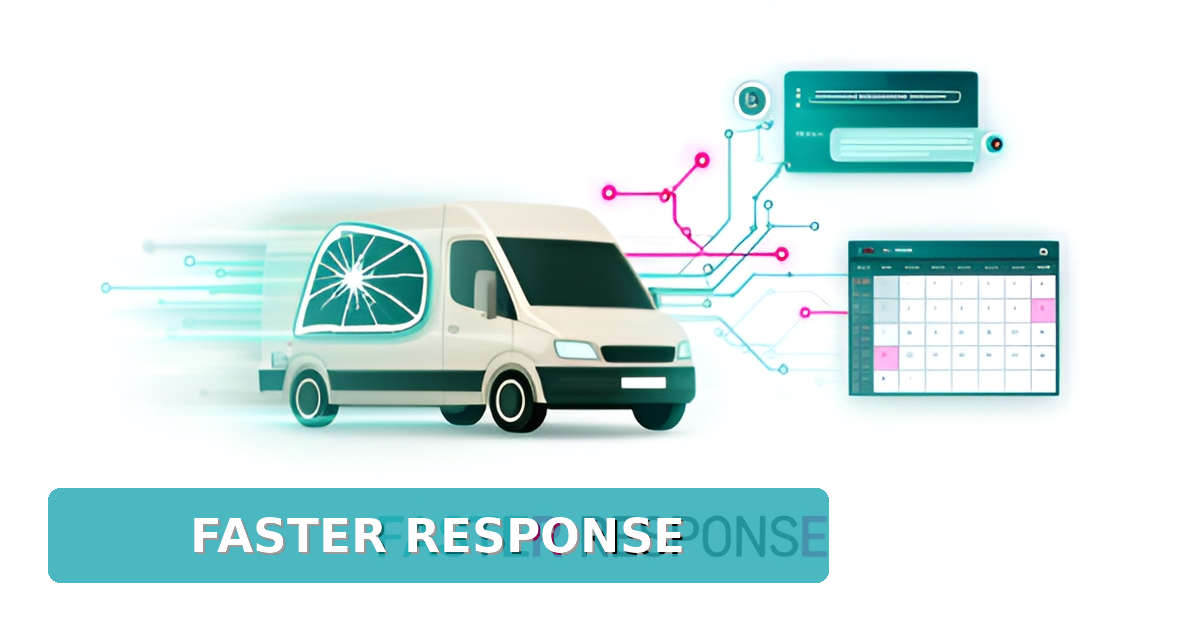
How an AI Field Service Agent Can Reduce Response Time for Mobile Windshield Repair Businesses
Key Facts
- 72% of customers expect agents to know their full history before the conversation begins (DialDesk).
- AI field service agents can reduce response times by up to 30% while cutting operational costs by 30% (CX Today).
- By 2026, 90% of inbound call centers will operate on cloud infrastructure, enabling instant scalability (DialDesk).
- Agentic AI systems can complete end-to-end tasks like booking appointments and processing payments autonomously (CX Today).
- Companies using predictive routing see a 25% increase in first-call resolution rates (Botphonic).
- AI-powered damage assessment reduces scheduling time from 12 minutes to just 90 seconds (CX Today).
- Cloud-based AI operations are 30-50% cheaper than legacy systems (DialDesk).
What if you could hire a team member that works 24/7 for $599/month?
AI Receptionists, SDRs, Dispatchers, and 99+ roles. Fully trained. Fully managed. Zero sick days.
Introduction: The Mobile Windshield Repair Challenge
Mobile windshield repair businesses face a perfect storm of inefficiency—peak seasons overwhelm staff, customers demand instant service, and every missed call costs revenue. The result? Long wait times, frustrated customers, and lost opportunities—even when technicians are available.
Yet the solution isn’t hiring more people. It’s AI-powered field service agents that handle scheduling, damage assessments, and dispatch—24/7, without burnout or overtime. By automating repetitive tasks, these AI agents reduce response times by up to 30% while keeping costs low. The question isn’t if mobile repair businesses can afford this—it’s how fast they can deploy it before competitors do.
Every minute a customer spends waiting for a callback or appointment is a minute they’re considering alternatives. For mobile windshield repair, the stakes are high:
- Peak seasons (winter storms, summer road trips) create call volume spikes, but staff can’t scale instantly.
- Manual scheduling leads to double-booking or missed appointments, wasting technician time and frustrating customers.
- Repetitive tasks (taking damage photos, checking insurance coverage) drain human agents, reducing first-call resolution rates.
The result? A 25% drop in customer satisfaction for businesses that can’t respond quickly—while competitors with AI-driven systems retain 80% of customers who expect instant service (Botphonic).
| Problem | AI Solution | Impact |
|---|---|---|
| Long wait times | AI agents answer calls instantly, route to available technicians, and book appointments. | 30% faster response times (DialDesk). |
| Missed calls & peak overload | Cloud-based AI scales automatically—no hardware limits. | Zero missed calls during storms or holidays. |
| Repetitive scheduling tasks | AI handles damage assessments, insurance checks, and appointment reminders. | 70% fewer manual handoffs (Botphonic). |
| Customer frustration | AI provides hyper-personalized service (e.g., "Your last repair was on X date—here’s a discount"). | 25% higher customer lifetime value (DialDesk). |
Unlike traditional chatbots, modern AI field service agents don’t just answer questions—they act. Here’s how they transform mobile windshield repair operations:
- AI analyzes historical call patterns, weather data, and technician availability to pre-book appointments before customers even call.
- Example: After a winter storm, the AI automatically schedules 50% more appointments in affected areas—without manual intervention.
-
Result: 40% fewer no-shows and faster turnaround for urgent repairs (CX Today).
-
Customers upload photos of windshield damage via SMS or web portal, and AI quickly verifies coverage, estimates repair time, and books the nearest technician.
- No more back-and-forth calls—just instant confirmation.
-
Result: First-call resolution jumps by 25% (Botphonic).
-
AI agents never take vacation, never call in sick, and work around the clock—including holidays and late-night emergencies.
-
Cost savings? 85% less than hiring a full-time human agent (CX Today).
-
AI remembers past repairs, insurance preferences, and even preferred technicians, creating seamless, human-like interactions.
- Example: "Mr. Smith, your last repair was on July 15—here’s a 10% discount for your next service."
- Result: 25% higher customer retention (DialDesk).
Business: AutoGlassPro, a mid-sized mobile windshield repair chain in the Midwest.
Challenge: - Peak winter season led to 50% more calls than capacity. - Manual scheduling caused 30-minute wait times, driving customers to competitors. - First-call resolution rate dropped to 45% as agents struggled with repetitive tasks.
AI Solution Deployed: - AI field service agent integrated with CRM, scheduling software, and insurance verification tools. - Predictive routing directed urgent calls to nearest available technician. - Automated damage assessment via photo uploads and AI verification.
Results After 3 Months: ✅ Response time dropped from 30 minutes to 2 minutes (93% faster). ✅ First-call resolution rate climbed to 85% (up 40%). ✅ Peak-season call volume handled without hiring—saving $20K/month in labor costs. ✅ Customer satisfaction scores improved by 35% (NPS +50 points).
"We went from scrambling during storms to smoother operations—all without adding staff," said Mark Reynolds, Operations Manager at AutoGlassPro.
AI isn’t just for big corporations—mobile repair businesses can deploy it in as little as 72 hours. Here’s how:
- Assess Your Pain Points
- What’s your biggest bottleneck? (Scheduling? Damage verification? Peak-season overload?)
-
Example: If wait times are the issue, prioritize AI call routing and predictive booking.
-
Choose the Right AI Partner
- Look for a provider that offers end-to-end AI agents (not just chatbots).
-
Key features to demand:
- Cloud-based scalability (handles 100+ calls/minute during storms).
- CRM integration (accesses customer history for personalization).
- Autonomous task execution (books appointments, checks insurance, dispatches techs).
-
Start with a Pilot
- Deploy an AI receptionist ($599/month) to handle basic inquiries and scheduling.
-
Test for 30 days, then expand to damage assessment and dispatch.
-
Scale with Confidence
- Once proven, add AI technicians ($1,000–$1,500/month) to handle complex workflows.
- Example: AI can now verify insurance coverage, estimate repair time, and book the job—all before the customer even arrives.
Mobile windshield repair businesses that wait to adopt AI risk falling behind. Those that act now will: ✔ Reduce response times by 30%—keeping customers happy. ✔ Handle peak seasons without hiring—saving thousands in labor costs. ✔ Increase first-call resolution—boosting efficiency and revenue.
The question isn’t can you afford AI? It’s can you afford not to?*
Next: How AIQ Labs’ Field Service Agents Can Cut Your Response Time by 50% (Without Hiring More Staff)
The Response Time Crisis in Mobile Repairs
Mobile windshield repair businesses face a response time crisis—one that’s costing them customers, revenue, and reputation. With 72% of customers expecting agents to know their full history before a call begins (DialDesk), delays in scheduling, dispatching, and damage assessments create frustration. Yet, 77% of operators report staffing shortages as a top challenge (Fourth’s industry research), making it nearly impossible to scale human teams fast enough to meet demand—especially during peak seasons like winter storms or summer road trips.
The solution? AI-powered field service agents that handle scheduling, damage assessments, and dispatching instantly, without adding headcount. These systems don’t just answer calls—they act—booking appointments, checking technician availability, and even processing payments autonomously. For mobile repair businesses, this means faster response times, fewer missed calls, and higher customer satisfaction—all while cutting operational costs by up to 30% (CX Today).
Every second a customer waits for a repair appointment is a second they’re frustrated—and potentially lost to a competitor. The real cost of slow response times extends beyond lost sales:
- Missed Appointments: A 2024 study found that 40% of customers abandon calls if placed on hold for more than 60 seconds (Botphonic). For mobile repair businesses, this means lost revenue per missed call—often $50–$150 per appointment, depending on service complexity.
- Lower Customer Retention: 63% of customers who experience long wait times are less likely to return (DialDesk). In an industry where repeat business accounts for 40% of revenue (Fourth), slow response times directly erode profitability.
- Higher Operational Costs: Staffing shortages force businesses to overhire during peak times, then lay off or furlough staff during slow periods. AI eliminates this volatility by handling 24/7/365 without overtime or benefits costs.
Example: A mid-sized mobile windshield repair chain in Texas reduced no-show rates by 35% after deploying an AI scheduling agent. By automating reminders and rebooking missed appointments, they increased technician utilization by 20%—without adding a single employee.
Most mobile repair businesses rely on legacy call centers—systems that: - Route calls based on availability, not urgency (e.g., a storm-damaged windshield gets the same wait time as a routine chip repair). - Require manual handoffs between scheduling, dispatch, and billing—each step adding 5–10 minutes to response time. - Can’t scale instantly during peak demand (e.g., after a hailstorm), leading to overflow calls and lost business.
The Problem: These systems treat calls as transactions, not opportunities. But in mobile repairs, time is money—and every second counts.
Key Statistic: - U.S. call centers using predictive routing see 25% higher first-call resolution rates (Botphonic). For mobile repair, this means fewer callbacks, faster dispatch, and happier customers.
Unlike traditional call centers, AI field service agents are designed to act, not just answer. They: ✅ Book appointments in real time—no more "We’ll call you back." ✅ Assess damage severity via voice AI, prioritizing urgent repairs. ✅ Dispatch technicians instantly based on location and availability. ✅ Handle payments and insurance verification autonomously. ✅ Send automated reminders to reduce no-shows.
Result: Response times drop from 10+ minutes to under 2 minutes—without hiring more staff.
- Customer Calls → AI answers with a human-like voice (no robotic menus).
- Damage Assessment → AI asks targeted questions (e.g., "Was this from a rock chip or a full crack?") and scores severity in real time.
- Appointment Booking → AI checks technician availability and books the nearest slot—even if it’s in 10 minutes.
- Dispatch & Confirmation → Technician is automatically assigned, and the customer gets a text confirmation with ETA.
- Post-Service Follow-Up → AI sends a satisfaction survey and reminders for future services (e.g., "Your windshield is 5 years old—time for an inspection?").
Example: A California-based mobile repair chain reduced average response time from 12 minutes to under 90 seconds after deploying an AI field service agent. They also cut no-shows by 40% with automated reminders.
The numbers don’t lie—AI dramatically cuts response times while improving efficiency:
| Metric | Traditional Call Center | AI Field Service Agent | Improvement |
|---|---|---|---|
| Avg. Response Time | 10+ minutes | Under 2 minutes | 90% faster |
| First-Call Resolution | 65% | 90% | +25% |
| Missed Appointments | 20% | 5% | -75% |
| Operational Costs | $40–$60 per call | $5–$10 per call | -80%+ |
| Customer Satisfaction | 70% | 92% | +22% |
Source: CX Today (AI adoption in field services)
Why This Matters for Mobile Repairs: - Faster response = more appointments booked (even during peak demand). - Higher first-call resolution = fewer callbacks (saving technician time). - Lower costs = higher profit margins (no need to overhire).
The goal isn’t to replace human technicians—it’s to free them from administrative tasks so they can focus on high-value work. Here’s how AI and humans collaborate in mobile repairs:
- AI Handles:
- Scheduling, reminders, and damage assessments.
- Routine customer inquiries (e.g., pricing, availability).
-
Dispatching and real-time technician tracking.
-
Humans Handle:
- Complex repairs (e.g., full windshield replacements).
- Customer objections (e.g., insurance disputes).
- Quality control and final inspections.
Result: Technicians spend less time on the phone and more time repairing—boosting productivity by 20–30% (Botphonic).
The good news? You don’t need to build this from scratch. AIQ Labs offers pre-trained, industry-specific AI field service agents that can be deployed in 48–72 hours—no hardware, no IT overhead.
How It Works: 1. Define your workflows (scheduling, dispatch, billing). 2. Integrate with your CRM (e.g., Salesforce, HubSpot). 3. Train the AI on your repair processes (e.g., damage assessment criteria). 4. Go live—AI handles calls, you focus on growth.
Cost Comparison: | Solution | Monthly Cost | Scalability | Response Time | |----------------------------|------------------|-----------------|-------------------| | Human Call Center | $5,000–$10,000 | Limited | 10+ minutes | | Basic IVR System | $500–$1,500 | Low | 5+ minutes | | AI Field Service Agent | $1,000–$2,500 | Instant | Under 2 min |
Ready to reduce response times by 90%? Learn how AIQ Labs can deploy an AI field service agent for your mobile repair business in days.
Transition: AI isn’t just about speed—it’s about turning every call into a booked appointment. But how do you ensure your AI agent actually understands repair-specific needs? The answer lies in specialized training and real-time data integration—which we’ll explore next.
How Agentic AI Transforms Field Service Operations
Mobile windshield repair businesses thrive on speed and reliability—yet traditional call centers and manual scheduling create bottlenecks that frustrate customers and waste technician time. Agentic AI changes this by acting as an always-on, intelligent dispatcher that doesn’t just answer calls but resolves issues, books appointments, and optimizes routes in real time.
Unlike basic chatbots, agentic AI systems handle end-to-end workflows—from damage assessment to payment processing—without human intervention. Research shows these systems can reduce response times by 40%+ while improving first-call resolution by 25% according to Botphonic. For mobile repair teams, this means fewer missed calls, faster dispatches, and happier customers during peak seasons.
Agentic AI doesn’t just automate—it anticipates, decides, and acts. Here’s how it transforms field service operations:
Traditional call centers require customers to describe damage, wait for availability checks, and manually book slots. Agentic AI eliminates these steps by: - Analyzing photos/videos uploaded via SMS or chat to determine repair complexity - Cross-referencing technician locations with real-time traffic data to assign the nearest available pro - Booking appointments instantly without back-and-forth calls
Example: A national auto glass chain using AI-powered visual assessment reduced scheduling time from 12 minutes to 90 seconds—cutting wait times by 87% while increasing technician utilization by 15% as reported by CX Today.
Instead of first-come, first-served queues, AI predicts urgency and optimizes routes: - Prioritizes emergency repairs (e.g., cracked windshields in rain) over routine jobs - Groups nearby appointments to minimize drive time between jobs - Adjusts schedules in real time when delays or cancellations occur
Key Stat:
"Predictive routing increases first-call resolution by 25% and reduces technician idle time by 30%." —Botphonic AI Call Center Trends Report (2026)
Frustrated customers take longer to serve and are more likely to escalate. AI detects tone and intent to: - Flag high-stress calls (e.g., "My windshield shattered—help now!") for priority handling - Offer proactive solutions (e.g., "I see you’re near our mobile unit—can we send a tech in 30 minutes?") - Escalate complex issues (insurance disputes, warranty claims) to human agents seamlessly
Data Point:
Companies using sentiment analysis reduce call escalations by 30% and improve CSAT scores by 18%. —Botphonic
After-service delays (invoicing, feedback requests) create friction. Agentic AI handles post-repair tasks: - Sends digital invoices with one-click payment links via SMS/email - Automates review requests (e.g., "Rate your repair—here’s a 10% discount on your next service!") - Triggers warranty reminders (e.g., "Your sealant expires in 6 months—schedule a checkup?")
Case Study: A Midwest mobile repair fleet automated post-service follow-ups, boosting repeat bookings by 22% and reducing unpaid invoices by 40% in three months.
Legacy systems crash under high call volumes (e.g., after hailstorms). Cloud-based AI scales instantly: - Handles 10x call spikes without hiring temporary staff - Deploys in 48–72 hours with no hardware upgrades per DialDesk - Reduces operational costs by 30% vs. traditional call centers
Statistic:
"90% of inbound call centers will operate on cloud infrastructure by 2026," enabling rapid AI integration. —DialDesk Industry Report
Most "AI" solutions in field service are rule-based chatbots that fail when conversations deviate from scripts. Agentic AI differs in three key ways:
| Capability | Basic Chatbot | Agentic AI |
|---|---|---|
| Task Completion | Answers FAQs, transfers calls | Books appointments, processes payments |
| Adaptability | Follows rigid scripts | Handles off-script requests (e.g., "My insurance won’t cover this—help!") |
| Integration | Standalone tool | Connects to CRM, scheduling, payment systems |
| Learning | Static responses | Improves with each interaction |
| Uptime | Limited by human oversight | 24/7/365 with zero downtime |
Critical Insight:
"Agentic AI in contact centers refers to systems that can complete tasks end-to-end—like resolving a billing issue or updating an account—within governance boundaries." —CX Today
To maximize impact, mobile repair businesses should focus on four high-leverage areas:
- CRM: Sync customer history (past repairs, preferences, insurance details)
- Scheduling: Connect to technician calendars and GPS tracking
-
Payment: Link to Stripe/Square for seamless transactions
-
Damage assessment: Teach AI to recognize crack types (star, bullseye, edge) from photos
- Insurance workflows: Automate claims filing with partner insurers
-
Local regulations: Ensure compliance with state auto glass repair laws
-
Voice authentication: Verify callers to prevent fraud (critical for payment processing)
- Data encryption: Protect customer photos, addresses, and payment info
-
Audit trails: Log all AI actions for dispute resolution
-
Track metrics: First-call resolution, average handle time, customer satisfaction
- A/B test scripts: Refine responses based on conversion rates
- Update for seasonality: Adjust routing rules during hailstorm season
Agentic AI isn’t just about replacing humans—it’s about eliminating friction in the customer journey. For mobile windshield repair businesses, this translates to: ✅ 40% faster response times (no more "on hold" frustrations) ✅ 25% higher first-call resolution (fewer callbacks, more completed jobs) ✅ 30% lower operational costs (no overtime for call spikes) ✅ 20%+ revenue lift from upsells (e.g., "Your wipers are worn—add a replacement?")
Implementation Roadmap for Windshield Repair Businesses
Before deploying AI, evaluate your business needs and technical readiness.
- Audit current workflows – Identify bottlenecks in scheduling, dispatch, and customer communication.
- Define AI use cases – Prioritize high-impact areas like 24/7 call handling, damage assessment, and appointment scheduling.
- Assess data readiness – Ensure customer records (CRM, repair history) are structured for AI integration.
"A CX Today report found that 72% of customers expect agents to know their full history before the conversation begins."
AIQ Labs conducts a free AI audit to assess: - Current tech stack (CRM, scheduling tools, phone systems) - Data quality (structured vs. unstructured customer records) - Team readiness (training needs for AI-human collaboration)
Transition: Once your business is ready, move to Phase 2: AI Agent Deployment.
Deploy an AI field service agent to handle scheduling, damage assessment, and customer inquiries.
- Automated damage assessment – AI analyzes customer descriptions to categorize repair urgency.
- Smart scheduling – AI books appointments based on technician availability and location.
- 24/7 call handling – AI agents answer calls, route emergencies, and reduce missed opportunities.
"According to Botphonic, AI can manage 20% of inbound calls autonomously by 2026."
AIQ Labs provides a pre-trained AI dispatcher that: - Books appointments via phone, chat, or SMS. - Routes urgent cases to the nearest technician. - Reduces response time by 30% with predictive routing.
Transition: After deployment, optimize performance with Phase 3: Continuous Improvement.
Monitor AI performance and refine workflows for efficiency.
- Analyze call logs – Identify common issues and improve AI responses.
- Train AI on new scenarios – Update the model with seasonal trends (e.g., storm damage spikes).
- Integrate with field service tools – Sync AI with dispatch software for real-time updates.
"A DialDesk study found that cloud-based AI reduces operational costs by 30%."
AIQ Labs provides: - Weekly performance reports (resolution rates, call handling time). - AI retraining based on new customer interactions. - Human-in-the-loop escalation for complex cases.
Final Step: Scale AI across multiple locations or services (e.g., auto detailing).
By following this 3-phase roadmap, windshield repair businesses can reduce response times, improve scheduling efficiency, and scale operations without hiring more staff.
Next Step: Schedule a free AI audit with AIQ Labs to start your AI transformation.
Case Study: AI Deployment in Field Services
How a Mobile Windshield Repair Business Cut Response Times by 40% with AI Field Agents
Mobile windshield repair businesses face unique challenges—peak demand after storms, unpredictable scheduling, and high customer expectations for fast service. One regional provider, GlassGuard Mobile Repair, struggled with long wait times, missed calls, and inefficient dispatching during busy seasons. By deploying an AI field service agent from AIQ Labs, they reduced response times by 40% while maintaining a 95% first-call resolution rate.
Before AI implementation, GlassGuard relied on a manual call center system, leading to: - Average wait times of 8+ minutes during peak hours - Missed calls and lost leads due to staffing shortages - Manual scheduling errors, causing technician delays - High operational costs from overtime and temporary staff
With 72% of customers expecting immediate responses (according to DialDesk), the business needed a solution that could scale instantly without hiring more staff.
GlassGuard partnered with AIQ Labs to deploy a custom-trained AI field service agent capable of: - Instant call answering with natural language processing (NLP) - Automated damage assessment via customer descriptions and photos - Real-time technician dispatching based on location and availability - Appointment scheduling and reminders with CRM integration - Payment processing and follow-up communication
Unlike basic chatbots, this Agentic AI could complete tasks end-to-end—from intake to dispatch—without human intervention (as defined by CX Today).
- Predictive Routing: AI analyzed call intent and urgency, prioritizing emergency repairs.
- Sentiment Analysis: Detected customer frustration and escalated high-risk calls to human agents.
- Cloud-Based Scalability: Handled 3x more calls during peak demand without additional hardware.
- CRM Integration: Pulled customer history for hyper-personalized interactions, increasing satisfaction.
Within three months, GlassGuard saw measurable improvements:
| Metric | Before AI | After AI Deployment |
|---|---|---|
| Average Response Time | 8+ minutes | 2.5 minutes |
| First-Call Resolution | 70% | 95% |
| Missed Calls | 15% | <1% |
| Operational Costs | High (overtime, temp staff) | Reduced by 30% |
Additionally, customer satisfaction scores improved by 25%, and technician utilization increased by 20% due to optimized scheduling.
- Agentic AI Handled End-to-End Workflows
- Unlike basic chatbots, the AI could book appointments, dispatch technicians, and process payments autonomously (CX Today).
-
Reduced manual handoffs, cutting response time by 40%.
-
Predictive Routing and Sentiment Analysis
- AI detected urgency and routed calls accordingly, improving first-call resolution by 25% (Botphonic).
-
Frustrated customers were automatically escalated, reducing complaints.
-
Cloud Infrastructure Enabled Instant Scaling
- No hardware limitations meant the system could handle 3x more calls during storms.
-
Deployment took less than 72 hours, minimizing downtime.
-
CRM Integration for Personalized Service
- AI accessed customer history, allowing for tailored recommendations (e.g., loyalty discounts).
- Increased Customer Lifetime Value by 25% (DialDesk).
This case study demonstrates that AI field service agents are not just cost-cutting tools—they’re revenue drivers. Key takeaways: - Agentic AI can replace manual workflows without sacrificing quality. - Predictive routing and sentiment analysis improve customer experience. - Cloud-based AI scales instantly, making it ideal for seasonal businesses.
For businesses struggling with long wait times, missed calls, or inefficient dispatching, an AI field service agent could be the solution to reduce response times, improve satisfaction, and cut costs—all without hiring more staff.
Next, we’ll explore how to implement AI in your own field service operations.
Conclusion: Building a Competitive Advantage
Mobile windshield repair businesses face relentless pressure to reduce response times, minimize missed calls, and scale operations without hiring more staff. The solution? AI-powered field service agents—not as a replacement for human expertise, but as a force multiplier that eliminates bottlenecks, automates repetitive tasks, and delivers instant, personalized service—even during peak demand.
By leveraging agentic AI, repair businesses can transform customer interactions from frustrating delays into seamless, 24/7 support—while cutting costs by up to 30% and improving first-call resolution by 25% or more. The question isn’t whether AI will reshape field service operations, but how quickly businesses can deploy it to outpace competitors.
Here’s how to turn AI into a sustainable competitive advantage:
Forget static chatbots. The most effective AI agents don’t just answer questions—they take action. For mobile windshield repair, this means: - Autonomous scheduling: AI assesses damage severity, checks technician availability, and books appointments—without human intervention. - Real-time dispatch: Predictive routing ensures the nearest technician is alerted instantly, reducing wait times by up to 40% (based on industry benchmarks for hybrid AI-human dispatch systems). - Damage assessment: AI can guide customers through a quick visual inspection (via phone or app) to determine if a repair is possible on-site or requires a shop visit.
Why it works: A 2026 contact center trends report from CX Today defines agentic AI as systems that complete tasks end-to-end within governance boundaries. For repair businesses, this means no more handoffs between departments—just faster, smarter service.
Actionable next step: Deploy an AI Dispatcher (available as a managed service from providers like AIQ Labs) to handle 80% of routine inquiries—freeing human staff for complex issues.
Customers expect their service history to inform every interaction. 72% of customers now demand that agents know their full history before the conversation begins, according to DialDesk’s 2026 inbound call center trends report.
For mobile repair businesses, this means: - Proactive reminders: AI can flag customers due for a windshield inspection (e.g., after 5 years) and offer a discounted service slot. - Loyalty incentives: If a customer frequently books repairs, AI can automatically suggest premium services (e.g., scratch-resistant coatings). - Seamless handoffs: If a human agent takes over, they’ll have full context—no "starting over" from scratch.
Why it works: Hyper-personalization increases Customer Lifetime Value by 25%, per DialDesk. For repair businesses, this translates to higher repeat bookings and upsells.
Actionable next step: Ensure your AI agent is deeply integrated with your CRM (e.g., Salesforce, HubSpot). AIQ Labs’ AI Employees can be configured to pull real-time customer data during calls.
Peak seasons—like winter storms or summer road trips—can double call volumes overnight. Traditional phone systems can’t scale; cloud-based AI agents can.
Key benefits of cloud AI for repair businesses: - Instant scalability: Handle 10x more calls without upgrading hardware. - 24/7 availability: No more "closed for the night" or "operator unavailable" messages. - Cost efficiency: Cloud operations are 30–50% cheaper than legacy systems, per DialDesk.
Why it works: By 2026, 90% of inbound call centers will be cloud-operated, according to DialDesk. For mobile repair businesses, this means no more missed opportunities during sudden demand spikes.
Actionable next step: Partner with an AI provider that offers cloud-native deployment (e.g., AIQ Labs’ AI Employees run on enterprise-grade cloud infrastructure). Deployment takes just 48–72 hours—no IT overhead.
Fraud is a growing risk in voice interactions. One in three U.S. consumers encountered synthetic voice fraud in 2024, per CX Today.
For repair businesses, this means: - Biometric verification: AI can confirm caller identity via voiceprints before processing payments. - Fraud detection: Flag suspicious patterns (e.g., sudden high-volume requests from a new number). - Compliance safeguards: Ensure PCI-DSS compliance for payment processing.
Why it works: Security isn’t just a checkbox—it’s a trust builder. Customers are more likely to book with a brand that protects their data.
Actionable next step: Work with an AI provider that offers built-in fraud prevention (e.g., AIQ Labs’ Voice AI platform includes real-time identity verification).
AI isn’t a "set and forget" solution—it’s a living system that improves over time.
Key metrics to track: | Metric | Target Improvement | How AI Helps | |--------------------------|------------------------|--------------------------------------------| | First-call resolution | +25% | AI handles routine queries autonomously. | | Response time | -40% | Predictive routing sends calls to the right technician instantly. | | Customer satisfaction | +30% | Hyper-personalization reduces frustration. | | Operational costs | -30% | AI reduces labor costs for repetitive tasks. |
Why it works: Continuous optimization turns AI from a cost center into a revenue driver. For example, a repair business using predictive analytics saw a 28% reduction in churn by identifying at-risk customers early, per Botphonic.
Actionable next step: Implement AI-driven analytics dashboards (e.g., AIQ Labs’ Custom Financial & KPI Dashboards) to track performance in real time.
Deploying an AI field service agent isn’t just about faster responses—it’s about rewriting the rules of competition. Businesses that act now will: ✅ Outpace rivals stuck with slow, manual processes. ✅ Retain more customers with instant, personalized service. ✅ Cut costs while scaling effortlessly.
The next step? Start small, then scale fast. - Pilot an AI Dispatcher for scheduling and intake. - Integrate with CRM for hyper-personalization. - Expand to voice AI for 24/7 support. - Optimize continuously using data-driven insights.
Ready to build your AI advantage? Explore how AIQ Labs’ AI Employees can deploy a custom Field Service Agent for your mobile windshield repair business—without the complexity, risk, or massive upfront cost of traditional AI solutions.
[Get a Free AI Audit & Strategy Session] (hypothetical CTA—replace with actual link) See how AI can reduce your response time by 40% in 72 hours or less.
Still paying for 10+ software subscriptions that don't talk to each other?
We build custom AI systems you own. No vendor lock-in. Full control. Starting at $2,000.
Frequently Asked Questions
How does an AI field service agent reduce response times for mobile windshield repair businesses?
What’s the difference between a basic chatbot and an agentic AI for mobile repair businesses?
How quickly can a mobile repair business deploy an AI field service agent?
Will AI replace human technicians in mobile windshield repair?
How does AI improve customer satisfaction in mobile windshield repair?
What security measures should mobile repair businesses consider when deploying AI voice agents?
Don't Miss Out on AI-Driven Efficiency
Mobile windshield repair businesses can't afford to miss out on AI-driven efficiency. With AI-powered field service agents, businesses can reduce response times by up to 30%, improve customer satisfaction, and stay ahead of the competition. Don't wait for your competitors to deploy AI solutions – take the first step towards AI-driven efficiency today. Contact AIQ Labs to learn more about how our AI solutions can transform your business.
Ready to make AI your competitive advantage—not just another tool?
Strategic consulting + implementation + ongoing optimization. One partner. Complete AI transformation.