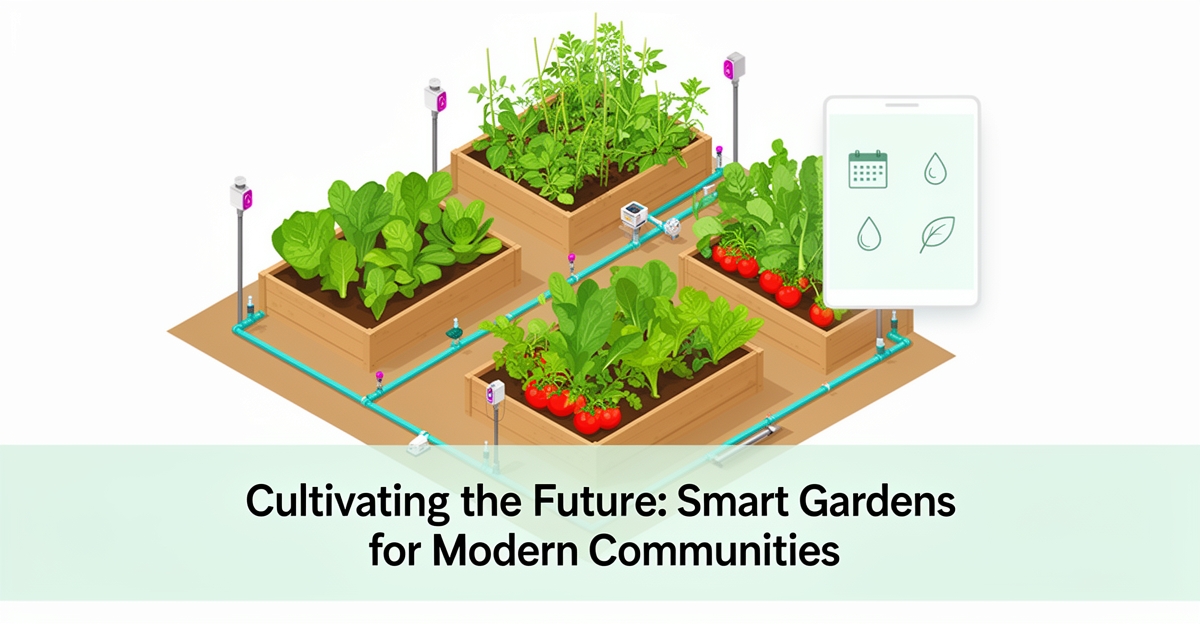
How an AI Garden Assistant Can Automate Community Garden Maintenance Tasks
Key Facts
- AI automation cuts administrative burnout by up to 40% for garden coordinators, according to Community Gardening.org
- Smart irrigation systems reduce water usage by 30% while boosting yields, Meegle reports
- AI-assisted monitoring increases grape yields by 20%, according to Meegle's analysis
- AI route optimization slashes fuel costs by 15-25% for field operations, per OS for Your Business
- Gardenly generates photorealistic garden redesigns from photos in under 30 seconds, according to Gardenly
- Local AI systems keep garden data private and operational during internet outages, The Home Smart Home notes
- AI landscaping implementations typically achieve positive ROI within 12-18 months, OS for Your Business finds
Hire a team member that works 24/7 — for less than a part-time wage.
AI receptionists, SDRs, dispatchers and 99+ roles. Trained on your business, fully managed.
Not sure where to start? Ask our AI planner
The Hidden Burden of Manual Garden Management
Community garden coordinators spend more time on paperwork than plants. Plot waitlists grow, volunteers no-show, irrigation runs at the wrong time, and pest outbreaks are caught too late. The manual load quietly drains momentum from the garden itself.
Administrative work is the heaviest drag. According to community garden research, AI can reduce administrative burnout by up to 40% through automation of tedious tasks like plot assignments and volunteer scheduling. That reduction comes from replacing spreadsheets and reminder chains with predictive allocation and self-service updates.
Plot assignments and volunteer scheduling create recurring friction. Coordinators manually match members to available beds, track preferences, and chase confirmations. AI analyzes historical demand to forecast waitlist movement, automatically matches members with suitable plot sizes and locations, and sends personalized planting calendars based on local climate and soil type. Repetitive coordination tasks shift from people to workflows.
Irrigation and pest monitoring compound the burden. Manual checks mean overwatering, underwatering, and late detection. AI-assisted monitoring data shows water usage can drop by up to 30% through optimized irrigation, while grape yield can increase by 20% with consistent monitoring. Soil moisture sensors paired with weather forecasts enable personalized watering schedules, and computer vision can flag issues from photos before they spread.
The pain points show up daily as:
- Plot assignments and waitlist management handled by email and spreadsheets
- Volunteer scheduling that relies on memory and manual reminders
- Irrigation decisions made on fixed timers instead of real-time soil and weather data
- Pest and disease detection delayed until visible damage appears
These tasks are ideal for AI Workflow & Task Automation. Small community garden services use AI to manage daily operations like planting schedules, watering reminders, and volunteer assignments without adding staff. The goal is operational consistency, not replacing the human connection that makes gardens thrive.
At AIQ Labs, we see the same pattern across SMBs: manual oversight creates bottlenecks that scale poorly. Custom AI workflows tailored to local gardening cycles can automate the administrative layer while coordinators focus on community building and garden health. Learn more about our AI Employees or AI Workflow Builds.
How AI Garden Assistants Solve Core Maintenance Challenges
Community gardens run on volunteer labor and coordinator goodwill, and both run out fast. AI garden assistants tackle the four most draining maintenance tasks head-on, turning hours of manual oversight into automated workflows that run quietly in the background.
The most measurable win is water. According to Meegle's analysis of AI gardening assistants, AI-controlled irrigation systems can cut water usage by up to 30%, with commercial farming applications showing 25% reductions. These systems combine soil moisture sensors with weather forecast data to generate personalized watering schedules, so plots get exactly what they need, no more, no less. The same source documents a 20% increase in grape yield through AI-assisted monitoring, proof that precision care translates directly into more productive plots.
Plot allocation is another chronic headache. As Community Gardening.org explains, one of the biggest challenges in garden management is assigning plots fairly and efficiently. AI predictive algorithms analyze historical data to forecast demand, automatically match members with available plots, and suggest optimal sizes and locations based on member preferences. The payoff extends beyond logistics: the organization reports that automating tedious tasks like plot assignments and volunteer scheduling can reduce administrative burnout by up to 40%.
Pest and disease management benefits from computer vision. Cameras placed strategically around the garden feed images into pre-trained detection models, tools like Frigate or DeepStack running on local hardware, which identify problems from photos before they become infestations. Early detection allows targeted treatments and minimizes chemical use, keeping shared gardens healthier without intensive scouting rounds by volunteers.
Volunteer coordination rounds out the automation stack. AI systems match task assignments to each volunteer's availability and skills, streamlining scheduling the same way AI dispatch platforms match field technicians to jobs. For coordinators juggling dozens of members, this eliminates the constant back-and-forth of manual sign-up sheets.
- Smart irrigation driven by soil sensors and weather data, cutting water use by 25-30%
- Predictive plot allocation that forecasts demand and matches members automatically
- Computer vision pest detection that flags issues early for targeted treatment
- Skill-and-availability-based volunteer task matching
These capabilities mirror what AI workflow automation delivers across other small service operations, automated scheduling, task dispatch, and communication handling. Firms like AIQ Labs build this kind of custom automation for small businesses, adapting the same workflow architecture to local needs like a garden's planting cycles and volunteer roster. The result is consistency: tasks happen on schedule whether or not the coordinator has time to check. Explore our AI Operating Systems for connected workflow layers.
Implementing AI in Community Gardens: From Setup to Scale
Starting an AI garden assistant doesn't require a complete overhaul, it begins with assessing your garden's specific needs, from plot size and climate to volunteer capacity and irrigation setup. According to Community Gardening.org, AI can reduce administrative burnout by up to 40% through automation of tedious tasks like plot assignments and volunteer scheduling, making it a practical first step for gardens overwhelmed by manual coordination. Many community gardens start small, piloting AI for one function, such as smart watering reminders or planting calendars, before expanding to broader workflow automation.
Hardware selection depends on whether you prioritize local processing for privacy and reliability or cloud-based convenience. For local AI, a stable Home Assistant installation on a Raspberry Pi or NAS serves as the foundation, paired with IP cameras supporting RTSP/ONVIF for pest detection and soil moisture sensors for irrigation control. As noted by The Home Smart Home, local AI offers uninterrupted operation during internet outages and keeps sensitive garden data within your network, enabling real-time responses to threats like invasive pests or sudden drought conditions without latency.
Integration with existing tools is streamlined through platforms like Home Assistant, which connects via HACS (Home Assistant Community Store) to add AI capabilities such as Frigate for object detection or custom automations linking sensor data to valve controls. AIQ Labs supports this phase by ensuring seamless two-way API integrations between garden management tools and custom AI workflows, eliminating manual data entry and creating a single source of truth for scheduling, inventory, and volunteer tracking. This approach aligns with their AI Workflow & Integration service, which focuses on transforming disconnected systems into a unified operational hub. Learn more about our AI Workflow Builds or AI Operating Systems.
A phased rollout minimizes disruption: begin with monitoring-only AI (e.g., photo-based pest alerts), then add advisory functions (e.g., planting suggestions), and finally enable automated actions (e.g., triggering irrigation when soil moisture drops below threshold). Each phase includes testing, volunteer feedback, and refinement, mirroring AIQ Labs’ implementation process where development, integration, and optimization occur in structured stages to ensure user adoption and long-term efficiency. By scaling gradually, gardens build trust in the system while preserving the hands-on, communal spirit that defines their success.
Still paying for 10+ subscriptions that don’t talk to each other?
We build custom AI systems you own outright. No vendor lock-in. Full control.
Not sure where to start? Ask our AI planner
Frequently Asked Questions
How much can AI reduce administrative burnout for community garden coordinators?
Can AI really save water in community gardens, and if so, how much?
Will using AI in our garden mean we lose the personal, community feel?
How does AI help with pest detection in community gardens?
Is it hard to set up an AI garden assistant if we're not tech experts?
What kind of hardware do we need to run AI locally in our garden?
Let Your Garden Grow While Your Workflows Run Themselves
Community gardens thrive on connection, not paperwork, but too often, coordinators find themselves buried in spreadsheets, chasing volunteers, and reacting to problems instead of preventing them. AI garden assistants change that by automating the repetitive tasks that drain time and energy: smart irrigation that cuts water use by up to 30%, predictive plot allocation that eliminates waitlist guesswork, computer vision that catches pests early, and volunteer scheduling that matches skills to availability. These aren’t futuristic ideas, they’re practical, proven tools already helping gardens operate more consistently while preserving the human touch that makes them special. For small organizations looking to reduce administrative burnout and scale impact without adding staff, the path forward starts with assessing where AI can relieve the heaviest manual loads. Take the first step with a free, no-obligation strategy call to see how AI workflow automation can work for your garden’s unique rhythms, because when the backend runs smoothly, the community can focus on what matters most: growing together.
Ready to automate your garden’s workflows? Start your 2-minute Fit Check to see how AIQ Labs can help. No fake prices, no invented case studies, just real results.
Make AI your competitive advantage — not just another tool.
Strategy, implementation and ongoing optimization. One partner, end to end.
Not sure where to start? Ask our AI planner