How an AI Kitchen Assistant Can Reduce Food Waste in High-End Restaurants
Key Facts
- AI adoption in the food and beverage sector has grown substantially, with market projections pointing to continued expansion through 2032 according to Onix Systems research.A majority of diners now prefer mobile apps and QR code menus for ordering per Restroworks data.Most consumers say valuing their time is the most important service measure according to Restroworks.Millennials and Gen Z strongly favor digital ordering channels shows Restroworks research.Consumers are more likely to return after a smooth digital ordering experience per Restroworks study.AI kitchen assistants analyze order patterns, ingredient inventory and portion sizes to predict waste.
- AI-powered kitchen assistants optimize workflows to reduce spoilage and improve food cost control.
Hire a team member that works 24/7 — for less than a part-time wage.
AI receptionists, SDRs, dispatchers and 99+ roles. Trained on your business, fully managed.
Not sure where to start? Ask our AI planner
The Hidden Cost of Food Waste in Premium Dining
In the world of high-end dining, where every plate is a masterpiece and every ingredient is meticulously sourced, there's an uncomfortable truth lurking beneath the surface: food waste is silently eroding profits. Despite premium pricing and a reputation for excellence, even the most celebrated restaurants are not immune to the financial drain caused by spoilage, overproduction, and inefficient inventory management.
The trend lines tell a compelling story. Industry research points to sustained growth in AI adoption across the food and beverage sector through 2032, driven in part by the urgent need to address operational inefficiencies like food waste. For high-end restaurants, where ingredient costs are often higher and margins tighter, the stakes are even greater. A single spoiled shipment of truffles or an over-prepped batch of house-made pasta can translate into hundreds, or even thousands, of dollars lost in a single service.
The root causes of food waste in premium dining are multifaceted. Overproduction, often driven by the desire to avoid disappointing guests, leads to excess food being prepared and ultimately discarded. Spoilage, particularly with perishable high-end ingredients like fresh seafood or specialty produce, further compounds the problem. Inefficient inventory management, where stock levels are not accurately tracked or forecasted, exacerbates these issues, leading to unnecessary waste and inflated food costs.
The financial impact is significant. A recent study found that a majority of diners now prefer ordering via mobile apps, and most have used QR code menus, highlighting the growing role of technology in streamlining restaurant operations. Yet many high-end establishments still rely on manual processes for inventory and waste tracking, leaving money on the table. Without real-time data and predictive insights, chefs and managers are left guessing how much to order, prep, and serve, often erring on the side of excess to avoid running out.
The consequences extend beyond the bottom line. Food waste in premium dining also carries reputational risks. Today's diners, particularly Millennials and Gen Z, are increasingly conscious of sustainability. Restroworks reporting shows these demographics strongly favor digital ordering, and that consumers are more likely to return after a seamless tech-driven experience. Restaurants that fail to address waste not only lose money but also risk alienating a growing segment of environmentally aware customers.
The good news? The same technology transforming other areas of the restaurant industry can also tackle food waste head-on. AI-powered kitchen assistants analyze order patterns, ingredient inventory, and portion sizes to predict waste and optimize workflows. By leveraging real-time data, these systems help high-end restaurants reduce spoilage, minimize overproduction, and improve food cost control, all without compromising the quality or creativity that defines premium dining.
For restaurants ready to take control of their waste problem, the solution lies in embracing AI-driven tools designed to turn inefficiencies into opportunities. The question isn't whether you can afford to invest in these technologies, it's whether you can afford not to.
How AI Analyzes Kitchen Data to Predict and Prevent Waste
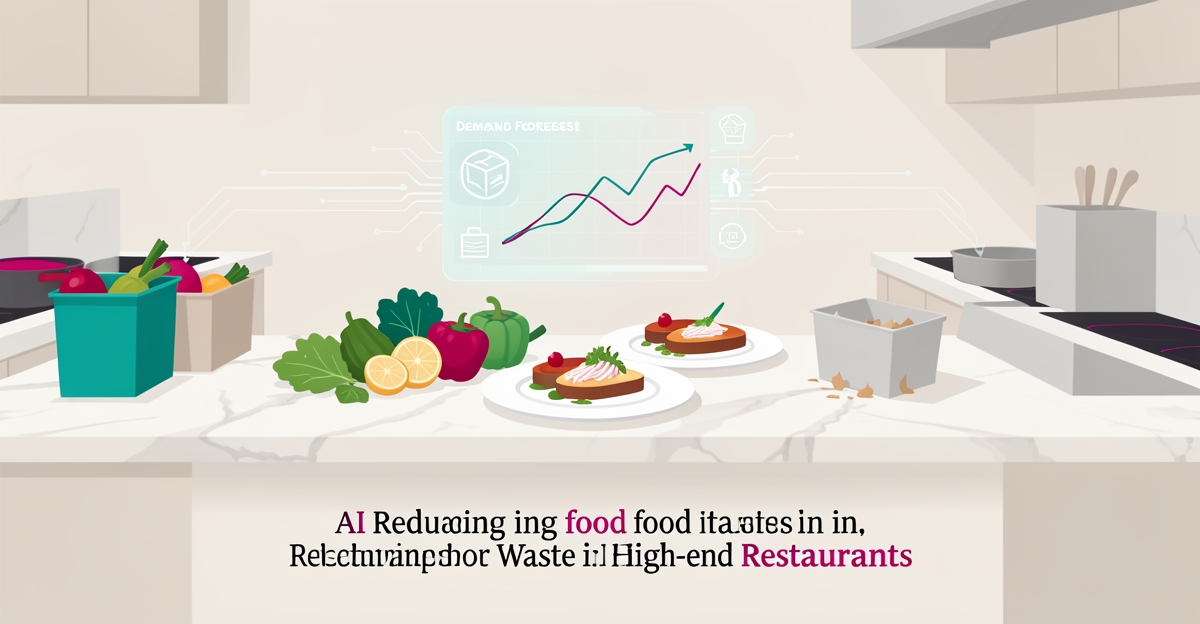
Food waste is a silent margin killer in high-end kitchens, where premium ingredients and precise plating leave little room for error. AI-powered kitchen assistants turn daily operational data into predictive control, helping chefs prep smarter instead of over-prepping.
These systems continuously ingest order patterns from POS and mobile ordering channels. With most diners now preferring mobile apps and QR code menus widespread, order streams become rich, real-time demand signals. The assistant maps peak covers, menu mix shifts, and table-turn velocity to forecast ingredient needs by hour and station.
Inventory and portion data are analyzed in parallel. Weight sensors, usage logs, and waste tracking feed models that learn how much of each protein, produce item, and sauce is actually consumed versus discarded. Predictive demand modeling aligns prep sheets with expected covers, reducing overproduction during slow periods and stockouts during rushes.
The result is dynamic workflow optimization. AI can recommend real-time adjustments such as re-sequencing prep tasks, adjusting batch sizes, and reallocating staff to stations with rising demand. This supports the broader automation momentum in the sector, as AI adoption across the food and beverage market continues to expand.
In practice, an AI kitchen assistant monitors and recommends across:
- Order pattern analysis for demand forecasting by time, day, and menu item
- Ingredient inventory tracking to flag near-expiry stock and suggest usage
- Portion size variance detection to standardize plating and cost control
- Prep schedule optimization to align mise en place with predicted covers
Automation is also a customer experience lever. Most consumers say valuing their time is the most important service measure, which makes faster, accurate kitchen execution a competitive advantage for high-end restaurants.
AIQ Labs builds custom AI agents that monitor daily operations and recommend adjustments to reduce spoilage and improve food cost control. Whether that starts as a single AI Workflow Build targeting your most expensive kitchen workflow or grows into a fuller AI Operating System for the whole restaurant, these agents deliver operational intelligence without replacing chef expertise.
The approach fits naturally alongside AI Employees handling guest-facing roles, reservations, ordering, and dispatch, so front-of-house and kitchen data flow into one connected picture.
From Insight to Action: Implementing AI in High-End Kitchen Workflows
Deploying an AI kitchen assistant doesn't require a complete overhaul of your restaurant's operations, in fact, the most successful implementations start with a single, high-impact workflow and scale from there. With AI adoption in food and beverage continuing to accelerate, restaurants that act now position themselves to capture efficiency gains before the technology becomes table stakes.
The first step is data integration. Your AI assistant needs access to order history, inventory levels, and portioning data to identify waste patterns. This means connecting your point-of-sale system, inventory management tools, and supplier platforms into a unified data pipeline. For many high-end kitchens, this integration challenge is where projects stall, but it's also where the right partner makes the difference. AIQ Labs handles the technical heavy lifting through fixed-price, phased workflow builds, so your team can focus on execution.
Next comes staff training and workflow alignment. Even the most sophisticated AI fails if your brigade doesn't trust or understand its recommendations. Start by involving your executive chef and sous chefs in the setup process, letting them define what "waste" means in your specific context, whether that's over-prepped mise en place, excess protein trimming, or unsold specials. Then establish clear protocols for how the AI's insights translate into action: who reviews daily forecasts, how portion adjustments are communicated to the line, and when inventory orders should be modified.
Consider this phased approach for seamless adoption:
- Audit your data sources, Map every system that touches food costs, from reservation platforms to supplier invoices
- Pilot with one station or service period, Lunch service or a single prep category offers controlled testing
- Define success metrics upfront, Track food cost percentage, waste volume, and labor hours saved
- Iterate based on kitchen feedback, Your team's on-the-ground observations refine the AI's accuracy
The investment case is compelling. Restaurant automation already drives measurable returns: most diners now prefer mobile ordering, and kitchens that embrace automation report improved operational efficiency and reduced labor costs. Early adopters gain both immediate savings and long-term competitive positioning.
Implementation timelines vary, but many restaurants see initial waste reduction within the first month of operation. The key is starting with a clear scope, securing chef buy-in, and choosing a partner who builds systems you own outright, no vendor lock-in, no subscription traps, just actionable intelligence that compounds over time. AIQ Labs builds in milestones so you pay for verified progress, and you own the finished system outright.
Still paying for 10+ subscriptions that don’t talk to each other?
We build custom AI systems you own outright. No vendor lock-in. Full control.
Not sure where to start? Ask our AI planner
Frequently Asked Questions
How can an AI kitchen assistant actually reduce food waste in a high-end restaurant?
Will using AI in the kitchen compromise the creativity or quality of our dishes?
What kind of data does an AI kitchen assistant need to work effectively?
Is implementing AI in our kitchen going to require a major overhaul of our current systems?
How do we know if the AI's recommendations are accurate and trustworthy for our kitchen?
What measurable results can we expect from using an AI kitchen assistant?
Turning Kitchen Waste into Strategic Advantage
High-end restaurants face a quiet profit drain from food waste, spoilage, overproduction, and inefficient inventory management eroding margins despite premium pricing. As explored, AI-powered kitchen assistants transform this challenge by analyzing order patterns, ingredient usage, and portion data to predict waste, optimize prep, and align workflows with real-time demand. The result isn't just less waste, it's sharper food cost control, smoother operations, and a stronger appeal to sustainability-conscious diners who value seamless, tech-enhanced experiences. For restaurants ready to act, the path forward starts with a free 2-minute Fit Check at Strategy, implementation and ongoing optimization. One partner, end to end. Not sure where to start? Ask our AI plannerMake AI your competitive advantage — not just another tool.
Related Resources
read about patient experience, not ai, is healthcare's next
TP's new analysis argues patient experience—not AI—is healthcare's next frontier. Here's what the five shifts mean for small and mid-sized clinics in North Amer
demo-first voice ai: why smb vendors are letting you try
AI365Agent's new demo offering highlights how SMB voice AI has commoditized — and why ownership, integration, and compliance now matter more than the demo call.