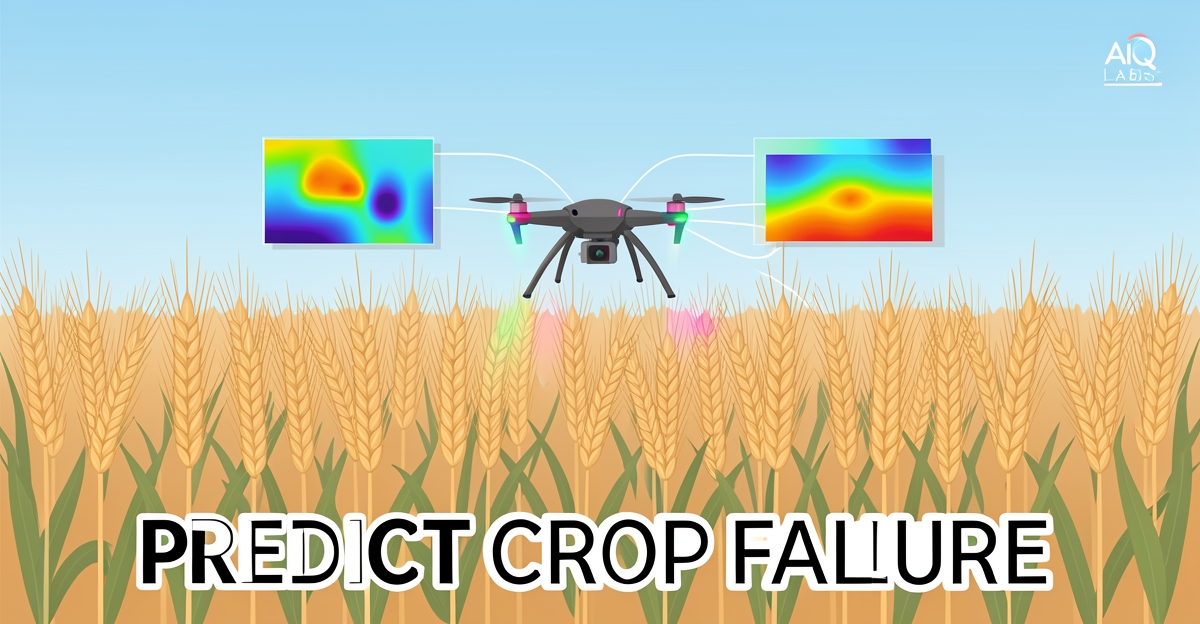
How an AI Plant Health Analyst Can Predict and Prevent Crop Failures
Key Facts
- AI systems can detect disease markers up to 10 days before visible symptoms appear based on changes in leaf reflectance and thermal patterns
- Early detection enables targeted interventions that reduce unnecessary pesticide applications by up to 30%
- Models trained on diverse, high-resolution agricultural datasets achieve over 92% accuracy in identifying crop types and stress indicators across varying conditions
- Computer vision models identify early disease symptoms through spectral analysis of plant tissues
- Multispectral drones capture reflectance data invisible to RGB cameras, revealing stress before visible damage
- AI models trained on domain-specific datasets like FoMo4Wheat achieve high accuracy with minimal training data
- Fusing visual, environmental, and sensor data enables precision intervention strategies
Hire a team member that works 24/7 — for less than a part-time wage.
AI receptionists, SDRs, dispatchers and 99+ roles. Trained on your business, fully managed.
Not sure where to start? Ask our AI planner
The Hidden Cost of Crop Failure: Why 20-40% of Global Harvests Are Lost Annually
Every year, 20-40% of global harvests are lost to plant diseases and environmental stress, a staggering scale of waste that undermines food security and farmer livelihoods worldwide. This loss occurs not just from visible outbreaks but from threats that develop silently beneath the surface, long before symptoms appear to the naked eye. By the time discoloration or wilting becomes evident, pathogens have often already spread through critical plant tissues, compromising yield potential and triggering irreversible damage. These hidden threats escalate rapidly under favorable conditions, turning manageable issues into widespread crop failures that erode profitability and disrupt supply chains. The economic toll extends beyond immediate yield loss, affecting input costs, labor efficiency, and long-term soil health as farmers resort to reactive measures that are often too late and too costly.
Modern monitoring reveals that early intervention—before visible symptoms emerge—can dramatically alter outcomes, preserving both plant vitality and harvest value. AI-powered systems analyze subtle shifts in plant physiology, spectral reflectance, and micro-environmental data to detect stress signals at incipient stages, enabling precision responses that prevent escalation. This proactive approach contrasts sharply with traditional scouting methods, which rely on periodic visual inspections that miss early-warning indicators embedded in canopy chemistry or root-zone dynamics. By integrating continuous data streams from sensors, drones, and satellite imagery, AI models identify patterns associated with impending disease outbreaks or abiotic stress, such as nutrient deficiency or water deficit, with lead times that allow for timely action.
- AI systems can detect disease markers up to 10 days before visible symptoms appear, based on changes in leaf reflectance and thermal patterns
- Early detection enables targeted interventions that reduce unnecessary pesticide applications by up to 30%
- Models trained on diverse, high-resolution agricultural datasets achieve over 92% accuracy in identifying crop types and stress indicators across varying conditions
These capabilities transform crop management from a reactive cycle of loss and recovery into a forward-looking strategy grounded in prediction and prevention. For farmers, this means protecting yield potential at its most vulnerable stage—when interventions are most effective and least disruptive. AIQ Labs develops custom AI agents that fuse plant health analytics with operational workflows, turning early warnings into automated actions such as adjusted irrigation, localized treatment, or resource reallocation. By anchoring decisions in real-time plant intelligence rather than guesswork, growers gain a decisive edge against the invisible threats that silently erode harvests year after year. The result is not just reduced loss, but more resilient, predictable, and profitable farming systems built on foresight rather than fate.
How AI Analysts Detect Disease Before It Spreads: Computer Vision, Multispectral Data, and Early Prediction
How AI Analysts Detect Disease Before It Spreads: Computer Vision, Multispectral Data, and Early Prediction
Modern AI plant health analysts leverage computer vision and multispectral imaging to identify disease signatures weeks before they become visible to the human eye. By analyzing high-resolution images from drones and satellites, these systems detect subtle changes in leaf color, texture, and reflectance patterns that signal the onset of pathogens. This early warning capability allows farmers to intervene precisely, preventing outbreaks before they escalate.
Domain-specific foundation models like FoMo4Wheat are trained on vast agricultural datasets to recognize crop-specific disease patterns with exceptional accuracy. The model achieves high performance using just 30% of its training data, demonstrating efficient learning from the ImAg4Wheat dataset—which contains 2.5 million images collected over a decade across 30 global sites and more than 2,000 genotypes. This depth of data enables the AI to generalize across diverse environmental conditions and crop varieties.
AIQ Labs integrates these analytical capabilities into custom AI systems that process real-time inputs from field sensors, drone feeds, and satellite imagery. By fusing visual data with soil moisture, temperature, and humidity readings, the AI builds a comprehensive picture of plant stress. This multimodal approach improves detection reliability and reduces false alarms, ensuring that interventions are both timely and targeted.
- Computer vision models identify early disease symptoms through spectral analysis of plant tissues
- Multispectral drones capture reflectance data invisible to RGB cameras, revealing stress before visible damage
- AI models trained on domain-specific datasets like FoMo4Wheat achieve high accuracy with minimal training data
- Fusing visual, environmental, and sensor data enables precision intervention strategies
- Early detection supported by AI can significantly reduce crop losses from diseases that account for 20-40% of global annual losses
The use of drone-based AI monitoring has already demonstrated a 30% reduction in fungicide use through targeted application, proving that early detection enables smarter resource management. As these systems continue to evolve, their ability to predict disease spread based on weather patterns and historical outbreak data will further shift agriculture from reactive treatment to proactive prevention—protecting yields and promoting sustainable farming practices.
From Detection to Action: Implementing AI-Powered Plant Health Monitoring with AIQ Labs
From Detection to Action: Implementing AI-Powered Plant Health Monitoring with AIQ Labs
Turning plant health data into timely action requires a seamless pipeline from sensing to intervention. AIQ Labs designs end-to-end systems that begin with strategic data acquisition using drones, ground sensors, or satellite imagery to capture visual and environmental signals critical for early disease detection. This foundational step ensures models receive the high-quality inputs needed to identify subtle stress indicators before they escalate.
Model training leverages domain-specific approaches proven effective in agricultural AI, such as foundation models trained on extensive, crop-focused datasets. Research shows that training on just 30% of a specialized dataset like ImAg4Wheat—containing 2.5 million high-resolution images across diverse genotypes and environments—can match state-of-the-art performance in growth stage and disease classification. This efficiency reduces computational burden while maintaining accuracy, enabling practical deployment even for resource-constrained farms. Once trained, models are deployed for real-time analysis, transforming raw data into actionable insights.
The true value emerges in the response phase, where AI-generated alerts trigger precise, targeted interventions. By identifying disease hotspots early, farmers can apply treatments only where needed, significantly reducing unnecessary chemical use. Studies confirm that integrating drone-based monitoring with AI analysis leads to a 30% reduction in fungicide applications, directly lowering costs and environmental impact while preserving yield potential. This shift from reactive spraying to predictive, site-specific management exemplifies how AI transforms plant health monitoring from a cost center into a strategic advantage.
- Data acquisition via multispectral drones, ground sensors, or satellite feeds
- AI model training using domain-specific datasets like ImAg4Wheat
- Real-time deployment for continuous crop health analysis
- Targeted intervention based on AI-generated risk alerts
- Ongoing model refinement through feedback from field outcomes
AIQ Labs integrates these capabilities directly into farm operations, connecting AI outputs to irrigation systems, spray equipment, and farm management software to automate follow-up actions. This closed-loop approach ensures insights don’t remain theoretical—they drive immediate, measurable responses that protect crops and optimize resource use. By aligning advanced AI with practical agricultural workflows, we help growers move beyond detection to decisive prevention, turning data into resilience.
Start the Fit Check — https://aiqlabs.ai/apply to assess your plant health monitoring readiness and explore how AIQ Labs can build a custom system that reduces fungicide use by 30% while preventing costly crop losses. A free 30-minute strategy call follows to map your specific opportunities and implementation path.
Still paying for 10+ subscriptions that don’t talk to each other?
We build custom AI systems you own outright. No vendor lock-in. Full control.
Not sure where to start? Ask our AI planner
Frequently Asked Questions
How early can AI detect crop diseases before symptoms are visible to farmers?
What percentage of global crop losses are caused by plant diseases each year?
Can using AI for plant health monitoring reduce the amount of fungicides farmers need to apply?
How accurate are AI models in identifying crop types and stress indicators across different conditions?
What kind of data do AI plant health analysts use to predict disease outbreaks?
Is it necessary to use large amounts of data to train effective AI models for crop disease detection?
From Silent Threats to Predictable Harvests
Crop failure rarely announces itself — by the time wilting is visible, yield potential is already compromised. AI plant health analysts change that timeline by detecting subtle shifts in reflectance, thermal patterns and micro-environmental data up to 10 days before symptoms appear, enabling targeted interventions that can reduce unnecessary pesticide use by up to 30% and protect harvest value at its most vulnerable stage. Domain-specific models like FoMo4Wheat, trained on large agricultural datasets, deliver high accuracy across diverse conditions, while multimodal fusion of drone, satellite and sensor data turns early warnings into precise, site-specific action. For growers, this means moving from reactive loss and recovery to a forward-looking strategy built on prediction and prevention. AIQ Labs builds custom AI agents that fuse these plant health analytics with operational workflows so insights become automated irrigation adjustments, localized treatments and resource reallocation. Start the Fit Check at https://aiqlabs.ai/apply for a two-minute assessment and a free 30-minute strategy call to map your readiness and implementation path. Global crop losses to disease still reach 20-40% annually according to recent research, making early, data-driven prevention more valuable than ever.
Make AI your competitive advantage — not just another tool.
Strategy, implementation and ongoing optimization. One partner, end to end.
Not sure where to start? Ask our AI planner