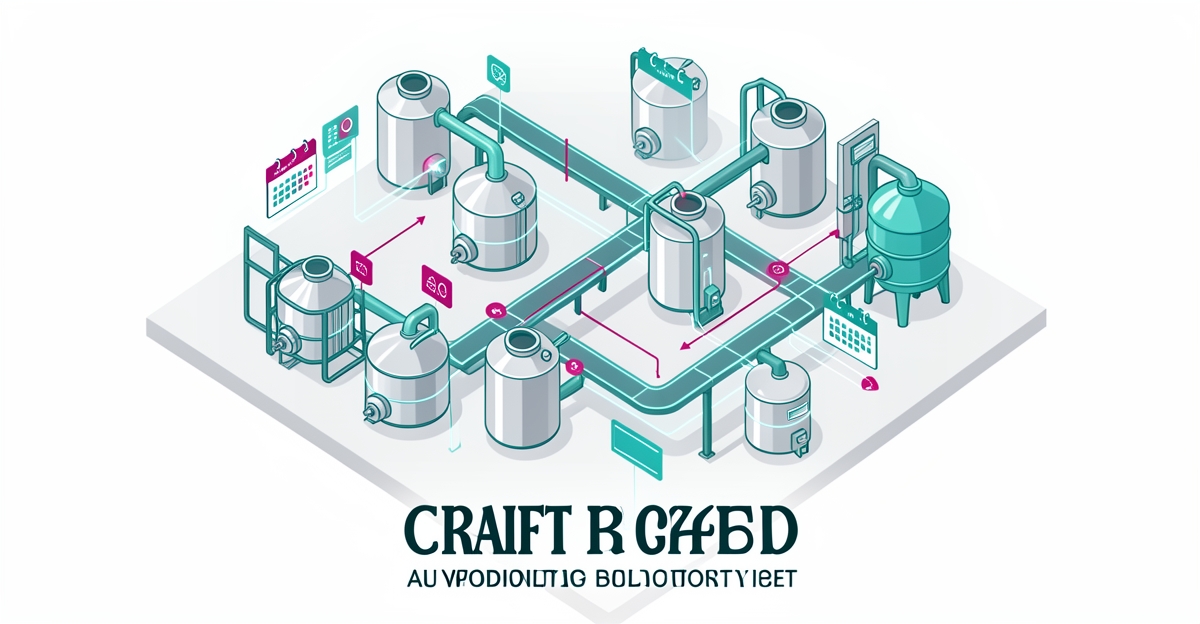
How an AI-Powered Brewing Scheduling System Can Reduce Waste and Improve Efficiency
Key Facts
- A typical 10-barrel brewery can lose 15-20 hours weekly to manual data entry, according to brewery tech stack analysis
- Quality inconsistencies from delayed responses can affect 5-8% of production volume per industry research
- Poor inventory visibility can add 3-5% to raw material costs from integration analysis
- Equipment utilization typically improves from 70-75% to 85-90% with AI scheduling
- Raw material waste often drops 20-30% via predictive scheduling according to research
- Batch cycle times typically decrease 15-25% through better phase coordination in AI-powered systems
- Administrative scheduling time often drops 60-70% after automation per study
Hire a team member that works 24/7 — for less than a part-time wage.
AI receptionists, SDRs, dispatchers and 99+ roles. Trained on your business, fully managed.
Not sure where to start? Ask our AI planner
The Patchwork Problem Costing Breweries Time and Beer
Imagine a Head Brewer's morning starting not with brewing, but with a digital scavenger hunt. They check fermentation temperatures in BrewNinja, review production schedules in BrewPlanner, and then cross-reference inventory levels in Ekos Brewmaster, just to get a basic operational picture.
This fragmented workflow is the reality for many breweries. It creates a constant, low-grade operational drag where the same information is manually entered into multiple systems, introducing the risk of transcription errors with every keystroke. According to an analysis of brewery tech stack integration, a typical 10-barrel brewery can lose 15-20 hours per week to these manual data entry and system-switching tasks.
The consequences of this data fragmentation extend far beyond wasted hours. It creates critical blind spots that directly impact the bottom line and the quality of the beer itself. The most common issues include:
- Delayed Quality Control: When fermentation parameters drift at 2 AM, the issue often goes unnoticed until the morning check-in. A minor adjustment that could have saved the batch becomes a major quality problem.
- Workflow Failures: The most frequent scheduling breakdowns happen at transition points. For example, primary fermentation completes, but the secondary tanks aren't available, creating costly downtime.
- Inventory Blind Spots: Raw material usage is tracked in one system while procurement happens in another. This disconnect leads to last-minute ingredient shortages or costly excess stock.
These seemingly small disconnects compound into significant financial losses. Research suggests that quality inconsistencies stemming from delayed responses can affect 5-8% of total production volume, and inventory waste from poor visibility can add another 3-5% to raw material costs.
This patchwork of disconnected tools isn't just inefficient; it's a systemic problem that quietly drains resources and puts product quality at risk. The core issue isn't the individual tools, but the lack of an intelligent layer connecting them. This is precisely the kind of challenge AIQ Labs addresses through AI Workflow Builds, rebuilding the one workflow that costs you the most, at a fixed price, so fragmented data becomes a single source of truth.
AI as an Orchestration Layer, Not a Rip-and-Replace
Breweries often assume AI adoption means discarding their current systems, but the most effective approach works differently. An AI Operating System functions as an orchestration layer, sitting above existing tools like BrewNinja, Ekos Brewmaster, and BrewPlanner to unify data without requiring replacement. This preserves prior investments while eliminating the friction of manual coordination between platforms. AIQ Labs builds these layers in phases, so breweries get a connected operating backbone they own outright, supporting smarter decisions across production, sales, and inventory.
This orchestration layer delivers three core capabilities that directly address brewery pain points. First, it automates data synchronization, when fermentation reaches dry-hop stage in one system, inventory levels and quality test schedules update automatically elsewhere. Second, it provides intelligent monitoring with context-aware alerts; instead of generic notifications, the AI analyzes sensor data against historical patterns to recommend specific actions when parameters drift. Third, it enables predictive planning by aligning production schedules with real-time sales and inventory data to prevent bottlenecks before they occur. These functions collectively reduce the 15-20 hours per week typically lost to manual data entry and system-switching tasks.
By avoiding rip-and-replace strategies, breweries achieve measurable gains without disruptive overhauls. Equipment utilization typically improves from 70-75% to 85-90% through better phase coordination, while raw material waste often drops by 20-30% via predictive scheduling. Administrative time for scheduling and rescheduling frequently falls by 60-70%, freeing staff for higher-value work. Crucially, this approach prevents new data silos from forming, a common pitfall when AI tools are added without an integration strategy. The result is a cohesive operational backbone that enhances existing investments rather than replacing them.
Proven Impact on Waste, Cycle Time and Equipment Use
Breweries operating with fragmented systems often lose valuable time and materials due to poor coordination between production stages. An AI-powered brewing scheduling system acts as an intelligent orchestration layer that connects existing tools like BrewNinja, Ekos Brewmaster, and BrewPlanner without requiring replacement. This unified approach enables real-time data synchronization and predictive planning that directly addresses common pain points in beverage manufacturing.
By automating workflow handoffs and dynamically allocating resources based on current conditions, breweries see measurable gains in operational efficiency. Research indicates equipment utilization rates typically improve from 70-75% to 85-90% through better coordination between fermentation, conditioning, and packaging stages. Batch cycle times often decrease by 15-25% as idle time between production phases is eliminated, allowing more consistent throughput without adding shifts or equipment.
Raw material waste drops significantly when predictive scheduling aligns ingredient usage with actual production needs. Inventory optimization through AI-driven forecasting can reduce raw material waste by 20-30% while virtually eliminating production delays caused by shortages. Administrative teams also benefit, with scheduling and rescheduling time often dropping by 60-70% as manual data entry and system-switching tasks are automated. These improvements compound to enhance reliability, with on-time delivery rates typically rising from 80-85% to 95%+ through more accurate production timeline predictions.
For breweries seeking to implement such systems, AIQ Labs builds custom workflow automation that integrates AI scheduling capabilities with existing brewing software. This approach creates a single source of truth across production, inventory, and sales data, enabling proactive decision-making rather than reactive firefighting. The result is a more agile operation where quality consistency improves, waste is minimized, and equipment runs closer to its full potential.
A Phased Implementation Roadmap for Craft Breweries
For craft breweries looking to implement an AI-powered brewing scheduling system, a phased approach ensures smooth adoption while delivering early wins. Starting with foundational steps minimizes disruption and builds confidence in the technology's value.
Begin by auditing your current tech stack to identify all tools, spreadsheets, and manual handoffs in your operation. This clarity reveals where data silos exist, such as between BrewNinja for fermentation tracking, Ekos Brewmaster for inventory, and BrewPlanner for scheduling, and highlights opportunities for automation. Connecting these systems through an AI integration layer creates a unified data flow without replacing existing investments. According to industry research, this step alone can reduce planning time by 60-70% while improving accuracy significantly.
Next, enable predictive analytics by linking real-time sensor data from fermenters with historical batch records. The AI uses this combined dataset to forecast completion times with 85-90% accuracy, typically surpassing the 60-70% reliability of manual methods. As conditions change, the system dynamically recalculates equipment and tank assignments, preventing bottlenecks like primary fermentation finishing before secondary tanks are ready. This coordination can improve equipment utilization from typical 70-75% levels to 85-90%, directly boosting throughput without new capital expenditure.
Finally, automate workflow handoffs and refine continuously. Set up rules so that when a batch reaches dry-hopping, inventory levels adjust automatically, quality testing schedules trigger, and packaging line prep begins. Over time, the AI learns from each batch to improve predictions, reducing raw material waste by 20-30% and cutting quality investigation time by 70-80%. Breweries choosing this path often see measurable returns within months, especially when starting with one high-cost workflow before scaling to a full operating layer. AIQ Labs supports this journey through phased workflow builds tailored to beverage production environments, ensuring each phase aligns with operational realities and growth goals.
Still paying for 10+ subscriptions that don’t talk to each other?
We build custom AI systems you own outright. No vendor lock-in. Full control.
Not sure where to start? Ask our AI planner
Frequently Asked Questions
How much time can AI-powered scheduling actually save my brewery?
Do I need to replace my existing brewery management software to use AI?
What specific efficiency gains can breweries expect from AI scheduling?
How does AI-powered scheduling reduce waste and improve quality?
What's the difference between comprehensive AI platforms and specialized brewing tools?
How accurate are AI predictions compared to manual brewing schedules?
From Fragmented Systems to Unified Operations: Your Next Step Toward Smarter Brewing
Breweries today face a critical challenge: valuable time and resources are lost to manual data entry, system-switching, and disconnected workflows that create blind spots in quality control, inventory, and scheduling. As this article outlined, an AI-powered orchestration layer, built to integrate with existing tools like BrewNinja, Ekos Brewmaster, and BrewPlanner, eliminates these inefficiencies by automating data synchronization, enabling predictive planning, and providing context-aware alerts. The result is measurable improvement: equipment utilization typically rising to 85-90%, raw material waste dropping by 20-30%, and administrative time for scheduling cut by 60-70%. These gains compound to enhance product consistency, reduce costs, and free your team to focus on craft and innovation rather than firefighting operational gaps. The path forward starts with clarity: audit your current tech stack to identify silos and manual handoffs, then explore how an AI integration layer can unify your systems without replacement. To see where your brewery stands and what specific opportunities exist, take the first step with the 2-minute Fit Check, then book a free 30-minute strategy call. AIQ Labs will help you map your biggest bottleneck and build a cohesive, intelligent operational backbone, owned by you, designed for your workflow, and built to scale.
Make AI your competitive advantage — not just another tool.
Strategy, implementation and ongoing optimization. One partner, end to end.
Not sure where to start? Ask our AI planner