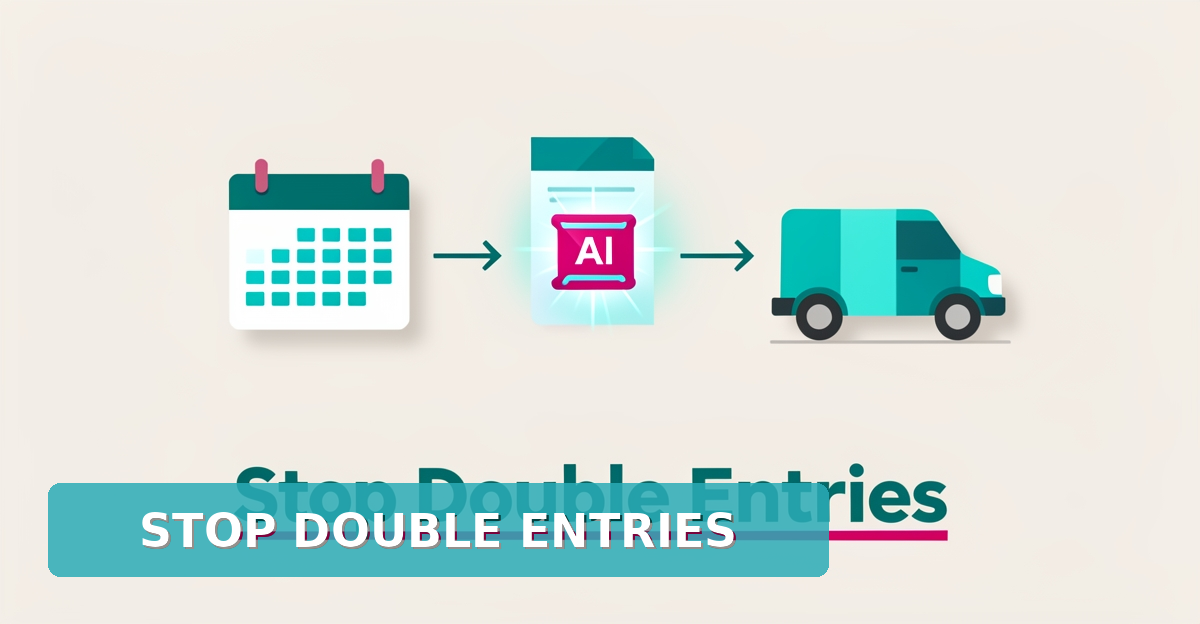
How an AI-Powered Service Tracker Reduces Repetitive Job Entries in Small Installers
Key Facts
- AI-driven data collection typically cuts data-handling costs substantially versus manual processes, based on documented automation case studies in the trades and manufacturing sectors.
- Automated data collection routinely turns hour-long logging tasks into minutes, freeing technicians for billable work.
- AI tracking can filter out a significant share of low-value visits, freeing teams for profitable work.
- Shops that automate scheduling and logging typically report fewer unnecessary customer visits, cutting travel costs and improving productivity.
- Well-built AI systems scale from a few hundred records to tens of thousands without rebuilding infrastructure.
- AI platform subscriptions typically run in the low hundreds of dollars monthly as of late 2026, though owned builds often cost less over time.
- AI service trackers automatically log visits, detect recurring issues, and flag double bookings before dispatch, keeping records accurate without manual entry.
Hire a team member that works 24/7 — for less than a part-time wage.
AI receptionists, SDRs, dispatchers and 99+ roles. Trained on your business, fully managed.
Not sure where to start? Ask our AI planner
The Repetitive Entry Trap Small Installers Face
Small garage door shops often find themselves trapped in a cycle of repetitive manual logging that drains both time and morale. Technicians spend hours each week re-entering service visit details into spreadsheets or paper logs, only to discover later that the same information was already recorded elsewhere. This duplication isn't just tedious, it creates a ripple effect of inefficiencies that impacts scheduling, customer communication, and ultimately, profitability.
Small service businesses routinely lose a large share of their team's time to low-value visits, jobs that could have been avoided with better data insights. When technicians arrive at a job site only to find the issue was miscommunicated or already resolved, that visit becomes an unnecessary drain on resources. AI-powered tracking systems can meaningfully reduce these unnecessary visits, directly cutting travel costs and freeing up technician hours for actual installations and repairs.
The burden of manual entry extends beyond wasted time, it actively creates operational risks. When service logs are updated inconsistently across multiple systems or by different team members, the likelihood of double bookings increases significantly. A technician might be dispatched to a job that's already scheduled for another day, or two teams might arrive at the same location simultaneously, confusing the customer and damaging the shop's reputation. These scheduling conflicts often stem from the simple fact that humans, when fatigued by repetitive data entry, are prone to transcription errors or overlooked updates.
AI-powered service trackers eliminate this trap by automatically logging visit details as they happen, using voice-to-text transcription, smart form filling, and integration with scheduling tools. Rather than asking technicians to remember to log information after a job, the system captures it in real time, reducing the chance of forgotten entries or inconsistent formatting. This automation doesn't just save time; it creates a single, accurate source of truth for every service interaction.
- Automatic capture of visit timestamps, technician notes, and parts used
- Real-time synchronization with calendars to prevent scheduling overlaps
- Pattern recognition that flags recurring issues before they become repeat visits
- Reduced cognitive load on technicians, allowing them to focus on craftsmanship
By removing the manual entry burden, small installers reclaim time that was previously lost to administrative overhead. Teams using AI-driven tracking typically see order-of-magnitude gains in time efficiency for data-related tasks, what once took an hour now takes minutes. This shift allows shop owners and technicians to redirect their energy toward ideal customer opportunities, jobs that are profitable, well-suited to their expertise, and likely to lead to referrals.
For small garage door shops operating with limited staff, every minute saved on repetitive entry is a minute gained for actual service delivery. When AI handles the logging, the team spends less time correcting errors and more time doing what they do best: fixing doors, satisfying customers, and growing their business through reliable, high-quality work. The result isn't just cleaner data, it's a more agile, responsive operation where repetitive tasks no longer stand in the way of meaningful progress.
How AI-Powered Service Tracking Automates Logging and Prevents Errors
Small installers lose hours to the same repetitive job entries every week. An AI-powered service tracker changes that by capturing visits automatically and turning raw activity into actionable workflow intelligence.
Documented automation case studies in the garage door sector show how AI-driven data collection replaces manual logging with automated extraction and analysis. The system pulls data automatically, then applies a scoring algorithm to prioritize relevance, size, and market presence. For service teams, the same logic applies to jobs: visits are logged without typing, patterns surface without review meetings, and conflicts are flagged before dispatch.
Automatic logging eliminates the double entry that slows technicians and office staff. Case studies of automated versus manual workflows report substantial cost reductions in data collection processes and an approximate 10x increase in time efficiency. That efficiency gain translates directly to installer workflows where every minute saved on paperwork is a minute available for billable work.
Pattern detection is where AI moves from recording to prevention. By analyzing service history across jobs, the system identifies recurring issues, repeat call-outs and parts that fail together. Teams can intervene proactively instead of reacting to the same complaint.
Conflict flagging protects scheduling integrity. AI monitors upcoming visits, travel time and crew availability to spot double bookings and unrealistic routes before they happen. In documented rollouts, teams using these systems eliminated a significant share of low-value visits and reduced travel for their crews.
For busy small-scale shops, the model delivers three practical shifts:
- Automatic visit logging removes repetitive manual data entry and keeps records complete
- Pattern detection highlights recurring issues so technicians arrive prepared
- Conflict flagging prevents double bookings and optimizes daily routes
AIQ Labs builds this type of system through AI Workflow Builds, a fixed-price, phased rebuild of the one workflow that costs your shop the most. The approach mirrors proven automation builds: research and tool selection, infrastructure setup, API integration for analysis, and training and documentation for adoption. You own the system outright when it's done.
The result is operational efficiency without adding headcount. Installers focus on service delivery while the system handles logging, scoring and scheduling guardrails in the background.
From Data Capture to Smarter Scheduling and Pattern Detection
Service data stops being a chore when the system captures it for you and immediately turns it into decisions. For small installers, that shift means fewer duplicate entries, cleaner schedules, and more time with the customers that actually drive revenue.
Automatic extraction removes the manual logging burden. An AI-powered service tracker pulls visit details, job notes, parts used, and customer feedback directly from forms, calls, and field inputs. Documented AI-driven automation case studies show meaningful cost reductions alongside order-of-magnitude time-efficiency gains versus manual collection. That speed creates room to act on data instead of chasing it.
Once captured, data feeds scoring and prioritization. A scoring algorithm evaluates each service record for relevance, recurrence risk, and revenue potential. High-scoring jobs rise to the top, repeat-issue patterns surface early, and low-value follow-ups drop out of the queue. Teams spend more time on ideal opportunities because non-ideal visits are filtered before dispatch.
Pattern detection prevents the same problem from returning. The system identifies recurring issues across locations, technicians, and equipment types, flagging potential systemic failures before they escalate. Booking logic uses the same history to prevent double bookings and travel conflicts, cutting unnecessary customer visits and reducing travel costs for crews.
Integration makes the intelligence usable. Extracted service data syncs to CRM and scheduling tools so dispatchers see a single source of truth. AIQ Labs' Workflow Builds connect CRM, project management, and field systems with automated data synchronization. The result is less re-entry and faster handoffs between office and field.
Operational benefits compound quickly:
- Automatic logging of service visits eliminates repetitive manual data entry
- Pattern detection flags recurring issues for proactive prevention
- Scoring and prioritization route crews to high-value, high-risk jobs first
- CRM integration prevents double bookings and reduces travel
For busy garage door shops, this is operational efficiency without adding headcount. Data capture becomes the trigger for smarter scheduling, and smarter scheduling becomes the trigger for better margins.
Implementation Roadmap for Garage Door Shops
Small installers lose hours to repetitive job entries, double bookings, and chasing the same issues twice. An AI-powered service tracker changes that by automatically logging visits, detecting patterns, and flagging recurring problems before they become callbacks.
Tool selection starts with integration and scalability. AI platform subscriptions typically run in the low hundreds of dollars monthly as of late 2026, with entry-level tools handling meaningful daily data volumes. Choosing a stack that connects to existing CRM, scheduling, and dispatch systems avoids data silos from day one.
Infrastructure setup mirrors proven server-based approaches. A lightweight server running scripts to manage extraction and storage supports growth from a few hundred records to tens of thousands without rebuilds. Documented automation builds have scaled from hundreds to tens of thousands of records after establishing this foundation, and the model holds for service records as well.
API integration brings automation to the front line. Connecting AI-powered APIs for text and data analysis enables automatic logging of service visits, filtering of duplicate entries, and scoring of jobs by urgency and repeat risk. Automated collection typically delivers order-of-magnitude time-efficiency gains compared with manual entry, freeing technicians to work rather than type.
Process configuration should balance full automation with human oversight. Semi-automated workflows handle routine logging while flagging anomalies for review, which reduces errors and builds trust with crews. Training and documentation keep adoption high. Instructional videos and user manuals remain essential for garage shops with limited IT staff.
Scaling is deliberate. Start with a pilot covering a single route or technician, validate data accuracy, then expand territory by territory. Once the system is tuned, shops typically see meaningful cost reductions, less time spent on low-value opportunities, and fewer unnecessary customer visits.
For shops wanting owned systems, AIQ Labs builds custom Workflow Builds that replace subscription chaos with a system the business owns outright. For teams preferring managed operation, an AI Employee can act as a dispatcher or service coordinator, logging visits, preventing double bookings, and surfacing recurring issues around the clock, at roughly 80% less cost than a human hire.
A practical rollout plan looks like this:
- Audit current tools and data sources, then select an AI stack with CRM and scheduling APIs
- Deploy a server and database to store service records with scripts for automated extraction
- Integrate AI APIs for automatic logging, pattern detection, and conflict flagging
- Train staff with short videos and manuals, then pilot with a small batch of records before scaling
- Monitor accuracy and expand to full fleet, aiming for owned infrastructure and measurable efficiency gains
With the right roadmap, repetitive entries fade and operational efficiency becomes a competitive advantage rather than a daily bottleneck.
Still paying for 10+ subscriptions that don’t talk to each other?
We build custom AI systems you own outright. No vendor lock-in. Full control.
Not sure where to start? Ask our AI planner
Frequently Asked Questions
How much time can an AI-powered service tracker save on manual data entry for small garage door shops?
Will using an AI service tracker really reduce unnecessary customer visits and travel costs?
How does an AI service tracker prevent double bookings and scheduling conflicts?
What kind of cost savings can small installers expect from automating service visit logging?
Is it difficult for a small garage door shop with limited IT staff to implement an AI service tracker?
Can an AI service tracker help identify recurring issues before they become repeat service calls?
Turn Repetitive Entries into Real Revenue
Small garage door installers no longer need to lose hours each week to manual data entry, double bookings, or chasing the same issues twice. AI-powered service trackers cut costs and dramatically improve time efficiency by automatically logging visits, detecting recurring patterns, and flagging scheduling conflicts before they happen. This isn't just about cleaner data, it's about freeing your team to focus on the jobs that actually drive profit and customer satisfaction. For shops ready to stop wasting time on repetitive tasks and start operating with real clarity, the next step is simple: take the 2-minute Fit Check to see where AI can make the biggest impact in your workflow, then book a free 30-minute strategy call to map your biggest bottleneck and the automation opportunity behind it.
Make AI your competitive advantage — not just another tool.
Strategy, implementation and ongoing optimization. One partner, end to end.
Not sure where to start? Ask our AI planner