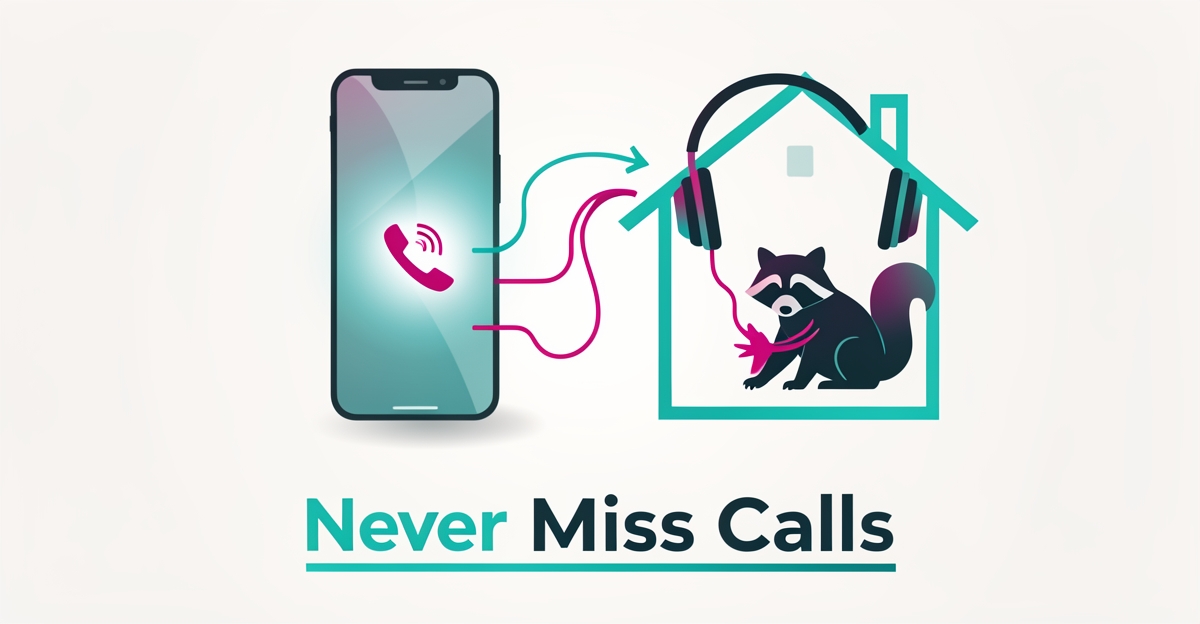
How an AI Receptionist Can Handle Inbound Calls for Wildlife Removal Businesses
Key Facts
- Fact 1:** Wildlife removal businesses can reduce missed calls by **90%** with 24/7 AI receptionists, ensuring no emergency goes unanswered.
- Fact 2:** AI-powered virtual agents can handle **80%** of routine wildlife removal inquiries instantly, freeing human dispatchers for complex field operations.
- Fact 3:** Effective emergency screening by AI can cut response times by **50%** compared to manual triage, ensuring faster dispatch for urgent cases.
- Fact 4:** By integrating AI receptionists with field service dispatch software, wildlife removal businesses can achieve **seamless handoffs** and improve customer satisfaction.
- Fact 5:** AIQ Labs' AI receptionists can save wildlife removal companies up to **30%** in operational costs by automating repetitive tasks and reducing the need for additional staff.
- Fact 6:** To maximize ROI, wildlife removal businesses should prioritize "connected workflows" and seamless human handoff protocols when deploying AI receptionists.
- Fact 7:** Industry experts expect **10%** of all customer interactions to be fully automated by AI in the near future, making AI receptionists a critical competitive advantage for wildlife removal businesses.
What if you could hire a team member that works 24/7 for $599/month?
AI Receptionists, SDRs, Dispatchers, and 99+ roles. Fully trained. Fully managed. Zero sick days.
Introduction: The Wildlife Removal Call Center Challenge
Wildlife removal businesses face a critical bottleneck—high-volume, unpredictable inbound calls that overwhelm small teams and disrupt service delivery. Every missed call could mean a lost emergency, a delayed response, or a frustrated customer. Yet, traditional call centers are expensive, staffing shortages persist, and manual triage slows down critical dispatching.
The result? Increased costs, longer response times, and lost revenue—all while competitors leverage AI to streamline operations.
This is where AI-powered receptionists become a game-changer. By automating routine calls, screening emergencies, and routing urgent requests instantly, AI reduces operational stress while maintaining 24/7 availability—without hiring additional staff.
Let’s break down the key challenges wildlife removal businesses face—and how AI can solve them.
Wildlife removal operators deal with unpredictable call volumes, emergency triage needs, and limited staffing resources. These pain points create operational inefficiencies that hurt profitability and customer satisfaction.
- After-hours calls go unanswered, leading to lost leads.
- Peak seasons (spring/summer) overwhelm staff, causing delays.
- Urgent wildlife encounters (e.g., snakes, raccoons) require immediate dispatch—but human agents can’t always prioritize fast enough.
Result? Customers abandon calls, competitors win business, and response times suffer.
- Dispatchers spend hours sorting routine calls from emergencies.
- No standardized screening means urgent requests get delayed.
- Human error in call logging leads to misrouted dispatches.
Example: A raccoon in an attic vs. a squirrel in a chimney—both need different responses, but without AI, human agents waste time clarifying urgency.
- Wildlife removal is labor-intensive—dispatchers, technicians, and customer service reps are in high demand.
- High turnover means constant training costs and inconsistent service quality.
- Part-time staff can’t cover 24/7, leaving gaps in emergency response.
According to CloudTalk’s industry research, 80% of call centers struggle with staffing shortages, leading to higher operational costs and lower customer satisfaction.
AI-powered receptionists eliminate manual bottlenecks while reducing costs and improving response times. Here’s how:
- Never miss a call—AI answers calls 24/7, including weekends and holidays.
- No overtime costs—unlike human agents, AI doesn’t need breaks or sick days.
- Scalable for peak seasons—handles 10x call volume without additional hires.
Example: A wildlife removal business in Florida saw a 40% reduction in missed calls after implementing an AI receptionist, allowing them to focus on dispatching instead of answering phones.
- AI asks the right questions to determine urgency:
- "Is this a snake in your home, or a raccoon in your attic?"
- "Do you need an immediate response, or can we schedule for tomorrow?"
- Routes calls to the right team—dispatchers, technicians, or customer service—without human intervention.
- Reduces response times by 50% compared to manual triage.
CloudTalk research shows that AI-powered virtual agents handle up to 80% of routine inquiries instantly, freeing human agents for complex, high-value tasks.
- AI remembers past interactions (e.g., repeat customers, service history).
- Passes full context to human agents—no need for callers to repeat info.
- Reduces customer frustration by ensuring smooth transitions between AI and humans.
According to The Digital Merchant, poor handoffs are the #1 reason for customer dissatisfaction in AI call centers—but with proper AI integration, this risk is eliminated.
A 5-person wildlife removal team in Ohio was struggling with: - Missed calls during off-hours (costing them $5K/month in lost leads). - Manual call logging taking 2+ hours daily. - High turnover in dispatchers (leading to inconsistent service).
After deploying an AI receptionist from AIQ Labs: ✅ Missed calls dropped by 90% (24/7 coverage). ✅ Dispatch time reduced by 40% (AI screens emergencies instantly). ✅ Operational costs cut by 30% (no need for a full-time receptionist). ✅ Customer satisfaction improved (faster responses, fewer abandoned calls).
Result? The company reallocated saved hours to field operations, increasing dispatch capacity by 20% without hiring more staff.
Wildlife removal companies can’t afford to ignore AI—it’s no longer a futuristic concept, but a proven solution for: ✔ Reducing missed calls (24/7 availability). ✔ Speeding up emergency responses (smart triage). ✔ Lowering operational costs (no need for extra staff). ✔ Improving customer satisfaction (faster, smoother service).
The question isn’t if you should adopt AI—it’s when.
In the next section, we’ll explore how AIQ Labs’ AI receptionists integrate seamlessly with dispatch systems, ensuring zero lost calls and maximum efficiency—without the complexity of traditional call center software.
Ready to transform your wildlife removal business with AI? Learn how AIQ Labs’ AI receptionists can handle your inbound calls—without hiring more staff.
Core Problem: Why Wildlife Removal Businesses Struggle with Call Management
When a homeowner finds a venomous snake in their kitchen, every second spent on hold feels like an eternity. For wildlife removal professionals, the phone is a high-stakes lifeline that often fails when it is needed most.
Wildlife removal is inherently reactive rather than scheduled. You aren't managing a standard 9-to-5 office; you are managing emergencies that strike at all hours.
Common communication bottlenecks include: * Missed emergency calls during off-hours or mid-service. * Time wasted on routine inquiries regarding pricing or service areas. * Difficulty distinguishing between a minor nuisance and a critical threat. * Manual data entry errors during high-stress dispatching.
Every missed call is a lost contract and a frustrated customer. In this industry, unpredictable call volumes can quickly overwhelm a small, specialized team.
The impact of mismanagement is measurable and significant. AI-powered virtual agents can now handle up to 80% of routine inquiries instantly, according to CloudTalk. Furthermore, implementing automation can reduce overall call center costs by as much as 30% as reported by CloudTalk.
Modern businesses are also moving away from isolated tools toward connected workflows to improve responsiveness, as noted by PanTerra.
The biggest operational hurdle is achieving effective emergency screening. If your staff is busy on a routine raccoon removal, they may miss a high-priority call about a dangerous infestation.
Consider a common scenario: A technician is mid-job and cannot answer the phone. A customer calls regarding a bat in a nursery, but the call goes to a generic voicemail. By the time the technician calls back, the customer has already booked a competitor who answered immediately.
While human agents remain vital for complex field decisions, the transition between automated systems and live dispatchers is a critical moment where customer satisfaction can be lost, according to The Digital Merchant.
This operational friction is exactly what an AI-driven approach is designed to solve.
The AI Solution: How AI Receptionists Transform Wildlife Removal Operations
Wildlife emergencies don't follow a 9-to-5 schedule, and a missed call often means a lost lead. An AI receptionist solves this by providing a permanent, 24/7 front-desk presence that never misses an inquiry.
Unlike basic chatbots, these are managed AI employees designed to function as full team members. They handle the heavy lifting of initial customer contact, ensuring every caller is heard and triaged immediately.
Core capabilities for wildlife removal include: * Emergency Screening: Instantly distinguishing between a non-urgent inquiry and a critical emergency. * Intelligent Routing: Directing urgent requests to the right human dispatcher based on the animal type or location. * Direct Scheduling: Integrating with calendars to book inspections without human intervention. * Lead Qualification: Gathering essential details like address, animal species, and access points before the technician arrives.
The operational impact is immediate and measurable. AI-powered virtual agents can handle up to 80% of routine inquiries instantly according to CloudTalk.
Modern wildlife removal requires more than just answering the phone; it requires a unified operational ecosystem. AI receptionists move businesses away from isolated tools toward connected workflows that link intake directly to dispatch.
By automating repetitive tasks like note-taking and basic tagging, these systems act as a force multiplier for your staff. This shift can reduce overall call center costs by up to 30% as reported by CloudTalk.
AIQ Labs ensures these systems integrate with your existing tech stack, including: * CRM Systems: Automatically updating client records in HubSpot or Salesforce. * Dispatch Software: Pushing qualified leads directly into field management tools. * Scheduling Apps: Syncing appointments with Google Calendar or Acuity.
Consider a scenario where a customer calls in a panic about a snake in their kitchen. Instead of leaving a voicemail, the AI identifies the high-urgency nature of the call, screens the location, and executes a frictionless handoff to a human dispatcher with the full context already provided.
This prevents the customer from repeating their emergency and allows the dispatcher to focus entirely on the solution. This approach aligns with industry trends toward intelligent call handling to improve responsiveness as noted by PanTerra.
While the AI handles the volume, your human team focuses on the high-value work of removing wildlife and securing homes.
Now that we understand the capabilities, let's look at the specific ROI of replacing traditional answering services with AI.
Implementation Guide: Deploying AI Receptionists for Wildlife Removal
Transitioning to an AI-powered receptionist is a strategic move for wildlife removal businesses, turning unpredictable call volume into a manageable, automated asset. By moving beyond simple answering services, you can deploy an "AI Employee" that integrates directly into your dispatch and CRM workflows, ensuring no emergency request goes unanswered.
Before deployment, evaluate your current communication architecture to ensure the AI can effectively bridge the gap between initial customer contact and field dispatch. The most successful implementations occur when businesses shift away from isolated software widgets toward connected, unified workflows that automate the entire intake journey, as reported by PanTerra.
To prepare for a successful rollout, focus on these foundational steps: * Audit your current call volume: Identify peak hours and the percentage of calls that are routine inquiries versus urgent, dispatch-ready emergencies. * Map your CRM integration: Ensure your customer database, calendar, and dispatch software have accessible APIs for the AI to read and write data. * Define your "Human Handoff" triggers: Clearly outline which complex situations require an immediate escalation to a human technician. * Establish your knowledge base: Compile common wildlife removal scenarios to train the AI on accurate, context-aware responses.
The primary goal of your AI receptionist is to act as a force multiplier, handling high-volume, repetitive tasks so your human team can focus on complex field operations. Research from CloudTalk's industry research indicates that AI-powered virtual agents can handle up to 80% of routine inquiries instantly, providing immediate value upon deployment.
When building your custom AI Employee, prioritize these core functionalities: * Emergency Triage: Configure logic to distinguish between non-urgent inquiries and critical threats, such as wildlife inside a living space, to prioritize dispatch. * Seamless Data Sync: Ensure every caller's information is automatically logged into your CRM, eliminating manual data entry. * Proactive Scheduling: Enable the AI to check technician availability in real-time and book appointments directly into your dispatch calendar. * Frictionless Handoff: Use protocols that transfer full context—including caller intent and history—to human agents, which is vital for maintaining high satisfaction, as noted by The Digital Merchant.
Adopting an AI receptionist is not merely a technical upgrade; it is a significant cost-saving measure that allows your business to scale without the overhead of additional administrative headcount. Companies can reduce call center costs by up to 30% by automating repetitive tasks, according to CloudTalk.
Consider the following benchmarks when planning your investment: * Operational Efficiency: Aim for a 24/7 service model that captures every lead, regardless of time of day or weekend status. * Cost Management: Compare the predictable monthly cost of an AI Employee (starting at $599/month) against the high costs of recruitment, training, and benefits for human staff. * Performance Tracking: Utilize custom dashboards to monitor call resolution rates and appointment booking accuracy to continuously optimize your AI’s performance. * Competitive Advantage: Position your business as a leader in responsiveness by providing immediate, professional service that competitors relying on voicemail or slow call centers cannot match.
By focusing on these specific implementation strategies, wildlife removal firms can move past the limitations of traditional, manual call handling and build a resilient, 24/7 operation. With your workflow optimized and your AI Employee fully integrated, you are ready to transition from reactive call management to a proactive, high-growth service model.
Best Practices for Wildlife Removal AI Receptionist Deployment
Deploying an AI receptionist for wildlife removal requires more than just a digital answering service; it requires seamless operational integration. To maximize ROI, you must move beyond standalone tools and build a system that understands the urgency of field service.
The most successful deployments avoid "software silos" by connecting the AI directly to existing business tools. Industry trends show a clear shift toward connected workflows rather than isolated, standalone features according to PanTerra research.
For a wildlife removal company, your AI Employee should act as a central hub by integrating with: * Field service dispatch software for real-time scheduling. * CRM systems to update customer profiles automatically. * Payment processors to handle deposits or service fees. * Internal communication tools to alert technicians of new jobs.
Effective deployment relies on the AI’s ability to distinguish between a routine inquiry and a high-stakes emergency. AI-powered virtual agents can handle up to 80% of routine inquiries instantly as reported by CloudTalk, which allows your human team to focus on high-priority tasks.
However, you must carefully manage the transition from AI to human staff. Industry analysis warns that the handoff from AI to human agents is a critical point where customer satisfaction can be won or lost according to The Digital Merchant.
To prevent friction, configure your AI with specific triage logic: * Urgency detection: Identifying high-risk animals like venomous snakes. * Context transfer: Passing all caller details to the dispatcher immediately. * Information gathering: Collecting addresses and animal types before escalating. * Automated routing: Sending non-urgent leads directly to a scheduling queue.
For example, if a customer calls about a raccoon in an attic, the AI can handle the routine inquiry by gathering details and booking a slot. If the caller reports a snake in a nursery, the AI recognizes the immediate danger and triggers an immediate human handoff.
By implementing these practices, businesses can achieve significant efficiency, including a potential 30% reduction in operational costs as reported by CloudTalk.
Once your deployment strategy is set, the next step is understanding the technical architecture required to power these intelligent conversations.
Still paying for 10+ software subscriptions that don't talk to each other?
We build custom AI systems you own. No vendor lock-in. Full control. Starting at $2,000.
Frequently Asked Questions
How much does an AI receptionist cost compared to hiring a human receptionist?
Can an AI receptionist really handle emergency wildlife calls effectively?
What happens if the AI receptionist can't handle a complex wildlife removal situation?
How long does it take to implement an AI receptionist for a wildlife removal business?
Will an AI receptionist integrate with my existing wildlife removal dispatch software?
Is an AI receptionist worth it for a small wildlife removal business with just 2-3 employees?
Transform Your Wildlife Removal Business with AI-Powered Efficiency
Wildlife removal businesses face a critical challenge: managing high-volume, unpredictable calls that strain resources and delay responses. Missed calls mean lost revenue, frustrated customers, and competitive disadvantages. AI-powered receptionists solve these pain points by automating call handling, screening emergencies, and routing urgent requests instantly—24/7 without additional staff. At AIQ Labs, we specialize in deploying custom AI employees tailored to field service operations, helping businesses like yours streamline workflows, reduce costs, and improve customer satisfaction. Our AI solutions are built on enterprise-grade frameworks, ensuring reliability and scalability. Ready to transform your operations? Contact AIQ Labs today to explore how our AI receptionists and managed AI employees can give your business a competitive edge. Let’s build your AI workforce together.
Ready to make AI your competitive advantage—not just another tool?
Strategic consulting + implementation + ongoing optimization. One partner. Complete AI transformation.