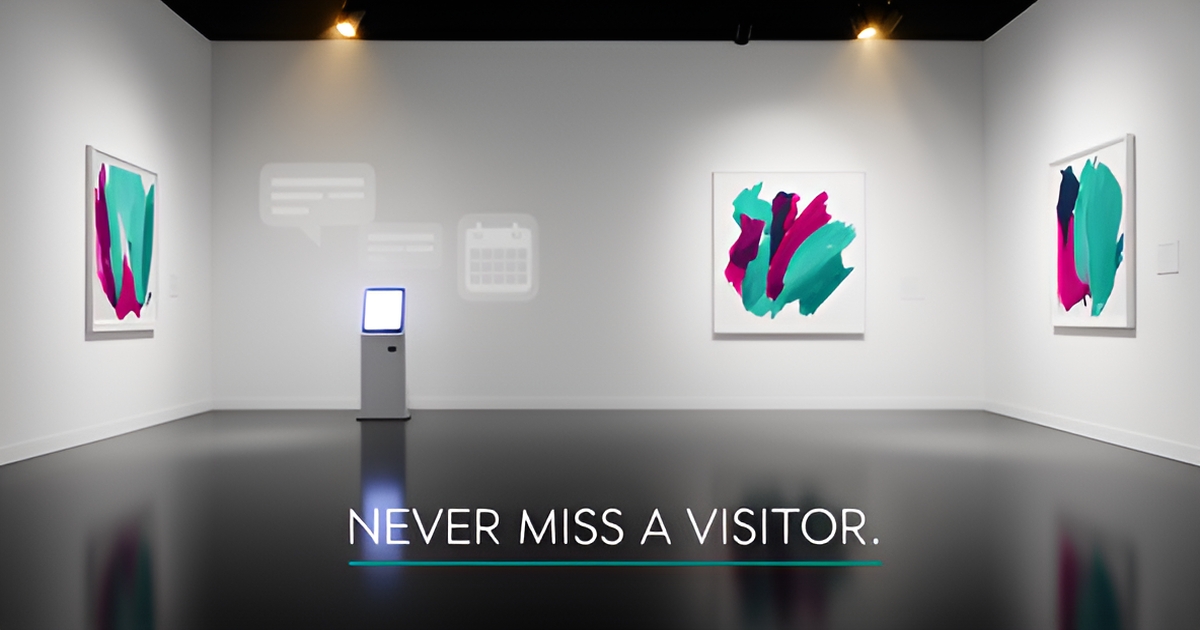
How an AI Receptionist Can Streamline Visitor Management at Your Art Gallery
Key Facts
- AIQ Labs' AI Employees typically cost roughly 80% less than an equivalent human hire, with no benefits, sick days, or after-hours premiums
- AI receptionists answer calls 24/7, so after-hours inquiries from collectors, artists, and press never go to voicemail
- AI receptionists handle multiple calls simultaneously without placing visitors on hold
- AIQ Labs has deployed 200+ multi-agent systems and runs 4 live SaaS products daily — this is proven infrastructure, not an experiment
- AI adoption is now near-universal across industries, but many organizations still struggle to show measurable results — governance and data quality are usually why
- AIQ Labs' AI Employees cover 99+ roles, including receptionists, SDRs, and dispatchers, managed end-to-end on your behalf
Hire a team member that works 24/7 — for less than a part-time wage.
AI receptionists, SDRs, dispatchers and 99+ roles. Trained on your business, fully managed.
Not sure where to start? Ask our AI planner
The Visitor Management Challenge: When Gallery Staff Can't Keep Up
Gallery doors stay open long after staff clocks out, but the phone stops being answered. Collectors call about private viewings, artists ask about installation windows, and press requests pile up while the front desk is tied up hanging work. That gap turns interest into missed opportunity.
Traditional visitor management relies on a single point of human coverage. During installations, the receptionist becomes a logistics coordinator, leaving calls to ring and voicemail to fill. After-hours inquiries from collectors or curators go unanswered until the next business day, and the momentum of a sale or partnership cools.
Cost compounds the strain. A human receptionist typically carries a monthly salary of $3,000-$4,500 plus benefits and taxes, with additional expense for after-hours coverage, holidays and sick days. An AI receptionist from AIQ Labs typically runs at roughly 80% less than a human hire — and it never calls in sick during an opening.
The problem is not just staffing, it is fragmentation. Galleries juggle appointment books, email threads, walk-in logs and phone messages across disconnected tools. Inconsistent data definitions and access controls create governance gaps that scale poorly — and adding AI to a fragmented system makes the gaps harder to ignore, not easier to fix.
When communication is fragmented, ownership blurs. Who confirms a collector appointment? Where is the visitor pre-registration stored? Which staff member follows up on a press inquiry? Without standardized data and clear accountability for AI outputs, operational fragmentation can scale faster than the business can control it.
Visitor management pain shows up daily as:
- Missed calls during installations and openings when front-desk staff are pulled into floor support
- After-hours inquiries from collectors and curators that wait until morning and lose urgency
- Manual appointment booking and message logging that creates duplicate entries and scheduling errors
- High cost of front-desk coverage for evenings, weekends and seasonal exhibitions
These gaps directly affect experience. Every call that goes to voicemail during a private viewing inquiry is a collector relationship that may not come back. For art galleries, the visitor journey is the brand — inconsistent responses, delayed replies and missed bookings erode trust with collectors and artists alike.
Addressing the challenge starts with clarity on what must be standardized before coverage is scaled. Defining clear objectives, ensuring consistent data definitions and establishing ownership for AI outputs helps galleries move from reactive firefighting to reliable visitor engagement.
How AI Receptionists Transform Gallery Operations: The Practical Benefits
For art galleries, every missed call is potentially a missed collector, a missed exhibition booking, or a lost opportunity to engage a first-time visitor. AI receptionists are a practical answer to that problem, and the operational case is straightforward.
The most immediate advantage is availability. Unlike human staff who work set hours, AI receptionists operate around the clock. For galleries fielding inquiries about exhibitions, private viewings, or event rentals at all hours, that difference is significant — an inquiry answered at 9pm is an inquiry that doesn't go to a competitor's opening.
The financial case is equally direct. An AI receptionist from AIQ Labs typically costs roughly 80% less than a human hire, with no benefits, training costs, or after-hours premiums. You pay to start monthly, and you can scale up or down as exhibition seasons demand.
Modern voice AI has also become natural enough that many callers simply experience a competent, professional receptionist. This matters in an industry where personal touch and professionalism shape first impressions of your gallery's brand.
Beyond availability and cost, AI receptionists offer operational advantages that are difficult to replicate with human staff alone:
- Handling multiple calls simultaneously without placing visitors on hold
- Maintaining consistent, professional responses regardless of call volume or time of day
- Scaling effortlessly during high-traffic periods like exhibition openings or art fair seasons
- Integrating directly with scheduling and CRM tools to book appointments in real time
For galleries that experience unpredictable call surges, this simultaneous handling capability means no visitor inquiry goes unanswered during peak moments. A human receptionist can manage one conversation at a time; an AI receptionist manages several without any drop in quality.
That said, successful adoption requires more than plugging in a tool. The real task is deciding what must be standardized before AI is scaled. Clear governance, consistent data practices, and defined accountability ensure the technology delivers on its promise rather than exposing operational gaps.
This is where working with an experienced partner matters. AIQ Labs deploys managed AI Employees trained specifically on a gallery's workflows, from exhibition inquiries to private event bookings, ensuring the system reflects your standards from day one. Rather than a generic answering service, galleries get a purpose-built team member that works every hour of every day — backed by 200+ multi-agent systems deployed to date.
Addressing the Hidden Risks: Governance and Data Quality in AI Implementation
An AI receptionist can answer visitor inquiries at midnight and book a private viewing before a human staff member arrives, but that speed also exposes the cracks underneath. For art galleries, the promise of 24/7 availability collides with the reality that AI amplifies whatever data and governance you already have.
The cost savings and lead-capture gains of an AI receptionist depend on clean, consistent inputs. If visitor records conflict across ticketing, CRM, and gallery management tools, the AI will faithfully reproduce those conflicts at scale.
The integration of AI receptionists also exposes gaps in governance, data quality, and access controls. Inconsistent data definitions and access controls create conflicting visitor records across systems. Lack of clear ownership and accountability for AI outputs leaves galleries unsure who approves booking confirmations or handles errors.
As AI industry practitioners put it: AI doesn't make integration intelligent by design — it just makes the gaps harder to ignore. The task is not to slow AI adoption. It is to decide what must be standardized before AI is scaled. Scaling without standards risks scaling operational fragmentation faster than the business can control it.
Galleries deploying inbound call management AI for visitor inquiries need a governance foundation before go-live. Standardize before you scale is the practical rule.
- Define a single source of truth for visitor data, artist roster, opening hours, and appointment slots with consistent definitions and access controls.
- Assign clear ownership for AI outputs, including who approves booking logic, handles escalations, and audits responses.
- Map data flows and permissions across phone, web, and on-site systems so the AI receptionist routes and records consistently.
- Establish monitoring and human-in-the-loop escalation for sensitive requests such as private sales or donor inquiries.
AI adoption is now near-universal, yet many organizations still struggle to show measurable results from their AI investments. For galleries, measurable results come when the AI employee is trained on standardized workflows and integrated with the tools the team already uses. AIQ Labs addresses governance and data quality as part of the build, not after problems appear — whether you start with a single AI Employee or a broader AI Workflow Build.
Implementation Roadmap: Six Steps to Deploy Your Gallery's AI Receptionist
Deploying an AI receptionist doesn't have to be a leap into the unknown. With a structured roadmap, galleries can move from manual visitor management to a fully automated front desk in weeks — not months.
Start by defining clear objectives. Are you aiming to eliminate missed calls during exhibition openings, or reduce the administrative burden on your curatorial staff? Establishing specific goals upfront ensures your AI receptionist aligns with your gallery's operational priorities and delivers measurable value from day one.
Next, choose the right deployment model. Not all AI solutions are built for the nuances of art gallery workflows. Look for a partner that offers 24/7 availability, real-time appointment scheduling, visitor inquiry handling, and call routing with equal proficiency — and a payment model that fits, whether that's starting monthly, building in milestones, or owning the system outright.
User-friendly design matters as much as backend power. Your AI receptionist should reflect your gallery's voice and aesthetic sensibility, whether communicating via phone, SMS, or web chat. A clunky interface frustrates visitors; a seamless one enhances your brand's professionalism.
Consistent updates and maintenance keep the system sharp. AI models improve with data, but they require regular refinement to handle new exhibition schedules, seasonal hours, or special event protocols. Neglect this step, and even the most sophisticated system becomes obsolete. With a managed AI Employee, this upkeep is handled for you.
Training for gallery-specific needs separates generic chatbots from true AI employees. The system must understand art terminology, artist names, exhibition details, and the distinction between a casual visitor inquiry and a serious collector request. This level of customization preserves the personal touch galleries pride themselves on.
Finally, establish rigorous performance monitoring. Track metrics like response accuracy, visitor satisfaction, and booking conversion rates. Organizations that skip governance and oversight risk scaling operational fragmentation faster than they can control it. Regular audits ensure your AI receptionist remains an asset, not a liability.
At AIQ Labs, we guide galleries through each of these phases, deploying managed AI Employees that integrate with your existing tools and workflows — at roughly 80% less cost than a human hire — while maintaining the white-glove service your visitors expect. If the front desk is just one of several broken workflows, an AI Operating System can connect everything in phases, owned outright.
Still paying for 10+ subscriptions that don’t talk to each other?
We build custom AI systems you own outright. No vendor lock-in. Full control.
Not sure where to start? Ask our AI planner
Frequently Asked Questions
How much can an art gallery save by switching from a human receptionist to an AI receptionist?
Can callers tell if they're talking to an AI receptionist instead of a human?
What operational benefits do AI receptionists offer beyond cost savings?
How does 24/7 availability from an AI receptionist impact lead generation for galleries?
What risks should galleries be aware of when implementing an AI receptionist?
What steps should a gallery take to ensure successful AI receptionist implementation?
Turn Every Inquiry Into a Collector Connection
An AI receptionist doesn't just answer the phone after hours — it closes the gap between interest and action for your gallery. When calls are missed during installations, inquiries wait until morning, and bookings live across disconnected tools, the visitor experience and your revenue both erode. 24/7 coverage means no call goes to voicemail, multiple conversations run without holds, and the whole thing typically costs roughly 80% less than a human hire. Those gains only hold when data, workflows, and ownership are standardized first. Start by defining what must be consistent — visitor data, appointment logic, escalation paths — then scale coverage with confidence. AIQ Labs builds managed AI Employees trained on gallery-specific workflows, from private viewings to press requests, integrated with the tools your team already uses. Ready to see where the biggest bottleneck is? Take the 2-minute Fit Check at aiqlabs.ai/apply, then book a free 30-minute strategy call to map high-ROI automation opportunities for your gallery.
Make AI your competitive advantage — not just another tool.
Strategy, implementation and ongoing optimization. One partner, end to end.
Not sure where to start? Ask our AI planner