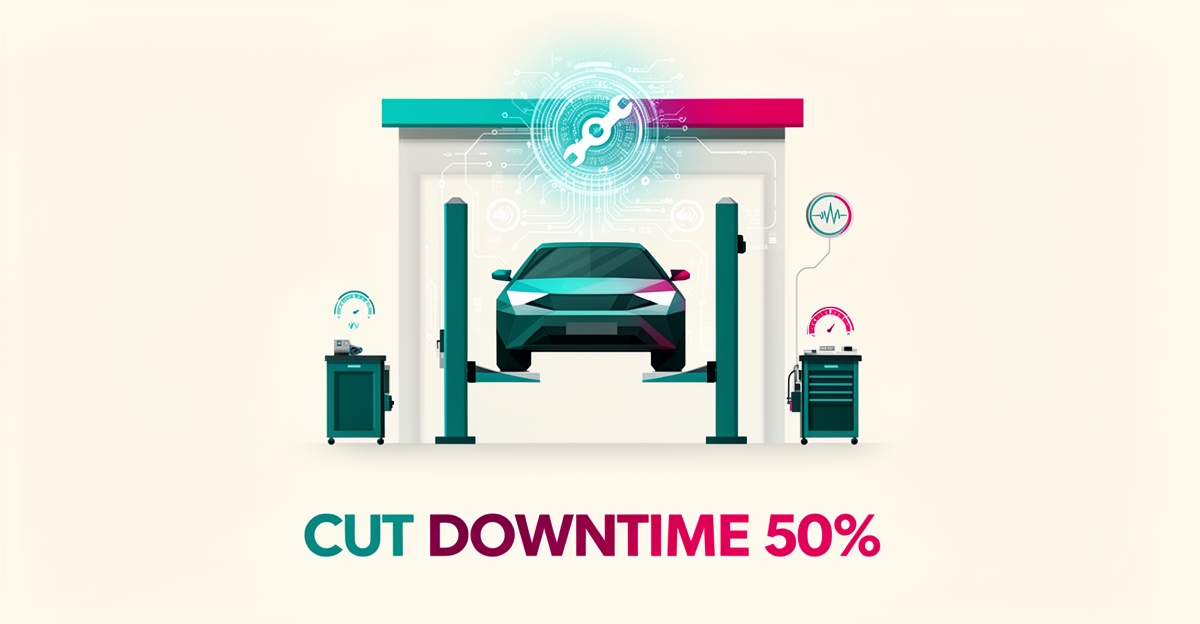
How an AI Repair Technician Can Reduce Downtime in Your Auto AC Repair Shop
Key Facts
- Industry analyses project the global EV repair service market growing from roughly $42 billion in 2025 toward well over $100 billion by the mid-2030s, meaning vehicles in your bays will keep getting more complex
- Predictive maintenance can cut maintenance costs by up to 40% in transportation and logistics operations, according to industry research
- AI-driven predictive maintenance has been associated with downtime reductions of up to 50% in transportation operations
- AI predictive maintenance can meaningfully extend asset lifespans — often cited at around 40% in industrial settings
- AI is not a replacement for human judgment but a tool to augment it — a view widely shared across project-management and automation practitioners
Hire a team member that works 24/7 — for less than a part-time wage.
AI receptionists, SDRs, dispatchers and 99+ roles. Trained on your business, fully managed.
Not sure where to start? Ask our AI planner
The True Cost of Downtime in Your Auto AC Repair Shop
It's 9 a.m. on a Monday, and two of your four bays are sitting empty because a recovery machine failed overnight and a customer's vehicle is waiting on a misdiagnosed compressor. Every idle hour in an auto AC repair shop is revenue leaking out the door — and most shops feel it daily.
Downtime rarely announces itself. It shows up as a cascade: equipment that quits mid-job, a backlog of service requests piling up at the front counter, and technicians redoing work because the first diagnosis missed the real fault. Each of these costs compounds the next, turning a busy shop into a bottlenecked one.
The traditional fix — reacting when something breaks — simply can't keep pace with modern vehicles. AC systems are no longer standalone mechanical circuits; they're integrated with sensors, electronic controls, and software that vary across every make and model. That complexity is only accelerating. Industry analyses project the electric vehicle repair service market growing from roughly $42 billion in 2025 toward well over $100 billion by the mid-2030s, meaning the vehicles rolling into your bays will keep getting harder to service with reactive workflows alone.
The cost of misdiagnosis deserves special attention. A wrong diagnosis doesn't just waste one repair — it triggers return visits, parts returns, warranty disputes, and eroded customer trust. In a specialty trade like AC service, where refrigerant handling and system pressures demand precision, accuracy is the difference between a loyal customer and a bad review.
The good news is that downtime is measurable and, increasingly, preventable. Industry research on predictive maintenance suggests it can reduce maintenance costs by up to 40% and cut downtime by as much as 50% in transportation and logistics operations, with similar studies pointing to fewer infrastructure failures and longer asset lifespans. Those gains translate directly to fewer stalled lifts and faster bay turnaround.
For a repair shop, the pain points cluster into four areas:
- Idle bays caused by unexpected equipment failures, like recovery machines or leak detectors going down mid-week
- Backlogged service requests that pile up when triage is done manually
- Repeat visits and rework driven by diagnostic errors
- Technician time lost to manual scheduling, data entry, and chasing parts information
This is where AI-driven workflow automation changes the math. Systems like the AI Workflow Builds from AIQ Labs can monitor equipment in real time, predict failures before they sideline a bay, prioritize incoming service requests intelligently, and support technicians with faster, more accurate diagnostics — all while integrating with the tools your shop already uses.
The shops that thrive won't be the ones that work harder when things break. They'll be the ones that see failures coming and fix problems the first time.
What an AI Repair Technician Actually Does
Imagine an extra team member in your shop who never sleeps, constantly analyzes data, and flags problems before they become breakdowns. That is the reality of an AI repair technician — not a robot turning wrenches, but an intelligent system working alongside your human techs to keep every job moving.
At its core, an AI repair technician is an AI employee that plugs into your shop's existing workflow. It continuously ingests real-time data from sensors and IoT devices attached to vehicles and shop equipment, then applies predictive maintenance techniques to spot anomalies long before they cause a failure.
In practice, the AI repair technician handles three core functions every day:
- Real-time diagnostics — analyzing live sensor and IoT data to pinpoint faults in AC compressors, refrigerant systems, and electrical components faster than manual inspection alone
- Predictive failure alerts — flagging equipment that shows early warning signs so your team can schedule repairs during planned downtime instead of scrambling after a breakdown
- Automatic service prioritization — triaging incoming repair requests based on urgency, parts availability, and technician workload so no critical job sits in a queue
The impact is measurable. Industry research suggests predictive maintenance can reduce downtime by up to 50% and cut maintenance costs by up to 40% in transportation and logistics operations — numbers that translate directly to fewer stalled lifts and faster bay turnaround in an auto AC shop.
Crucially, this technology augments human judgment rather than replacing it. As automation practitioners widely put it: AI is not a replacement for human judgment, but a tool to augment and support it. Your technicians still make the final call on every repair. The AI simply ensures they walk into each job with better information, clearer priorities, and fewer surprises.
Integration is deliberately frictionless. An AI repair technician connects to the diagnostic scanners, scheduling tools, and management software your shop already uses — no rip-and-replace required. At AIQ Labs, we build these systems to slot into existing workflows so your team adopts them naturally, without a learning curve that slows down billable work. The result is a shop where human expertise and machine intelligence operate side by side, each doing what it does best.
Predictive Maintenance and Real-Time Monitoring: The Downtime Killers
Predictive maintenance transforms how auto AC repair shops approach equipment care, turning reactive fixes into strategic planning. By analyzing historical performance and real-time sensor data, AI systems can forecast component wear and potential failures before they disrupt service. This proactive stance allows shops to address issues during scheduled maintenance windows rather than scrambling during peak hours. Industry research suggests predictive maintenance can slash maintenance costs by up to 40% and reduce downtime by as much as 50% in transportation and logistics operations — benefits that translate directly to auto repair environments where compressor and condenser reliability is critical.
Real-time monitoring amplifies this advantage by providing continuous visibility into equipment health. AI-powered sensors track vibration, temperature, pressure, and electrical signatures across AC systems, flagging subtle anomalies that precede major breakdowns. When a refrigerant leak begins or a compressor motor shows early signs of strain, the system alerts technicians immediately, enabling intervention before a complete failure occurs. This capability not only prevents unexpected downtime but also extends the useful life of expensive assets — studies of AI-driven predictive maintenance commonly cite asset lifespan extensions of around 40% along with significantly fewer infrastructure failures. For a shop handling dozens of vehicles daily, this means fewer emergency tow-ins and more predictable workflow scheduling.
The true power lies in shifting from emergency repairs to planned interventions. Instead of waiting for a customer to arrive with a non-functional AC system on a scorching afternoon, technicians use AI insights to replace worn seals, recharge refrigerant, or recalibrate controls during slower periods. This approach reduces overtime labor costs, minimizes parts rush-order expenses, and keeps service bays available for scheduled appointments. AIQ Labs supports this transition by building custom monitoring systems that integrate with existing shop management tools, ensuring predictive alerts flow seamlessly into work order queues without disrupting established routines. The result is a repair environment where downtime becomes the exception rather than the expected cost of doing business.
How to Implement an AI Repair Technician in Your Shop
Implementing an AI repair technician in your auto AC shop starts with a clear, practical roadmap that fits your existing operations. Begin by integrating AI diagnostic tools into your current workflow — connecting them to your service management software and sensor data streams so they can analyze real-time vehicle performance without disrupting your team's routine. This step lays the foundation for smarter, faster troubleshooting right from the start.
Next, build a predictive maintenance strategy using historical repair data and live sensor inputs to anticipate component failures before they happen. As industry research suggests, predictive maintenance can reduce maintenance costs by up to 40% and decrease downtime by up to 50% in transportation and logistics operations, with AI-powered systems also extending asset lifespans. These gains translate directly to fewer emergency repairs and more predictable shop schedules.
Deploy real-time monitoring across critical AC components like compressors, condensers, and refrigerant lines to catch anomalies the moment they arise. Train your technicians on how to interpret AI alerts and act on recommendations — focusing on augmentation, not replacement, so they see the tool as a force multiplier. Finally, continuously monitor system performance, gather feedback, and adjust thresholds or workflows based on what the data shows. Common concerns like data quality, training time, and upfront cost are addressable: start small with clean data streams, leverage hands-on microlearning sessions, and use flexible payment models like AIQ Labs' Start Monthly, Build in Milestones, or Own It Outright to make adoption feasible for SMBs without requiring large capital outlays. This approach ensures your AI investment evolves with your shop's needs, delivering steady improvements in uptime and repair accuracy over time.
Getting Started Without Disrupting Your Team
Starting with a single, high-value workflow — whether it's AI-driven diagnostics or service request triage — lets your team prove ROI in weeks instead of months. Industry research on AI in maintenance operations suggests predictive maintenance alone can reduce downtime by up to 50% and cut maintenance costs by roughly 40%. AIQ Labs builds these systems so your shop owns the code, the agents, and the data — no vendor lock-in, no platform dependencies, and no recurring subscription for the core intelligence.
- Pick one workflow with the clearest bottleneck
- Deploy a custom AI agent trained on your shop's processes
- Measure technician hours saved and repair accuracy gains
- Scale to the next workflow only after the first pays for itself
The EV repair market is projected to grow substantially through the mid-2030s, and shops that own their AI infrastructure will capture that growth without bleeding margin to software vendors. AIQ Labs' Start Monthly model covers the build, training, integrations, and ongoing optimization for a fraction of the cost of a human hire — pause or adjust anytime. If you'd rather pay per milestone and keep everything built at each phase, that option exists too. See the full breakdown on the pricing page.
Start the Fit Check at aiqlabs.ai/apply — a two-minute assessment — then book a free 30-minute strategy call at aiqlabs.ai/book to map your highest-ROI starting point. No obligation, just clarity. Prefer to talk first? Reach the team at [email protected] for answers on custom systems, AI employees, or workflow builds.
Still paying for 10+ subscriptions that don’t talk to each other?
We build custom AI systems you own outright. No vendor lock-in. Full control.
Not sure where to start? Ask our AI planner
Frequently Asked Questions
What exactly does an AI repair technician do in an auto AC repair shop?
How much can predictive maintenance reduce downtime and maintenance costs in an auto AC repair shop?
Will implementing an AI repair technician require replacing my shop's existing tools and software?
How does AI help prevent repeat visits and rework caused by misdiagnosis in AC repairs?
What's the best way to start using AI in my auto AC shop without overwhelming my team?
Is there a risk of vendor lock-in when working with AIQ Labs for an AI repair technician system?
Turn Downtime Into Your Competitive Edge
The auto AC repair landscape is evolving fast — vehicles are smarter, customer expectations are higher, and reactive fixes no longer cut it. As we've seen, AI repair technicians don't replace your team; they empower them with real-time diagnostics, predictive alerts, and smarter workflow triage that keep bays productive and repairs accurate the first time. The result? Fewer idle hours, lower maintenance costs, and a shop ready to handle the growing wave of EV and complex AC repairs without sacrificing margins. If you're ready to see where AI can make the biggest impact in your shop — without disruption or guesswork — start with a two-minute Fit Check to map your highest-ROI opportunity. Then, book a free 30-minute strategy call to explore how a custom AI system built for your workflow can pay for itself in weeks, not months. Start the Fit Check today and take the first step toward a smarter, more resilient shop.
Make AI your competitive advantage — not just another tool.
Strategy, implementation and ongoing optimization. One partner, end to end.
Not sure where to start? Ask our AI planner