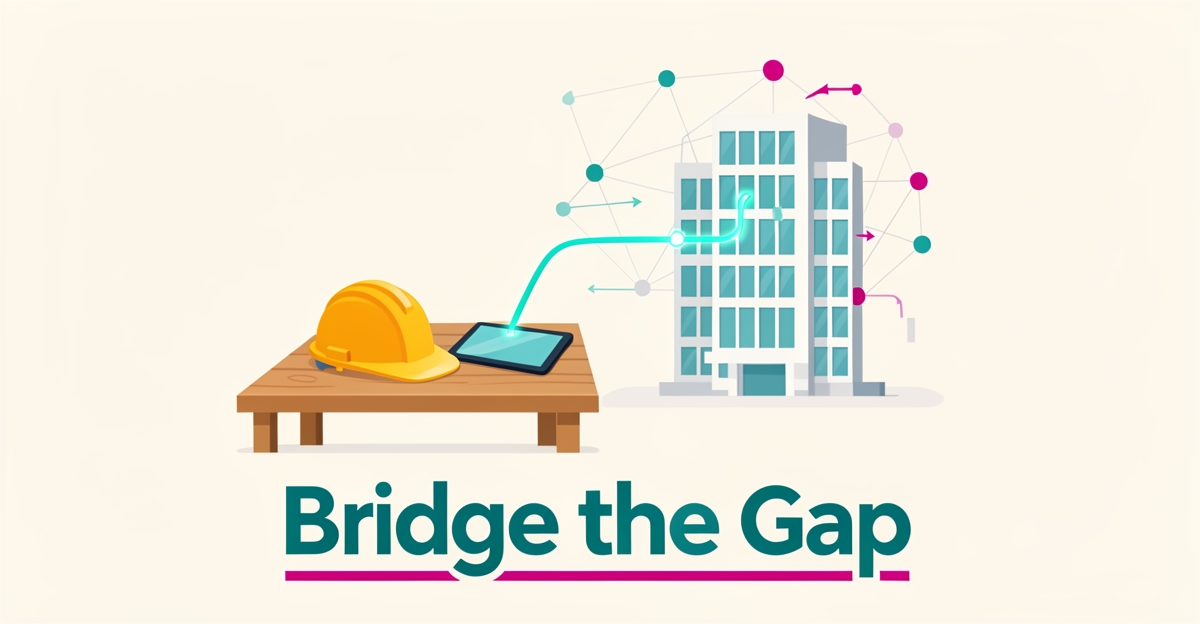
How an AI Site Coordinator Can Improve Communication Between Field Teams and HQ
Key Facts
- Generative AI is projected to touch a large share of knowledge work within the next several years, yet daily workplace adoption still lags far behind, leaving most field teams without tools to bridge information silos.
- Silence in field teams often signals confusion rather than clarity, many field workers withhold questions due to unclear channels or fear of appearing uninformed.
- Most people treat AI like a search engine, limiting its value. Treat it instead like a teammate that needs a good brief.
- Organizations that pair AI deployment with structured training and clear role definitions typically see faster ramp-up and stronger returns than those that install tools and walk away.
- AIQ Labs has deployed 200+ multi-agent systems and runs four live SaaS products it operates daily, real production experience, not slideware.
Hire a team member that works 24/7 — for less than a part-time wage.
AI receptionists, SDRs, dispatchers and 99+ roles. Trained on your business, fully managed.
Not sure where to start? Ask our AI planner
The Field-HQ Communication Gap That's Costing Operations
Field operations face a persistent communication gap that directly impacts efficiency and trust between crews on the ground and headquarters leadership. Delayed updates, lost issue reports, and failed request routing are not just minor inconveniences, they create cascading delays that inflate project timelines and erode accountability. Silence in team communication often signals confusion rather than consensus, with many field workers withholding questions due to unclear channels or fear of appearing uninformed. Meanwhile, daily workplace use of generative AI still lags well behind its potential, leaving most field teams without tools to bridge information silos. These gaps aren't just technical, they're operational, leading to duplicated effort, missed safety alerts, and delayed decision-making that costs organizations both time and revenue. Addressing this requires more than better radios or apps; it demands a systemic approach where AI acts as a neutral facilitator to clarify complexity, encourage questions, and maintain alignment without adding cognitive load to overburdened field staff. AIQ Labs' AI Employees, such as AI Dispatchers or Field Managers, are designed to embed directly into these workflows, logging issues in real time, routing requests to the right personnel, and sending structured updates that keep HQ informed without requiring manual follow-up. By treating AI as a teammate rather than a tool, field teams gain a reliable channel that reduces ambiguity and builds trust through consistent, transparent communication. This shift doesn't replace human judgment, it amplifies it by ensuring critical information flows where it's needed, when it's needed. The result is fewer lost issues, faster response times, and a field-HQ relationship grounded in clarity rather than guesswork. Organizations that implement such systems see measurable improvements in coordination, not because they've added more meetings or reports, but because they've removed the friction that prevents good communication from happening in the first place. For field operations plagued by silent misunderstandings and delayed actions, an AI site coordinator isn't just an upgrade, it's a necessary correction to a broken communication loop that's been quietly draining operational performance.
Why AI Site Coordinators Work as Neutral Communication Bridges
Field crews hesitate to ask "obvious" questions and HQ interprets silence as clarity. That gap drives delays, duplicate work, and safety risks. An AI site coordinator closes it by acting as a neutral, judgment-free teammate that field teams can query without fear of looking inexperienced.
Treating AI as a collaborator rather than a search tool changes the dynamic. Most people treat AI like a search engine, which limits its value. When the role is defined, goals are clear, and context is shared, AI becomes a reliable bridge for real-time reporting, issue logging, and request routing.
Neutrality is the core advantage. Silence in teams often signals confusion, not clarity. An AI coordinator clarifies complexity by summarizing dense threads and meeting notes, encourages curiosity by making it safe to ask basic questions, and keeps teams aligned by reinforcing shared goals without sounding repetitive.
Structured prompting makes that reliability possible. Effective human-AI work relies on structure, clarity, and iteration, not magic. As generative AI becomes embedded across more of the working day, closing the adoption gap requires clear protocols, not just access to tools.
A practical framework for a site coordinator includes:
- Set the role and goal, then ask the AI to restate the task to catch misunderstandings early
- Work in steps from outline to details to edits, using reflection loops for improvement
- Save repeatable chats as ongoing projects for consistent reporting and escalation
This teammate model mirrors how AI Employees are deployed in workforce management. The coordinator is onboarded like a new hire with defined responsibilities for updates, logging, and routing, integrated with field tools and HQ systems. Human-AI collaboration improves when teams understand capabilities and limits, and structured onboarding dramatically shortens ramp time compared with a drop-it-in-the-field approach.
AIQ Labs designs managed AI employees with real-time reporting capabilities that fit this neutral bridge role, supporting field operations without replacing human judgment. The result is faster issue capture, fewer misrouted requests, and a shared source of truth between crews and management.
Building an AI Site Coordinator That Field Teams Actually Trust
The most advanced AI site coordinator will fail if field crews don't trust it enough to use it. Adoption gaps remain real: many workers still don't use generative AI daily, and a significant share have never engaged with it professionally. Trust, not capability, is usually the bottleneck.
Building trust starts with treating the AI like a new hire, not a software install. Practitioners of AI integration advocate for onboarding AI like a teammate with clearly defined responsibilities. For field operations, this means explicitly stating that the AI handles status updates and routing requests, while human supervisors retain authority over safety decisions and personnel matters.
Structured onboarding and training deliver measurable returns. Organizations that pair AI deployment with comprehensive training typically see faster ramp-up and stronger returns on their technology investments than those that skip the literacy piece. This investment ensures that when a site coordinator AI logs an issue or flags a delay, field teams understand both its capabilities and its limitations.
Establishing clear communication protocols prevents the "silence means confusion" problem that plagues distributed teams. Effective protocols include:
- Defined escalation paths for when the AI encounters scenarios beyond its authority
- Standardized formats for field reports that the AI logs and routes to headquarters
- Feedback loops where human input actively refines the AI's future performance
- Regular check-ins that treat the AI as a collaborative partner rather than a monitoring tool
Governance frameworks build the transparency necessary for adoption. Successful deployments establish clear guidelines on data privacy, decision-making authority, and ethical boundaries. When AIQ Labs deploys managed AI employees for field operations, these governance structures ensure the technology serves as a bridge between crews and management, not a barrier.
The difference between abandonment and adoption lies in change management. Organizations that invest in comprehensive upskilling and clear communication strategies create workers who leverage AI to amplify their impact. By defining roles precisely, training thoroughly, and maintaining human oversight, field teams transform skeptical crew members into active collaborators who trust the AI to keep headquarters informed while they focus on the work at hand.
Implementation Playbook for Field Operations
Field operations often break down when crews and HQ speak different languages, field teams need immediate, actionable updates while management requires structured reporting and trend analysis. An AI site coordinator bridges this gap by serving as a consistent, real-time communication layer that logs issues, routes requests, and sends status updates without requiring field personnel to change their workflows.
To deploy an AI site coordinator effectively, start by clearly defining its role within your field operations framework, specify whether it will handle daily check-ins, safety incident logging, material request routing, or weather-related delay notifications. Establish boundaries so the AI knows when to escalate to human supervisors versus handling routine updates autonomously. This clarity prevents overreliance or underutilization and sets the foundation for trust. Next, invest in AI literacy training for both field crews and office staff; organizations that pair deployment with structured training consistently report faster ramp-up and better returns, turning initial hesitation into confident collaboration.
Implement structured prompting workflows using proven frameworks: begin by setting the AI's role (e.g., "You are a site coordinator responsible for logging field updates and routing urgent issues"), define the goal (e.g., "Ensure HQ receives accurate, timely reports on crew progress and blockers"), add context (e.g., "Include location, time, weather impact, and any safety concerns"), and use reflection loops to refine outputs. Save repeatable chats as templates for recurring scenarios like daily start-of-shift briefings or end-of-day summaries. Finally, establish feedback loops where field teams can correct AI interpretations, such as misclassified issue severity, and supervisors can adjust reporting templates based on evolving project needs. This iterative approach ensures the AI site coordinator becomes a trusted, neutral facilitator that keeps field and HQ aligned without adding administrative burden.
- Define clear role boundaries and escalation protocols for the AI site coordinator
- Deploy structured prompting with role-setting, goal definition, and context enrichment
- Implement feedback loops for continuous improvement based on field team input
AIQ Labs supports this deployment through AI Employees, managed AI staff covering 99+ roles at roughly 80% less cost than a human hire, with real-time reporting capabilities that let field teams adopt AI coordination without disrupting existing workflows. If your communication bottleneck sits inside a single high-cost workflow, AI Workflow Builds rebuild that one workflow at a fixed price, in phases. And when you're ready to connect field, dispatch, and HQ into one operating layer, AI Operating Systems deliver it in phases you own outright. Payment models are straightforward: Start Monthly, Build in Milestones, or Own It Outright, no fake prices, no invented case-study numbers. By treating the AI site coordinator as a collaborative teammate rather than a simple automation tool, organizations transform communication from a point of friction into a streamlined, insight-driven process that keeps projects on schedule and teams informed.
Turning Communication Gaps into Competitive Advantage
The communication gap between field teams and headquarters isn't just a nuisance, it's a silent drain on efficiency, safety, and project timelines. By treating an AI site coordinator as a neutral teammate rather than a tool, organizations can close this loop with real-time issue logging, structured updates, and judgment-free support that encourages questions and reduces ambiguity. Success hinges on clear role definition, structured onboarding and training, and feedback loops that build trust through transparency. When field crews trust the AI to keep HQ informed without adding cognitive load, they're free to focus on the work that moves projects forward. Ready to see how this could work in your operations? Start with the two-minute Fit Check to map your biggest communication bottleneck, then book a free 30-minute strategy call, no obligation, just clarity. You can also reach the team directly at [email protected].
Make AI your competitive advantage — not just another tool.
Strategy, implementation and ongoing optimization. One partner, end to end.
Not sure where to start? Ask our AI planner