How an AI Site Coordinator Can Improve On-Site Project Efficiency
Key Facts
- Speaking at 150–180 words per minute beats typing at roughly 40, so voice-driven coordination typically cuts documentation time significantly.
- Mid-sized field teams often lose 20+ hours weekly chasing pre-visit checklist confirmations manually.
- Effective AI site coordinators deploy four specialized agents: checklist managers, weather monitors, communication coordinators, and resource allocators.
- Unlike basic RAG tools that only retrieve information, agentic AI executes actions like rescheduling crews and alerting clients automatically.
- Poorly scoped AI deployments are a leading reason automated interactions fail to solve the underlying problem, clear boundaries and human handoffs matter as much as capability.
Hire a team member that works 24/7 — for less than a part-time wage.
AI receptionists, SDRs, dispatchers and 99+ roles. Trained on your business, fully managed.
Not sure where to start? Ask our AI planner
The Hidden Cost of Manual Pre-Visit Coordination
Before a single crew member arrives on site, field service and construction teams often waste valuable hours chasing down pre-visit checklists, manually verifying weather conditions, and coordinating back-and-forth with clients, tasks that introduce delays, missed details, and unnecessary labor costs. This hidden friction occurs daily, eroding efficiency before work even begins.
The math is simple: typing averages around 40 words per minute while speaking runs 150–180, which is why manual data entry and phone-tag communication are such poor uses of a coordinator's day. And when teams bolt on poorly designed AI, it often adds complexity instead of removing it, automated interactions that fail to solve the actual problem are common when systems are scoped badly. The goal is a system that reduces workload, not one that creates a new thing to babysit.
- Manually checking weather across multiple sources delays crew deployment
- Chasing checklist confirmations can consume 20+ hours weekly in mid-sized teams
- Inconsistent client communication leads to missed access instructions or site requirements
- Last-minute changes due to poor pre-visit planning cause rework and idle labor
- Documentation gaps create liability risks and complicate post-job reporting
These inefficiencies aren't just inconvenient, they directly impact project timelines, crew utilization, and client satisfaction. By automating routine pre-visit coordination through an AI site coordinator, teams can eliminate manual bottlenecks, ensure nothing falls through the cracks, and redirect human focus toward high-value activities like problem-solving and relationship management. AIQ Labs builds production-grade multi-agent systems that handle these precise workflows, managing checklists, weather alerts, and client communication, so crews arrive ready to work, not waiting for clarification. For teams that want a managed option, AI Employees covers coordinator-style roles that run these routines daily.
From Information Retrieval to Action: Why Agentic AI Changes the Game
The real power of AI in field operations isn't just about retrieving information, it's about taking action. While basic RAG-style tools can pull weather forecasts or checklist items, they stop short of executing meaningful tasks. As one industry principle puts it: support isn't a search problem, it's an action problem. This distinction fundamentally changes what AI can achieve on job sites.
Agentic AI moves beyond passive retrieval to active execution, calling weather APIs, updating schedulers in real time, and initiating client communications without human prompting. Where traditional automation might notify a coordinator about rain, an agentic system automatically reschedules crews, alerts clients, and updates project timelines across integrated platforms. This capability transforms pre-visit coordination from a series of manual handoffs into a seamless, self-directed workflow.
The impact is measurable: when agentic systems are properly scoped with clear boundaries, the large majority of routine coordination tasks can be handled with zero human intervention. For construction and field services, this means fewer delays from weather-related miscommunications, reduced administrative burden on site managers, and more reliable execution of pre-visit protocols. AIQ Labs applies this same principle when building AI site coordinators that don't just inform teams, they act on their behalf.
Inside an AI Site Coordinator: Specialized Agents Working as a Team
An effective AI site coordinator is less like a single bot and more like a coordinated crew that works before the crew arrives. It replaces scattered reminders and manual checks with a team of specialized agents that own distinct parts of pre-visit execution.
The architecture mirrors how leading teams design agentic systems: rather than one generalist model, work is split across specialized agents, analyzers, orchestrators, reasoners, recommenders, and responders, each with a defined role. The same specialization principle applies on site.
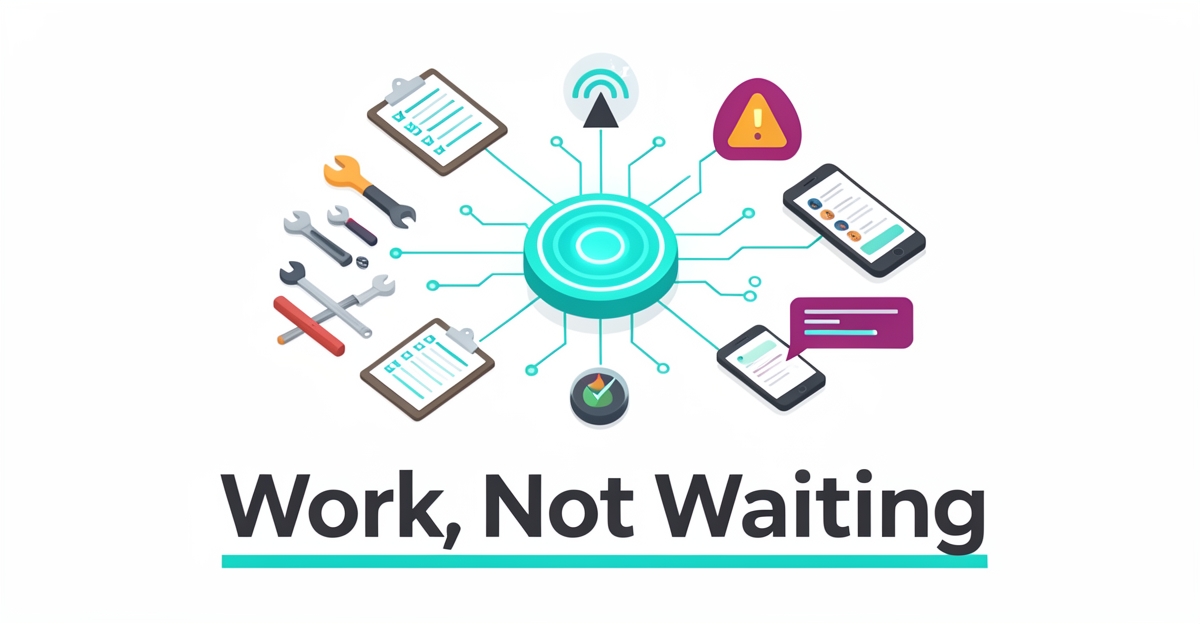
In field services, those roles translate into four collaborating agents that keep jobs on track. Checklist managers ensure pre-visit preparation tasks are completed and documented. Weather monitors pull live conditions and trigger rescheduling alerts. Communication coordinators handle client confirmations and crew briefings. Resource allocators match equipment and personnel to the job requirements.
Agentic AI makes this possible because it can act, not just retrieve. Unlike basic RAG systems, agentic systems integrate with scheduling, weather APIs, and project management tools to update records and send messages. With clear boundaries, agents can autonomously handle the bulk of routine coordination, showing the scale of autonomous handling when scope is well defined.
A practical coordinator team operates like this:
- Checklist Manager, verifies permits, site access, safety gear and pre-visit documentation
- Weather Monitor, tracks forecasts and sends proactive delay or protection alerts
- Communication Coordinator, confirms arrival windows and shares updates with clients and crews
- Resource Allocator, aligns tools, materials and staff to the scheduled visit
This division reduces the errors that come from one generalist trying to do everything. It also supports risk-based deployment. Low-risk, repetitive tasks such as reminders and weather checks run fully automated, while higher-stakes decisions escalate to humans.
Trust remains critical. Automated interactions frequently fail when systems are deployed without clear constraints and transparent handoffs, a reminder that capability must be paired with good design.
AIQ Labs builds these production-grade multi-agent systems for construction and field-based services, designing each agent with defined responsibilities, integration points, and human-in-the-loop escalation. With 200+ multi-agent systems deployed and four live SaaS products the company runs daily, the approach is proven in production, not theory. The result is pre-visit coordination that is consistent, auditable, and frees human coordinators to focus on problem-solving and client relationships.
Deploying with Confidence: Risk-Based Rollout and Human Oversight
Deploying an AI site coordinator successfully requires a thoughtful, risk-based approach that builds trust through gradual implementation. Starting with low-risk, repetitive tasks like automated reminder texts and weather alerts allows teams to validate the system's reliability before expanding its scope. This phased strategy matters because poorly designed deployments that overlook human oversight are a common reason AI interactions fail to solve the underlying problem. By contrast, defining clear AI boundaries, such as limiting the coordinator to pre-visit checklists and scheduling while reserving complex decisions like scope changes or safety assessments for human review, creates structured escalation paths that prevent errors.
Human-in-the-loop controls remain essential for high-stakes decisions, ensuring AI augments rather than replaces critical judgment. Agentic systems achieve high autonomous resolution rates when properly scoped, but this success depends on matching task complexity to AI capabilities. For construction and field services, this means configuring the AI site coordinator to handle routine logistics, like confirming material deliveries or sending weather-based delay notices, while triggering human alerts for situations involving regulatory compliance, client disputes, or resource conflicts. AIQ Labs implements this framework by designing systems with transparent handoff protocols, where the AI logs all actions and notifies humans only when predefined risk thresholds are exceeded, maintaining accountability without creating bottlenecks. This balanced deployment builds confidence through proven reliability, turning the AI site coordinator from a potential liability into a trusted operational partner that reduces delays by handling the predictable so humans can focus on the unpredictable.
Implementing Your AI Site Coordinator: A Practical Roadmap
Implementing an AI site coordinator starts with mapping your current pre-visit workflows to uncover where time is lost and errors occur. By documenting each step, from checklist creation to weather checks and client outreach, you can pinpoint repetitive, rule-based tasks ideal for automation. When agentic AI is scoped correctly, the large majority of routine coordination can run without constant oversight. Starting with low-risk, high-frequency tasks builds trust and demonstrates value early in the implementation process.
Next, identify which tasks can be fully automated versus those requiring human judgment. Simple actions like sending appointment reminders, pulling weather forecasts, or updating scheduling systems are perfect for AI, while complex site assessments or client negotiations should remain human-led. Applying a risk-based deployment framework, similar to how specialized AI agents handle distinct functions in customer support, ensures the system operates within safe boundaries. And because dictation is typically 3–4x faster than typing, voice-enabled AI coordinators can further accelerate field communication and documentation.
Integrate the AI site coordinator with your existing tools using deep API connections rather than superficial links. AIQ Labs' approach emphasizes seamless synchronization with project management platforms, calendars, and communication systems to create a unified workflow. Begin with a pilot focused on one workflow or department, using the Build in Milestones model to validate results before scaling. Set clear metrics, such as reduction in pre-visit delays or improvement in checklist completion rates, to measure impact and guide refinements. As performance stabilizes, expand gradually to additional sites or functions, maintaining human oversight for high-stakes decisions while letting AI handle the routine. This phased, owned-system approach ensures sustainable efficiency gains without disruption. If you want to see how a single high-cost workflow gets rebuilt first, Workflow Builds takes that phased approach at a fixed price; for a fully connected operating layer, AI Operating Systems connects coordination across the whole business.
Still paying for 10+ subscriptions that don’t talk to each other?
We build custom AI systems you own outright. No vendor lock-in. Full control.
Not sure where to start? Ask our AI planner
Frequently Asked Questions
How does an AI site coordinator actually reduce delays before a job starts?
What's the difference between a basic automation tool and an agentic AI site coordinator?
If AI often fails to solve customer problems, why would it work for site coordination?
Which pre-visit tasks should I automate first?
Can voice-enabled AI really speed up field documentation and communication?
How do I implement an AI site coordinator without disrupting current operations?
Stop Losing Hours Before the Work Day Even Starts
The hours lost to manual pre-visit coordination, chasing checklists, checking weather apps, and confirming client details, add up to more than just administrative fatigue; they directly erode your project margins and crew productivity. By deploying an AI site coordinator built on specialized, agentic systems, you transform these fragmented tasks into a seamless workflow where weather monitors, checklist managers, and communication coordinators work autonomously to ensure crews arrive prepared. AIQ Labs builds these production-grade systems specifically for construction and field services, integrating deeply with your existing tools while maintaining the human oversight necessary for high-stakes decisions. If you're ready to eliminate the hidden friction slowing down your projects, start with the two-minute Fit Check at AIQ Labs to map your biggest bottleneck and identify your highest-ROI automation opportunity.
Make AI your competitive advantage — not just another tool.
Strategy, implementation and ongoing optimization. One partner, end to end.
Not sure where to start? Ask our AI planner