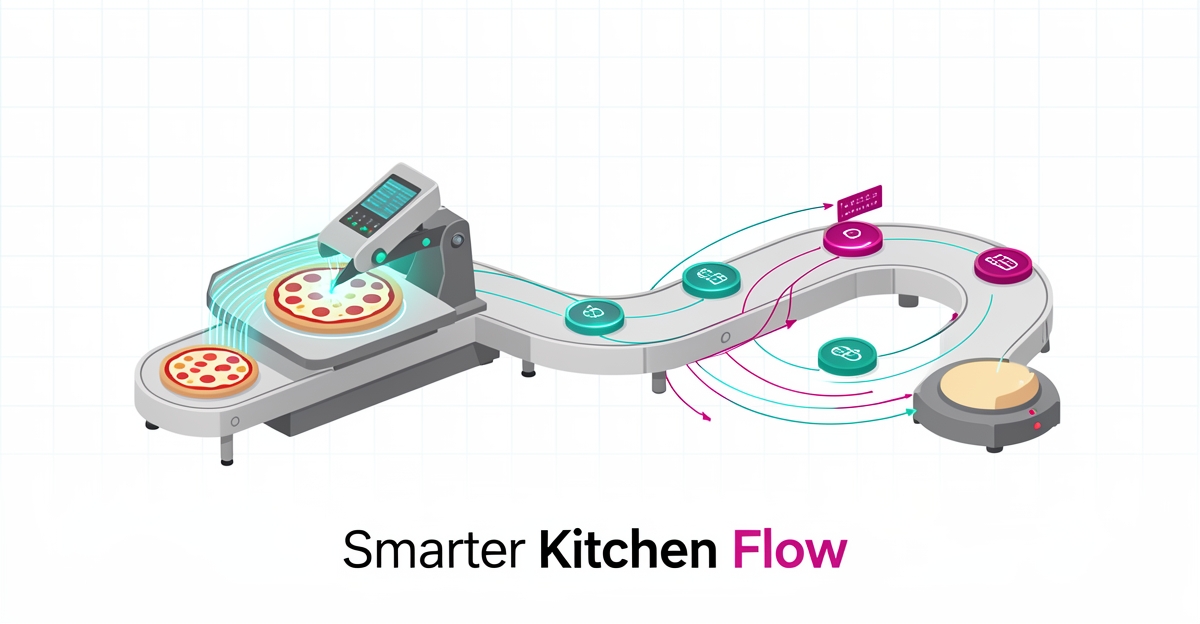
How an AI Slicer and Order Dispatcher Can Transform Your Pizza Kitchen Workflow
Key Facts
- AI-powered dispatching typically cuts planning time from 2-4 hours daily to minutes, based on industry dispatch comparisons.
- Better resource utilization with AI dispatching commonly yields meaningful cost savings through reduced idle time and smarter routing.
- Real-time order tracking is typically linked to a meaningful reduction in customer status calls, per industry comparisons.
- Manual dispatching caps at roughly 10-15 drivers per dispatcher, while AI systems scale far beyond that as of late 2026.
- AI-powered routing typically drives fewer delivery miles through smarter sequencing and load balancing.
- AIQ Labs has deployed 200+ multi-agent systems and runs 4 live SaaS products daily.
Hire a team member that works 24/7 — for less than a part-time wage.
AI receptionists, SDRs, dispatchers and 99+ roles. Trained on your business, fully managed.
Not sure where to start? Ask our AI planner
The Pizza Kitchen Bottleneck: Why Manual Dispatch Fails Under Pressure
Peak hour in a pizza kitchen is a test of coordination. Orders pile up, ovens compete for space, and staff are pulled in different directions while customers wait for updates.
Manual dispatching breaks down under that pressure. Planning that should take minutes stretches into hours, industry dispatch comparisons typically put manual planning at 2-4 hours daily, versus minutes with AI-powered dispatching. That gap is felt on the line as tickets stack and priorities shift without clear visibility.
Error rates rise when decisions rely on memory and intuition. A dispatcher's workload, fatigue, and experience directly shape mistakes in order routing, slicing timing, and cook assignment. With manual systems, error rates depend on the dispatcher rather than a consistent algorithm. The result is remakes, missed modifiers, and uneven station load during rushes.
Customer friction compounds the operational cost. Without real-time tracking, teams field status calls and kitchen staff get interrupted for updates. Real-time tracking is typically linked to a meaningful drop in customer support calls. Fewer interruptions mean more focus on production and faster handoffs to delivery.
The throughput impact is measurable. Kitchens using AI-powered dispatching typically see faster average delivery times and lower cost per order through better resource utilization. Smarter routing and load balancing also tend to reduce delivery miles, which compounds savings on fuel and driver hours.
Busy kitchens face recurring pain points that manual routing cannot resolve consistently:
- Order routing delays as tickets wait for dispatcher attention during peak volume
- Slicing and cooking coordination mismatches that create bottlenecks at ovens and expediting
- Uneven staff assignment with some stations overloaded while others idle
- Lack of real-time visibility forcing check-in calls and slowing response
These issues scale with demand. Manual dispatching typically supports 10-15 drivers per dispatcher, while AI systems scale well beyond that. The constraint is not labor availability but the speed and reliability of decision-making.
AIQ Labs builds [AI Workflow Builds](/workflow-builds) for these exact pressures, rebuilding the one workflow that costs you the most, at a fixed price, in phases. The focus is on real-time order management, staff assignment, and slicing and cooking optimization rather than generic automation.
Manual dispatch creates a ceiling on throughput that shows up as longer waits, higher error rates, and staff burnout. Removing that ceiling starts with faster, consistent planning and live coordination across the kitchen.
How AI-Powered Dispatching and Smart Slicing Transform Kitchen Flow
In a high-volume pizza kitchen, every second counts, delays in order dispatching or slicing can cascade into longer wait times, cold deliveries, and frustrated customers. AI-powered dispatchers and smart slicers eliminate guesswork by analyzing live order data, staff availability, and cooking timelines to orchestrate workflow with precision. By continuously optimizing task sequencing and resource allocation, these systems transform reactive kitchen operations into a synchronized, high-throughput process.
AI-powered dispatching typically reduces average delivery times through real-time order prioritization and dynamic staff assignment, directly improving customer satisfaction. At the same time, optimized routing and workload distribution commonly yield meaningful cost savings by minimizing idle time and maximizing labor efficiency. These gains are amplified when slicing is integrated into the dispatch logic, ensuring pizzas are cut and boxed immediately after baking, without bottlenecks at the prep station.
- Fewer delivery miles driven thanks to smarter route sequencing
- Fewer customer support calls thanks to real-time order tracking and proactive updates
- Planning time reduced from hours daily to minutes with automated dispatch logic
AIQ Labs builds these capabilities into [AI Employees](/ai-employees) designed specifically for pizzerias, whether managing a single location or a multi-unit operation. By aligning dispatch logic with menu complexity, peak-hour patterns, and team structure, the system adapts to real-world kitchen dynamics without requiring disruptive overhauls. The result is a self-optimizing workflow that scales with demand, reduces human error, and frees staff to focus on food quality and customer engagement, turning operational chaos into a competitive advantage.
Custom AI Built for Your Menu, Labor and Throughput
Custom AI development for pizza kitchens begins with understanding the unique rhythm of your operation, from thin-crust specialties to deep-dish peaks, from weekend rushes to weekday lulls. AIQ Labs builds systems that don't just react to orders but anticipate them, aligning slicing sequences, oven cycles, and staff assignments to your exact menu and labor structure. This level of tailoring ensures AI doesn't force your workflow into a generic mold but enhances what already works.
Off-the-shelf dispatch tools often fail in pizzerias because they can't distinguish between a Margherita needing 8 minutes in the oven and a meat-lovers requiring 14, or account for prep time differences between hand-tossed and pan crusts. AIQ Labs' custom development solves this by encoding your specific recipes, cook times, and station capabilities directly into the AI's decision logic. The result is a dispatcher that knows when to fire the broiler for a calzone versus holding back for a gluten-free option, reducing bottlenecks before they form.
Through our [AI Workflow Builds](/workflow-builds), we create production-ready systems that integrate with your POS, kitchen display screens, and even voice ordering platforms. These aren't prototypes; they're scalable applications built on modern multi-agent frameworks, designed to handle peak-hour complexity without breaking. Unlike subscription-based tools that lock you into rigid workflows, our custom code gives you full ownership, meaning you control updates, integrations, and future enhancements as your menu evolves.
[AI Employees](/ai-employees) take this further by embedding intelligent agents into your team's daily flow. An AI Dispatcher, for instance, doesn't just assign orders, it monitors real-time oven availability, tracks dough proofing times, and reroutes work when a station gets backed up. It communicates naturally via chat or voice, integrates with your scheduling software, and learns from shift patterns to improve continuously. This isn't automation for automation's sake; it's a digital team member that reduces cognitive load on managers and keeps the line moving, at a fraction of the cost of another hire.
For kitchens that need more than a single workflow, an [AI Operating System](/ai-operating-systems) connects dispatch, slicing, inventory, and scheduling into one operating layer, built in phases and owned outright. This partnership approach turns AI from a one-time install into a sustained advantage.
For pizzerias drowning in manual ticket juggling or guesswork scheduling, custom AI delivers measurable gains: faster delivery times and lower cost per order through better resource utilization. These aren't theoretical improvements, they're the kind of outcomes engineered into the 200+ multi-agent systems AIQ Labs has deployed, and refined daily across the 4 live SaaS products the company runs. When your dispatcher knows exactly when to pull a Sicilian slice for optimal crispness while starting the next order's prep, throughput rises not because staff work harder, but because the system works smarter.
From Assessment to Live Kitchen: Implementation Roadmap
Moving from kitchen chaos to real-time control starts with data, not guesswork. An AI slicer and order dispatcher only delivers when it's built around your actual menu, staff, and peak patterns.
Start by mapping the real pain points. Identify where orders stall, where slicing and cooking overlap creates bottlenecks, and where staff assignments rely on intuition. Gather kitchen operations data including order volumes by hour, staff schedules, cook and slice times, and ticket error rates. This baseline makes ROI modeling possible and guides system design.
Choose an implementation approach that matches risk tolerance and timeline. Start Monthly lets you deploy one AI employee for dispatch and slicing coordination with setup plus a flat monthly plan, including build, training, integrations, monitoring, and improvements. Build in Milestones splits a workflow or department system into phases you approve and pay per phase, keeping everything built so far. Own It Outright delivers a full AI operating system with full ownership of code, agents, and data when complete.
Implementation follows a practical roadmap:
- Assessment & data collection: audit current workflow, capture order and labor data, define success metrics
- Solution design: map menu formats and labor structures to custom AI agents for dispatch, slicing, and cooking optimization
- Integration and training: connect to POS and kitchen displays, train models on your specific items and timings
- Pilot and go-live: run a limited service window, monitor throughput and wait times, then expand kitchen-wide
- Monitor and optimize: track delivery times, cost per order, and staff utilization with continuous tuning
Once live, AI-powered dispatching typically improves delivery times, reduces costs, and increases efficiency. The exact gains depend on your baseline, kitchens with the most manual overhead tend to see the largest improvements.
Real-time tracking also reduces pressure on front-of-house. With proactive status updates, customer support calls typically drop noticeably, freeing staff to focus on production.
AIQ Labs builds these systems from the ground up for restaurant clients, customizing to specific menu formats and labor structures rather than forcing a generic template. The result is a kitchen that assigns work to staff in real time, balances slicing and cooking, and scales without adding headcount.
Ready to see where AI fits your kitchen? Complete the 2-minute Fit Check at [Apply](/apply) and book a free 30-minute strategy call. Questions first? Reach us at [email protected]. AIQ Labs is headquartered in Halifax, Nova Scotia.
Still paying for 10+ subscriptions that don’t talk to each other?
We build custom AI systems you own outright. No vendor lock-in. Full control.
Not sure where to start? Ask our AI planner
Frequently Asked Questions
How much time can an AI dispatcher actually save compared to manual dispatching?
What kind of delivery time improvements should we expect?
Can AI dispatching scale beyond a few drivers during rushes?
Will customers stop calling to check on order status?
How does AI handle different cook times for various pizza types?
What are the cost savings beyond labor efficiency?
From Kitchen Chaos to Competitive Edge: Your Next Step
The pattern is consistent: AI-powered slicing and dispatching transforms pizza kitchen workflows by cutting planning time from hours to minutes, reducing delivery delays, and lowering customer support volume through real-time tracking and smarter routing. Manual dispatching creates a ceiling on throughput that shows up as longer waits, higher error rates, and staff burnout, problems that scale with demand but don't have to define your operation. AIQ Labs builds custom AI employees and workflow systems tailored to your menu, labor structure, and peak patterns, integrating with your POS and kitchen displays to orchestrate slicing, cooking, and order assignment in real time. The result isn't just faster tickets, it's a self-optimizing kitchen where staff focus on food quality, not firefighting bottlenecks. If you're ready to remove the manual dispatch ceiling, complete the 2-minute Fit Check at [Apply](/apply) and book a free 30-minute strategy call to map your biggest bottleneck and see where AI delivers the fastest ROI for your pizzeria.
Make AI your competitive advantage — not just another tool.
Strategy, implementation and ongoing optimization. One partner, end to end.
Not sure where to start? Ask our AI planner