How an AI Technician Assistant Can Cut Repeat Repairs in Small Appliance Shops
Key Facts
- Industry analyses of AI-guided preventive maintenance suggest maintenance costs can run roughly 25% higher under purely reactive approaches
- Predictive maintenance approaches are widely reported to reduce unplanned downtime by around 30% in comparable industries
- Most CMMS users report that maintenance management software improves productivity in their operations
- AI diagnostic systems can process thousands of data points in seconds to identify faults faster than manual analysis alone
- AI technician assistants provide step-by-step repair instructions and real-time safety checks on mobile devices
- AIQ Labs has deployed 200+ multi-agent systems and runs 4 live SaaS products daily
Hire a team member that works 24/7 — for less than a part-time wage.
AI receptionists, SDRs, dispatchers and 99+ roles. Trained on your business, fully managed.
Not sure where to start? Ask our AI planner
The Hidden Cost of Inconsistent Repairs in Small Appliance Shops
Fragmented knowledge and reactive repair cycles create hidden costs that erode profitability in small appliance shops. When technicians rely on memory or inconsistent manuals, repairs vary widely in quality and time required, leading to repeat visits and customer dissatisfaction. This variability drives up labor expenses and reduces shop throughput, especially when junior staff lack access to institutional expertise.
Industry analyses consistently suggest that purely reactive maintenance costs more than strategies that incorporate predictive guidance, often cited at around 25% more. Without standardized procedures, technicians may replace working parts or miss underlying issues, resulting in unnecessary material costs and extended downtime. These inefficiencies compound when shops serve multiple locations or handle diverse appliance models with unique failure patterns.
Inconsistent execution across staff amplifies these challenges, as experienced technicians develop individualized shortcuts while newcomers struggle with complex diagnostics. The absence of a centralized knowledge base means critical troubleshooting insights remain siloed, forcing repeated problem-solving for common faults. This knowledge gap not only slows repairs but also increases the risk of safety oversights during high-pressure field work.
AI technician assistants address these pain points by delivering step-by-step repair instructions, part recommendations, and safety checks directly to technicians' mobile devices. By standardizing workflows and providing instant access to historical data, these tools reduce variability in execution and help less experienced staff perform at higher competency levels. AIQ Labs' AI Employees work alongside technicians to reinforce consistency without replacing human judgment.
- Standardized repair procedures minimize guesswork and rework
- Real-time part recommendations reduce incorrect replacements
- Mobile accessibility ensures guidance is available at the point of need
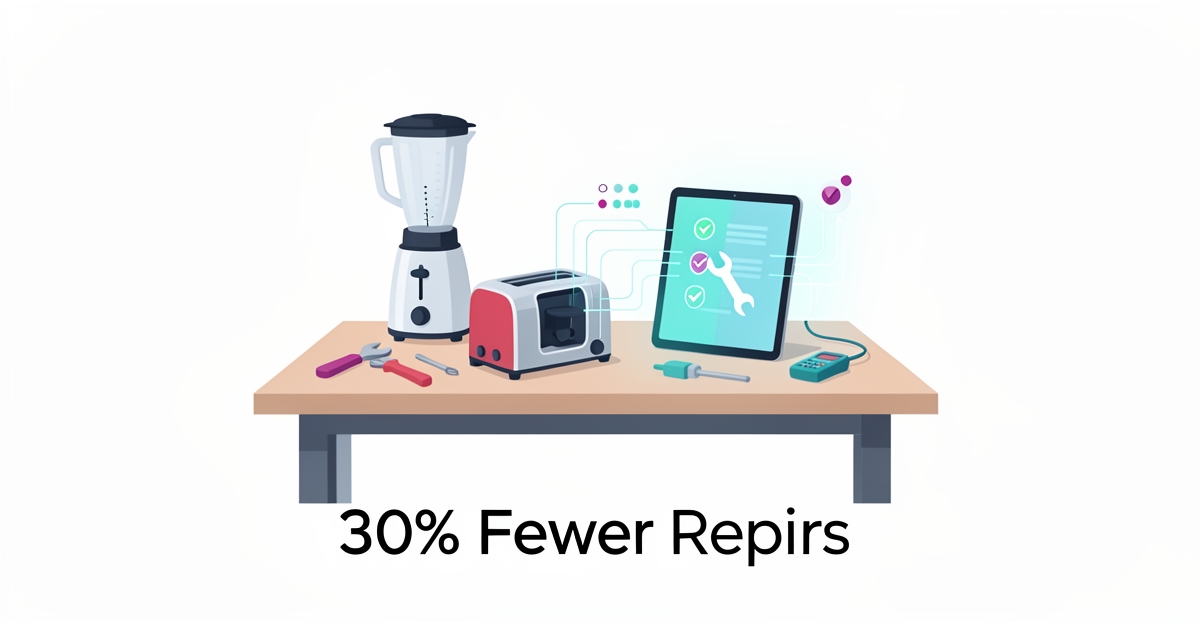
The result is fewer repeat repairs, lower material waste, and improved first-time fix rates, directly impacting the bottom line. Shops that adopt AI-guided assistance typically report gains in operational efficiency, with predictive maintenance approaches widely credited with cutting unplanned downtime by around 30% in comparable industries. For small appliance businesses, this translates to more completed jobs per day and stronger customer trust through reliable, consistent service.
How AI Technician Assistants Standardize and Accelerate Repairs
When a technician faces an unfamiliar appliance fault, the difference between a 20-minute fix and a two-hour ordeal often comes down to one thing: access to the right information at the right moment. AI technician assistants eliminate that bottleneck by delivering step-by-step guidance, part recommendations, and safety checks in real time.
AI-powered diagnostic systems can process thousands of data points in seconds, identifying faults faster and more accurately than manual analysis alone. This speed translates directly to the shop floor, where technicians receive instant diagnostic support instead of relying on trial-and-error troubleshooting.
One of the most powerful capabilities is standardized, step-by-step repair instructions tailored to specific assets and work orders. Modern AI maintenance assistants deliver clear, logical sequences that remove guesswork from repair processes. This ensures every technician follows the correct procedure regardless of experience level, eliminating the inconsistencies that lead to rework and compliance risks.
AI assistants also excel at predictive maintenance, which fundamentally changes how shops approach equipment health. Instead of waiting for failures, these systems analyze sensor data and usage patterns to flag issues before breakdowns occur. Industry reporting widely credits predictive maintenance with reducing unplanned downtime by roughly 30%, a shift that directly impacts both operational costs and customer satisfaction.
The practical benefits extend across multiple dimensions of repair work:
- Instant part recommendations based on the specific fault and equipment model, reducing ordering errors and return trips
- Real-time safety checks that flag potential hazards before technicians begin work, protecting both staff and customers
- Historical knowledge access that answers questions like "What fixed this issue last time?" without digging through manuals or interrupting senior staff
- Mobile accessibility that puts guidance in technicians' hands whether they're in the shop or on a field visit
The mobility factor deserves particular attention. AI recommendations are accessible on desktop, tablet, and mobile devices, meaning technicians get support at the point of need rather than returning to a workstation or waiting for supervisor input. This capability alone can cut significant time from field visits.
AIQ Labs deploys trained AI Employees that work alongside technicians in exactly this capacity, handling diagnostic support and procedural guidance while human expertise focuses on complex repairs and customer interactions. With 200+ multi-agent systems deployed, the pattern is consistent: gains come not because AI replaces skilled work, but because it removes the friction that slows skilled workers down.
Implementing AI Assistants Without Disrupting Your Workflow
The biggest mistake shops make with AI isn't choosing the wrong tool, it's bolting it onto a workflow nobody redesigned. Organizations that implement AI-guided preventive maintenance programs typically see meaningful cost reductions compared to purely reactive approaches, but those results only materialize when the technology fits how technicians actually work. Here's how to make that happen without grinding your shop to a halt.
Start with connection, not replacement. Your AI assistant should plug into the systems you already use, work orders, scheduling, parts inventory, rather than forcing technicians to learn an entirely new environment. Most CMMS users report that maintenance management software improves productivity, and that effect strengthens when AI guidance lives directly inside existing work orders. The goal is a single source of truth, not another tab to check.
Train staff on augmented workflows, not just the tool. Technicians may resist AI if they're accustomed to traditional methods, so frame it as a knowledge multiplier: instant access to historical repair data, troubleshooting steps used on past jobs, and step-by-step instructions tailored to each asset. Mobile access matters here, AI recommendations should be available on desktop, tablet, and mobile so guidance arrives at the point of need, whether a technician is in the shop or on a field call. Establish clear ownership and standard operating procedures from day one: who reviews each AI recommendation, on what timeline, and with what decision-making authority.
Build in review cycles for continuous improvement. AI models can drift as equipment ages and conditions change, so schedule structured reviews, daily, weekly, or per shift, rather than relying on ad hoc check-ins. Use new operating data to regularly update the system so predictions get smarter over time, and define escalation paths for when AI guidance conflicts with a technician's judgment. Human oversight remains essential for complex repairs where context and experience matter.
The right rollout structure removes the risk. AIQ Labs offers three ways to engage, each suited to a different stage: Start Monthly with an AI Employee that bundles setup, training, integrations, monitoring, and improvements into a flat monthly plan you can pause or adjust anytime; Build in Milestones through a Workflow Build that rebuilds the one workflow costing you the most, in phases you approve and pay for as each ships; or Own It Outright with an AI Operating System that connects your whole shop in one layer, built in phases and owned outright. No fake prices, no invented case-study numbers, just a structure where you keep everything built so far and stop whenever the results stop justifying the investment.
Shops that follow this sequence, connect, train, review, typically see early wins within weeks, not months, and build the foundation to scale AI across more workflows as confidence grows.
Your Next Repair Could Be the Last One You Guess On
Inconsistent repairs don't just waste time, they erode trust, inflate labor costs, and turn repeat customers into former ones. AI technician assistants change that equation by putting standardized, step-by-step guidance, real-time part recommendations, and safety checks directly into technicians' hands at the point of need. The result is measurable: shops using AI-guided preventive maintenance typically see meaningful cost reductions compared to purely reactive approaches, while predictive maintenance is widely credited with cutting unplanned downtime by around 30%. For small appliance shops, that means fewer return visits, less material waste, and junior staff performing at senior levels from day one. AIQ Labs' AI Employees work alongside your technicians, not replace them, handling diagnostic support and procedural guidance so your team can focus on complex repairs and customer relationships. Implementation starts with connecting to your existing workflow, not disrupting it, and scales at your pace. Ready to see where the biggest win lives in your shop? Start the two-minute Fit Check at https://aiqlabs.ai/apply, then join a free 30-minute strategy call at https://aiqlabs.ai/book to map your highest-ROI automation opportunity, no obligation, just clarity.
Make AI your competitive advantage — not just another tool.
Strategy, implementation and ongoing optimization. One partner, end to end.
Not sure where to start? Ask our AI planner