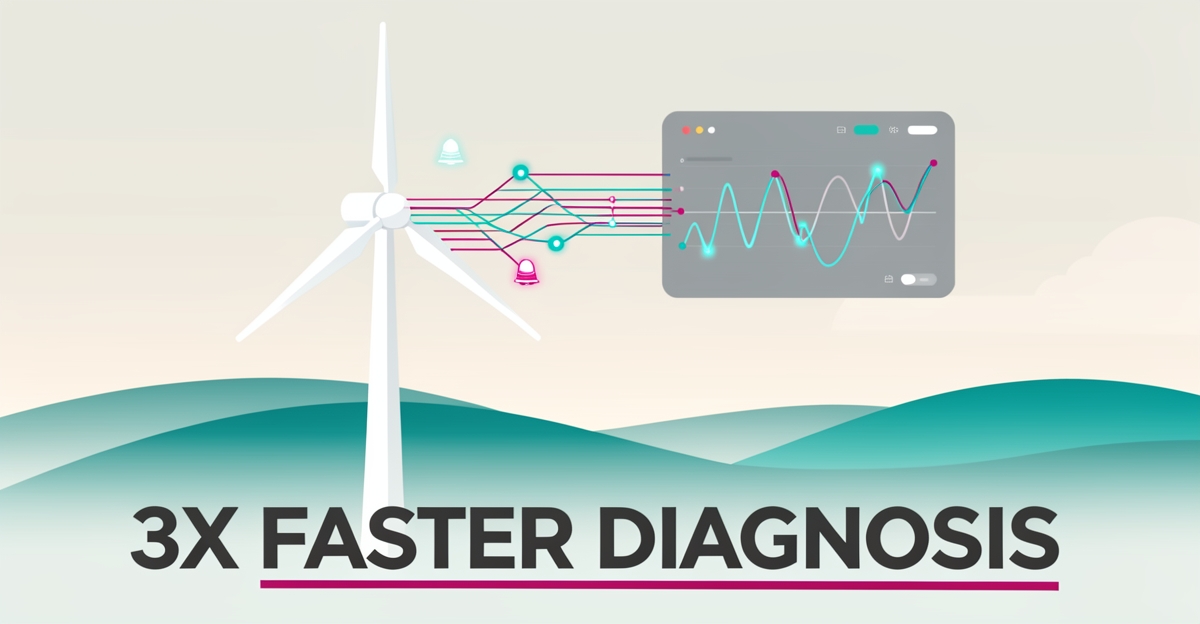
How an AI Technician Can Diagnose Wind Turbine Faults Faster Than Human Technicians
Key Facts
- Industry analyses suggest AI-powered solutions can cut operational costs by roughly 15% across wind portfolios
- Intelligent controls and predictive algorithms are credited with up to 20% more energy efficiency in industry reporting
- Early detection technology has been associated with multi-fold reductions in downtime
- Early detection is also linked to multi-fold reductions in idle-stay periods
- AI-driven forecasting can predict wind farm output roughly a day or more in advance, per renewable energy engineering reporting
- AI diagnostic support can substantially cut diagnostic time for field technicians
- AI systems can flag specific turbine failure risks well before they escalate
Hire a team member that works 24/7 — for less than a part-time wage.
AI receptionists, SDRs, dispatchers and 99+ roles. Trained on your business, fully managed.
Not sure where to start? Ask our AI planner
The Cost of Slow Turbine Fault Diagnosis
Every hour a turbine sits idle waiting for a diagnosis, revenue evaporates and maintenance backlogs swell. Human-led inspections rely on scheduled climbs and manual data review, creating blind spots where early faults quietly escalate into major failures. The industry faces mounting pressure to shrink these windows without adding headcount.
- Scheduled climbs leave weeks-long gaps between physical inspections
- Subtle vibration or temperature anomalies get buried in terabytes of SCADA data
- Technicians arrive on-site without a prioritized fault list, burning hours on discovery
- Reactive repairs typically cost several times more than planned interventions
Industry reporting on early detection technologies suggests they can deliver multi-fold reductions in downtime and idle-stay periods, while AI-powered solutions are credited with roughly 15% lower operational costs across wind portfolios. These gains stem from shifting the paradigm: instead of technicians hunting for problems, intelligent systems surface the right problem at the right time.
AIQ Labs applies this same principle through AI employees that ingest sensor streams, maintenance logs, and fault histories to give field teams a ranked diagnosis before they leave the office. The result is fewer wasted climbs, faster mean-time-to-repair, and O&M budgets that scale with capacity, not with headcount.
How AI Technicians Analyze Sensor Data and Fault Patterns in Real Time
AI-powered diagnostic systems transform wind turbine maintenance by processing vast streams of operational data in real time. These intelligent systems ingest SCADA sensor readings, historical maintenance records, and live weather feeds to detect subtle anomalies that precede mechanical failures. By continuously analyzing vibration patterns, temperature fluctuations, and power output variations, AI technicians identify developing issues long before they become visible to human inspectors. This proactive approach enables predictive maintenance that addresses problems during scheduled downtime rather than emergency repairs.
The analytical framework combines multiple data streams to build a comprehensive picture of turbine health. Machine learning models correlate sensor deviations with known fault signatures from historical failure databases, while simultaneously factoring in environmental conditions like wind speed, temperature extremes, and precipitation that accelerate component wear. When the system detects patterns matching early-stage bearing degradation, gearbox misalignment, or blade imbalance, it generates prioritized alerts with recommended inspection procedures. This multi-dimensional analysis lets AI technicians flag specific failure risks well in advance, giving maintenance teams time to prepare parts and personnel.
Industry analyses credit intelligent diagnostic systems with measurable operational improvements, including up to 20% more energy efficiency through optimized turbine performance and predictive algorithms, and roughly 15% lower operational costs by minimizing unnecessary inspections and preventing catastrophic failures. Most significantly, AI-powered early detection is associated with multi-fold reductions in unplanned downtime compared to traditional reactive maintenance approaches, keeping turbines generating power when they're needed most.
- Continuous SCADA data ingestion at high-frequency intervals
- Pattern recognition against large libraries of known fault signatures
- Weather-adjusted threshold calculations
- Historical maintenance log correlation
- Real-time anomaly scoring with confidence levels
AIQ Labs develops custom diagnostic agents that integrate with existing SCADA systems and maintenance workflows. These AI employees work alongside human technicians, providing real-time insights during field visits while continuously learning from new failure patterns to improve diagnostic accuracy over time. The system's ability to process complex multi-variable data in milliseconds represents a fundamental advancement over manual analysis methods that could take hours or days to reach similar conclusions.
From Alert to Action: Real-Time Insights for Field Technicians
When a turbine fault alert triggers, the clock starts ticking for field technicians to respond before minor issues escalate into costly downtime. AIQ Labs' custom AI agents transform raw sensor data into immediate, actionable intelligence, prioritizing fault codes, estimating repair complexity, and delivering step-by-step guidance tailored to the specific turbine model and site conditions. This real-time decision support can cut diagnostic time substantially, enabling technicians to arrive on site already knowing the likely root cause and required parts.
The AI system continuously learns from historical maintenance logs and failure patterns across similar wind farms, refining its recommendations with each intervention. For example, when vibration anomalies align with specific gearbox wear signatures detected in past incidents, the agent flags high-priority work orders and suggests preventive measures to avoid cascading failures. Technicians receive context-aware repair guidance through mobile interfaces, including torque specifications, safety precautions, and estimated time-to-completion based on real-time weather and accessibility data.
This workflow automation ensures that critical insights don’t get lost in translation between control rooms and field teams. By integrating with existing CMMS platforms via secure APIs, AIQ Labs’ agents automatically generate and update work orders, assign priority levels based on grid impact risk, and even suggest optimal technician routing for multiple site visits. Field teams benefit from reduced diagnostic guesswork, faster mean-time-to-repair, and fewer repeat visits, directly contributing to the downtime reductions achievable with AI-driven early detection. Ultimately, this seamless flow from alert to action empowers technicians to focus on skilled repairs rather than data interpretation, maximizing turbine availability and energy output.
Deploying an AI Diagnostic Agent for Wind Operations
Wind farms lose value every hour a fault goes undetected. Technicians arrive with the right tools but without the pattern history that turns a sensor blip into an early diagnosis.
Deploying an AI diagnostic agent starts with data readiness. Operators audit SCADA streams, vibration sensors, oil analysis logs and historical maintenance records for completeness and consistency. Clean, time-aligned turbine-specific logs are the foundation for models that can spot deviations before they become failures.
Model training focuses on turbine-specific fault patterns. The agent learns from years of logs to correlate anomalies with known failure modes and weather conditions. Industry research credits intelligent controls and predictive algorithms with up to 20% more energy efficiency, and the same approach is associated with roughly 15% lower operational costs.
Integration connects the agent to existing SCADA and CMMS without rip-and-replace. Real-time sensor feeds flow into the diagnostic engine, and outputs write back as work orders, parts requests and technician briefings. Two-way API integration keeps the agent inside current workflows so crews see actionable insights during field visits, not in a separate dashboard.
A pilot rollout limits risk while proving speed. Operators select a single wind row or turbine type, run the agent in shadow mode alongside human technicians, and measure time-to-diagnosis and first-visit fix rate. AI-driven forecasting can also predict wind farm output a day or more in advance, per renewable energy engineering reporting. That foresight pairs with fault prediction to prioritize dispatches.
Typical pilot milestones include:
- Data readiness assessment and SCADA/CMMS mapping
- Turbine-specific model training on historical logs and fault labels
- Shadow deployment with technician feedback loops
- Limited live rollout with KPI tracking for diagnosis speed
AIQ Labs builds these agents as custom AI systems operators own outright. Implementation can follow Start Monthly for a flat monthly plan that includes build, training and integrations, Build in Milestones for phased delivery with approval per phase, or Own It Outright for full code and data ownership at completion. See pricing models for details.
Early detection changes maintenance economics. Industry reporting on early detection technology has associated it with multi-fold reductions in downtime and idle-stay periods. When an agent surfaces the likely fault, root cause and recommended parts before the truck leaves, technicians diagnose faster and complete more repairs per visit.
Still paying for 10+ subscriptions that don’t talk to each other?
We build custom AI systems you own outright. No vendor lock-in. Full control.
Not sure where to start? Ask our AI planner
Frequently Asked Questions
How much faster can an AI technician diagnose wind turbine faults compared to a human technician?
What kind of data does an AI diagnostic agent analyze to detect early turbine faults?
Can AI really predict turbine failures before they happen?
How much downtime can be reduced by using AI-powered fault detection in wind turbines?
What operational cost savings can wind farms expect from implementing AI diagnostic systems?
Is it necessary to replace existing SCADA or CMMS systems when deploying an AI diagnostic agent?
Turning Turbine Diagnostics into a Competitive Advantage
Wind farm operators face a clear choice: continue losing revenue to slow, reactive maintenance or embrace AI-powered diagnostics that surface faults before they escalate. By ingesting real-time SCADA data, correlating anomalies with thousands of fault signatures, and delivering prioritized alerts directly to field teams, AI technicians cut diagnosis time and enable the downtime reductions early detection is known for. This isn’t just about faster repairs, it’s about scaling O&M efficiency without scaling headcount, turning maintenance from a cost center into a source of predictable uptime and energy output. For operators ready to move beyond guesswork, the next step is a focused assessment of where AI can deliver the fastest impact. Start the Fit Check, a free, two-minute evaluation, to see how a custom AI diagnostic agent could integrate with your existing SCADA and CMMS workflows, then schedule a free 30-minute strategy call to map your highest-ROI automation opportunity.
Make AI your competitive advantage — not just another tool.
Strategy, implementation and ongoing optimization. One partner, end to end.
Not sure where to start? Ask our AI planner