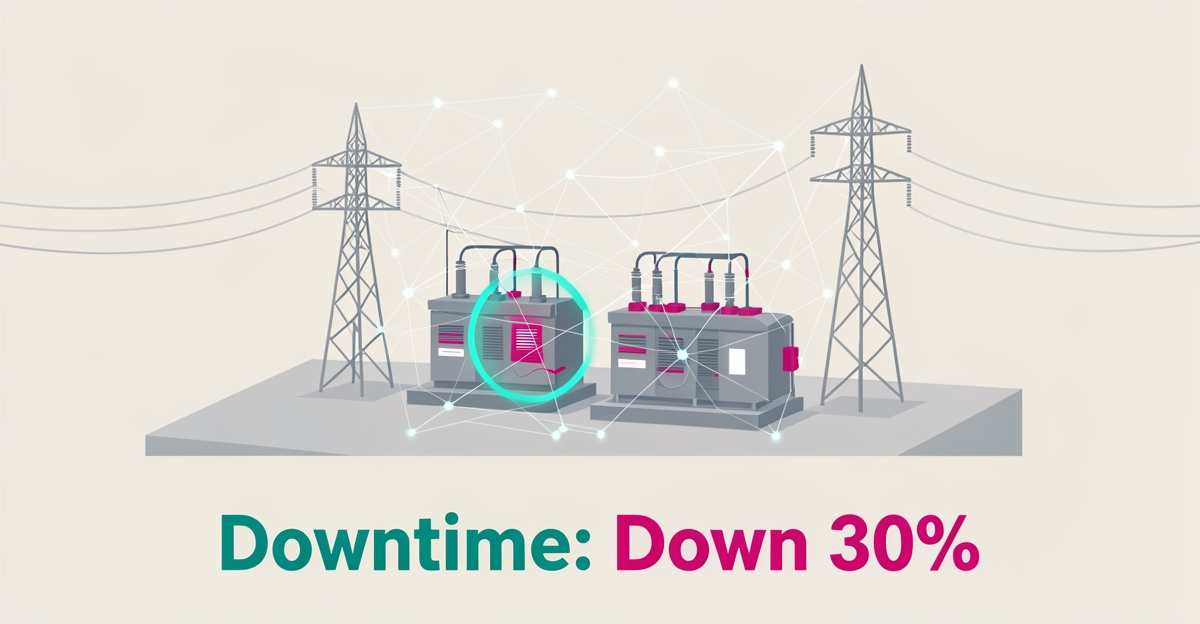
How an AI Technician Can Reduce Equipment Downtime in Substation Sites by 30%
Key Facts
- A large majority of companies have reported unplanned downtime incidents in recent years, according to widely cited industry research.
- Unplanned downtime is often estimated to cost industrial manufacturers tens of billions of dollars annually.
- Predictive maintenance is commonly credited with reducing equipment downtime by 30–50%.
- Predictive maintenance is often reported to extend machinery lifespan by 20–40%.
- A majority of organizations are using or piloting real-time equipment monitoring, per recent industry surveys.
- AI-powered predictive maintenance is frequently cited as reducing maintenance costs by up to 30%.
Hire a team member that works 24/7 — for less than a part-time wage.
AI receptionists, SDRs, dispatchers and 99+ roles. Trained on your business, fully managed.
Not sure where to start? Ask our AI planner
The Cost of Unexpected Equipment Failures in Substation Operations
Unplanned equipment failures in substation operations create ripple effects that extend far beyond the initial outage. When critical infrastructure goes down unexpectedly, it disrupts power delivery, compromises safety protocols, and triggers costly emergency responses that strain both budgets and personnel. These incidents are far more common than many operators realize, with widely cited industry research indicating that a large majority of companies have experienced unplanned downtime in recent years.
For substation sites specifically, where equipment failure can cascade into widespread grid instability, this pattern underscores a pervasive vulnerability. The financial toll is equally significant, industry estimates commonly place the annual cost of unplanned downtime for industrial manufacturers in the tens of billions of dollars, a figure that reflects not just repair expenses but lost productivity, regulatory penalties, and reputational damage.
Traditional maintenance strategies often fall short in preventing these outcomes. Reactive maintenance, which addresses issues only after failure occurs, guarantees extended downtime and inflated repair costs. Preventive maintenance, while better intentioned, relies on fixed schedules that don't account for real-time equipment conditions, leading to either unnecessary interventions or missed warning signs. In high-risk environments like substations, where equipment faces constant stress from weather, load fluctuations, and aging infrastructure, these approaches lack the precision needed to avert costly surprises. AIQ Labs' AI Workflow Builds offer a pathway beyond these limitations by rebuilding the maintenance workflows that cost you the most, with systems that learn from operational patterns to anticipate needs before they become crises.
How AI-Powered Predictive Maintenance Anticipates Failures Before They Happen
Unplanned equipment failures at substation sites can cascade into costly outages, safety risks, and service disruptions that ripple across entire grids. AI-powered predictive maintenance transforms this reactive cycle by continuously analyzing equipment logs, weather patterns, and usage data to anticipate failures before they occur. By detecting subtle anomalies in vibration, temperature, or electrical signatures that precede breakdowns, AI models enable maintenance teams to intervene at the optimal moment, turning surprise failures into scheduled, preventable actions.
Industry research commonly credits predictive maintenance with reducing equipment downtime by 30–50% and extending machinery lifespan by 20–40%, directly addressing the enormous annual cost of unplanned downtime faced by industrial manufacturers. These gains stem from AI's ability to process vast streams of sensor and operational data in real time, identifying failure patterns invisible to manual inspections. For high-risk utility environments where equipment operates under extreme conditions, this precision is not just efficient, it's critical for maintaining grid stability and worker safety.
AIQ Labs builds custom AI models trained on site-specific data from substation assets, integrating inputs like historical maintenance logs, real-time IoT sensor feeds, and environmental variables such as humidity and temperature swings. Unlike generic algorithms, these tailored systems learn the unique failure signatures of transformers, circuit breakers, and switchgear in their actual operating context. This approach minimizes false alarms while maximizing prediction accuracy, ensuring maintenance resources are deployed only when truly needed, aligning with the human-AI collaboration principles increasingly central to modern industrial operations.
- Analyzes equipment logs, weather, and usage data to predict maintenance needs
- Commonly credited with reducing downtime by 30–50% and extending equipment lifespan by 20–40%
- Custom models built for high-risk construction and utility environments
- Integrates with existing SCADA, CMMS, and sensor infrastructure
- Enables proactive maintenance scheduling based on actual asset condition
By shifting from fixed-interval maintenance to condition-based interventions, substation operators avoid both the costs of over-maintenance and the risks of unexpected failure. AIQ Labs' custom model approach ensures that predictions are grounded in the physical realities of each site, whether coastal substations facing salt corrosion or inland facilities managing thermal stress from peak loads. This level of specificity transforms predictive maintenance from a theoretical advantage into a measurable operational improvement, where AI doesn't just flag potential issues, it recommends precise actions that fit into existing crew workflows and safety protocols. As utilities face increasing pressure to modernize aging infrastructure while maintaining reliability, AI-driven anticipation becomes less optional and more essential. For organizations ready to move beyond pilots, the path forward begins with a targeted assessment of their highest-risk assets and data readiness.
Implementing an AI Technician: From Data Integration to Actionable Maintenance Alerts
Deploying an AI technician isn't about flipping a switch; it's about systematically connecting data streams that already exist in your substation but haven't yet learned to talk to each other. When you bridge the gap between raw sensor data and actionable maintenance workflows, you transform reactive scrambling into proactive precision.
The process begins with IoT sensor integration on your critical assets. Voltage regulators, transformers, and circuit breakers each generate performance signatures that reveal their health status. Recent industry surveys suggest a majority of organizations are already using or piloting real-time equipment monitoring, recognizing that granular data collection forms the foundation of any predictive capability. These sensors feed continuous streams of temperature, vibration, and electrical load data into your system, replacing the guesswork of manual inspections with empirical evidence.
Once data flows, AI-driven analytics take over. Rather than relying on a single algorithm, specialized agents collaborate: one analyzes historical failure patterns, another monitors real-time anomalies, and a third cross-references weather data against equipment stress loads. This orchestrated approach detects subtle parameter shifts that precede failures, with industry research commonly crediting predictive maintenance with downtime reductions of 30–50% and machinery lifespan extensions of 20–40%.
Integration with your existing SCADA and CMMS platforms ensures these insights trigger actual work orders, not just dashboard alerts. The AI technician doesn't simply flag an anomaly; it checks parts inventory, reviews technician certifications, and schedules interventions during low-demand periods. This closed-loop automation addresses the reality that most companies experience unplanned downtime incidents, often because warning signs were visible but not actionable.
When you partner with AIQ Labs, you can access this capability through three distinct entry points:
- An AI Employee that functions as your 24/7 maintenance coordinator, handling monitoring and alert triage without adding headcount, at a fraction of the cost of a human hire
- An AI Workflow Build that rebuilds your specific maintenance pipeline at a fixed price, in phases, with full code ownership and no vendor lock-in
- An AI Operating System that connects monitoring, work orders, and reporting into one operating layer your utility owns outright
The distinction matters because true ownership of your AI infrastructure means you're not renting intelligence that disappears if you stop paying subscription fees. Whether you choose the Start Monthly model for immediate deployment, Build in Milestones for a phased rollout, or Own It Outright for full control, you retain control of the code, the data, and the institutional knowledge the system accumulates.
Implementation succeeds when the AI augments human expertise rather than replacing it. Your veteran technicians validate the AI's recommendations against their field experience, creating a feedback loop that refines the models. This human-AI collaboration ensures that when the system alerts you to a potential transformer failure, it does so with the context and confidence that comes from combining machine precision with operational wisdom.
Still paying for 10+ subscriptions that don’t talk to each other?
We build custom AI systems you own outright. No vendor lock-in. Full control.
Not sure where to start? Ask our AI planner
Frequently Asked Questions
How much can AI actually reduce equipment downtime at substations?
How does AI predict equipment failures before they happen?
Is predictive maintenance worth the investment compared to our current preventive maintenance schedule?
Will this require replacing our existing SCADA and CMMS systems?
Does implementing an AI technician mean replacing our human maintenance crew?
What's the real financial risk of sticking with reactive maintenance?
Turning Predictive Insights into Substation Resilience
Unplanned equipment failures in substations don't just disrupt power delivery, they trigger costly emergency responses, safety risks, and grid instability that ripple across operations. As we've seen, AI-powered predictive maintenance shifts this reality by analyzing real-time sensor data, weather patterns, and equipment logs to anticipate failures before they happen, with industry studies commonly citing downtime reductions of 30–50% and meaningful asset lifespan extensions. This isn't about replacing technicians, it's about giving them sharper foresight to schedule interventions wisely, avoid unnecessary work, and keep critical infrastructure running. For substation operators ready to move beyond reactive cycles, the path starts with understanding where AI can integrate into existing SCADA and CMMS workflows to turn data into action. Start with the 2-minute Fit Check, then book a free 30-minute strategy call to see how a tailored AI technician could protect your highest-risk assets, no obligation, just clarity on what's possible for your site.
Make AI your competitive advantage — not just another tool.
Strategy, implementation and ongoing optimization. One partner, end to end.
Not sure where to start? Ask our AI planner