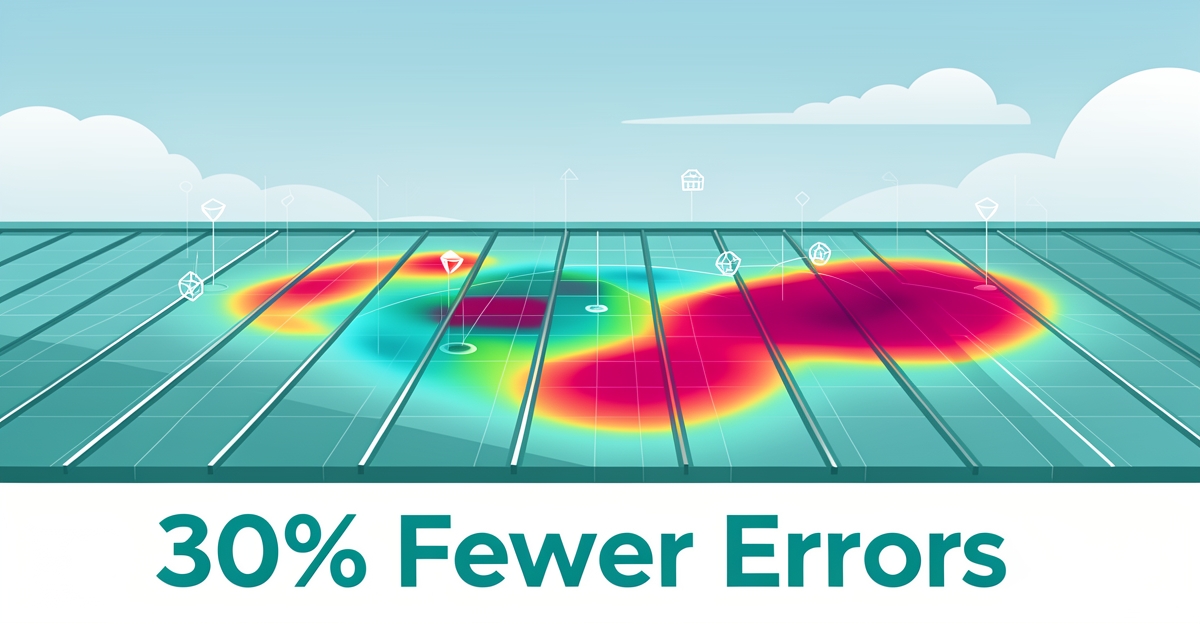
How an AI Technician Can Reduce Roof Inspection Errors by 30% in Metal Roofing
Key Facts
- Industry applications of AI defect localization report error reductions of up to 30% in metal roofing inspections.
- Thermal sensing platforms can scan large numbers of inspection points quickly, catching anomalies before they become failures.
- AI analyzes customer records, past jobs and weather data to flag roofing risks before dispatch.
- A multi-technology approach is essential for a complete roof condition assessment.
- Data quality and accuracy are crucial for AI roof inspection tools to function effectively.
Hire a team member that works 24/7 — for less than a part-time wage.
AI receptionists, SDRs, dispatchers and 99+ roles. Trained on your business, fully managed.
Not sure where to start? Ask our AI planner
The Hidden Cost of Human-Only Metal Roof Inspections
The hidden cost of relying solely on human inspectors for metal roof assessments extends far beyond labor hours. Traditional methods often miss subtle thermal anomalies that indicate underlying issues, leading to undetected moisture intrusion or structural weaknesses that compromise roof integrity over time. Without consistent data interpretation protocols, even experienced technicians may overlook critical signs during routine evaluations, especially when assessing large commercial installations with complex seams and fasteners. Human fatigue further compounds these risks, as prolonged exposure to heat, glare, and repetitive visual scanning reduces attention to detail during extended fieldwork. These limitations create a preventable error gap that AI-powered analysis can systematically address by cross-referencing historical job data, weather patterns, and customer records to flag risks before they escalate. Industry applications of AI defect localization report that integrating these tools into metal roofing inspections can reduce errors by up to 30%, directly improving safety outcomes and assessment accuracy. AI-driven analysis detects thermal inconsistencies invisible to the naked eye, enabling proactive maintenance rather than reactive repairs. For field teams managing high-volume inspection schedules, this technological augmentation doesn't replace expertise, it enhances decision consistency and reduces oversight caused by cognitive load. AIQ Labs supports this shift by building document and data systems that transform fragmented inspection histories into actionable intelligence, helping technicians prioritize high-risk areas with greater confidence. By anchoring assessments in multi-source data validation, metal roofing professionals can close the accuracy gap inherent in manual-only workflows while maintaining rigorous safety standards across every project phase. This approach turns inspection from a point-in-time check into a continuous risk-mitigation process, where past performance and environmental context actively inform present-day evaluations. The result is not just fewer errors, but a more resilient inspection framework that adapts to the unique demands of metal roofing systems. Teams gain the ability to trace recurring issues to specific installation variables or weather events, transforming inspection data into a strategic asset for long-term roof performance management. Ultimately, reducing preventable errors isn't about adding more steps, it's about making every inspection count with precision grounded in data, not just human judgment.
How AI Analyzes Historical and Environmental Data to Flag Roofing Risks
Metal roofing failures rarely appear without warning. AI changes the inspection from a snapshot to a pattern-based risk assessment by connecting what happened before with what the environment is doing now.
AI systems ingest customer records, past job reports, and localized weather data to build a risk profile for each roof. The analysis flags conditions that precede failures, such as moisture retention after hail events or corrosion trends in coastal zones. This proactive layer supplements on-site inspectors rather than replacing them.
According to industry applications of AI defect localization, AI-powered tools can deliver error reductions of up to 30% in metal roofing contexts. The improvement comes from correlating historical defects with environmental stressors that are invisible during a single visit.
Thermal imaging is a core input for this correlation. Modern thermal sensing platforms can scan large numbers of inspection points in a single pass and detect thermal anomalies before they become equipment failures. In industrial settings, that capability supports continuous operations by catching overheating early.
For metal roofs, the same principle applies to moisture intrusion and fastener fatigue. AI matches past repair notes with weather events to predict where condensation will pool or where wind uplift is most likely. Data quality and accuracy remain crucial for these models to function effectively.
A multi-technology approach strengthens the assessment. Structural inspection guidance consistently highlights the importance of using multiple investigative tools to get a complete and accurate picture of a roof's condition. AI acts as the integrator.
Typical risk signals the system surfaces include:
- Repeated moisture intrusion logged after hail or heavy rain in the same roof zone
- Thermal anomalies indicating trapped heat or insulation breakdown
- Corrosion patterns accelerating in coastal or high-humidity microclimates
- Fastener and seam issues recurring on roofs with similar age and coating history
AIQ Labs builds AI-powered document and data systems that support field teams with real-time decision insights. Through a focused AI Workflow Build, these systems can ingest service reports, photos, and weather feeds to flag high-risk assets before dispatch.
The result is a risk-assessment layer that prioritizes inspections, reduces repeat visits, and improves safety. Inspectors arrive with context, not just a checklist, and decisions are grounded in historical and environmental data rather than guesswork.
From Insight to Action: Implementing AI-Augmented Inspections in Field Workflows
Adopting AI in roof inspections doesn't mean discarding the systems your team already trusts, it means giving them a second set of eyes that never sleeps. Rather than replacing your CRM, scheduling software, or field apps, AIQ Labs builds custom AI systems that integrate directly into existing workflows, pulling from customer records, historical job data, and weather patterns to surface risks before a ladder ever leaves the truck.
The practical impact is immediate. Before each inspection, the system generates a pre-inspection briefing that flags high-risk zones, panels with prior repair history, sections exposed to recent hail events, or areas where thermal anomalies previously appeared. This kind of targeted analysis is what industry applications of AI defect localization credit with error reductions of up to 30% in metal roofing contexts.
In the field, technicians receive real-time risk flags through mobile interfaces, not after-the-fact PDF reports. If a roof section shows signs of moisture intrusion or thermal irregularity, the same class of issues thermal sensing platforms have proven effective at catching before failure, the system elevates that zone in the inspection queue automatically.
- Pre-inspection briefings auto-generated from customer records, past jobs, and weather data
- Real-time risk flags delivered to mobile devices while technicians are on-site
- Auto-prioritized inspection zones based on historical failure patterns
- Full audit trails for compliance and quality review
This is where AIQ Labs' AI Employees pillar becomes practical. An AI Employee in a field service role, a dispatcher, estimator assistant, or work order manager, handles the data synthesis and routing so human inspectors focus on what they do best: physical assessment and judgment. The AI doesn't climb the roof. It makes sure the person who does knows exactly where to look first.
Because these systems are custom-built and client-owned, there's no subscription lock-in or forced migration. As structural inspection experts consistently emphasize, the most reliable assessments come from combining multiple data sources, and that's precisely what a well-integrated AI layer delivers without disrupting the workflows your team already runs on. For teams ready to connect inspection data, dispatch, and reporting into one layer, an AI Operating System approach ties it together in phases you own outright.
Still paying for 10+ subscriptions that don’t talk to each other?
We build custom AI systems you own outright. No vendor lock-in. Full control.
Not sure where to start? Ask our AI planner
Frequently Asked Questions
Can AI really reduce mistakes on metal roof inspections?
What kinds of problems does AI catch that humans miss?
Will AI replace my roof inspection technicians?
How does AI use past jobs and weather to help inspections?
Do I need special equipment to get the error reduction benefit?
Is data quality a problem for AI roof inspections?
Turning Inspection Data into Long-Term Roof Resilience
By integrating AI-powered analysis of historical job data, weather patterns, and customer records, metal roofing teams can meaningfully reduce inspection errors, by up to 30% in reported applications, and shift from reactive fixes to proactive risk management. This approach doesn't replace inspector expertise, it enhances decision consistency by highlighting high-risk zones before technicians even arrive on site, reducing oversight caused by fatigue or cognitive load. The result is a more resilient inspection framework that turns fragmented data into actionable intelligence, helping teams prioritize where to look first and trace recurring issues to specific installation or environmental factors. For roofing professionals looking to make every inspection count with precision grounded in data, AIQ Labs offers custom-built systems that integrate directly into existing workflows, no subscription lock-in, just owned technology that scales with your business. To explore how this could work for your team, start with the free two-minute Fit Check to identify your highest-ROI automation opportunity.
Make AI your competitive advantage — not just another tool.
Strategy, implementation and ongoing optimization. One partner, end to end.
Not sure where to start? Ask our AI planner