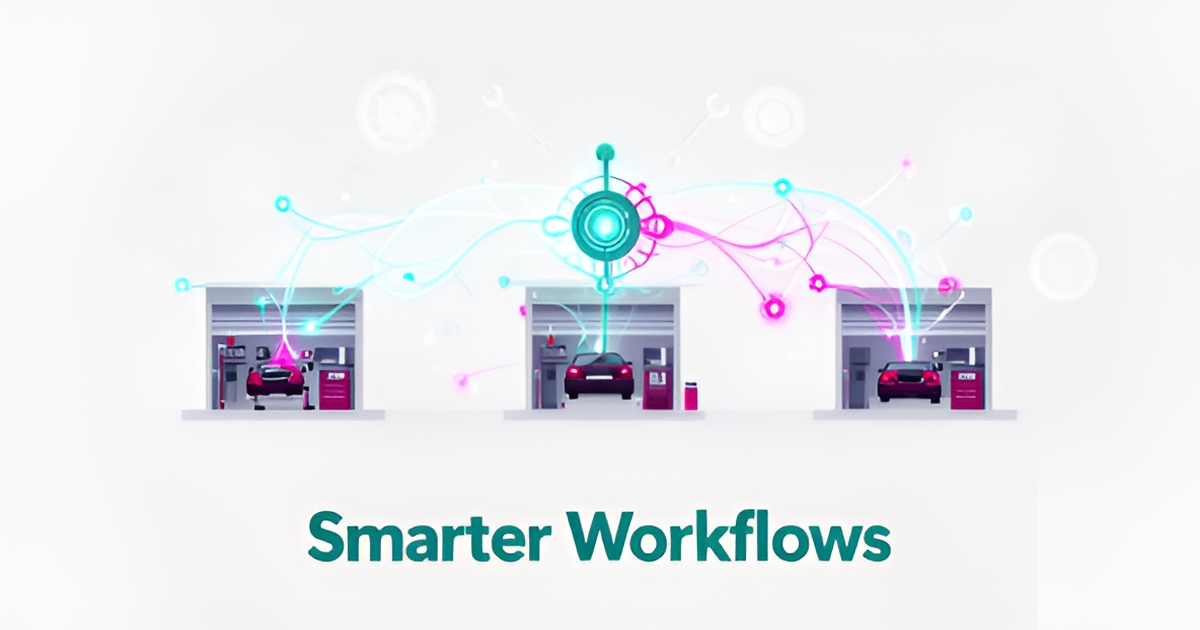
How an AI Technician Coordinator Can Improve Workflow Efficiency in Multi-Shop Environments
Key Facts
- A majority of large organizations have automated at least one business function with AI, according to recent research.
- AI-powered automation is projected to add trillions of dollars in annual economic value globally, industry research shows.
- The global workflow automation market has been valued in the tens of billions of dollars and continues to grow, market data indicates.
- Market forecasts project the workflow automation market to grow several-fold by 2030, market forecasts show.
- Most enterprises use or plan to use low-code/no-code tools for workflow automation, enterprise adoption trends reveal.
- Citizen developers are expected to outnumber professional developers in the coming years, future workforce projections state.
- A large share of new enterprise applications are built with low-code or no-code technologies, development trend analysis confirms.
Hire a team member that works 24/7 — for less than a part-time wage.
AI receptionists, SDRs, dispatchers and 99+ roles. Trained on your business, fully managed.
Not sure where to start? Ask our AI planner
The Hidden Cost of Manual Task Assignment in Multi-Shop Operations
Despite advances in automation, many multi-shop operations still rely on manual task assignment, creating hidden inefficiencies that erode profitability. A recent study found that most large organizations have automated at least one function, yet scheduling and dispatch remain pain points where human error and delay persist. In busy restoration environments, technicians often sit idle waiting for the next job while others are overloaded, not due to lack of work, but because assignments are made reactively rather than strategically. This mismatch between skill availability and task demand leads to longer cycle times, rushed work, and missed deadlines—especially when shops operate across locations with shifting priorities.
The cost of this inefficiency goes beyond lost productivity. Manual scheduling increases the likelihood of assigning complex repairs to technicians lacking specific expertise, resulting in rework or extended troubleshooting. Without real-time visibility into workload, skill sets, and job urgency, dispatchers make decisions based on incomplete information, often favoring proximity over competence. These skill mismatches not only delay project timelines but also increase the risk of errors that require costly callbacks or customer concessions. In multi-shop settings, where consistency and reliability are critical, such variability undermines service quality and damages brand trust across locations.
AI-driven task coordination eliminates guesswork by matching work to the right technician based on certified skills, current availability, and job priority. By continuously analyzing incoming work orders, technician profiles, and shop capacity, an AI coordinator ensures that every assignment maximizes throughput while minimizing idle time. This dynamic balancing act reduces bottlenecks, prevents burnout from uneven workloads, and keeps projects moving forward without constant managerial oversight. The result is a more predictable workflow where timelines are met not through overtime, but through smarter allocation of existing talent.
Ultimately, the shift from manual to intelligent task assignment isn’t just about efficiency—it’s about building a resilient operation that scales without friction. When AI handles the complexity of scheduling, shop leaders can focus on growth rather than firefighting. For businesses ready to move beyond broken processes, AIQ Labs offers a path forward through custom workflow builds that turn scheduling from a liability into a competitive advantage. To explore how this could work in your operation, start the Fit Check and schedule a free 30-minute strategy call to identify your highest-impact automation opportunity.
How AI Technician Coordinators Optimize Work Queues and Skill-Based Task Assignment
Imagine a bustling restoration shop where every technician is perfectly matched to the jobs they excel at, idle time shrinks dramatically, and workflow bottlenecks become a thing of the past. This isn’t just a dream—AI technician coordinators are making it a reality.
AI-driven workflow managers analyze multiple factors—technician skills, availability, and job priority—to dynamically assign tasks. This approach reduces idle time and improves throughput. According to industry research, AI-powered automation is expected to add trillions of dollars in annual economic value through enhanced decision-making and process efficiency. This economic potential underscores why businesses are rapidly adopting AI coordinators.
One of the key benefits is the ability to optimize work queues in real time. Instead of relying on static schedules or manual dispatching, AI systems continuously assess who is best suited for each task. Experts note that this dynamic assignment helps avoid common pitfalls like automating broken processes or overestimating AI’s capabilities. The result is a smoother, more efficient operation that adapts as conditions change.
Here are some ways AI technician coordinators optimize workflows:
- Analyze technician skill sets to match tasks precisely
- Monitor real-time availability and adjust assignments accordingly
- Prioritize urgent jobs to reduce downtime
- Balance workloads across multiple shop locations
AIQ Labs builds AI-driven workflow managers that optimize staffing and reduce idle time in busy restoration shops—whether as a standalone workflow build or as part of a broader AI operating system for your whole operation. By leveraging these intelligent coordinators, businesses can unlock significant productivity gains without adding headcount.
Moreover, studies show that most large organizations have already automated processes in at least one business function, highlighting the growing trust in AI to manage complex workflows. As AI continues to evolve, its role in skill-based task assignment will only deepen, making multi-shop environments more agile and responsive.
Ultimately, AI technician coordinators don’t just assign tasks—they transform how work flows through an organization, delivering measurable improvements in efficiency and output.
Implementation: Deploying an AI Coordinator That Integrates with Your Shop Management Tools
Deploying an AI technician coordinator starts with understanding your shop’s unique workflow demands and ensuring the solution fits seamlessly into your existing tools. Many organizations make the mistake of automating chaotic processes, which leads to faster failure rather than better outcomes, so the first step is to audit current task routing, technician availability, and skill-matching practices. This foundational analysis helps identify where AI can reduce idle time and prevent bottlenecks before they impact job completion.
AIQ Labs supports this through flexible payment models: Start Monthly for ongoing managed support, Build in Milestones for phased deployment of a custom coordinator, or Own It Outright if you want to own the system with no recurring fees. Every engagement includes deep integration with CRM, scheduling, and dispatch systems to enable real-time data exchange without disrupting current operations. Successful automation requires checking integration options and matching tools to specific workflow needs, which is why we prioritize API compatibility with platforms like Shop Management Software, Google Calendar, and QuickBooks during the architecture phase.
The deployment process follows a structured phased approach: discovery and architecture, development and integration, deployment and training, and ongoing optimization. During development, we build specialized agents that analyze work orders, assign tasks based on technician certification and location, and dynamically adjust schedules when delays occur. These agents operate 24/7, reducing reliance on manual dispatch and minimizing human error in task allocation. Industry research suggests AI-powered automation can add trillions of dollars in annual economic value across global industries by enhancing decision-making and streamlining repetitive coordination tasks.
To ensure long-term effectiveness, we embed performance monitoring from day one, tracking metrics like average job start time, technician utilization rate, and dispatch accuracy. This data feeds into continuous improvement cycles where the AI coordinator learns from historical patterns—such as peak demand times or recurring parts delays—to refine its recommendations over time. By aligning AI capabilities with proven workflow principles, shops in multi-location environments can achieve measurable gains in throughput and customer satisfaction without overhauling their core systems. For shops ready to begin, the first step is a free strategy call to map bottlenecks and validate ROI before any build begins.
Still paying for 10+ subscriptions that don’t talk to each other?
We build custom AI systems you own outright. No vendor lock-in. Full control.
Not sure where to start? Ask our AI planner
Frequently Asked Questions
How does an AI technician coordinator reduce idle time in multi-shop operations?
What are the risks of relying on manual task assignment in restoration shops?
Can AI coordinators integrate with existing shop management tools like Google Calendar or QuickBooks?
What payment models does AIQ Labs offer for building an AI coordinator?
Is it a mistake to automate broken processes with AI, and how can I avoid it?
How do I get started with implementing an AI technician coordinator for my multi-shop operation?
From Reactive Dispatch to Resilient Operations
Manual task assignment in multi-shop environments creates the hidden drag of idle technicians, overloaded teams, and skill mismatches that drive rework and missed deadlines. An AI technician coordinator removes that guesswork by continuously matching work orders to the right certified technician based on real-time availability, location, and job priority, balancing workloads across locations and keeping projects moving without constant managerial oversight. The shift is less about adding technology and more about building a resilient operation that scales without friction, turning scheduling from a liability into a competitive advantage. If you’re ready to see where the biggest bottlenecks and ROI opportunities sit in your own shops, start the Fit Check at AIQ Labs and schedule a free 30-minute strategy call to map your workflow and validate the impact before any build begins. With AI-powered automation projected to add trillions of dollars in annual economic value across global industries through enhanced decision-making and process efficiency, the question is no longer if intelligent coordination pays off, but how quickly you can capture it.
Make AI your competitive advantage — not just another tool.
Strategy, implementation and ongoing optimization. One partner, end to end.
Not sure where to start? Ask our AI planner