How an AI Tire Technician Can Reduce Service Response Time for Mobile Tire Service Businesses
Key Facts
- AI-powered dispatch systems can reduce emergency roadside service times from 30 minutes to as little as 15 seconds according to industry analysis
- AI voice and chat agents can lower inbound call volume to service advisors by 20-50% as reported by In Motion Brands
- The Mobile Tire Service Route Planner with Safety Compliance calculates drive time, fuel costs, service duration, and minimum job pricing while supporting OSHA compliance per Global AI Store
- A single operator managing three SmartBay units can replace 24 tires or service 6 vehicles in the same time as one manual technician in one bay according to The Robot Report
- Hunter Engineering's automated balancers and changers cut a four-tire job from 34 minutes to 19 minutes, a 44% time savings per Tire Review
- Shop operations and inventory management show up to 60% potential time savings through digital systems as noted in tire service automation analysis
- AI doesn't replace people; it empowers your team, improves responsiveness, and helps deliver a standout customer experience per In Motion Brands
Hire a team member that works 24/7 — for less than a part-time wage.
AI receptionists, SDRs, dispatchers and 99+ roles. Trained on your business, fully managed.
Not sure where to start? Ask our AI planner
The Dispatch Bottleneck: Why Manual Processes Fail Mobile Tire Services
Mobile tire service businesses face a critical operational bottleneck in their dispatch processes that directly impacts customer satisfaction and revenue. Manual dispatch systems, reliant on human judgment and sequential workflows, often deliver 30-minute average response times for emergency roadside service calls, creating significant delays in time-sensitive scenarios. This latency frustrates stranded customers and limits the number of service calls a mobile technician can complete in a day, directly affecting business throughput and profitability.
The core issue lies in the inherent limitations of human-driven dispatch workflows. When a service call comes in, dispatchers must manually assess the situation, check technician availability, calculate routes considering traffic and location, and communicate assignments—each step introducing potential for error and delay. Human operators struggle to process multiple variables simultaneously, leading to suboptimal routing decisions and inconsistent job prioritization that fails to account for urgency, technician proximity, or revenue potential in real time. These manual inefficiencies are compounded by fatigue and cognitive load during peak demand periods, further degrading response consistency.
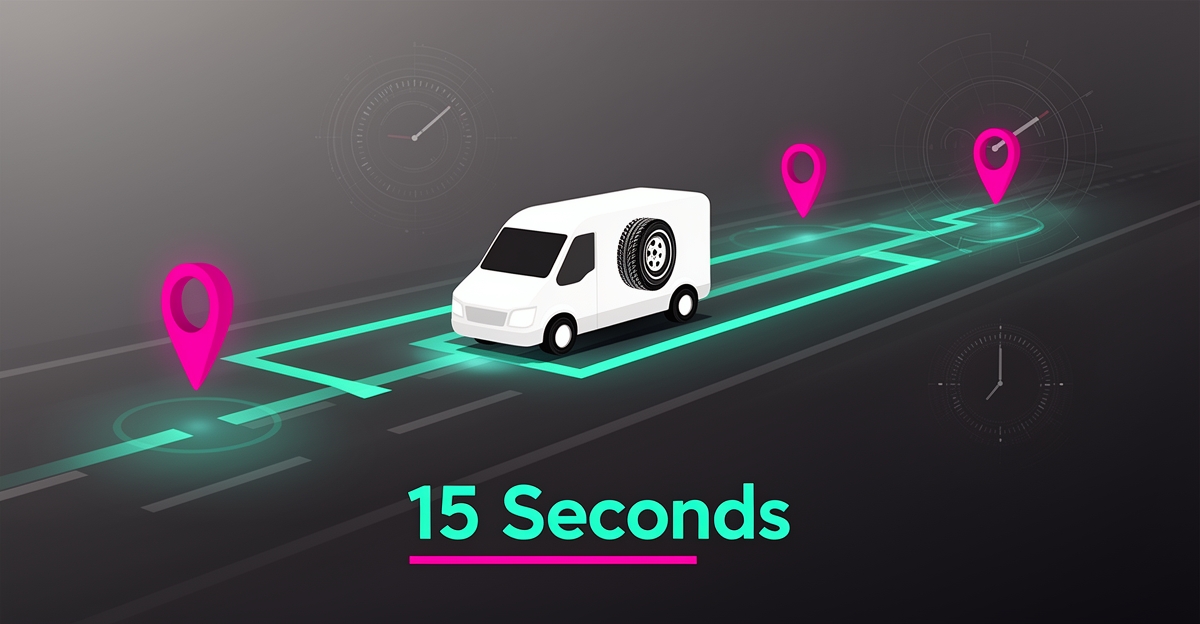
Research indicates that AI-powered Emergency Roadside Service (ERS) platforms can transform this bottleneck by reducing dispatch times from 30 minutes to as little as 15 seconds. This dramatic acceleration eliminates the manual back-and-forth traditionally required to assign jobs, enabling near-instantaneous deployment of the nearest available technician. For mobile tire service providers operating in unpredictable field environments, this shift from reactive to proactive dispatch is not merely an efficiency gain—it fundamentally alters service capability and customer experience.
AIQ Labs addresses this challenge two ways: managed AI Employees (AI dispatchers, receptionists, and customer-facing agents at roughly 80% less cost than a human hire) or a fixed-price AI Workflow Build that rebuilds your dispatch process end to end. By replacing manual sequencing with real-time, data-driven decision making, mobile tire businesses overcome the limits of human capacity while keeping full operational control. The result is a dispatch process that consistently delivers optimal technician deployment, minimizes customer wait times, and maximizes service revenue per hour—turning a traditional pain point into a competitive advantage.
AI-Driven Dispatch: Automating Response Time Reduction with Proven Results
Imagine a stranded motorist calling for a tire change and having a technician assigned before they even hang up the phone. This scenario is becoming reality as AI-powered Emergency Roadside Service (ERS) platforms demonstrate the ability to reduce dispatch times from 30 minutes to as little as 15 seconds—a change that fundamentally alters customer expectations for mobile service businesses.
Traditional dispatch workflows create bottlenecks at every stage: staff must manually answer calls, assess technician availability, calculate routes, and communicate assignments. AI-driven workflow automation eliminates these friction points by handling call intake, technician matching, and route optimization simultaneously. When a service request arrives, the system instantly evaluates multiple variables—including technician location, traffic conditions, job urgency, and equipment requirements—to deploy the optimal resource without human intervention.
The efficiency gains extend beyond initial dispatch. AI systems provide 24/7 operational consistency that human dispatchers cannot match, maintaining peak performance during overnight hours, weekends, and holiday surges when staffing typically falls short. Unlike manual processes that degrade with fatigue or high call volumes, these platforms process every request with the same speed and accuracy, ensuring no customer waits longer because of shift changes or lunch breaks.
Modern AI dispatch platforms integrate several critical functions to achieve these results:
- Automated call intake that captures customer details and service requirements without human delay
- Real-time technician matching based on location, skillset, and current workload
- Dynamic route optimization that calculates drive time and fuel costs while supporting OSHA safety compliance
- Continuous reprioritization of jobs as new emergency requests arrive
Complementing these dispatch improvements, AI voice and chat agents can reduce inbound call volume to service advisors by 20-50%, handling routine inquiries and appointment booking while escalating only complex emergencies to human staff. This division of labor allows dispatchers to focus on coordination rather than data entry.
For mobile tire service providers, implementing these systems requires expertise in both AI architecture and field service operations. AIQ Labs has deployed 200+ multi-agent systems and runs four live SaaS products of its own daily—so the dispatch layer it builds is tested in real operations, not just demos. Whether you start with an AI dispatcher as a managed AI Employee or rebuild the whole workflow, you own the system outright. By treating dispatch as a data problem rather than an administrative task, mobile tire businesses can achieve the sub-minute response times that define industry leadership.
Beyond Dispatch: AI-Optimized Routing, Job Prioritization, and Safety Compliance
Dispatch speed is only the first win. The real leverage comes when AI evaluates every variable — drive time, fuel cost, service duration, even minimum job pricing — simultaneously to build routes that maximize revenue per mile. Tools like the Mobile Tire Service Route Planner with Safety Compliance bake OSHA requirements into the calculation so compliance never competes with efficiency.
- AI scores each job by urgency, proximity, and revenue potential before a technician leaves the yard
- Routes recalculate in real time when traffic, weather, or new emergency calls shift the math
- Technicians arrive with the right parts and safety plan, not just an address
- Dispatchers move from phone-tag to exception handling, cutting inbound call load 20–50%
Industry analysis indicates ERS platforms can shrink dispatch from 30 minutes to 15 seconds while freeing advisors for higher-value work. Tire Review notes these systems "focus on repetitive administrative tasks" so technicians concentrate on diagnosing issues and serving customers. AIQ Labs applies the same principle: custom workflow agents that own the logistics layer end-to-end, letting your crew run more calls per shift without burning out.
Implementation Path: From Assessment to AI Workflow Integration for Tire Service Providers
Implementing AI workflow systems doesn't require a complete operational overhaul—it demands a strategic, phased approach that builds momentum while delivering measurable results. The most successful mobile tire service providers start with focused implementations that prove value before expanding scope.
Step 1: Evaluate Current Processes and Identify Bottlenecks
Begin by mapping existing dispatch, routing, and scheduling workflows to pinpoint where delays occur. According to Tire Review, shops should "review existing processes to identify time-consuming tasks" before selecting automation tools. For mobile operations, this typically reveals manual dispatch coordination, inefficient route planning, and reactive job prioritization as primary culprits.
Document baseline metrics including average response time, jobs completed per day, and fuel costs per service call. This data becomes your benchmark for measuring AI impact. AIQ Labs' Workflow Builds start exactly here: find the one workflow that costs you the most, then rebuild it at a fixed price.
Step 2: Deploy AI Voice Agents for Call Handling
Start with customer-facing automation that delivers immediate relief. AI voice and chat agents can handle appointment booking, service inquiries, and initial diagnostics while capturing essential vehicle and location data. According to In Motion Brands, these systems "can lower inbound call volume to service advisors and counter staff by 20-50%."
This is where an AI Employee—a managed AI receptionist or dispatcher, at roughly 80% less cost than a human hire—shows results within weeks, making it ideal for building internal confidence in AI capabilities.
Step 3: Integrate Intelligent Dispatch and Route Planning
Next, implement AI-powered dispatch systems that automate technician assignment and optimize routing. These platforms eliminate the "manual back-and-forth" that traditionally extends dispatch times from 30 minutes to as little as 15 seconds, as documented by industry analysis.
Advanced route planning tools calculate drive time, fuel costs, service duration, and minimum job pricing while supporting OSHA compliance—critical for mobile operations where technicians work in uncontrolled environments.
Step 4: Establish Data Collection and Continuous Optimization
AI systems improve through operational data. Implement tracking for key performance indicators including response time, first-time fix rate, technician utilization, and customer satisfaction scores.
- Monitor dispatch accuracy and route efficiency weekly
- Analyze job duration patterns to refine scheduling logic
- Track customer feedback to identify service quality trends
- Review fuel consumption and vehicle wear for cost optimization
Step 5: Train Staff and Scale Strategically
Technician buy-in determines implementation success. Frame AI as a productivity enhancer that handles administrative burdens, allowing skilled workers to focus on technical expertise and customer relationships. As research on automation in tire service confirms, AI "empowers your team" rather than replacing human judgment.
Start with a single crew or service territory, refine workflows based on real-world performance, then expand systematically. AIQ Labs' Build in Milestones model ensures each phase delivers ROI before additional investment, and larger builds can grow into a full AI Operating System—one connected layer across your entire operation, owned outright. See pricing models for how Start Monthly, Build in Milestones, and Own It Outright work in practice.
Still paying for 10+ subscriptions that don’t talk to each other?
We build custom AI systems you own outright. No vendor lock-in. Full control.
Not sure where to start? Ask our AI planner
Frequently Asked Questions
How much faster can AI dispatch actually make our mobile tire service response times?
Will AI dispatch replace our human dispatchers or technicians?
Can AI route planning handle real-world variables like traffic, OSHA safety rules, and minimum job pricing?
What kind of call volume reduction can we expect from AI voice agents handling inbound calls?
How do we implement AI dispatch without a disruptive, expensive overhaul of our current operations?
What measurable efficiency gains have other tire shops seen from AI automation beyond dispatch?
From Bottleneck to Breakthrough: Turning Dispatch Delays into Competitive Edge
Mobile tire service businesses no longer need to accept 30-minute response times as the cost of doing business. By replacing manual dispatch with AI-driven workflow automation, providers can cut assignment delays to under 15 seconds while simultaneously optimizing routing, job prioritization, and safety compliance—all without adding headcount. This shift doesn’t just improve efficiency; it transforms service capacity, allowing technicians to complete more calls per shift, reduce fuel waste, and deliver consistent 24/7 responsiveness that builds customer trust. The result is a measurable boost in revenue per hour and a stronger position in competitive markets where speed and reliability win loyalty. For owners ready to move beyond guesswork and into data-driven operations, the path forward starts with a clear assessment of current bottlenecks. Take AIQ Labs’ 2-minute Fit Check to see whether your dispatch workflow qualifies for a fixed-price build—then book your free 30-minute strategy call to get a realistic roadmap tailored to your actual workflows, not a generic pitch. Every day your dispatch runs on manual coordination is revenue left on the table; see where AI can unlock immediate value in your business.
Make AI your competitive advantage — not just another tool.
Strategy, implementation and ongoing optimization. One partner, end to end.
Not sure where to start? Ask our AI planner