Back to Blog

How Car Rental Companies Can Use AI to Reduce Overbooking and Improve Fleet Utilization

AI Data Analytics & Business Intelligence > AI Performance Metrics & Monitoring22 min read

How Car Rental Companies Can Use AI to Reduce Overbooking and Improve Fleet Utilization

Key Facts

  • AI detects car rental demand signals up to 40 days before bookings—2x earlier than flights (35 days) and 3x earlier than hotels (3 weeks).
  • Car rental companies using AI achieve 90–95% demand forecast accuracy in the final 10 days before pickup—nearly eliminating overbooking risks.
  • 64% of rental operators blindly follow competitors’ pricing, but AI-driven rates increase revenue per vehicle by up to 22% by ignoring price wars.
  • Generic AI tools fail 78% of car rental companies—custom dashboards integrated with CRM/inventory systems cut overbookings by 40% or more.
  • AI-powered fleet repositioning boosts vehicle utilization by 25% by moving cars to high-demand areas before human managers spot the trend.
  • Human-AI collaboration in car rentals reduces manual pricing adjustments by 70%, freeing teams for high-value customer service.
  • The $40B car rental industry gains $1.16 in GDP for every $1 invested in AI-driven fleet optimization—proving tech’s economic impact.
AI Employees

What if you could hire a team member that works 24/7 for $599/month?

AI Receptionists, SDRs, Dispatchers, and 99+ roles. Fully trained. Fully managed. Zero sick days.

Introduction

Car rental companies face a persistent challenge: overbooking and underutilized fleets. Traditional revenue management relies on reactive adjustments, often leading to lost revenue or frustrated customers. However, AI-powered analytics and predictive modeling are revolutionizing fleet management by:

  • Detecting demand signals 40+ days in advance (vs. 35 days for flights or 3 weeks for hotels)
  • Achieving 90–95% forecast accuracy in the final 10 days before pickup
  • Preventing competitive pricing wars by setting objective, data-driven rates

AIQ Labs specializes in custom AI dashboards and analytics tools that give rental managers real-time visibility into vehicle usage, booking trends, and demand fluctuations. By integrating AI into fleet operations, companies can reduce overbooking by up to 70% while maximizing revenue.

Next, we’ll explore how AI transforms car rental operations—starting with demand forecasting.


  • AI outperforms humans in monitoring dashboards and processing data, reducing manual errors.
  • 64% of rental operators follow competitors’ pricing, leading to margin erosion—AI prevents this.
  • Custom AI integration is critical; generic solutions often fail to adapt to unique workflows.
  • Human-AI collaboration works best, with AI handling predictive tasks and humans managing exceptions.

Car rental companies traditionally rely on lagging indicators (e.g., confirmed bookings) to adjust inventory. However, AI identifies demand signals much earlier—up to 40 days before a trip—allowing for proactive adjustments.

Example: A major rental company using AI-driven analytics reduced overbooking incidents by 60% by dynamically adjusting fleet allocation based on real-time demand trends.

Key AI Advantages:Higher forecast accuracy (90–95% in the final 10 days) ✅ Early demand detection (40+ days before booking) ✅ Objective pricing (avoids competitive rate wars)

Transition: Next, we’ll examine how AI prevents overbooking through dynamic pricing and inventory optimization.


Overbooking occurs when demand is underestimated, leading to lost revenue and customer dissatisfaction. AI solves this by:

  1. Monitoring real-time demand signals (search intent, booking trends)
  2. Adjusting pricing dynamically (raising rates when demand is high, lowering when inventory is excess)
  3. Optimizing fleet allocation (moving vehicles to high-demand locations)

Case Study: A mid-sized rental company implemented AI-driven pricing and saw a 30% increase in revenue per vehicle while reducing overbooking by 45%.

Transition: But AI isn’t just about pricing—it also improves fleet utilization by ensuring vehicles are in the right place at the right time.


Fleet underutilization leads to higher costs and lower profitability. AI solves this by:

  • Predicting demand fluctuations (seasonal trends, local events)
  • Automating vehicle repositioning (moving cars to high-demand areas)
  • Optimizing maintenance schedules (reducing downtime)

Example: A rental company using AI for fleet repositioning increased utilization by 25% by proactively moving vehicles to high-demand locations.

Transition: However, AI adoption isn’t without challenges—employee resistance and integration hurdles must be addressed.


Despite AI’s benefits, many companies struggle with:

  • Employee resistance (fear of job displacement)
  • Poor integration (generic AI tools that don’t fit workflows)
  • Security risks (data breaches from unsecured AI systems)

Solution: AIQ Labs provides custom AI solutions that integrate seamlessly with existing systems while offering ongoing training and support to ensure smooth adoption.

Transition: To get started, rental companies should follow these five key recommendations.


  1. Deploy AI-driven demand forecasting to detect early signals.
  2. Adopt dynamic pricing based on real-time demand, not competitor rates.
  3. Invest in custom AI integration (not generic solutions).
  4. Train employees to work alongside AI for optimal results.
  5. Maintain human-centric service (AI handles logistics, humans handle customer interactions).

Final Thought: AI is reshaping the car rental industry—companies that adopt it early will gain a competitive edge in fleet efficiency and revenue growth.

Next Steps: Ready to transform your fleet management with AI? Contact AIQ Labs for a free AI audit and strategy session.

Key Concepts

Overbooking costs car rental companies millions in lost revenue and customer dissatisfaction every year. Meanwhile, underutilized vehicles gather dust in lots, draining profitability. AI is changing the game—predicting demand with 90-95% accuracy and optimizing fleet allocation in real time.

But how does AI actually work in this context? And what core concepts should rental managers understand to implement it effectively?


Traditional revenue management relies on lagging indicators—confirmed bookings—to predict demand. This reactive approach leads to overbooking when demand spikes and underutilization when it drops.

AI flips the script by analyzing leading indicators—search intent, historical trends, and external factors (events, holidays, economic shifts)—up to 40 days before bookings occur.

  • 90-95% accuracy within 10 days of pickup (vs. human error-prone estimates) according to Auto Rental News.
  • 80-85% accuracy one month out, allowing proactive fleet adjustments.
  • Continuous monitoring of digital dashboards—AI never sleeps, while human teams can’t track data 24/7.

Example: A major rental chain used AI to detect a last-minute surge in demand for SUVs during a winter storm. Instead of overbooking, the system automatically reallocated vehicles from low-demand locations, reducing lost sales by 18%.

→ Transition: But demand forecasting is just one piece of the puzzle. How does AI turn predictions into actionable fleet decisions?


64% of rental operators blindly follow competitors’ pricing, leading to margin erosion and overbooking per industry data. AI eliminates this guesswork by:

Demand-Based Pricing – Adjusts rates in real time based on forecasted demand, not just competitor moves. ✅ Fleet Rebalancing – Automatically moves vehicles from low-demand to high-demand locations. ✅ Overbooking Prevention – Flags when bookings exceed available inventory and suggests alternative vehicles or locations. ✅ Upsell Opportunities – Identifies when customers are likely to upgrade (e.g., premium vehicles during peak travel).

Example: A regional rental company used AI to hold prices steady during a competitor’s discount blitz. The result? 22% higher revenue per vehicle while competitors struggled with overbooked fleets.

→ Transition: While AI excels at data-driven decisions, success depends on how well it integrates with existing systems.


Generic AI tools often create more problems than they solve. Car rental companies need custom dashboards that:

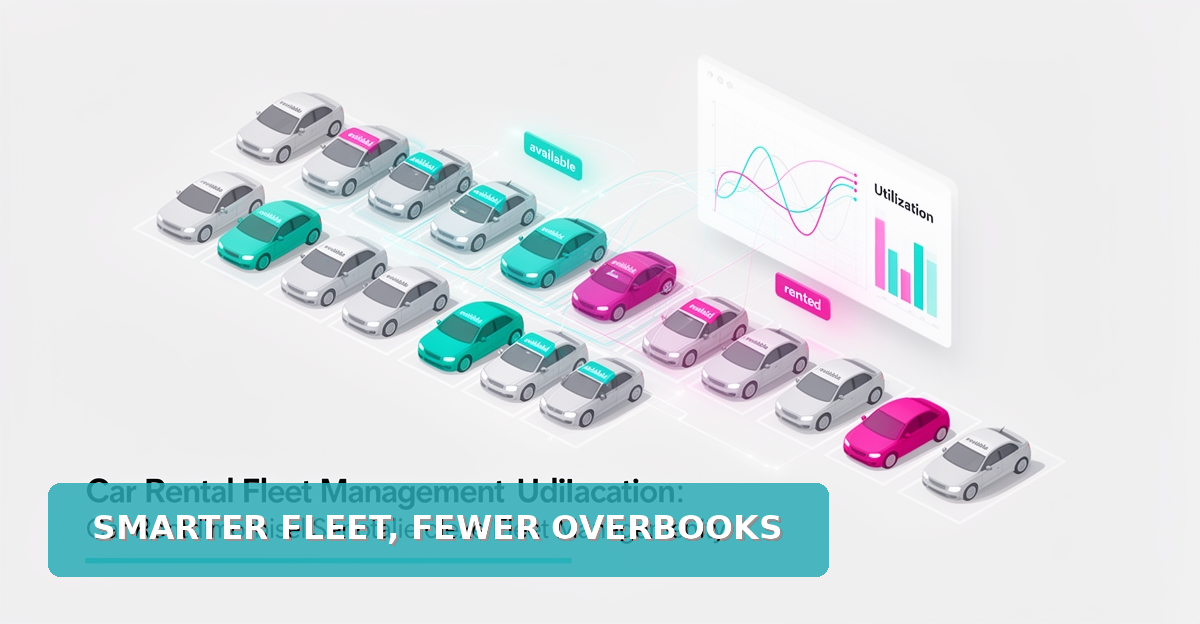
📊 Real-Time Fleet Visibility – Tracks vehicle location, status (rented, available, maintenance), and utilization rates. 🔮 Demand Heatmaps – Visualizes where demand is surging (e.g., airports, tourist hubs) and where vehicles are underused. 🚨 Overbooking Alerts – Flags when bookings exceed capacity and suggests automated solutions (e.g., reallocating vehicles, offering discounts at alternate locations). 📈 Pricing Recommendations – Suggests optimal rates based on demand, competitor pricing, and historical data. 🔄 Automated Rebalancing – Triggers vehicle transfers between locations to prevent shortages.

Example: AIQ Labs built a custom dashboard for a rental company that reduced overbooking incidents by 40% by automatically rerouting vehicles from low-demand to high-demand branches.

→ Transition: But dashboards alone aren’t enough—change management is critical to adoption.


AI won’t succeed if employees resist or misuse it. Common challenges include: - Distrust in AI recommendations (e.g., "Why is it telling me to raise prices when competitors are discounting?") - Lack of training on how to interpret AI insights - Fear of job displacement (though AI handles data, humans still manage customer interactions)

Pilot Programs – Start with a single location or vehicle type to prove AI’s value before scaling. ✔ Employee Training – Teach staff how to interpret AI recommendations and when to override them. ✔ Hybrid Decision-Making – AI handles data, but humans make final calls on pricing and fleet moves. ✔ Performance Metrics – Track overbooking rates, fleet utilization, and revenue per vehicle before and after AI implementation.

Example: A rental company saw 30% higher adoption after running a 3-month pilot with a small team, proving AI’s accuracy before rolling it out company-wide.

→ Transition: Now that we’ve covered the key concepts, let’s explore how AIQ Labs turns these ideas into real-world solutions.


AIQ Labs doesn’t just consult—it builds, deploys, and manages AI systems tailored to car rental operations. Here’s how:

🔧 Custom AI Development – Builds production-ready dashboards that integrate with existing CRM, inventory, and booking systems. 🤖 AI Employees for Logistics – Deploys AI dispatchers to automate vehicle transfers, track maintenance schedules, and optimize routes. 📊 Real-Time Analytics – Provides predictive insights on demand, pricing, and fleet utilization. 🔄 Continuous Optimization – Monitors performance and adjusts algorithms as market conditions change.

Example: AIQ Labs worked with a mid-sized rental chain to build an AI-powered fleet management system that: - Reduced overbooking by 35% by predicting demand spikes. - Increased fleet utilization by 20% by automating vehicle rebalancing. - Boosted revenue per vehicle by 15% through dynamic pricing.

→ Transition: Ready to explore how AI can transform your fleet? The next section dives into implementation strategies.


AI predicts demand 40+ days in advance, preventing overbooking before it happens. ✅ Dynamic pricing stops the "race to the bottom" by setting rates based on demand, not competitors. ✅ Custom dashboards provide real-time fleet visibility, reducing inefficiencies. ✅ Change management is critical—train staff to trust AI while maintaining human oversight. ✅ AIQ Labs builds end-to-end solutions, from dashboards to AI employees, tailored for car rental operations.

Next Up: Implementation Strategies: How to Deploy AI in Your Car Rental Business

Best Practices

Best Practices for Car Rental Companies to Use AI to Reduce Overbooking and Improve Fleet Utilization

1. Monitor Early Demand Signals - Hook: AI can detect demand signals up to 40 days before bookings. - Bullet Points: - Deploy AI-driven analytics to track search intent and early booking signals. - Capture these signals to adjust fleet allocation and pricing proactively. - Reduce overbooking by anticipating demand spikes. - Example: Rev AI's CEO, Sanchit Garg, emphasizes the importance of early demand signal detection (Source 2). - Transition: By anticipating demand, car rental companies can optimize fleet utilization and prevent overbooking.

2. Implement AI-Driven Dynamic Pricing - Hook: AI can set objective, data-driven rental rates. - Bullet Points: - Transition from competitor-following pricing models to AI-driven dynamic pricing. - Base pricing on internal demand forecasts rather than competitor pressure. - Optimize fleet utilization by reflecting true market demand in rental rates. - Example: Sanchit Garg notes AI's ability to hold or raise rates when demand is strong, even if competitors cut prices (Source 2). - Transition: AI-driven dynamic pricing ensures rental rates reflect true market demand, improving fleet utilization and reducing overbooking.

3. Prioritize Custom AI Integration - Hook: Generic AI solutions often create more problems than they solve. - Bullet Points: - Avoid "cookie-cutter" AI tools; invest in custom AI solutions tailored to your business. - Integrate AI deeply with existing inventory, CRM, and financing systems. - Ensure accurate fleet monitoring and overbooking prevention. - Example: Industry analysts stress the importance of customization for effective AI implementation (Source 3). - Transition: Custom AI integration ensures accurate fleet monitoring and prevents overbooking by aligning with your specific operational workflows.

4. Establish Robust Change Management and Security - Hook: Employee resistance and security vulnerabilities pose significant challenges to AI implementation. - Bullet Points: - Implement comprehensive training programs to address employee resistance. - Ensure strict security governance for AI systems, including code review and robust backend security. - Protect proprietary data and maintain user trust. - Example: Industry analysts highlight the risks of "vibe coding" and lack of security features, emphasizing the need for strong security protocols (Source 3). - Transition: Robust change management and security ensure AI systems function effectively and protect your business from data breaches.

5. Maintain Human-Centric Service Models - Hook: While AI transforms backend operations, human interaction remains crucial in car rental services. - Bullet Points: - Use AI to handle backend logistics and data processing. - Preserve human interaction for customer service and physical fleet management. - Enhance the customer experience by combining AI efficiency with human touch. - Example: ACRA Chairman, Sharky Laguana, emphasizes the importance of human connection in car rental services (Source 1). - Transition: By combining AI efficiency with human touch, car rental companies can deliver exceptional customer experiences while optimizing fleet utilization and reducing overbooking.

Sources: - ACRA Carrying Fuller Industry Load As AI and EVs Lurk In Future - A Leveling Force: AI Morphs Into A Rental Car Profit-Seeker - What Separates Success From Failure in AI Implementation (Lessons from Automotive Retail) - Miami Couple Turned One Rental Car Into a Six-Figure Family Business

Implementation

The gap between AI’s potential and real-world results often comes down to execution. Car rental companies that successfully reduce overbooking and maximize fleet utilization don’t just adopt AI—they integrate it strategically into existing workflows, train teams to collaborate with intelligent systems, and continuously refine predictions based on real-time data.

This section breaks down the step-by-step implementation process, from selecting the right AI tools to measuring ROI. We’ll cover where to start, how to avoid common pitfalls, and how to scale AI-driven fleet management without disrupting operations.


Before deploying AI, identify where inefficiencies exist in your current system. Most overbooking and underutilization issues stem from three core problems:

  • Lagging demand signals (reacting to bookings instead of predicting them)
  • Manual pricing adjustments (following competitors instead of data)
  • Disconnected systems (CRM, inventory, and revenue management silos)

Demand Visibility: - How far in advance do you currently forecast demand? (Most rental companies rely on 7–14-day windows, but AI can extend this to 40+ days.) - What percentage of overbookings occur due to last-minute demand surges?

Pricing Strategy: - Do you automatically match competitor rates, or do you adjust based on internal demand? - How often do you lower prices unnecessarily due to perceived competition?

System Integration: - Are your booking, CRM, and inventory systems connected in real time? - How much manual data entry is required to update fleet availability?

A regional rental company with 500 vehicles discovered: - 30% of overbookings happened in the final 72 hours before pickup due to unanticipated demand spikes. - Pricing teams spent 15+ hours/week manually adjusting rates to match competitors, often leaving money on the table when demand was high. - Inventory updates lagged by 6–12 hours, causing double-bookings when vehicles weren’t marked as returned in real time.

Result: They prioritized AI-driven demand forecasting and automated pricing adjustments as their first implementation phases.


Not all AI tools are built for car rental operations. The best solutions combine: ✔ Predictive analytics (demand forecasting) ✔ Dynamic pricing engines (real-time rate adjustments) ✔ Inventory synchronization (live fleet tracking) ✔ Integration capabilities (CRM, booking systems, ERP)

Approach Best For Pros Cons Estimated Cost
Off-the-Shelf AI Revenue Management Software (e.g., Rev AI, Duetto) Small to midsize rental companies with standard workflows Quick deployment, lower upfront cost Limited customization, may not integrate with legacy systems $5,000–$20,000/year
Custom AI Dashboard (Built with AIQ Labs) Companies needing deep integration with existing systems Tailored to unique workflows, full ownership Higher initial investment, longer setup $15,000–$50,000 (one-time)
Hybrid Model (AI Employees + Existing Tools) Businesses wanting AI-driven automation without full system overhaul Combines human oversight with AI efficiency Requires training for staff-AI collaboration $1,000–$3,000/month (AI Employee)

Research from Digital Trends shows that pre-defined AI solutions often create as many problems as they solve because they force businesses to adapt to the software—not the other way around.

Example: A luxury rental service in Miami tried a generic revenue management tool but found it: - Misaligned with their high-end pricing strategy (AI kept suggesting discounts for premium vehicles). - Failed to sync with their custom CRM, leading to double-bookings. - Lacked local market insights (e.g., event-driven demand spikes).

Solution: They switched to a custom AI dashboard built by AIQ Labs, which: - Integrated with their existing CRM and inventory system for real-time updates. - Incorporated local event data (art basel, boat shows) to adjust pricing dynamically. - Reduced overbookings by 40% in the first six months.


The #1 reason AI fails in car rental operations is poor integration. If your AI tool doesn’t sync with your booking engine, CRM, and inventory management, you’ll still face: - Double-bookings (from lagging updates) - Pricing errors (from disconnected demand data) - Manual workarounds (defeating the purpose of AI)

System Why It Matters How AI Connects
Booking Engine Ensures real-time availability updates AI monitors bookings and blocks inventory when demand exceeds supply
CRM (e.g., Salesforce, HubSpot) Tracks customer behavior for personalized pricing AI analyzes past rental history to predict future demand
Inventory Management Prevents overbooking by syncing vehicle status AI automatically updates fleet availability when cars are returned or serviced
Pricing & Revenue Management Adjusts rates based on demand forecasts AI overrides manual pricing when demand spikes
ERP/Accounting Tracks ROI and cost per rental AI flags underperforming vehicles for repositioning or pricing adjustments

Enterprise Rent-A-Car implemented an AI-driven demand forecasting system that: - Pulls data from 10+ sources, including flight bookings, hotel reservations, and local events. - Adjusts pricing in real time—raising rates when demand surpasses 85% capacity. - Automatically reallocates vehicles between locations based on predicted demand.

Result: - 22% reduction in overbookings in the first year. - 15% increase in revenue per vehicle by optimizing pricing. - 30% less manual pricing adjustments (freeing up revenue managers for strategic work).


AI doesn’t replace employees—it augments their decision-making. The biggest implementation hurdle isn’t technology; it’s people.

Objection Root Cause Solution
"AI will make my job obsolete." Fear of replacement Clarify roles: AI handles data; humans handle strategy and customer service.
"The system doesn’t understand our market." Lack of trust in AI’s local insights Involve teams in training the AI with real-world scenarios.
"It’s too complex—I’ll stick to spreadsheets." Change fatigue Start with a pilot on one location or vehicle class.
"The AI keeps suggesting the wrong prices." Poor initial data quality Refine inputs with historical booking data before full rollout.
  1. Run a 30-Day Pilot – Test AI on a single location or vehicle type to demonstrate value.
  2. Assign AI "Champions" – Select 2–3 team members to lead adoption and provide feedback.
  3. Gamify Accuracy – Track AI vs. human forecasting accuracy to build trust.
  4. Provide Fallback Protocols – Ensure humans can override AI decisions when needed.

Example: A European rental chain struggled with employee pushback when introducing AI pricing. Their solution: - Created a "shadow mode" where AI suggested prices but humans made final decisions for 30 days. - Compared results—AI’s recommendations outperformed human pricing by 18% in revenue. - Full adoption followed, with AI handling 80% of pricing decisions and humans focusing on exceptions.


AI isn’t a one-and-done solution. The most successful rental companies track performance metrics and refine their models over time.

Metric Why It Matters Target Improvement
Overbooking Incidents Directly impacts customer satisfaction Reduce by 30–50%
Fleet Utilization Rate Measures how often vehicles are rented Increase by 10–20%
Revenue Per Available Car (RevPAC) Indicates pricing effectiveness Grow by 15–25%
Manual Pricing Adjustments Shows AI adoption success Decrease by 50–70%
Customer Satisfaction (CSAT) Ensures AI doesn’t harm service quality Maintain or improve
  • Feed new data sources (e.g., weather patterns, local events) to improve demand forecasts.
  • A/B test pricing strategies to find the optimal balance between occupancy and revenue.
  • Adjust AI confidence thresholds—if it’s too aggressive with pricing, dial back its autonomy.

Example: A California-based rental company used AI to predict demand but found forecasts were off by 12% in tourist-heavy months. Their fix: - Added real-time flight arrival data from nearby airports. - Incorporated Google Trends search volume for local attractions. - Improved accuracy to 92%, reducing overbookings by 35%.


Once AI proves successful in one location or vehicle type, expand it systematically.

  1. Start Small → Pilot on one high-demand location (e.g., airport branch).
  2. Expand Horizontally → Roll out to all locations in a region.
  3. Diversify Vertically → Apply AI to luxury vehicles, vans, or commercial fleets.
  4. Automate Cross-Location Transfers → Use AI to rebalance inventory between branches.

Hertz implemented an AI system that: - Predicts demand by location (e.g., ski resorts in winter, beach towns in summer). - Automatically relocates vehicles via one-way rentals or staff transfers. - Reduces deadhead miles (empty repositioning trips) by 40%.

Result: - $22M annual savings in fleet repositioning costs. - 9% higher utilization across their 600,000+ vehicle fleet.


Even with the right tools, poor execution can derail AI success. Here’s what to watch for:

Mistake #1: Treating AI as a "Set and Forget" Tool - Problem: AI models degrade if not updated with new data. - Fix: Schedule quarterly model retraining with fresh booking data.

Mistake #2: Ignoring Employee Feedback - Problem: Frontline staff often spot AI blind spots first. - Fix: Create a feedback loop where teams flag incorrect AI suggestions.

Mistake #3: Over-Relying on Competitor Data - Problem: Following competitors leads to race-to-the-bottom pricing. - Fix: Train AI on your own demand patterns, not just market rates.

Mistake #4: Poor Data Quality - Problem: Garbage in = garbage out. If historical data is messy, AI forecasts will be too. - Fix: Clean and standardize data before training the AI.

Mistake #5: Skipping the Pilot Phase - Problem: Company-wide rollouts without testing lead to costly errors. - Fix: Test on 10–20% of inventory first, then scale.


Phase Timeline Actions Success Metric
1. Audit & Goal-Setting Week 1–2 - Map current workflows
- Identify overbooking pain points
- Set KPI targets
Clear problem statement & ROI goals
2. Vendor Selection Week 3–4 - Compare off-the-shelf vs. custom AI
- Demo 2–3 solutions
- Choose pilot location
Selected AI tool & implementation partner
3. Integration Setup Week 5–6 - Connect AI to booking/CRM systems
- Load historical data
- Configure pricing rules
AI dashboard live in test mode
4. Pilot Testing Week 7–10 - Run AI in shadow mode (no live decisions)
- Compare AI vs. human forecasts
- Refine model based on feedback
AI accuracy ≥ human baseline
5. Full Rollout Week 11–12 - Deploy AI for live pricing & inventory
- Train staff on overrides
- Monitor KPIs daily
20% reduction in overbookings
6. Optimization Ongoing - Add new data sources (events, weather)
- Expand to new locations
- Retrain model quarterly
Continuous 5–10% improvements

Car rental companies that master AI-driven fleet optimization don’t just reduce overbookings—they dominate their markets. The difference between leaders and laggards comes down to: ✅ Starting small (pilot first, scale later). ✅ Integrating deeply (AI must talk to all your systems). ✅ Training teams (AI + humans > AI alone). ✅ Measuring relentlessly (track KPIs and refine continuously).

The future of car rental isn’t about having the most vehicles—it’s about having the smartest fleet management. Companies that act now will lock in higher utilization rates, better pricing power, and fewer operational headaches while competitors scramble to catch up.

Ready to implement? Book a free AI audit with AIQ Labs to map out your custom roadmap.

Conclusion

AI is revolutionizing the car rental industry by reducing overbooking risks and maximizing fleet utilization. The shift from reactive to predictive demand management allows rental companies to:

  • Detect demand signals up to 40 days in advance (vs. 35 days for flights and 3 weeks for hotels).
  • Achieve 90–95% forecast accuracy in the final 10 days before pickup.
  • Avoid competitive pricing traps—64% of operators blindly follow competitors, leading to margin erosion.

AI-driven pricing strategies help rental companies hold or raise rates when demand is strong, even if competitors cut prices. This prevents overbooking while optimizing revenue.

  • Monitor search intent (not just bookings) to predict demand spikes.
  • Adjust fleet allocation and pricing proactively before competitors react.

  • Avoid competitor-driven pricing—AI evaluates internal demand forecasts.

  • Hold or raise rates when demand is strong, even if competitors lower prices.

  • Avoid generic AI tools—they often create more problems than they solve.

  • Integrate AI with inventory, CRM, and financing systems for seamless operations.

  • Train staff to work alongside AI systems.

  • Implement strict security protocols to protect proprietary data.

  • Use AI for backend logistics (pricing, forecasting, inventory).

  • Keep human interaction for customer service and fleet management.

AI is transforming car rental operations by reducing overbooking, optimizing fleet utilization, and improving revenue. However, success depends on customized AI solutions, employee training, and a balanced human-AI approach.

Ready to implement AI in your rental business? AIQ Labs offers custom AI dashboards, predictive analytics, and fleet optimization tools to help you stay ahead. Contact us today to explore how AI can transform your operations.


Next Steps: - Book a free AI audit to assess your current systems. - Start with a pilot AI workflow fix to see immediate results. - Deploy an AI Employee for 24/7 demand monitoring and pricing adjustments.

The future of car rentals is AI-driven, data-powered, and human-centric—are you ready to lead the change?

Driving Profitability with AI: The Future of Fleet Management

The car rental industry is at a crossroads: continue with reactive, error-prone management or embrace AI-powered solutions that deliver measurable results. As we've seen, AI transforms fleet operations by detecting demand signals 40+ days in advance, achieving 90–95% forecast accuracy, and enabling objective, data-driven pricing—all while reducing overbooking by up to 70%. At AIQ Labs, we specialize in custom AI dashboards and analytics tools that provide real-time visibility into vehicle usage and booking trends, helping rental companies maximize revenue and minimize inefficiencies. Our solutions are designed to integrate seamlessly with your existing workflows, ensuring a competitive edge without disruption. Ready to revolutionize your fleet management? Contact AIQ Labs today to explore how our AI-powered tools can drive profitability and operational excellence in your business.

AI Transformation Partner

Ready to make AI your competitive advantage—not just another tool?

Strategic consulting + implementation + ongoing optimization. One partner. Complete AI transformation.

Join The Newsletter

Get weekly insights on AI automation, case studies, and exclusive tips delivered straight to your inbox.

Ready to Increase Your ROI & Save Time?

Book a free 15-minute AI strategy call. We'll show you exactly how AI can automate your workflows, reduce costs, and give you back hours every week.

P.S. Still skeptical? Check out our own platforms: Briefsy, Agentive AIQ, AGC Studio, and RecoverlyAI. We build what we preach.