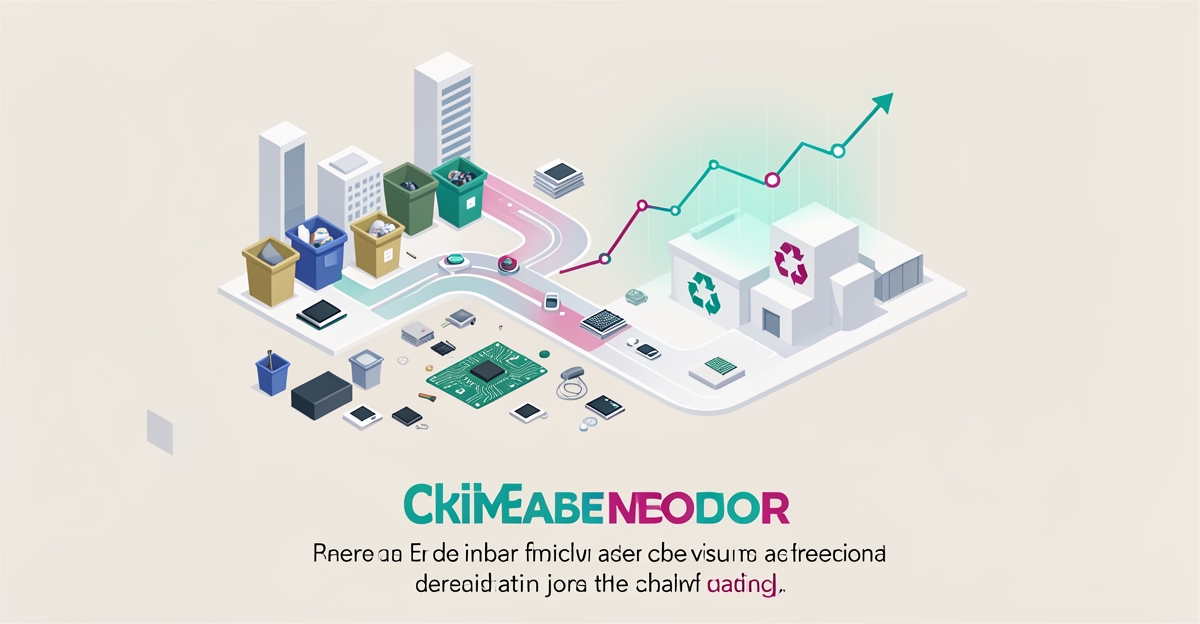
How E-Waste Companies Can Use AI to Track and Forecast Waste Volume Trends
Key Facts
- 62 million tonnes of e-waste were generated in 2022, up 82% from 2010 according to Global E-Waste Monitor 2024
- Only 22.3% of e-waste was collected and recycled in 2022 according to UNITAR
- Uncollected e-waste in 2022 left $62 billion worth of recoverable resources unaccounted for per the Global E-Waste Monitor
- AI-driven forecasting typically improves recycling rates and reduces contamination by aligning operations with predicted volumes
- Companies using AI-powered waste management typically report meaningful annual waste cost savings through optimized routes and resource use
Hire a team member that works 24/7 — for less than a part-time wage.
AI receptionists, SDRs, dispatchers and 99+ roles. Trained on your business, fully managed.
Not sure where to start? Ask our AI planner
The Growing Challenge of E-Waste Volume Uncertainty
The global volume of electronic waste is surging at an alarming rate, creating mounting pressure on e-waste management companies to adapt their operations. In 2022 alone, 62 million tonnes of e-waste were generated worldwide, representing an 82% increase since 2010 according to UNITAR data. This rapid growth far outpaces current recycling infrastructure, with only 22.3% of e-waste collected and recycled in 2022, leaving vast quantities of recoverable materials unprocessed and posing significant logistical challenges for waste handlers.
This escalating volume creates critical uncertainty for e-waste companies trying to optimize their core operations. Fluctuating waste inflows make it difficult to schedule collection routes efficiently, leading to either underutilized fleets during low-volume periods or overwhelmed systems during peak times. Staffing decisions become reactive rather than strategic, with companies either overpaying for idle labor or scrambling to hire temporary workers when unexpected surges occur. Inventory management suffers similarly, as facilities struggle to balance storage capacity against unpredictable intake volumes, risking both bottlenecks and underused space.
These operational pain points directly impact profitability and service reliability. Without accurate volume forecasting, e-waste processors cannot optimize labor allocation, leading to unnecessary overtime costs or service delays. Storage facilities may face overflow situations requiring costly emergency expansions, or conversely, maintain expensive idle capacity during lulls. Transportation logistics suffer from inefficient routing when collection schedules don't match actual waste generation patterns, increasing fuel consumption and emissions while reducing timely service delivery.
AIQ Labs helps e-waste companies transform this uncertainty into strategic advantage through predictive analytics that analyze historical volume patterns, seasonal trends, and customer behavior to forecast future waste flows with greater accuracy. By leveraging AI-driven forecasting, businesses can move from reactive scrambling to proactive planning, aligning collection schedules, workforce levels, and storage capacity with anticipated demand. This approach enables more efficient resource deployment, reduces operational waste, and builds resilience against volume fluctuations, turning a growing challenge into a foundation for smarter, more sustainable e-waste management. Start the Fit Check, https://aiqlabs.ai/apply to explore how predictive volume forecasting can stabilize your operations.
How AI Forecasting Transforms Waste Volume Prediction
For e-waste companies, guessing how much material will arrive next month is an expensive gamble. Too few collection trucks and staff, and volumes pile up; too many, and resources sit idle. AI-powered forecasting replaces that guesswork with data-driven predictions that directly improve the bottom line.
Predictive models work by analyzing three core data streams: historical e-waste volumes, seasonal patterns, and customer behavior. The stakes are high, the world generated 62 million tonnes of e-waste in 2022, up 82% from 2010, according to the Global E-Waste Monitor 2024. Yet only 22.3% of that e-waste was formally collected and recycled, leaving $62 billion worth of recoverable natural resources unaccounted for. Companies that can anticipate incoming volumes are better positioned to capture material that would otherwise slip through the cracks.
The financial case for AI-driven waste management is well documented across the industry. Operators using AI-powered forecasting and route optimization typically report meaningful improvements in recycling rates, reductions in contamination, and annual waste cost savings. Forecasting is a key driver behind these gains, because accurate volume predictions make every downstream operation more efficient.
When a forecasting model can predict demand surges and quiet periods, e-waste companies gain actionable advantages across their operations:
- Collection scheduling, plan pickup routes and frequencies around predicted volume spikes instead of fixed calendars, reducing fuel consumption and emissions.
- Staffing decisions, align warehouse and processing teams with expected intake, avoiding both overtime costs and underutilized labor.
- Inventory and equipment planning, ensure bins, trucks, and processing capacity are available before demand arrives, not after.
- Cash flow management, tie procurement and storage decisions to forecasted material value rather than reactive purchasing.
These gains depend on one critical ingredient: high-quality data. AI models are only as accurate as the historical records they learn from, and waste management data is often incomplete or inconsistent. That is why human oversight remains essential, forecast outputs should be validated against real-world results and refined continuously.
This is where practical implementation matters more than technology hype. AIQ Labs deploys predictive models trained on real-world e-waste data, building forecasting systems that translate raw collection records into actionable insights for growth and resource planning. Industry analysis of AI in commercial recycling operations shows how automating waste data analysis enables genuinely data-driven decisions.
The result is a shift from reactive operations to a forward-looking business, one that knows what is coming, staffs for it, and captures the value in every tonne.
Implementing AI Forecasting: From Data to Decisions
Moving from insight to action separates e-waste operators who react to volume spikes from those who stay ahead of them. AI forecasting turns historical collection logs, seasonal patterns, and customer behavior into a planning engine for staffing, routing, and inventory.
The first step is data assessment. Teams audit collection records, drop-off logs, and customer pickup histories for completeness and consistency. High-quality data is essential because AI requires clean inputs to function effectively, which can be a challenge in waste management where data is often incomplete or inaccurate. A forward-looking analysis of historical data, seasonal trends, and customer behavior is then mapped to identify predictable volume drivers.
Model training follows on real-world e-waste patterns. Predictive models learn from past surges tied to product release cycles, fiscal year-end cleanouts, and regional events. AIQ Labs deploys predictive models trained on real-world e-waste data to provide actionable insights for growth and resource planning. The models are validated against recent periods and adjusted for bias, with human oversight and validation to ensure results are accurate and reliable.
Integration into collection planning closes the loop. Forecast outputs feed directly into scheduling systems, workforce planning, and inventory control for containers, processing capacity, and resale materials. This enables proactive staffing, route optimization, and inventory control based on forecasted trends.
Implementation typically follows a practical sequence:
- Assess waste management practices and identify where forecasting can improve efficiency and reduce costs
- Choose AI technology suited to e-waste needs, such as predictive volume forecasting and route optimization
- Implement AI-powered systems and integrate them with existing collection and inventory infrastructure
- Monitor and evaluate performance and make adjustments as needed
The business case is reinforced by global data. Global monitoring shows 62 million tonnes of e-waste generated in 2022, up 82% from 2010, with only 22.3% collected and recycled in 2022. That gap creates both risk and opportunity for operators who can anticipate inflows.
AI-powered waste management is already demonstrating measurable gains across the industry, with operators typically reporting improved recycling rates, reduced contamination, and lower annual waste costs driven by optimized routes and better resource use. The size of the gain depends on data quality and how thoroughly forecasting is integrated into daily operations.
Once live, forecasting becomes part of daily operations. Dispatchers receive volume alerts by zone, managers adjust crew sizes ahead of predicted peaks, and inventory teams pre-position containers before demand spikes. The result is proactive rather than reactive operations, with fewer missed pickups, lower overtime, and steadier throughput.
For SMB e-waste companies, this capability aligns with Predictive Analytics & Forecasting as a core business intelligence function. It helps businesses plan collection schedules, hire staff, and manage inventory more efficiently without adding headcount. If you want to start with a single high-cost workflow, say, collection scheduling or dispatch, an AI Workflow Build rebuilds it at a fixed price in phases. For broader operational coverage, managed AI Employees can handle dispatch coordination and customer intake at a fraction of a human hire's cost, and a full AI Operating System connects forecasting, routing, and inventory into one owned layer.
Still paying for 10+ subscriptions that don’t talk to each other?
We build custom AI systems you own outright. No vendor lock-in. Full control.
Not sure where to start? Ask our AI planner
Frequently Asked Questions
How much e-waste was generated globally in 2022, and how does that compare to 2010?
What specific operational improvements can AI-powered forecasting deliver for e-waste companies?
What financial benefits have been documented from using AI in waste management?
Why is high-quality data critical for AI forecasting in e-waste management, and what challenges exist?
How does AI forecasting help e-waste companies move from reactive to proactive operations?
What is the first step in implementing AI forecasting for e-waste operations?
Key Takeaways
Turning E-Waste Uncertainty into Strategic Advantage
E-waste volume uncertainty no longer needs to be a costly guessing game for processors and collectors. By leveraging AI-driven forecasting that analyzes historical patterns, seasonal trends, and customer behavior, companies can align collection routes, staffing, and storage with what is actually coming, not what they hope will come. With global e-waste volumes rising far faster than recycling capacity, operators who forecast accurately capture more recoverable material, cut overtime and fuel costs, and run steadier, more profitable operations. AIQ Labs builds these forecasting systems in phases and hands you full ownership. Start the 2-minute Fit Check at https://aiqlabs.ai/apply or book a free 30-minute strategy call to see what forecasting could do for your operation.
Make AI your competitive advantage — not just another tool.
Strategy, implementation and ongoing optimization. One partner, end to end.
Not sure where to start? Ask our AI planner