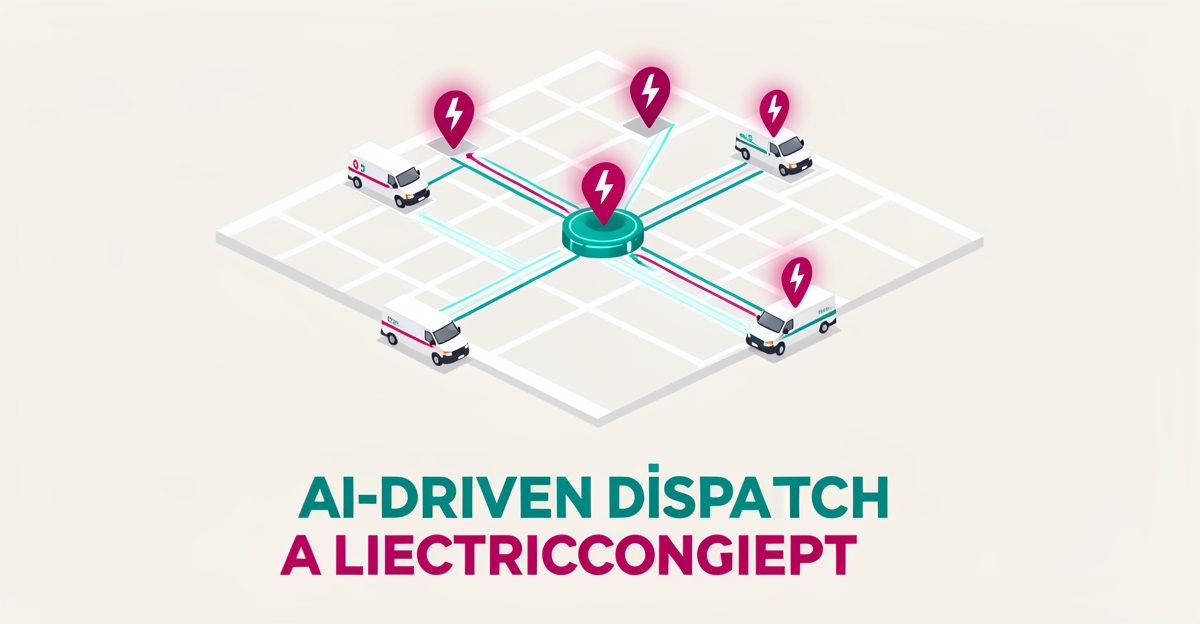
How Electrician Workflows Can Be Transformed with AI-Driven Dispatch Systems
Key Facts
- Employees spend an estimated 240 hours annually on repetitive tasks that could be automated, according to workflow automation research.
- AI-driven dispatch systems typically deliver productivity gains in the 30-40% range in the first year, industry analyses suggest.
- Workflow automation has been associated with strong multi-year returns, with some enterprise studies citing ROI above 200% over three years.
- Error rates for repetitive administrative work often drop substantially, by as much as 75% in some reports, after automation, according to available research.
- Most companies now use AI regularly across business functions, adoption data indicates.
- The global workflow automation market is projected to grow substantially through 2030, market research projects.
Hire a team member that works 24/7 — for less than a part-time wage.
AI receptionists, SDRs, dispatchers and 99+ roles. Trained on your business, fully managed.
Not sure where to start? Ask our AI planner
The Dispatch Bottleneck Costing Electricians Time and Revenue
Every electrician knows the frustration: a crew sits idle while an emergency call waits, a junior tech gets dispatched to a job requiring master-level certification, or a dispatcher juggles whiteboards and phone calls while response times climb. These aren't isolated incidents, they're the daily reality of manual dispatch processes that can't keep pace with modern field service demands.
The broader trend is clear. Industry research suggests that most organizations have now automated at least one business function, and AI use is widespread across operations. Yet many electrical contractors still rely on dispatch processes built for a different era, manual, reactive, and limited by human bandwidth.
- Slow response times as dispatchers manually match technicians to calls
- Idle crews waiting for assignments while high-priority jobs queue up
- Skill mismatches sending underqualified techs to complex installations
- No real-time visibility into technician location, capacity, or certification status
These bottlenecks compound quickly. Workflow automation data suggests employees spend an estimated 240 hours annually on repetitive tasks that could be automated, time that electricians could spend on billable work instead of administrative friction. For a five-person crew, that's over 1,200 hours of lost productivity each year.
AI implementation experts note that the difference between struggling and succeeding often comes down to treating automation like a teammate with a job description, not a tool you occasionally consult. The dispatch function, complex, time-sensitive, and data-rich, is precisely where this mindset shift pays off.
AIQ Labs has seen this firsthand building dispatch automation for electrical services companies, over 200 multi-agent systems deployed to date. When dispatch becomes an intelligent layer that continuously evaluates location, skills, availability, and job requirements simultaneously, the bottlenecks dissolve. Technicians get the right jobs. Customers get faster response. The business captures revenue that manual processes leave on the table.
How AI-Driven Dispatch Reassigns Work by Location, Skills and Availability
Imagine a world where every electrician's day is optimized down to the minute, with jobs assigned based on real-time location, specific certifications, and current availability, no more guesswork or wasted time. This is the reality that AI-driven dispatch systems are creating for field service operations, fundamentally changing how work is assigned and executed.
Traditional dispatch methods often rely on manual scheduling or basic proximity rules, leading to inefficiencies and missed opportunities. In contrast, AI-driven systems use algorithms to analyze multiple factors simultaneously, ensuring the right technician is sent to the right job at the right time. This approach not only improves response times but also maximizes workforce utilization.
Key factors considered by AI dispatch systems include:
- Real-time GPS tracking for optimal routing and proximity-based assignments
- Certification matching to ensure technicians have the required skills for each job
- Availability management to prevent overbooking and reduce idle time
- Capacity analysis to balance workloads across the team
According to industry research, organizations implementing AI-driven dispatch systems typically achieve productivity gains in the 30-40% range in the first year of deployment. These systems can also contribute to significant cost reductions depending on implementation maturity, with error rates for repetitive administrative work dropping substantially in many reports.
The integration capabilities of modern AI dispatch systems are particularly valuable for electrician businesses. These solutions work with existing field management software, acting as intelligent layers that enhance rather than replace current infrastructure. This compatibility reduces implementation complexity and allows businesses to leverage their existing technology investments.
AIQ Labs builds these custom dispatch systems through its AI Workflow Builds, rebuilding the one workflow that costs you the most, at a fixed price and in phases. The approach ensures that businesses can capture the benefits of AI-driven dispatch without disrupting their current operations.
The impact extends beyond simple efficiency gains. With AI now used regularly across most business functions, the technology has moved from experimental to essential. For electrician workflows specifically, this means faster response times, better resource allocation, and improved customer satisfaction, all critical factors in today's competitive service landscape.
From Field Software to Intelligent Layer: Integration Without Rip-and-Replace
Electrician workflows often suffer from fragmented systems that resist change, but transformation doesn’t require discarding what already works. Modern AI-driven dispatch systems are designed as intelligent layers that enhance, not replace, existing field management software, allowing businesses to preserve their current technology investments while gaining advanced automation capabilities. This approach eliminates the risk and disruption of rip-and-replace implementations, instead enabling a phased rollout where each stage delivers measurable value before moving to the next. Industry research on workflow automation points to strong multi-year returns for enterprises, suggesting that incremental integration can yield substantial long-term gains without an upfront overhaul.
Successful integration hinges on compatibility with tools electricians already rely on, such as CRM platforms, scheduling software, and invoicing systems. AI dispatch platforms connect via secure APIs to synchronize job data, technician availability, and customer information in real time, creating a unified operational view without manual data entry. This seamless connection ensures that dispatch decisions are informed by accurate, up-to-the-minute details, like a technician’s current location, certifications, and workload, while preserving familiar workflows for office and field staff. For AIQ Labs, this means building custom dispatch intelligence that plugs directly into a client’s current stack, owned outright and fully controllable.
A phased implementation minimizes risk and builds organizational confidence. Teams can begin by automating high-impact, low-complexity tasks, like assigning jobs based on proximity, before layering in skill-based matching and predictive scheduling. Each phase includes training, performance monitoring, and feedback loops to refine the system based on real-world results. As confidence grows, businesses expand AI capabilities into adjacent workflows, such as parts inventory alerts or customer follow-ups, creating cumulative efficiency gains. Available data suggests organizations commonly see first-year productivity gains in the 30-40% range after full automation deployment. These improvements compound over time, turning dispatch from a cost center into a strategic advantage. By integrating AI as a layer rather than a replacement, electrician businesses evolve their operations sustainably, owning the technology, controlling the pace, and realizing value at every step.
5-Step Implementation Playbook for Electrician Businesses
A successful AI dispatch rollout isn't about buying software, it's about treating the system like a new hire with a clear job description. As one practitioner puts it, the businesses that win install AI like a teammate with a job description and SOP, not a shiny app. Here's a five-step playbook to make that happen.
Step 1: Assess your current inefficiencies. Map your existing dispatch process end to end and document where jobs stall, which response times frustrate customers, and how much technician idle time your scheduling creates. With research suggesting most workers perform repetitive, time-consuming tasks that are at least partially automatable, most electrical shops will find more waste than they expect.
Step 2: Evaluate AI dispatch approaches. Compare options on the three factors that drive results: real-time location tracking, skill-set matching against certifications, and continuous availability management. Prioritize solutions that integrate with your existing field management software, an intelligent layer on top of your current tools beats a disruptive replacement.
Step 3: Plan the integration. Take a phased approach. Identify your key integration points, define data handoffs, and build a change management plan that includes role-specific training for dispatchers and technicians. Data quality is critical here: AI dispatch decisions are only as good as the technician location, certification, and job complexity data feeding them. Address privacy and security too, since field service involves customer details, technician locations, and billing information.
Step 4: Implement and monitor KPIs. Deploy in stages, then track response times, technician utilization, and customer satisfaction from day one. Gather feedback from the field continuously. Expect meaningful gains: industry studies commonly report first-year productivity improvements in the 30–40% range after full automation deployment.
Step 5: Optimize and scale. Fine-tune the assignment logic based on real performance data, then expand AI into adjacent workflows like lead capture and scheduling. Keep measuring ROI, enterprise studies on workflow automation have documented strong multi-year returns, and basic automation alone is often credited with cutting operational costs meaningfully.
This is the approach AIQ Labs follows when building custom dispatch systems for electrical service companies, automating scheduling, dispatch, and lead capture end-to-end while integrating with the tools already in place. Payment is milestone-based, so you fund each phase only when the previous one has proven itself. The businesses that treat AI dispatch as a managed capability rather than a one-time purchase are the ones that compound the gains.
- Baseline your response times and idle hours before you automate anything
- Demand integration with your existing field management software, not a rip-and-replace
- Assign an owner for data quality, certifications, locations, and job details
- Review KPIs weekly during rollout, then monthly once stabilized
Still paying for 10+ subscriptions that don’t talk to each other?
We build custom AI systems you own outright. No vendor lock-in. Full control.
Not sure where to start? Ask our AI planner
Frequently Asked Questions
How much time could my electrician crew save by switching to an AI-driven dispatch system?
Will I need to replace my current field management software to use AI dispatch?
What kind of productivity gains can I expect in the first year of using AI dispatch?
How does AI dispatch make sure the right technician gets the right job?
What’s the return on investment for implementing AI dispatch in my electrical business?
Is AI dispatch reliable enough to handle emergency calls and urgent service requests?
Turn Dispatch Into Your Competitive Edge
Manual dispatch doesn't have to be the bottleneck that holds your electrical business back. By reassigning work based on real-time location, certifications, and availability, AI-driven dispatch transforms idle hours into billable revenue, delivering the first-year productivity gains documented in workflow automation research while cutting scheduling errors substantially. The key isn't replacing your existing field management software, but layering intelligent automation on top of what already works. Start by baselining your current response times and idle hours, then implement in phases: assign by proximity first, add skill-matching next, and expand from there. AIQ Labs builds these custom dispatch systems for electrical contractors through its Workflow Builds, integrating with your current stack while you own the technology outright, paid in milestones. Ready to see what intelligent dispatch could recover for your business? Start with the two-minute Fit Check at aiqlabs.ai/apply, then book a free 30-minute strategy call to map your biggest bottleneck. No obligation, just clarity on whether the numbers make sense for your operation.
Make AI your competitive advantage — not just another tool.
Strategy, implementation and ongoing optimization. One partner, end to end.
Not sure where to start? Ask our AI planner