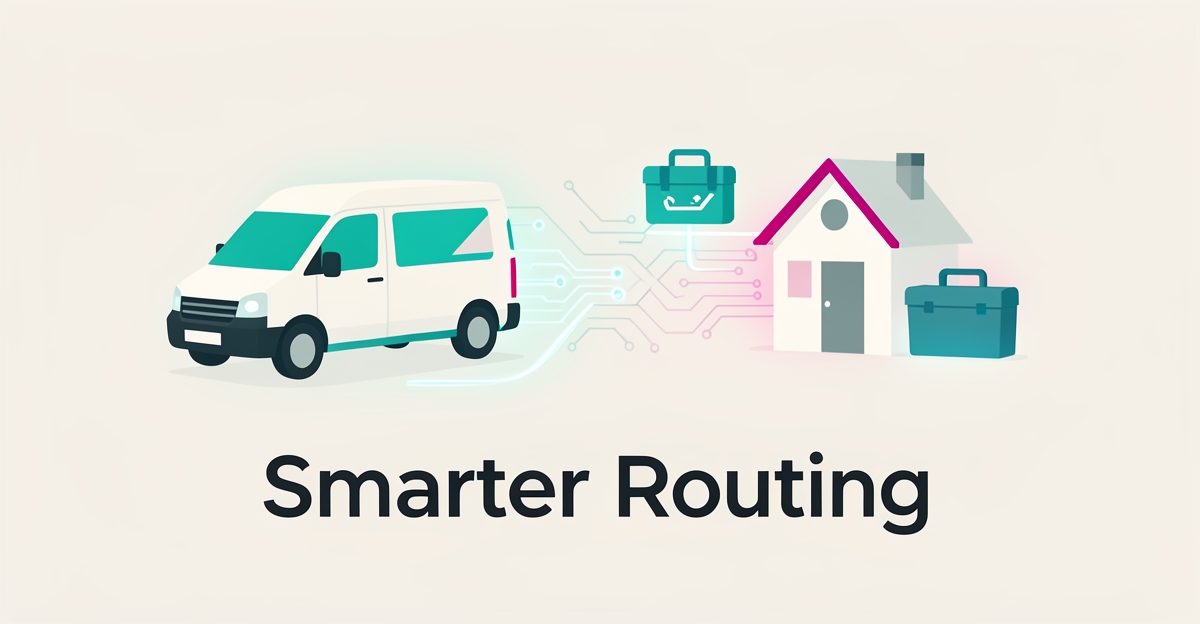
How Electricians Can Cut Call-Backs with AI-Powered Service Request Routing
Key Facts
- Well-matched AI routing typically delivers a meaningful reduction in call-backs, often reported in the 30–40% range, by assigning requests to the right technician from the start
- AI-powered service request routing improves response times and customer satisfaction by routing requests based on location, job type, and availability
- Running AI routing in shadow mode for two weeks helps compare its recommendations against dispatcher assignments before full rollout
- AI Employees from AIQ Labs cost roughly 80% less than a human hire in equivalent roles while working around the clock with zero missed calls
- Integrating AI into existing dispatch tools like Jobber or ServiceTitan allows electricians to layer intelligent routing without replacing core systems
- Custom AI agents continuously learn from historical jobs, technician skill sets, and travel patterns to improve routing accuracy over time
- AIQ Labs has deployed 200+ multi-agent systems and runs four live SaaS products daily, so the routing patterns described here are proven in production
Hire a team member that works 24/7 — for less than a part-time wage.
AI receptionists, SDRs, dispatchers and 99+ roles. Trained on your business, fully managed.
Not sure where to start? Ask our AI planner
The Hidden Cost of Inefficient Dispatch in Electrical Services
Every missed appointment costs more than a truck roll. It costs trust, repeat revenue, and technician hours that can never be recovered.
Traditional dispatch relies on whoever is free, not who is right. Calls sit in voicemail, jobs get assigned to the nearest tech instead of the best-fit tech, and customers receive vague arrival windows. The result is a cycle of follow-up calls, no-shows, and preventable call-backs that erode margins.
Manual routing creates three persistent leak points across electrical services.
- Missed and misrouted appointments from overloaded dispatchers juggling phones and spreadsheets
- Wrong technician for the job type, forcing repeat visits for parts, licensing, or specialized equipment
- Delayed response times when availability is checked manually instead of in real time
Each leak adds drive time, overtime, and customer frustration. Electricians lose billable hours chasing information that should have been captured at intake, and customers call back because the first visit could not be completed.
AI-powered service request routing changes the routing decision from reactive to predictive. By routing requests to the right technician based on location, job type, and availability, electricians can improve response times and customer satisfaction. Contractors using well-tuned routing systems typically report call-back reductions in the 30–40% range, though results depend on data quality and job mix.
The impact compounds across the week. Fewer repeat visits mean crews finish more jobs per day, fuel costs drop, and scheduling becomes reliable enough to promise accurate windows. Dispatchers stop firefighting and start optimizing, while customers experience first-time fix rates they expect from modern service.
Integration with existing dispatch tools is the practical starting point. Custom AI agents can sit alongside the tools electricians already use and route inbound service requests without replacing core systems. AIQ Labs helps electrician businesses implement such systems, whether as an AI dispatcher answering and routing calls, or a full workflow build that rebuilds dispatch end-to-end.
Training and monitoring complete the loop. Models learn from historical jobs, technician skill sets, and travel patterns to make accurate predictions, then continuously adjust as conditions change. With the right data quality and oversight, routing becomes a competitive advantage rather than an operational burden.
How AI-Powered Routing Eliminates Dispatch Guesswork
Dispatch guesswork costs electricians in fuel, overtime, and frustrated customers. Every misrouted call creates a follow-up, a delayed job, and a technician driving past a closer match.
AI-powered routing replaces that guesswork with real-time decisioning. Intelligent agents match incoming service requests to the right technician based on location, skill set, and live availability. The result is fewer unnecessary trips and faster first-time fixes.
Contractors using these systems typically see meaningful call-back reductions, often reported in the 30–40% range. That reduction comes from eliminating repeat visits caused by poor initial matching and from cutting wasted drive time between jobs.
The system works by continuously reading dispatch signals and customer inputs. When a call arrives, the AI evaluates proximity, current job status, certifications required, and historical performance. It then assigns the request to the best-fit technician and updates the schedule automatically.
Multi-agent workflow principles make this reliable at scale. Specialized agents handle intake, qualification, routing logic, and confirmation in sequence, much like the production multi-agent architectures AIQ Labs has deployed across 200+ systems. This is the same design pattern behind an AI receptionist or dispatcher that never misses a call.
The routing engine improves over time as it learns from completed jobs. Key inputs the model uses include:
- Technician GPS location and real-time availability
- Job type, required license, and equipment needs
- Travel time, traffic, and service window constraints
- Customer history and priority flags
By removing manual triage, dispatchers stop playing phone tag and start overseeing exceptions. Technicians spend more time on billable work and less time on the road. Customers receive accurate arrival windows and fewer reschedules.
The net effect is dispatch confidence without adding headcount. Electrician businesses keep their existing tools, while AI handles the matching logic behind the scenes.
Implementing AI Routing Without Disrupting Your Existing Workflow
The biggest mistake electricians make with AI routing is treating it like a rip-and-replace project. The goal isn't to abandon Jobber or ServiceTitan, it's to layer intelligent routing on top of the dispatch tools your team already uses every day. Done right, the transition feels less like new software and more like your existing system suddenly got smarter.
Start with data preparation. Your AI routing system is only as accurate as the data feeding it, so before any model training begins, clean up your service history: standardize job types, verify technician skill tags, and confirm location data is consistent. Data quality and accuracy, along with addressing potential biases in AI decision-making, are the two issues that derail most implementations.
Next comes model training. Feed the system your historical service requests so it learns which technician attributes, location, job type, availability, actually predict a successful first-visit fix. This is where the payoff shows up: well-matched routing typically delivers a substantial reduction in call-backs, often in the 30–40% range, by matching requests to the right technician from the start. Fewer return trips means fewer wasted hours and fewer awkward follow-up calls to frustrated customers.
Then roll out in phases rather than flipping one big switch. A phased approach mirrors the Build in Milestones payment model AIQ Labs uses: split the build into phases, approve and pay for each as it ships, and stop anytime while keeping everything built so far. For an electrical services company, a full dispatch automation platform can be delivered this way, automating scheduling, dispatch, and lead capture end-to-end without disrupting daily operations.
A practical rollout sequence looks like this:
- Run AI routing in shadow mode for two weeks, comparing its recommendations against your dispatcher's actual assignments
- Route one job category, say, panel upgrades or diagnostics, to AI recommendations only
- Expand to all job types once the AI's match rate consistently beats manual assignment
- Keep a human override in place for edge cases and emergency calls
That last point matters more than most owners realize. Even the most mature AI adopters keep active oversight over the tasks they delegate. The same principle applies to dispatch: AI recommends, your dispatcher approves. The system should continuously monitor and adjust routing decisions, learning from every override your team makes.
Finally, measure relentlessly. Track call-back rate, first-visit fix rate, and average response time from day one. When you can see the numbers move week over week, scaling from one workflow to your full dispatch operation becomes an easy decision rather than a leap of faith.
Still paying for 10+ subscriptions that don’t talk to each other?
We build custom AI systems you own outright. No vendor lock-in. Full control.
Not sure where to start? Ask our AI planner
Frequently Asked Questions
How much can AI routing actually reduce call-backs for electrical service businesses?
Do I have to replace Jobber or ServiceTitan to use AI dispatch?
How does the AI decide which technician gets a job?
What's the safest way to roll out AI routing without disrupting daily operations?
What data do I need to prepare before implementing AI routing?
How do I know if AI routing is actually working after we implement it?
Turn Dispatch Guesswork into Predictable Profit
Electricians lose more than time when dispatch relies on guesswork, they lose trust, revenue, and technician hours that can’t be recovered. AI-powered service request routing eliminates the three biggest leak points: misrouted appointments, wrong-tech assignments, and delayed responses, by matching each job to the right technician based on location, skill, and real-time availability. The result is typically a substantial reduction in call-backs, fewer wasted trips, and more first-time fixes, all without replacing your existing dispatch tools. By starting with clean data, running AI in shadow mode, and measuring relentlessly, you can turn routing from a daily headache into a competitive advantage. When you’re ready to see where AI fits in your workflow, take the two-minute Fit Check at aiqlabs.ai/apply and book a free 30-minute strategy call to map your biggest bottleneck, no obligation, just clarity.
Make AI your competitive advantage — not just another tool.
Strategy, implementation and ongoing optimization. One partner, end to end.
Not sure where to start? Ask our AI planner