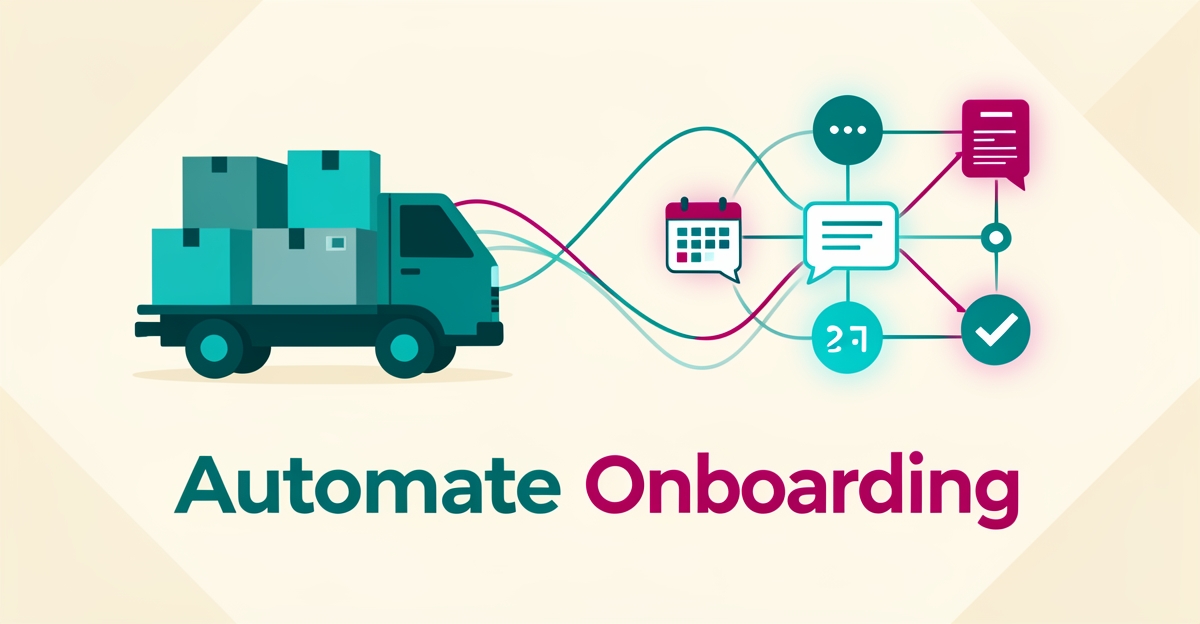
How Furniture Removal Businesses Can Automate Client Onboarding with AI
Key Facts
- 47% of AI investment is wasted due to lack of business process expertise industry research
- Businesses integrating AI with operations see 41% higher ROI per Forbes analysis
- Furniture industry data shows 81% increase in customer retention with consistent personalized experiences from SellersCommerce
- Structured feedback mechanisms lead to 73% higher AI performance metrics according to Harvard Business Review
- Aligning AI with existing workflows reduces implementation time by 38% per IBM research
- 65% of successful AI implementations start with business logic mapping
Hire a team member that works 24/7 — for less than a part-time wage.
AI receptionists, SDRs, dispatchers and 99+ roles. Trained on your business, fully managed.
Not sure where to start? Ask our AI planner
The Onboarding Bottleneck: Why Manual Client Onboarding Is Costing Furniture Removal Businesses
Furniture removal businesses are losing valuable opportunities before the first truck even leaves the yard. Manual client onboarding creates friction at every step, from missed inquiries buried in email inboxes to delayed follow-ups that let hot leads go cold. When teams juggle scheduling, quoting, and customer questions by hand, response times stretch from minutes to days, and consistency evaporates. Research shows that 47% of AI investment is wasted simply because underlying business processes aren’t optimized firstindustry research, highlighting how broken workflows undermine even the best technology. As one expert bluntly put it, "The AI is fine. Your process is broken"expert insight, reminding us that automation amplifies what already works, it doesn’t fix chaos.
The cost of manual onboarding goes beyond slow replies. Inconsistent communication leaves clients confused about next steps, while administrative overload pulls staff away from revenue-generating activities like dispatching crews or upselling packing services. Teams spend hours re-entering the same client details across spreadsheets, calendars, and invoices, work that feels productive but delivers diminishing returns. Without a standardized flow, each customer interaction becomes a reinvention of the wheel, increasing errors and eroding trust. This is where AI doesn’t replace human judgment but removes the repetitive drag: AI-powered onboarding can handle initial inquiries, qualify leads based on move size or timeline, and trigger personalized follow-ups, all while logging data directly into your CRM. But as another expert warns, "AI doesn't fix broken workflows. It accelerates the ones that already make sense"industry insight. The goal isn’t to automate confusion, it’s to streamline a clear, repeatable process so your team can focus on what humans do best: solving complex problems and building relationships. AIQ Labs helps furniture removal companies map their current onboarding flow first, identifying exactly where AI can remove friction without forcing a flawed system to move faster. Only then does automation become a true force multiplier, not a band-aid on a broken process.
How AI Automates the Furniture Removal Onboarding Journey
Imagine a potential client lands on your furniture removal website at 9 PM on a Tuesday, fills out an inquiry form, and receives a personalized response within minutes, not hours or days later. That immediate, intelligent engagement is what separates AI-powered onboarding from traditional manual follow-up.
The journey begins the moment a prospect reaches out. AI systems instantly capture inquiry details, the type of furniture, pickup location, preferred dates, special handling requirements, and route that information into your CRM without a single manual keystroke. According to research from Microsoft, businesses waste 47% of their AI investment when they lack proper business process expertise, which is why mapping your onboarding workflow before automation matters so much.
Once intake is complete, AI takes over the personalized messaging. Instead of generic email templates, the system crafts responses based on the specific details the client provided, mentioning the antique dresser they flagged as fragile, confirming the narrow staircase access they described, and offering time slots that match their stated availability. This level of tailored communication drives results: businesses integrating AI with their existing operations see 41% higher ROI, according to McKinsey research cited in recent industry analysis.
Intelligent follow-ups keep prospects engaged without overwhelming your team. If a client hasn't confirmed their pickup time within 24 hours, AI sends a gentle reminder. If they've asked about insurance coverage, it follows up with relevant details. The system knows when to escalate to a human team member, like when a client mentions a last-minute date change or expresses confusion about pricing. A study from Harvard Business Review shows that structured feedback mechanisms lead to 73% higher AI performance metrics, meaning these systems improve over time as they learn from each interaction.
Scheduling automation eliminates the back-and-forth that traditionally drags out the booking process. AI checks crew availability, factors in drive time between jobs, and presents clients with realistic time windows. Once confirmed, it sends calendar invites, dispatches reminders 48 hours before pickup, and even provides real-time updates on the day of service. Businesses that align AI with existing workflows see 38% faster implementation times, according to IBM research.
The final piece is CRM integration. Every interaction, from initial inquiry to post-pickup follow-up, lives in one centralized system. AIQ Labs builds these systems to connect seamlessly with tools like HubSpot, Salesforce, and industry-specific platforms, ensuring your team always has full context. This unified approach matters because furniture industry data shows an 81% increase in customer retention when businesses deliver consistent, personalized experiences throughout the client journey.
The result is an onboarding process that feels effortless to clients while requiring minimal manual effort from your team. AI handles the repetitive work, data entry, scheduling, follow-ups, so your staff can focus on the physical work and complex client needs that truly require human expertise.
Start Smart: Why Mapping Your Process Before Deploying AI Is Critical
Many AI projects fail not because the technology is flawed, but because businesses automate broken processes instead of fixing them first. Without understanding how your onboarding actually works today, even the most advanced AI will simply amplify inefficiencies.
Research shows that 47% of AI investment is wasted due to a lack of business process expertise, while 65% of successful implementations begin with clear business logic mapping. Skipping this step risks deploying tools that don’t align with how your team actually works or how clients experience your service.
Start by auditing your current onboarding workflow from first inquiry to pickup confirmation. Document every step, decision point, and handoff, especially repetitive tasks like scheduling, data entry, or follow-up reminders. Then map the process visually, identifying where delays occur, where errors happen, and where personalization adds real value.
Only after this foundation is laid should you evaluate where AI can meaningfully assist, whether it’s qualifying leads, sending personalized prep guides, or automating confirmation messages. This approach ensures your AI solution enhances a process that already works, rather than trying to fix one that doesn’t.
Implementing AI Onboarding Step by Step: From Pilot to Full Automation
Starting your AI onboarding journey doesn't require a complete overhaul, it begins with one focused step. Many furniture removal businesses find success by targeting a single, high-friction workflow like initial inquiry handling or quote generation, where automation delivers immediate relief. According to Harvard Business Review, organizations that take a gradual approach to technology adoption see 2.5x higher employee satisfaction compared to those attempting full deployment upfront.
Begin by mapping your current onboarding process to identify repetitive tasks that consume staff time but don’t require complex judgment, such as sending confirmation emails, scheduling pickups, or answering common questions about pricing or service areas. Use this map to select one workflow where AI can handle routine steps while preserving human oversight for exceptions. This aligns with research showing that 65% of successful AI implementations start with clear business logic mapping, ensuring the technology enhances rather than disrupts existing operations McKinsey.
Launch a pilot with your chosen workflow, integrating AI tools that connect to your existing CRM or scheduling software. Run the pilot for 2–4 weeks, collecting feedback from both staff and clients on accuracy, response time, and ease of use. Structured feedback loops during this phase are critical, organizations that implement them see 73% higher AI performance metrics, as continuous refinement based on real-world use drives better outcomes Harvard Business Review. Adjust the AI’s responses, triggers, or escalation rules based on this input before expanding.
Once the pilot proves stable and valued, scale gradually to adjacent workflows, like moving from inquiry handling to automated quote generation and then to pickup confirmation. Each phase should include its own testing and feedback cycle, maintaining the gradual approach that supports team adaptability. Throughout, ensure your AI system is trained on your specific service area, pricing rules, and common client concerns to deliver personalized, accurate interactions that feel seamless, not robotic. This phased, feedback-driven method builds confidence, reduces risk, and sets the foundation for sustainable automation across your entire client onboarding journey.
What an AI-Powered Onboarding System Looks Like in Practice
Imagine a furniture removal business where every client inquiry is handled instantly, day or night, no missed calls, no delayed responses, no manual data entry. This is what an AI-powered onboarding system looks like in practice: a seamless, intelligent workflow that guides customers from first contact to confirmed pickup with minimal human effort.
When a potential client calls or submits an online form, an AI Employee acting as an intelligent receptionist answers immediately, using natural language to gather essential details, pickup location, items to move, preferred dates, and special requirements. This AI agent doesn’t just collect information; it qualifies leads in real time by assessing job size, urgency, and service fit, then routes high-intent prospects to the appropriate next step. For example, if a caller needs same-day service for a large household move, the AI flags it as a priority and schedules a consultation, all while logging the interaction into the business’s CRM.
Behind the scenes, the system coordinates scheduling by syncing with the company’s calendar and dispatch tools, proposing available time slots based on crew availability and truck capacity. Once a time is selected, the AI sends personalized follow-ups via SMS or email, confirming details, providing prep tips, and reminding clients of what to expect. These messages adapt dynamically: a first-time mover gets a detailed checklist, while a repeat customer receives a streamlined confirmation with loyalty acknowledgment.
On the day of pickup, the AI reconfirms the appointment two hours prior, adjusts for traffic or weather-related delays if integrated with real-time data, and notifies the dispatch team. After the job is complete, it triggers a satisfaction survey and requests a review, turning every completed move into a feedback loop that improves future service. Throughout this journey, the AI Employee works 24/7, integrates with tools like Google Calendar, HubSpot, and Twilio, and continuously learns from interactions to refine its responses.
This level of automation doesn’t just save time, it transforms the customer experience. Businesses using similar AI-driven onboarding have seen a 38% reduction in implementation time when aligning AI with existing workflows, and those that prioritize business logic mapping report 65% of successful AI implementations starting with clear process alignment. By automating repetitive intake tasks, teams can focus on higher-value activities like customer relations and operational planning, leading to smoother scaling without proportional headcount growth.
For furniture removal companies ready to modernize their client onboarding, AIQ Labs builds and manages custom AI Employees that handle these exact workflows, trained on your specific processes, integrated with your tools, and optimized over time. Rather than replacing your team, these AI agents augment them, ensuring no lead falls through the cracks while reducing manual workload by up to 40% in early stages. The result is a faster, more reliable onboarding experience that turns inquiries into confirmed jobs with consistency and care, every time, around the clock.
Still paying for 10+ subscriptions that don’t talk to each other?
We build custom AI systems you own outright. No vendor lock-in. Full control.
Not sure where to start? Ask our AI planner
Frequently Asked Questions
How does AI actually improve the client onboarding process for furniture removal businesses?
Will AI replace my team or just add more complexity to our workflow?
What’s the biggest mistake businesses make when trying to use AI for onboarding?
How long does it take to see results from implementing AI-powered onboarding?
Can AI handle real client conversations, or will it feel robotic and frustrate customers?
Do I need to overhaul my entire system to use AI for onboarding?
Turn First Contact Into Confirmed Pickups, Around the Clock
Automating client onboarding isn’t about replacing your team, it’s about removing the repetitive drag that lets hot leads go cold. When furniture removal businesses map their current inquiry-to-confirmation flow first, AI can then handle instant intake, lead qualification, personalized follow-ups, and scheduling without manual re-entry, while humans focus on complex problems and relationship building. A phased pilot starting with one high-friction step, clear process mapping, and structured feedback is how teams see faster implementation and sustainable adoption. The payoff is a consistent, 24/7 experience that clients feel and retention improves when that consistency is delivered throughout the journey, with furniture industry data showing an 81% increase in customer retention when businesses deliver personalized experiences. If you’re ready to see where AI fits your specific workflow, start the fit check at https://aiqlabs.ai/apply for a free 30-minute strategy call at https://aiqlabs.ai/book to map your biggest onboarding bottleneck and identify high-ROI automation opportunities with AIQ Labs.
Make AI your competitive advantage — not just another tool.
Strategy, implementation and ongoing optimization. One partner, end to end.
Not sure where to start? Ask our AI planner