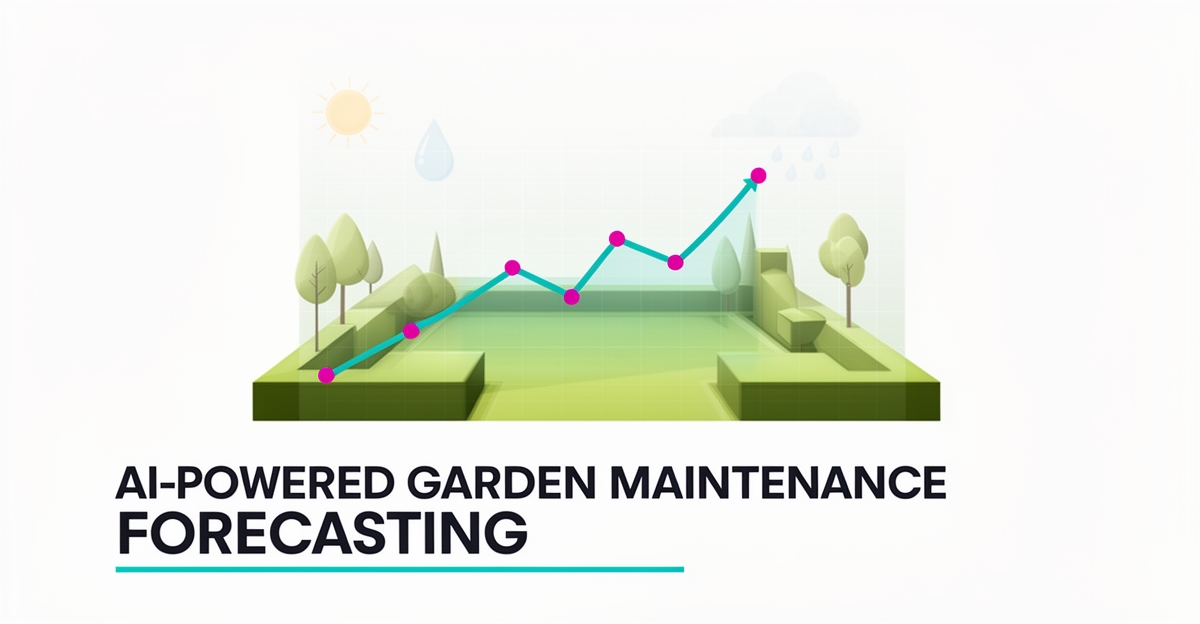
How Garden Maintenance Services Can Use AI to Predict Service Needs (Without Guessing)
Key Facts
- AIQ Labs builds predictive models that analyze weather patterns, crew availability, equipment status, and customer preferences simultaneously for proactive service planning.
- AI Employees from AIQ Labs cost 75-85% less than human employees in equivalent roles while working 24/7/365 with zero missed calls or days off.
Hire a team member that works 24/7 — for less than a part-time wage.
AI receptionists, SDRs, dispatchers and 99+ roles. Trained on your business, fully managed.
Not sure where to start? Ask our AI planner
The Cost of Guesswork in Seasonal Garden Maintenance
Garden maintenance businesses often operate on a cycle of reaction, waiting for clients to call when hedges are overgrown or leaves pile up, then scrambling to schedule crews and dispatch equipment. This reactive approach creates hidden costs that erode profitability and strain operations. Without foresight into seasonal demand patterns, teams face periods of idle capacity followed by overwhelming workloads, leading to rushed jobs, missed service windows, and dissatisfied customers. The unpredictability makes it difficult to optimize labor allocation, resulting in either overstaffing during slow periods or costly overtime and rushed hiring during peak seasons. These inefficiencies directly impact the bottom line, turning what should be a predictable seasonal rhythm into a constant state of catch-up.
Research shows that reactive maintenance models contribute to significant operational waste across service industries. Facilities relying on traditional, guesswork-based approaches experience higher costs due to emergency interventions and inefficient resource use, predictive maintenance, by contrast, can lower costs by up to 25% and boost uptime by 10-20% when implemented effectively. For garden maintenance providers, this means that every unplanned spring pruning rush or last-minute fall cleanup request represents a missed opportunity to optimize crew schedules, reduce fuel waste from inefficient routing, and avoid the premium costs associated with on-demand labor. The lack of predictive insight forces businesses into a cycle where they are always responding rather than anticipating, limiting their ability to scale sustainably.
- 30% of facilities currently use predictive maintenance, leaving the majority reliant on reactive methods
- Only 11% of facilities reach Level 4 predictive maintenance maturity, indicating a significant gap in adoption of advanced forecasting
- 51% of facilities aren't planning to adopt predictive maintenance, despite its proven cost and efficiency benefits
This gap between potential and practice highlights why many garden maintenance businesses continue to absorb avoidable expenses. AIQ Labs helps bridge this divide by transforming historical service data into forward-looking insights, enabling companies to anticipate needs before they become urgent requests. By moving beyond guesswork, businesses can shift from costly reactivity to strategic foresight, laying the foundation for more resilient, profitable operations throughout the year.
How AI Predicts Seasonal Service Needs Using Historical Data
Garden maintenance has always been seasonal, but guessing when to prune, fertilize or clean up is expensive. AI shifts the model from reactive scheduling to predictive service planning built on historical patterns rather than calendars.
AI-powered predictive maintenance analyzes historical service patterns, weather data and customer behavior to forecast seasonal needs. The system learns which clients typically need spring pruning, summer irrigation checks or fall cleanup, and when demand spikes historically occur. This allows crews to be positioned proactively instead of chasing last-minute requests.
The approach mirrors broader industry adoption. According to industry research, 30% of facilities use predictive maintenance, yet only 11% of facilities reach Level 4 predictive maintenance. That gap highlights the opportunity for garden services to move beyond basic scheduling with more sophisticated modeling.
Data availability drives success. A recent study found that 60% of maintenance professionals say data availability is key to PdM success. For garden maintenance, that means combining past work orders, service frequency, plant types and local climate records into a unified view that AI can query.
AI operating systems can automate entire workflows, learning from data patterns and making intelligent decisions without human intervention. In practice this means:
- Historical service logs identifying repeat seasonal tasks per property
- Weather pattern integration to anticipate growth cycles and storm damage
- Crew availability and equipment status matched to forecasted demand
- Customer preference signals to time outreach for pruning, fertilization or cleanup
The business impact is measurable. Predictive maintenance statistics show AI-powered predictive maintenance can lower costs by up to 25% and boost uptime by 10-20%. For garden services, uptime translates to completed visits on schedule and fewer missed seasonal windows.
Market momentum supports the shift. Predictive maintenance is a rapidly growing market, expected to reach $60.13 billion by 2030, with a compound annual growth rate of 29.5%. Growth is driven by increasing availability of AI and machine learning tools and stricter workplace safety standards.
AIQ Labs builds predictive models tailored to local climate and service patterns, focusing on Predictive Analytics & Forecasting within AI Data Analytics & Business Intelligence. The models are designed to analyze weather patterns, crew availability, equipment status and customer preferences simultaneously for proactive service planning.
With the right data foundation, seasonal service needs become forecastable rather than guessed.
Implementing AI-Powered Forecasting with Minimal Disruption
Garden maintenance teams can move from reactive calls to proactive scheduling without overhauling operations overnight. AI-powered forecasting lets you anticipate spring pruning and fall cleanup demand before clients ask, using patterns already in your business.
Start with the data you already collect. Service history, visit frequency, property size, plant types, and local weather create the foundation for seasonal predictions. Industry research shows 60% of maintenance professionals say data availability is key to predictive maintenance success. Clean, consistent records reduce noise and improve model accuracy from day one.
A practical rollout focuses on minimal disruption and measurable value. Start Monthly models let teams pilot forecasting for one crew or service line with setup plus a flat monthly plan that includes build, training, integrations, monitoring, and improvements. You can pause or adjust anytime while learning what works.
Model training aligns with local climate and service patterns. AI analyzes historical data to predict which clients need seasonal maintenance, allowing proactive service planning. The system learns from weather patterns, crew availability, equipment status, and customer preferences simultaneously, enabling proactive service planning without manual spreadsheets.
Integration with scheduling tools keeps adoption simple. Forecasts feed directly into existing calendars and dispatch workflows, so crews see prioritized visits rather than a new dashboard to check. AIQ Labs builds predictive models tailored to local climate and service patterns and connects them to the tools teams already use.
Implementation can follow a low-risk path:
- Audit and consolidate historical service records, weather logs, and crew capacity data
- Train a focused forecasting model on one season or service type, such as spring pruning
- Connect predictions to scheduling software with automated alerts for high-probability service windows
- Review accuracy weekly and expand scope using Build in Milestones, approving and paying per phase
The market momentum supports this approach. The predictive maintenance market was valued at $7.85B in 2022 and is expected to reach $60.13B by 2030 with a compound annual growth rate of 29.5%. AI-powered predictive maintenance can lower costs by up to 25% and boost uptime by 10-20%.
Only 11% of facilities reach Level 4 predictive maintenance, highlighting the need for garden maintenance services to invest in sophisticated technologies like machine learning. A phased, owned system avoids vendor lock-in and builds capability that compounds over seasons.
Still paying for 10+ subscriptions that don’t talk to each other?
We build custom AI systems you own outright. No vendor lock-in. Full control.
Not sure where to start? Ask our AI planner
Frequently Asked Questions
How can AI help your garden maintenance business move from reactive to proactive service planning?
What kind of data do you need to start using AI for predicting garden maintenance needs?
Will implementing AI forecasting disrupt your current operations or require a full system overhaul?
What measurable benefits can you expect from using AI to predict seasonal garden maintenance needs?
Is AI forecasting only for large garden maintenance companies, or can small businesses benefit too?
How do you know if your business is ready to adopt AI for predictive maintenance?
From Guesswork to Seasonal Foresight
Moving from reactive calls to proactive scheduling turns seasonal volatility into a predictable advantage. By analyzing historical service logs, weather patterns, crew capacity and customer preferences, garden maintenance teams can forecast spring pruning, summer irrigation checks and fall cleanup demand before it arrives, reducing rushed jobs, overtime and fuel waste. The data you already collect is the foundation, and a phased rollout lets you pilot forecasting for one crew or service line without overhauling operations. Businesses that shift to predictive planning are positioned to capture the cost and efficiency gains the industry is moving toward, with AI-powered predictive maintenance able to lower costs by up to 25% and boost uptime by 10-20%. If you want to see what proactive service planning could look like for your local climate and service mix, start the Fit Check at aiqlabs.ai/apply for a free 30-minute strategy call where AIQ Labs maps your biggest bottleneck and identifies high-ROI automation opportunities, with no obligation.
Make AI your competitive advantage — not just another tool.
Strategy, implementation and ongoing optimization. One partner, end to end.
Not sure where to start? Ask our AI planner