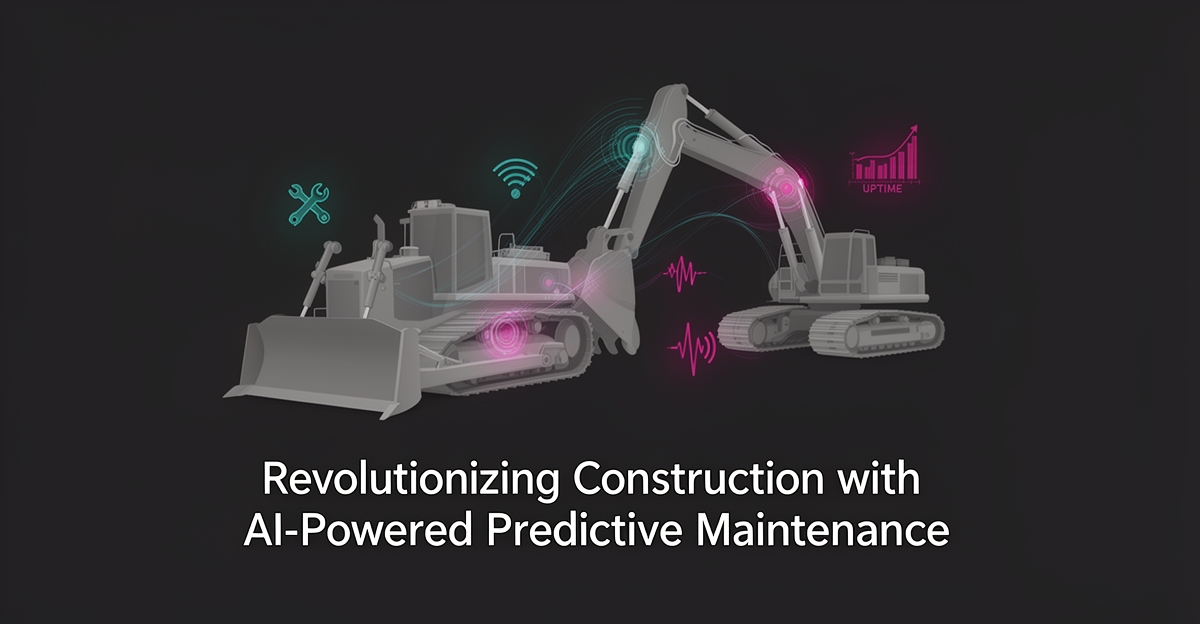
How Grading Contractors Can Use AI to Track Equipment Utilization and Maintenance
Key Facts
- Proactive monitoring typically cuts unplanned downtime by surfacing service needs early
- Most modern heavy equipment supports telematics, and older units can be retrofitted with IoT sensors
- Emergency repairs typically cost more than planned service due to expedited parts, overtime, and idle labor
- AI-driven monitoring replaces manual logs with real-time automated data collection and predictive alerts
- Predictive maintenance shifts decisions from experience and intuition to data-driven analytics
Hire a team member that works 24/7 — for less than a part-time wage.
AI receptionists, SDRs, dispatchers and 99+ roles. Trained on your business, fully managed.
Not sure where to start? Ask our AI planner
The Cost of Reactive Maintenance in Grading Operations
Reactive maintenance quietly erodes grading contractor margins while projects are still underway. When equipment fails without warning, crews stand idle, schedules slip, and emergency repairs disrupt the entire job site.
Traditional approaches rely on manual logs and operator experience to decide when to service machines. That reactive timing means failures are addressed only after they cause downtime and project delays. Fleet managers and equipment dealers have increasingly emphasized a proactive approach in recent years: improving visibility, reducing unplanned downtime, and planning with confidence instead of reacting to issues as they arise.
Unplanned stops create a cascade of costs that go far beyond the repair invoice. Labor is paid for hours with no production, rental equipment is sourced at premium rates, and clients face delays that damage trust and future bids. Emergency parts procurement adds markup and shipping surcharges, while overtime is used to recover lost ground.
The operational impact is just as damaging as the financial one. Reactive maintenance forces crews into stop-start workflows that reduce daily output and increase safety risks. Supervisors spend time firefighting instead of optimizing utilization, and maintenance teams are pulled from planned work to address crises.
Contractors still using reactive models face three compounding penalties:
- Higher emergency repair costs compared with planned service intervals
- Frequent unplanned downtime that reduces billable machine hours
- Project delays that trigger penalties and erode client confidence
Connected machine programs demonstrate the alternative. Modern telematics-equipped machines provide real-time data and performance insights, and proactive monitoring helps identify service needs early, supporting better planning for shifting job site demands and fleet utilization.
The contrast is clear in how maintenance timing and data collection are handled. Traditional management is reactive after failure with manual logs, while AI-driven management is proactive before failure with real-time automated monitoring. Decision making moves from experience and intuition to data-driven predictive analytics.
AIQ Labs builds workflow automation that integrates with equipment tracking tools to automate maintenance alerts and cost forecasting, helping contractors move from reactive firefighting to planned uptime. The result is data-driven visibility that protects both operations and margins.
How AI Transforms Equipment Monitoring from Reactive to Proactive
Grading contractors are moving from waiting for breakdowns to preventing them. Connected machines now feed real-time performance data into AI systems that spot patterns humans miss, turning maintenance from a cost center into a competitive advantage.
The shift is driven by proactive monitoring. The most effective operations work closely with dealers and technology partners to improve visibility, reduce unplanned downtime, and plan with confidence instead of reacting to issues as they arise. That visibility comes from connected machines that provide real-time data and performance insights.
AI transforms this data into action. Instead of manual logs and reactive repairs, systems continuously monitor usage, fuel, engine hours and load conditions. When anomalies appear, the platform generates automated alerts and repair recommendations before failure occurs. This is the core of predictive maintenance, where uptime is protected by prediction rather than repair.
The business impact is measurable. Traditional approaches rely on experience and intuition, leading to frequent unplanned stops and emergency repair costs. AI-driven approaches use data-driven predictive analytics to minimize downtime through prediction and lower costs through planned maintenance.
Implementation follows a clear pattern for contractors adopting connected machine technology:
- Audit current equipment to identify machines that can be connected via IoT sensors and telematics
- Deploy AI analytics platforms that process equipment data and generate actionable insights
- Establish automated monitoring systems that detect anomalies before failure
- Integrate AI-generated maintenance recommendations into existing scheduling and planning workflows
Accuracy matters as much as adoption. Generic AI outputs are not enough for equipment monitoring, systems need validated data pipelines and domain-specific models tuned to your fleet's actual operating conditions, not generic predictions. A monitoring system is only as good as the telemetry feeding it and the workflows it triggers.
Visibility matters beyond the job site. Contractors who can demonstrate proactive fleet management through real data strengthen both operational performance and their position in bids and client relationships.
AIQ Labs builds custom systems that integrate with equipment tracking tools to automate maintenance alerts and cost forecasting, supporting the move from reactive fixes to proactive fleet control. If you want that capability embedded in a broader connected operation, learn more about AI Operating Systems.
Implementing AI Equipment Tracking: A Practical Roadmap for Contractors
Moving from reactive repairs to predictive intelligence starts with a clear, phased plan that matches your fleet's reality. Contractors who treat implementation as a series of measurable milestones, rather than a single flip-the-switch event, typically see faster ROI and smoother crew adoption. The key is aligning sensor data, analytics, and human workflows before the first alert ever fires.
- Audit every asset to confirm which machines support telematics or can be retrofitted with IoT sensors
- Deploy connected-machine hardware on priority units first, dozers, excavators, and motor graders that drive the highest hourly cost
- Integrate an AI analytics platform that ingests real-time streams and maps usage patterns against maintenance histories
- Configure automated alerts that route directly into existing dispatch and scheduling tools
- Train operators and shop technicians to interpret AI-generated recommendations and close the loop with verified actions
Proactive monitoring cuts unplanned downtime by surfacing service needs early, and dealer-backed connected-machine programs show how real-time data improves fleet utilization planning. AIQ Labs helps contractors bridge the gap between raw telemetry and actionable workflows through fixed-price, phased workflow builds that plug into current ERP and dispatch systems, no rip-and-replace required. Start with a single high-value workflow, prove the model, then scale across the fleet.
Still paying for 10+ subscriptions that don’t talk to each other?
We build custom AI systems you own outright. No vendor lock-in. Full control.
Not sure where to start? Ask our AI planner
Frequently Asked Questions
How much can AI actually reduce downtime for my grading fleet?
What's the real cost of sticking with reactive maintenance?
Do I need to replace my existing equipment to use AI monitoring?
How accurate are AI maintenance predictions? Can I trust the alerts?
How long does it take to implement AI equipment tracking?
Will AI monitoring integrate with my current dispatch and scheduling tools?
From Firefighting to Forecasting: The Connected Fleet Advantage
Grading contractors who shift from reactive repairs to predictive intelligence don't just avoid breakdowns, they reclaim billable hours, stabilize project schedules, and protect margins that emergency fixes quietly erode. By auditing existing assets, deploying telematics on high-value machines, and integrating AI analytics into dispatch workflows, fleet operators can spot anomalies before they sideline equipment and turn maintenance from a cost center into a competitive edge. AIQ Labs builds custom systems that integrate directly with equipment tracking tools to automate maintenance alerts and cost forecasting, whether as a single workflow build or as part of a fuller AI operating system you own outright. If you're ready to move from firefighting to forecasting, start with a two-minute Fit Check at https://aiqlabs.ai/apply or book a free 30-minute strategy call to map your highest-ROI automation opportunity.
Make AI your competitive advantage — not just another tool.
Strategy, implementation and ongoing optimization. One partner, end to end.
Not sure where to start? Ask our AI planner