How Home Automation Integrators Can Automate Client Onboarding with AI
Key Facts
- Sales teams using AI automation commonly report saving several hours per rep per week on admin work
- Manual data entry, email template management, and calendar coordination are among the most commonly automated onboarding tasks
- Faster, validated intake typically shortens the gap between inquiry and scheduled consultation
- AI re-engagement of dormant accounts is widely reported to revive meetings that would otherwise stay lost
- AIQ Labs has deployed 200+ multi-agent systems and runs 4 live SaaS products daily
Hire a team member that works 24/7 — for less than a part-time wage.
AI receptionists, SDRs, dispatchers and 99+ roles. Trained on your business, fully managed.
Not sure where to start? Ask our AI planner
The Hidden Cost of Manual Client Onboarding
Manual client onboarding remains one of the most overlooked profit drains for home automation integrators. While teams focus on designing smart systems, they often lose valuable hours to fragmented intake processes, repetitive data entry, and delayed first-touch engagement, activities that directly erode margins and slow project timelines.
Industry benchmarks consistently show that sales representatives spend multiple hours per week on manual data entry alone, time that could be redirected toward client relationship building or technical planning. Teams also lose meaningful time managing email templates and coordinating calendars. These small inefficiencies compound into significant operational drag. They delay project kickoffs and reduce the capacity to pursue new opportunities, with integrators reporting fewer initial consultations and slower follow-ups as a result.
- Hours per week lost to manual data entry
- Recurring time spent maintaining email templates
- Back-and-forth calendar coordination before every site visit
When onboarding relies on scattered forms, manual CRM updates, and delayed responses, integrators risk losing momentum at the most critical stage, the first touch. AI-powered workflows eliminate this friction by automatically capturing, validating, and organizing client data from initial inquiry through project kickoff. By reducing manual input and accelerating response times, integrators can reclaim administrative hours, improve lead conversion velocity, and ensure every project starts on schedule, without adding headcount or complexity. AIQ Labs helps integrators implement these custom AI workflows as owned systems, turning onboarding from a cost center into a competitive advantage.
How AI Transforms Intake into a Competitive Advantage
For home automation integrators, the first 48 hours after a lead request define the rest of the relationship. Manual intake creates delays, duplicate data entry, and missed follow-ups that erode trust before installation even starts.
AI agents transform intake from a bottleneck into a revenue engine by collecting, validating, and organizing customer data automatically. The system captures project scope, property details, and preferences from forms, calls, and emails, then syncs clean records to CRM in real time. That automation removes the repetitive busywork that slows reps down.
Teams that automate intake and follow-up typically report saving several hours per rep per week. Time previously lost to data entry, CRM updates, and call prep gets redirected to consultative selling and relationship building.
The impact shows up in pipeline and close rates. When AI handles intake and follow-up consistently, first-touch engagement accelerates because validated data triggers immediate scheduling and personalized outreach, and faster, cleaner follow-through is one of the most reliable predictors of higher close rates.
Validation is where AI creates a competitive advantage. Instead of incomplete forms sitting in inboxes, agents confirm address, access requirements, system preferences, and budget signals before the rep ever sees the lead. CRM synchronization happens automatically, with a single source of truth across sales, design, and installation teams.
Integrators also recover lost opportunity. When AI re-engages previously closed-lost accounts with updated records and relevant outreach, teams commonly see a meaningful share of dormant pipeline convert into new meetings. That turns a graveyard into active pipeline without added headcount.
AIQ Labs helps integrators build custom, production-ready AI workflows that handle everything from intake forms to scheduling while maintaining data security and compliance. The approach mirrors our AI Workflow Builds: rebuild the one workflow that costs you the most, at a fixed price, delivered in phases.
Typical automation gains include:
- Automatic data capture and validation from web forms, voice, and chat
- Real-time CRM synchronization with deduplication and enrichment
- Instant appointment scheduling with calendar and installer availability checks
- Call prep summaries and personalized outreach drafts for reps
With manual input dramatically reduced, teams focus on design consultation and closing. The result is faster onboarding, higher data quality, and a measurable lift in revenue.
Building a Secure, Compliant Onboarding Workflow
Security isn't a checkbox, it's the architecture beneath every automated decision. Home automation integrators handle floor plans, access codes, network credentials, and billing details; a single leak erodes the trust that wins referrals. AIQ Labs designs onboarding pipelines where data privacy controls are baked into the agent logic, not bolted on afterward.
- Multi-agent orchestration separates intake, validation, and CRM sync into isolated agents with scoped permissions
- Connections enforce read-only access where write authority isn't required
- Human-in-the-loop checkpoints gate any action that modifies contracts, pricing, or scheduling
- Full audit trails capture every agent decision for compliance review
This compliance-first architecture is proven in production. AIQ Labs has deployed 200+ multi-agent systems and runs 4 live SaaS products daily, each governed by validation layers, hard guardrails, and configurable escalation paths. When an onboarding agent encounters an edge case, a mismatched address, a missing permit number, a scope change, it pauses, logs context, and routes to a human with a summary, not a blank ticket. The result: integrators move from quote to kickoff faster, without exposing the sensitive details that make smart homes work.
From Pilot to Scale: Implementation Roadmap for Integrators
Pilot success stalls when onboarding stays manual. Home automation integrators lose momentum between intake and first site visit, and sales teams absorb the busywork that AI can remove.
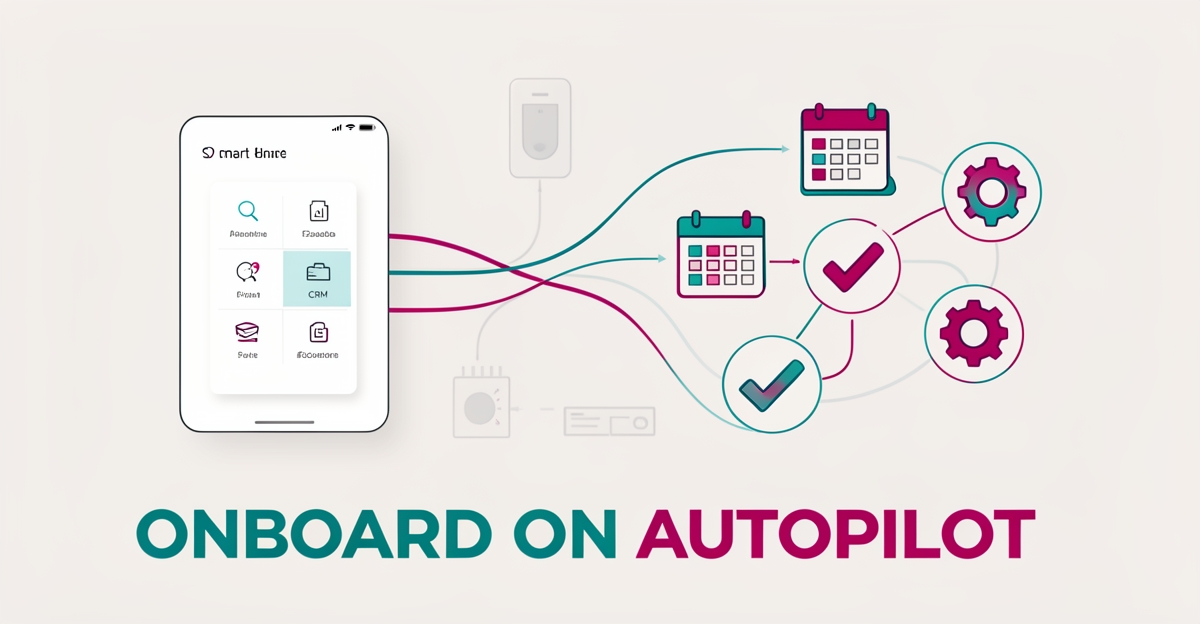
Start with one fix: intake → CRM → scheduling. An AI workflow collects customer data from forms and calls, validates it, and pushes it to CRM with calendar holds created automatically. This single workflow eliminates the largest recurring admin drain while freeing reps for relationship building.
Measure what matters before scaling. Track time saved per rep, first-touch speed, and conversion lift from qualified to scheduled. Use those baselines to prove ROI on the pilot workflow before committing to anything larger.
Once the intake workflow is stable, expand using a milestone-based build model. AIQ Labs structures this as phased delivery where each workflow ships, is approved, and is paid for before the next phase begins. You can build in milestones so you keep what works and stop anytime.
A practical roadmap looks like this:
- Phase 1 Pilot: Automate intake forms, data validation, CRM update, and scheduling for new leads only.
- Phase 2 Measure: Capture time saved, conversion lift, and error reduction; compare to baseline metrics.
- Phase 3 Expand: Add call prep, proposal generation, and post-install follow-up across sales and operations.
- Phase 4 Scale: Integrate with project management and service dispatch for end-to-end onboarding.
Scaling preserves data security and compliance while maintaining ownership of the system. Custom builds replace subscription sprawl with owned workflows that sync CRM, accounting, and scheduling without manual re-entry. For teams ready to go further, an AI Operating System connects intake, scheduling, project management, and dispatch into one operating layer you own outright.
The payoff compounds. Dormant quotes get re-qualified, follow-ups never slip, and every kickoff starts with clean data. For integrators, that means turning old quotes into new installs with less manual effort.
AI is not here to take your job. It's here to take your busywork. The best salespeople are not replaced by AI. They are powered by it.
Still paying for 10+ subscriptions that don’t talk to each other?
We build custom AI systems you own outright. No vendor lock-in. Full control.
Not sure where to start? Ask our AI planner
Frequently Asked Questions
How much time can AI really save on client onboarding for home automation integrators?
Will automating intake make us lose the personal touch with new clients?
What impact does AI intake have on close rates and pipeline?
Is client data safe when we automate onboarding with AI?
How do we start without overhauling everything at once?
How many hours per week does AI save sales teams overall?
Turn Onboarding from a Bottleneck into Your Competitive Edge
Home automation integrators lose valuable time to manual onboarding, hours weekly on data entry, template management, and scheduling that could be spent building relationships and closing deals. AI transforms this workflow by automatically capturing, validating, and syncing client data from intake to CRM, accelerating first-touch engagement and keeping pipeline moving. With secure, compliant automation, teams reclaim administrative hours, improve lead conversion, and turn dormant pipeline into active opportunities, without adding headcount. The result is faster project kickoffs, higher data quality, and measurable revenue growth. To see how this works for your business, complete the 2-minute Fit Check and book a free 30-minute strategy call to map your biggest onboarding bottleneck and identify high-ROI automation opportunities.
Make AI your competitive advantage — not just another tool.
Strategy, implementation and ongoing optimization. One partner, end to end.
Not sure where to start? Ask our AI planner