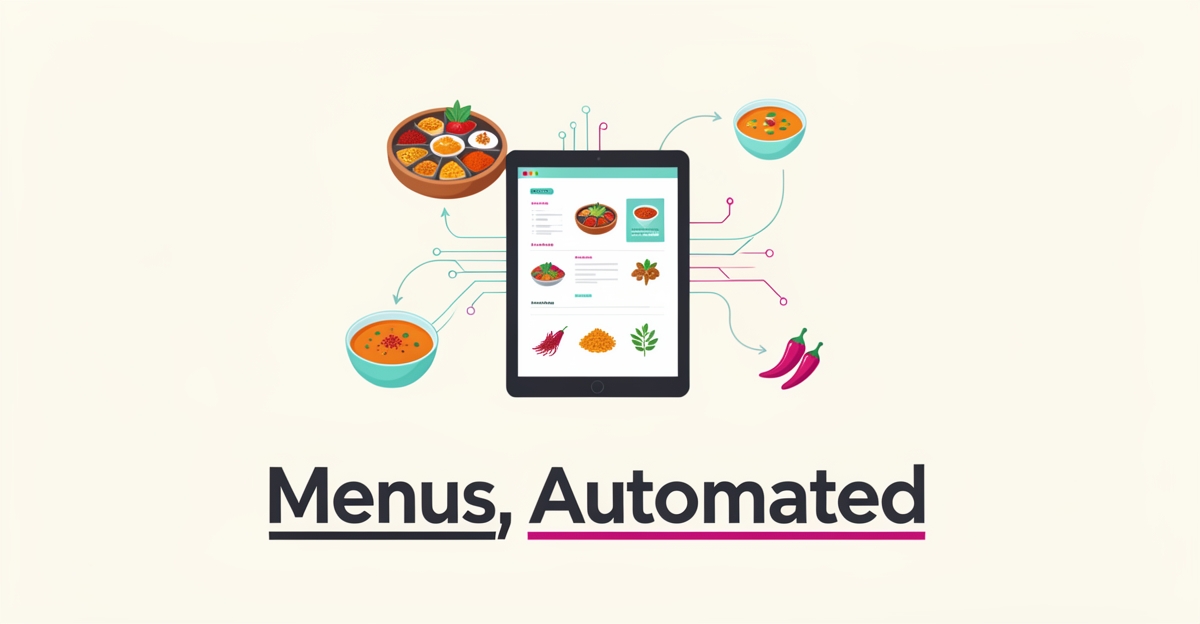
How Indian Restaurants Can Automate Menu Updates with AI Content Generation
Key Facts
- Seasonal shifts, supplier shortages, and regional trends force frequent menu revisions across boards, websites, and print materials
- AI content systems connected to inventory and POS data can dramatically reduce the time spent rewriting menu descriptions
- Domain-specific AI, trained on culinary vocabulary and your brand voice, outperforms generic chatbots for menu copy
- AIQ Labs has deployed 200+ multi-agent systems and runs 4 live SaaS products daily
Hire a team member that works 24/7 — for less than a part-time wage.
AI receptionists, SDRs, dispatchers and 99+ roles. Trained on your business, fully managed.
Not sure where to start? Ask our AI planner
The Manual Menu Bottleneck Costing Indian Restaurants Time and Revenue
Seasonal shifts, ingredient shortages, and evolving regional tastes force Indian restaurants to constantly revise their menus, a process that drains time from kitchen and marketing teams. Chefs spend hours rewriting descriptions for dishes that may only appear for a few weeks, while staff scramble to update boards, websites, and print materials before service begins. This repetitive manual work creates a bottleneck where freshness suffers and opportunities to highlight timely offerings slip away.
As a result, many restaurants serve outdated or generic descriptions that fail to capture the peak flavor of seasonal ingredients like monsoon greens or festive spices. When menu updates lag behind actual availability, diners miss chances to try limited-time specials, and upsell opportunities fade. Marketing teams, already stretched thin, resort to reusing old copy simply to keep pace, leading to bland, uninspired language that does little to excite or inform guests.
Without a streamlined way to reflect real-time changes, menus become static reflections of past efforts rather than dynamic invitations to current culinary strengths. This gap between kitchen reality and guest communication not only wastes staff effort but also dulls the dining experience at the moment it should feel most vibrant and responsive. AI-powered content generation offers a way to close that loop, turning constant change into a competitive advantage rather than a cost. To explore how AI can automate menu updates based on seasonality, availability, and regional trends, start with a free strategy call to assess your restaurant's biggest content bottleneck.
Why Domain-Specific AI Beats Generic Content Tools for Menu Generation
Across industries, a clear pattern has emerged: generic AI tools are losing ground to systems designed for a single domain. Finance, legal, and healthcare teams increasingly adopt AI trained on their specific workflows and vocabulary. The lesson for restaurants is straightforward, menu generation deserves the same treatment.
A generic chatbot can write a passable dish description. What it cannot do is know that your paneer supplier is short this week, that mango season just started, or that "bhuna" means something different to your Delhi-trained chef than to a content writer in another country. Domain-specific AI is grounded in industry-specific data and knowledge, which produces more accurate and relevant results.
The broader trend toward workflow-aware AI is instructive. The tools earning trust in professional settings are the ones that understand the data they work with, connect to live sources, and speak the language of the domain. Rather than pushing generic text generation on users, the most effective systems roll out custom skills tailored to the actual workflow. Translation: the future belongs to AI that understands the workflow it supports, not AI that writes generic text on demand.
For restaurants, that workflow understanding looks like this:
- Real-time ingredient signals, so a description never promises a dish the kitchen can't serve
- Seasonality awareness, automatically surfacing monsoon-friendly or summer-cooling menu items
- Regional trend data, keeping descriptions aligned with what diners are actually searching for
- Culinary vocabulary grounded in Indian cooking techniques, not approximations
Data integration is the critical component here. Effective AI applications in any domain rely on access to high-quality data from both internal and external sources, AI without live data produces stale insights. A restaurant-specific system works the same way, pulling from inventory, supplier updates, and seasonal calendars before generating a single word of copy.
Accuracy and brand voice matter more than raw generation speed. Research on AI adoption consistently flags accuracy and reliability as core challenges, models can produce inaccurate results, and output must be validated rather than trusted blindly. A menu description that misstates ingredients or drifts from your restaurant's tone erodes trust with every read. This is why AIQ Labs builds restaurant content systems with brand voice training and quality-control workflows baked in, freeing chefs and marketing staff from repetitive writing instead of adding a new review burden.
Every industry that has adopted AI successfully learned the same lesson: AI earns its place when it speaks the language of the domain. Menus, where appetite, accuracy, and authenticity converge, deserve nothing less.
How AI Content Systems Automate Seasonal, Ingredient-Driven Menu Updates
Indian restaurants face constant pressure to keep menus fresh and relevant as seasons change and ingredient availability shifts. Manually updating descriptions for seasonal specials or regional trends consumes valuable time that chefs and marketing teams could spend on core operations. AI content systems now automate this process, handling the repetitive research-and-rewrite cycle so menu content stays accurate, engaging, and aligned with real-time kitchen realities.
Dynamic description generation begins with real-time ingredient tracking integrated into the restaurant's inventory or POS system. When a seasonal item like fresh mangoes becomes available or a monsoon-driven shortage affects certain spices, the AI generates updated menu descriptions highlighting peak freshness or suggesting alternatives. Multi-agent research further enhances this by scanning regional food trends, weather patterns, and local harvest reports to anticipate demand shifts. This ensures descriptions aren't just reactive but strategically timed to maximize appeal and minimize waste.
Personalization at scale allows the same base dish to feature tailored descriptions across different channels, emphasizing health benefits for wellness-focused audiences on Instagram, highlighting regional authenticity for food bloggers, or stressing comfort and warmth for delivery platforms during colder months. AIQ Labs builds this kind of multi-agent content personalization into its systems, dynamically tailoring output to audience and channel. By automating research, drafting, and optimization, these systems free kitchen staff to focus on cooking and marketing teams to focus on strategy, cutting the repetitive content workload substantially. The result is a menu that evolves as naturally as the seasons, without the manual lift.
Implementation Roadmap for Owned AI Menu Systems in Restaurants
Most restaurants stall after a promising AI pilot because they lack a roadmap for scaling. The path from experimental menu tweaks to a fully automated, owned system follows a phased pattern: start narrow, connect your data, and expand once the first workflow proves itself.
The transition requires shifting from generic AI experiments to domain-specific automation that understands culinary context. Your restaurant needs AI trained on regional Indian cuisine nuances, not just generic content generation. For restaurants that want a managed starting point, AI Employees can handle recurring content and communication tasks at a fraction of the cost of a human hire.
Follow this phased approach to build your owned AI menu infrastructure:
- Identify high-value workflows where seasonality, ingredient costs, or regional festivals drive frequent menu changes
- Connect POS and inventory systems via API to enable real-time data flow
- Build custom skills for Indian cuisine nuances, training AI to distinguish between regional variations like Chettinad and Awadhi preparations
- Establish automated triggers that update descriptions when ingredient availability shifts or local trends emerge
Data integration forms the backbone of reliable automation. Your menu system needs specialized training on spice profiles, dietary classifications, and regional naming conventions rather than generic food writing. If your menu workflow is the single biggest recurring cost, a focused Workflow Build rebuilds that one process at a fixed price, in phases.
Finally, choose an ownership model that eliminates vendor lock-in. AIQ Labs structures engagements through three approaches: Start Monthly for managed AI staff, Build in Milestones for phased department systems, or Own It Outright for complete operational control. This ensures your menu automation remains a sustainable competitive asset rather than a subscription dependency.
Still paying for 10+ subscriptions that don’t talk to each other?
We build custom AI systems you own outright. No vendor lock-in. Full control.
Not sure where to start? Ask our AI planner
Frequently Asked Questions
Can AI really keep up with seasonal ingredients and supplier shortages for my Indian menu?
Why is generic AI not good enough for Indian restaurant menus?
How does AI menu automation save time for chefs and marketing teams?
Will AI descriptions stay in my restaurant's brand voice and be accurate?
Do I need to own the AI system or is a subscription tool enough?
How do restaurants start automating menu updates without getting stuck in a pilot?
Turn Seasonal Change Into Your Menu Advantage
Manual menu updates will always lag behind the kitchen. When ingredient availability, monsoon greens, festival spices and regional searches shift week to week, generic copy and delayed boards cost you freshness, upsells and guest trust. Domain-specific AI closes that gap by connecting real-time inventory and supplier signals to culinary-aware description generation, keeping tone, technique vocabulary and brand voice consistent while freeing chefs and marketing teams from repetitive rewriting. The pattern is proven across industries: tools succeed when they speak the language of the workflow they support. For Indian restaurants that means seasonality awareness, ingredient-driven triggers and channel-specific personalization built on owned systems, not subscriptions. AIQ Labs builds restaurant content systems with brand voice training and quality-control workflows so updates stay accurate and authentic. Start with a clear bottleneck assessment, map your POS and inventory data flows, and pilot one high-change workflow. Complete the 2-minute Fit Check to book a free 30-minute strategy call and map your biggest content bottleneck into a high-ROI automation plan. You can also reach the team directly at [email protected].
Make AI your competitive advantage — not just another tool.
Strategy, implementation and ongoing optimization. One partner, end to end.
Not sure where to start? Ask our AI planner