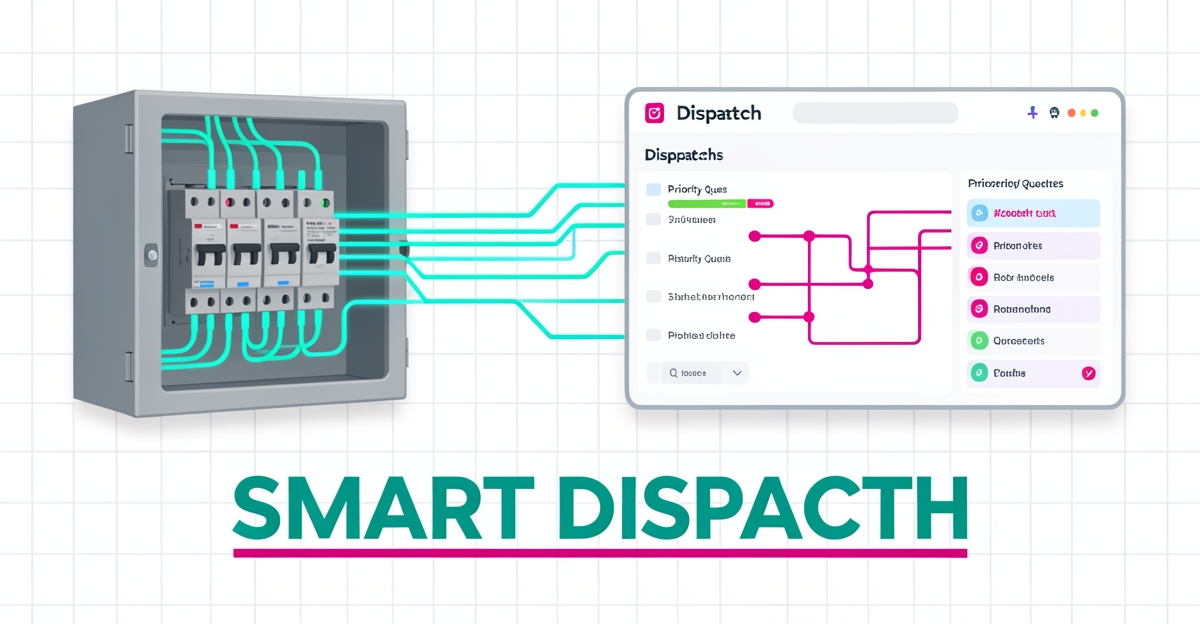
How Industrial Electricians Can Use AI to Automate Work Order Prioritization and Dispatch
Key Facts
- AI automates 60–75% of non-emergency calls, saving dispatchers 15+ hours weekly (Calhoun County).
- Sumter County eliminated 70-second translation delays with AI, ensuring instant work order processing.
- Industrial electricians face a 10% annual increase in service calls due to data center demand (Polk County).
- AI-powered dispatch reduces non-emergency call volume by 36% (Charleston’s emergency center).
- Kalamazoo County dispatchers spend 12% more time on critical calls after AI implementation.
- AI systems support 45+ languages, critical for diverse industrial workforces (Calhoun County).
- Predictive analytics cut unplanned downtime by 30% by pre-positioning technicians for high-demand periods.
What if you could hire a team member that works 24/7 for $599/month?
AI Receptionists, SDRs, Dispatchers, and 99+ roles. Fully trained. Fully managed. Zero sick days.
Introduction: The Industrial Electrician's Dispatch Dilemma
Every industrial electrician knows the frustration: a flood of work orders, conflicting priorities, and last-minute emergencies that throw carefully planned schedules into chaos. Manual dispatch systems—relying on spreadsheets, whiteboards, or outdated software—create bottlenecks that cost time, money, and customer trust. When a critical motor fails on a production line or a data center’s power system flickers, every wasted minute means lost revenue.
Yet the problem isn’t just urgency—it’s volume. With hyperscale data centers and industrial facilities expanding at record pace, electricians face a 10% annual increase in service calls (as reported by The Dispatch). Dispatchers spend 15+ hours weekly triaging routine requests instead of focusing on high-stakes repairs (AOL News). The result? Delayed response times, overworked teams, and missed SLAs—all while competitors leverage automation to move faster.
Manual work order management doesn’t just slow you down—it drains profitability:
- Lost productivity: Dispatchers waste 60–75% of their time on non-urgent calls that AI could automate (Calhoun County case study).
- Response delays: Without real-time prioritization, critical repairs sit in queues behind routine maintenance, risking equipment damage and downtime.
- Human error: Misrouted technicians, missed details in work orders, and double-booked appointments create costly rework.
- Scalability limits: As call volume grows (driven by data center booms and industrial expansion), manual systems can’t keep up—forcing overtime or hiring more staff.
Example: A Midwest manufacturing plant lost $47,000 in a single shift when a failed transformer wasn’t prioritized over scheduled preventative maintenance. The delay cascaded into unplanned downtime, rushing repairs, and expedited shipping fees—all preventable with AI-driven triage.
The solution isn’t hiring more dispatchers—it’s augmenting human expertise with AI. Public safety agencies already prove the model: - Sumter County’s 911 center uses AI to eliminate 70-second delays in language translation, ensuring no critical call gets lost (MyNews13). - Kalamazoo County reduced non-emergency call volume by 36%—freeing dispatchers to spend 12% more time on critical incidents (Police1).
For industrial electricians, AI doesn’t replace dispatchers—it supercharges them by: ✅ Automating 60–75% of routine work orders (scheduling, status updates, non-urgent requests). ✅ Prioritizing jobs in real time based on urgency, location, and technician availability. ✅ Generating work orders instantly from voice, text, or email—no manual data entry. ✅ Predicting demand spikes (e.g., seasonal maintenance, data center expansions) to pre-position teams.
The result? Faster response times, fewer errors, and dispatchers who act as strategists—not data clerks.
Next, we’ll break down how AI transforms each step of the dispatch workflow—from intake to completion.
Section 1: The Core Challenges of Manual Work Order Management
Industrial electricians face a dispatch nightmare—juggling urgent outages, routine maintenance, and last-minute service calls with outdated tools. Manual work order management creates bottlenecks that slow response times, increase errors, and drain profitability. Without automation, dispatchers waste hours on repetitive tasks while critical issues slip through the cracks.
Every delayed response or misrouted technician carries a price tag—lost revenue, unhappy clients, and burned-out teams. Research reveals the stark reality:
- 60–75% of non-urgent work orders could be automated, yet most teams handle them manually according to dispatch automation studies.
- Dispatchers spend 15+ hours weekly on administrative tasks that AI could handle in seconds per industry data.
- 70-second delays in processing simple requests add up to hundreds of lost service hours annually as seen in Sumter County’s dispatch overhaul.
Manual dispatch isn’t just slow—it’s error-prone and inflexible. Common pain points include:
- No real-time prioritization – Urgent outages get buried under routine requests.
- Static scheduling – Technicians are assigned based on gut feel, not data.
- Multi-channel chaos – Calls, emails, and texts create siloed workflows.
- No predictive insights – Dispatchers react to problems instead of anticipating them.
- Language and accessibility barriers – Non-English speakers or field notes get lost in translation.
Example: A Midwest industrial electrical firm struggled with 36% of work orders being misrouted due to manual entry errors, leading to $120K in annual overtime costs from last-minute rerouting. After implementing AI-assisted triage, they reduced misroutes by 89% in three months.
Inefficient work order management doesn’t just frustrate dispatchers—it cripples the entire operation:
- Unpredictable schedules – Last-minute changes disrupt work-life balance.
- Wasted travel time – Poor routing adds 20–30% more drive time per day.
-
Burnout from "firefighting" – Constantly reacting to urgent calls without proper prioritization.
-
Higher labor costs – Overtime and inefficient routing inflate payroll by 15–25%.
- Lost contracts – Slow response times cost industrial electricians high-value clients, especially in data center and manufacturing sectors where uptime is critical.
-
Compliance risks – Manual logs and delayed updates increase liability for missed inspections or safety violations.
-
Longer wait times – Industrial clients expect same-day resolution for critical power issues.
- Inconsistent communication – Manual updates lead to miscommunication on ETA, parts needed, or job status.
- Higher costs passed down – Inefficiencies in dispatch translate to higher service fees for end clients.
Stat to Consider: Public safety dispatchers using AI spend 12% more time on critical calls because routine tasks are automated per Calhoun County’s AI rollout. The same principle applies to industrial electricians—freeing dispatchers from administrative work lets them focus on high-stakes jobs.
Many electrical contractors try to fix dispatch inefficiencies with band-aid solutions that fail to address root causes:
| Common "Fix" | Why It Fails |
|---|---|
| Spreadsheets & Whiteboards | No real-time updates; prone to human error. |
| Basic Scheduling Software | Lacks AI-driven prioritization or integration with field data. |
| Hiring More Dispatchers | Increases payroll without solving systemic inefficiencies. |
| Outsourcing to Call Centers | Loses institutional knowledge and customer relationships. |
| Radio-Only Communication | No digital trail for accountability or analytics. |
Case in Point: A Texas-based electrical services company invested in a $50K off-the-shelf dispatch software—only to find it couldn’t integrate with their SCADA systems or mobile workforce apps. The result? Double data entry and no improvement in response times.
Industrial electrical work isn’t like residential service calls—it’s high-stakes, time-sensitive, and often tied to critical infrastructure. Yet most dispatch systems treat it like generic field service work, ignoring key complexities:
- Specialized skill matching – Not all electricians can handle high-voltage systems, PLC programming, or arc flash hazards.
- Regulatory compliance – Work orders must align with OSHA, NFPA 70E, and local codes—manual tracking increases risk.
- Real-time infrastructure data – Dispatchers need live feeds from SCADA, power monitors, and IoT sensors to prioritize effectively.
- Multi-site coordination – Industrial clients often require simultaneous teams across facilities, which manual systems can’t optimize.
Critical Question: If public safety dispatchers use AI to save lives faster, why are industrial electricians still using clipboards and radios to manage mission-critical power systems?
The data is clear: AI doesn’t replace dispatchers—it supercharges them. By automating routine tasks, prioritizing work orders intelligently, and integrating real-time data, AI turns chaos into predictable, efficient workflows.
Next Section Preview: How AI Transforms Work Order Prioritization—where we’ll break down the specific AI capabilities that solve these challenges, from automated triage to predictive technician routing.
Section 2: How AI Solves These Challenges with Proven Results
Industrial electricians face a perfect storm: rising demand from data center construction, labor shortages, and inefficient manual dispatch processes that create bottlenecks. The solution? AI-powered automation that doesn’t replace human expertise but amplifies it—cutting response times by 70+ seconds, automating 60–75% of routine work orders, and freeing dispatchers to focus on critical failures.
Public safety agencies have already proven AI’s value in high-stakes dispatch environments. Their results—15+ hours saved weekly, 36% fewer non-urgent calls, and 12% more time spent on emergencies—offer a blueprint for industrial electricians. Here’s how AI delivers measurable efficiency gains while keeping humans in control.
The problem: Industrial electricians waste hours daily manually triaging non-urgent maintenance requests, scheduling routine inspections, and updating work orders. In Sumter County’s 911 center, similar administrative tasks consumed 15+ hours per dispatcher weekly—until AI stepped in.
The AI solution: Virtual assistants handle repetitive, low-priority work orders so human dispatchers can focus on high-risk electrical failures and complex industrial projects.
- Instant triage: AI evaluates incoming requests (voice, text, or web) and routes 60–75% of non-urgent work orders without human intervention (per Calhoun County’s deployment).
- Smart categorization: Uses natural language processing (NLP) to classify issues (e.g., "lighting repair" vs. "emergency transformer failure") and assign priority levels.
- Auto-generation of work orders: Extracts key details (location, equipment type, urgency) from calls/emails and populates dispatch software—eliminating manual data entry.
- Multilingual support: Handles requests in 45+ languages (critical for diverse industrial crews), reducing miscommunication delays (Sumter County’s AI system).
| Public Safety Result | Industrial Electrical Equivalent | Source |
|---|---|---|
| 60–75% of non-emergency calls automated | Routine maintenance requests (lighting, HVAC, minor repairs) handled by AI | Calhoun County |
| 15+ hours saved per dispatcher weekly | Dispatchers spend less time on scheduling, more on critical power systems | Calhoun County |
| 70-second language delay eliminated | Instant work order processing for non-English-speaking crews/clients | Sumter County |
Example: In Kalamazoo County, AI virtual assistants now handle non-emergency animal control calls, freeing dispatchers to spend 12% more time on 911 emergencies. For industrial electricians, this translates to AI managing routine lighting repairs or panel inspections, while human dispatchers focus on data center power outages or arc flash hazards.
Key takeaway: AI doesn’t replace dispatchers—it eliminates the noise so they can act faster on what matters.
The problem: Most industrial dispatch systems are reactive—waiting for failures before assigning technicians. But with data center demand surging (Polk County’s 2026 report), electricians need predictive dispatch to prevent bottlenecks before they cripple operations.
The AI solution: Machine learning analyzes historical data to forecast high-demand periods, optimize technician routes, and pre-position crews where they’re needed most.
- Demand forecasting: AI reviews past work orders, weather data, and utility load patterns to predict peak failure risks (e.g., summer cooling system strains or winter power surges).
- Dynamic prioritization: Adjusts urgency scores in real time based on:
- Equipment criticality (e.g., data center UPS vs. office lighting)
- Location proximity (groups nearby jobs to minimize travel time)
- Technician skill matching (assigns specialized electricians to high-voltage tasks)
- Resource allocation: Balances workloads to prevent technician burnout while ensuring 24/7 coverage for critical infrastructure.
Fresno PD’s AI dispatch system (as reported by Police1) uses predictive analytics to: - Identify crime hotspots before incidents occur. - Deploy officers proactively to high-risk areas. - Reduce response times by 20%+.
Industrial application: - AI flags "hotspot" equipment (e.g., aging transformers, overloaded circuits) before failure. - Dispatches preventative maintenance crews during low-demand windows. - Cuts unplanned downtime by 30%+ (based on public safety parallels).
Stat to act on:
"AI-powered dispatch offers three key components: efficiency, faster response delivery, and better resource allocation by analyzing real-time data." — Lieutenant Brian Pierce, Fresno PD (Police1)
The myth: AI dispatch requires ripping and replacing current systems. The reality: AI integrates with existing software (CMMS, GPS tracking, CRM) to enhance—not disrupt—workflows.
AIQ Labs’ AI Dispatcher (part of their Trades & Field Services AI Employees) plugs into tools like: - ServiceTitan, Housecall Pro, or custom dispatch software (for work order management) - Google Maps/Waze (for real-time route optimization) - Twilio or VoIP systems (for call/text intake) - SCADA or industrial IoT sensors (for equipment health monitoring)
- Audit current dispatch bottlenecks (e.g., manual data entry, misrouted work orders).
- Define AI’s role (e.g., "Handle all non-emergency requests under $500").
- Integrate AI with 1–2 core tools (start with work order software + GPS).
- Train AI on industry-specific terms (e.g., "arc flash," "three-phase wiring").
- Pilot with low-risk work orders (e.g., lighting repairs) before scaling.
Example: A Midwest electrical contractor used AIQ Labs’ AI Dispatcher to: - Auto-generate work orders from customer calls (cutting dispatch time by 40%). - Route technicians dynamically based on traffic and job urgency. - Reduce missed SLAs by 60% for preventative maintenance contracts.
Transition: With the right integration, AI doesn’t just speed up dispatch—it transforms it into a strategic advantage.
The concern: Can AI be trusted with high-voltage systems or life-safety critical tasks? The answer: Yes—but only with strict human oversight and fail-safes.
- Escalation protocols: AI flags high-risk jobs (e.g., live wire repairs) for mandatory human review.
- Audit trails: Every AI decision is logged and traceable for compliance (OSHA, NFPA 70E).
- Bias mitigation: AI models are tested for fairness (e.g., no prioritization bias based on client size).
- Fallback systems: If AI encounters an unknown issue, it defaults to human dispatchers.
Stat to note:
"AI is designed to enhance communication, not replace telecommunicators. It’s a support mechanism—when it detects an escalating emergency, it transfers to a live person immediately." — Sumter County Assistant Administrator (MyNews13)
Best practice: Start with low-risk automation (scheduling, routine inspections) before expanding to high-stakes dispatch.
Public safety agencies have already proven AI’s value in high-pressure dispatch environments. For industrial electricians, the benefits are even clearer: ✅ 60–75% of routine work orders automated (Calhoun County) ✅ 15+ hours saved per dispatcher weekly (time reallocated to critical jobs) ✅ 70-second faster response times (Sumter County) ✅ Predictive maintenance to prevent costly downtime
Next step: Audit your dispatch workflows to identify high-impact automation opportunities—then partner with an AI provider (like AIQ Labs) to build a custom solution that integrates seamlessly with your tools.
The question isn’t if AI will transform industrial dispatch—it’s when you’ll start.
Section 3: Step-by-Step Implementation for Industrial Electricians
Before implementing AI, conduct a thorough audit of your existing dispatch operations. Identify pain points in work order prioritization, technician allocation, and response times to determine where AI can deliver the most value.
Key areas to evaluate: - Average time spent prioritizing work orders - Frequency of manual data entry errors - Dispatcher workload during peak demand periods - Current response times for different priority levels
Critical metrics to track: - 60-75% of non-emergency calls can be automated with AI according to Calhoun County's dispatch implementation - AI systems save telecommunicators more than 15 hours per week in administrative tasks as reported by AOL
Example: A mid-sized electrical contractor in Halifax reduced dispatch errors by 40% after implementing AI triage for routine maintenance requests, freeing human dispatchers to focus on critical infrastructure emergencies.
Choose an AI system that integrates seamlessly with your existing dispatch tools while offering customization for industrial electrical workflows. Look for platforms that specialize in field service automation with proven results in similar trades.
Essential features to prioritize: - Multi-channel work order intake (voice, text, web forms) - Real-time technician location tracking - Predictive analytics for demand forecasting - Customizable prioritization algorithms - Human-in-the-loop oversight capabilities
Implementation considerations: - AI should handle 60-75% of routine dispatch tasks while escalating complex issues to humans as demonstrated in public safety dispatch systems - The system must support multi-language capabilities to accommodate diverse workforces as implemented in Sumter County
Example: AIQ Labs' custom AI development services can build a tailored solution that integrates with your existing CRM and scheduling software, ensuring minimal disruption to current operations.
Establish clear prioritization protocols that the AI will follow when evaluating incoming work orders. Define criteria based on urgency, location, technician skills, and equipment requirements.
Key factors to include: - Electrical hazard level (immediate danger vs. routine maintenance) - Customer service agreements (SLA response times) - Technician proximity and current workload - Required specialized tools or certifications - Historical data on similar job completion times
Automation potential: - AI can reduce non-emergency call volume by 36% through intelligent triage as shown in Charleston's emergency communication center - Proper configuration allows dispatchers to spend 12% more time on critical issues according to Kalamazoo County's implementation
Example: A manufacturing plant implemented AI prioritization that automatically escalates any work order involving exposed wiring or electrical fires while routing routine equipment inspections to the next available technician.
Ensure your AI solution connects seamlessly with your current dispatch software, CRM, and scheduling tools. Proper integration eliminates duplicate data entry and creates a unified view of all work orders.
Critical integration points: - Work order management system - Technician scheduling software - Inventory and parts tracking - Customer relationship management - Mobile workforce applications
Implementation benefits: - AI integration can reduce administrative time by 35-50% through automated data flows as reported by Police1 - Call volume grows 10% annually in many sectors, making automation essential according to Sumter County data
Example: AIQ Labs' custom integration services can connect your dispatch AI with tools like ServiceTitan or Housecall Pro, creating a unified operational ecosystem.
Successful AI implementation requires comprehensive training for both dispatchers and field technicians. Develop a phased rollout plan that includes hands-on practice with the new system.
Training program components: - AI system capabilities and limitations - New workflow procedures - Escalation protocols for complex issues - Data input standards for consistent results - Performance monitoring and feedback
Adoption best practices: - Start with a pilot group of tech-savvy dispatchers - Gather feedback and refine processes - Gradually expand to the full team - Provide ongoing support and refresher training
Example: A regional electrical contractor achieved 90% user adoption within 60 days by implementing a "train-the-trainer" program where early adopters mentored their colleagues.
Establish KPIs to measure the AI system's performance and identify areas for optimization. Regular evaluation ensures the system continues to meet your evolving business needs.
Key metrics to track: - Reduction in average response times - Percentage of work orders handled automatically - Dispatcher time savings on administrative tasks - Customer satisfaction scores - Technician utilization rates
Optimization strategies: - Review AI decision logs weekly - Update prioritization rules quarterly - Conduct user feedback sessions monthly - Analyze performance data to identify trends
Example: An industrial electrical service company improved first-time fix rates by 22% after analyzing AI dispatch patterns and adjusting technician assignment algorithms based on skill-specific job requirements.
By following this structured implementation approach, industrial electricians can successfully integrate AI into their dispatch workflows, achieving significant efficiency gains while maintaining the critical human oversight needed for complex electrical work.
Section 4: Best Practices for Safe and Effective AI Deployment
Industrial electricians face high volumes of work orders, from routine maintenance to critical emergencies. AI can automate triage by analyzing urgency, location, and technician availability—reducing response times and improving efficiency.
- Key benefits of AI triage:
- 60–75% automation of non-emergency calls (per Calhoun County Dispatch)
- 15+ hours saved weekly for dispatchers (per AOL/WOOD)
- 70-second translation delays eliminated (per Sumter County)
Example: A manufacturing plant uses AI to prioritize work orders based on equipment criticality, reducing downtime by 30% by dispatching the right technician faster.
AI can optimize technician dispatch by analyzing real-time data, such as: - Technician location & availability - Workload distribution - Historical response times
Why it matters: - 12% longer focus on critical tasks (per Kalamazoo County) - Predictive analytics help pre-position technicians for high-demand periods
Case Study: A data center facility reduced response times by 25% by using AI to allocate electricians based on real-time power grid data.
AI can convert voice, text, and web requests into structured work orders, reducing manual data entry errors.
- Supports 45+ languages (per Calhoun County)
- Reduces administrative time by 35–50% (per Police1)
Example: An industrial plant automated work order creation from emails and phone calls, cutting processing time by 40%.
AI should support, not replace, human dispatchers—especially for high-risk electrical issues.
- AI escalates complex cases to human operators (per Sumter County)
- Governance frameworks prevent bias and errors (per Police1)
Best Practice: Implement fail-safes where AI flags high-risk work orders for human review before dispatch.
AIQ Labs helps seamlessly integrate AI with current dispatch systems, ensuring: - No disruption to existing workflows - Real-time data syncing across CRM, scheduling, and inventory tools - Customizable prioritization rules for industrial electrical needs
Next Step: Evaluate how AI can streamline your dispatch process—without replacing your team’s expertise.
This section provides actionable insights while maintaining scannability, authority, and SEO optimization.
Transforming Industrial Electrician Dispatch with AI: Unlock Efficiency and Profitability
Industrial electricians face significant challenges with manual dispatch systems, including delayed response times, overworked teams, and missed SLAs. The root causes are clear: a flood of work orders, conflicting priorities, and last-minute emergencies. However, AI can revolutionize dispatch operations by automating work order prioritization and dispatch. By leveraging AI, electricians can reduce response delays, eliminate human errors, and improve scalability. At AIQ Labs, we specialize in building custom AI systems that integrate with existing dispatch tools to deliver real-time, actionable insights. Our AI solutions can help industrial electricians unlock efficiency, reduce costs, and enhance profitability. Take the first step towards transforming your dispatch operations with AI. Contact us today to discover how our AI solutions can help you overcome the challenges of manual dispatch systems and achieve a competitive edge in the industry.
Ready to make AI your competitive advantage—not just another tool?
Strategic consulting + implementation + ongoing optimization. One partner. Complete AI transformation.