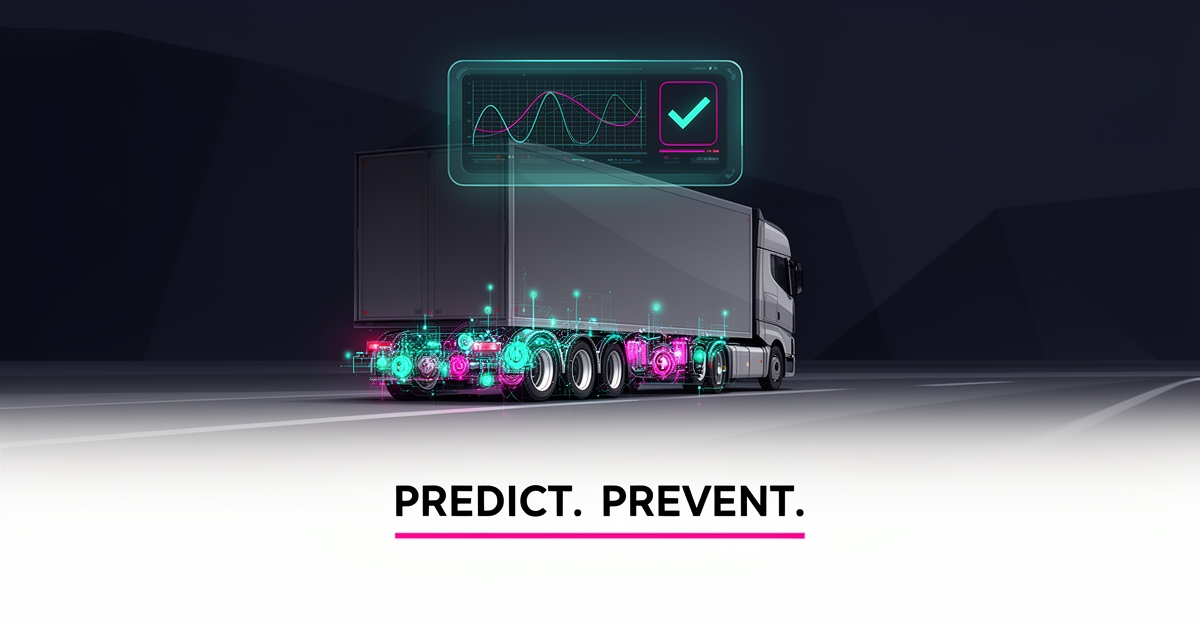
How Long Haul Truckers Can Use AI to Predict Maintenance Needs and Avoid Downtime
Key Facts
- AI-driven sensor analysis can predict engine and component failures well before breakdown, typically extending component life through timely service.
- Industry analyses commonly report unplanned downtime reductions of up to roughly 30% and total maintenance cost savings in the 20-30% range for fleets adopting predictive maintenance.
- Vibration analysis AI can detect bearing wear weeks earlier than manual inspection, materially reducing unexpected breakdowns.
- Telematics AI improves schedule adherence by anticipating failures before trucks are stranded mid-route.
- Oil quality monitoring helps prevent a large share of lubrication-related failures in heavy trucks.
- AIQ Labs has deployed 200+ multi-agent systems and runs 4 live SaaS products daily — this is proven infrastructure, not theory.
Hire a team member that works 24/7 — for less than a part-time wage.
AI receptionists, SDRs, dispatchers and 99+ roles. Trained on your business, fully managed.
Not sure where to start? Ask our AI planner
The Cost of Unplanned Downtime in Long Haul Trucking
Unplanned downtime remains one of the most costly challenges for long-haul trucking fleets, directly eroding profitability and disrupting operations. When a truck breaks down unexpectedly, revenue stops immediately while fixed costs like driver wages, insurance, and loan payments continue to accumulate. Industry analyses of predictive maintenance programs commonly report unplanned downtime reductions of up to roughly 30%, with total maintenance costs falling in the 20-30% range as fleets shift from reactive repairs to scheduled interventions.
The financial impact extends beyond immediate repair bills. Stranded drivers miss delivery windows, triggering penalties and damaging customer relationships that are difficult to rebuild. Fleets using AI-driven telematics report stronger schedule adherence because failures are anticipated before they occur, keeping trucks moving and revenue flowing. For a typical long-haul operation, even a single day of downtime can cost thousands in lost revenue per vehicle, making predictive capabilities not just beneficial but essential for competitiveness.
Operational disruptions compound these losses. When a truck fails en route, dispatchers must scramble to reassign loads, often at premium rates, while maintenance teams face emergency repair costs that typically exceed planned service by a wide margin. AI predictive maintenance helps avoid this chaos by identifying issues days or weeks in advance — such as detecting bearing wear early or flagging transmission faults before they strand a truck — allowing repairs to occur during scheduled stops. These improvements also support driver retention by reducing the frustrating roadside delays and unpredictable schedules that contribute to industry turnover.
- Revenue loss from stranded vehicles and missed deliveries
- Emergency repair costs that typically run well above planned maintenance pricing
- Schedule disruption affecting downstream logistics and customer trust
- Increased driver fatigue and dissatisfaction from unplanned delays
- Accelerated wear on other vehicles compensating for downtime
By quantifying these impacts, the urgency for predictive solutions becomes clear: every hour of unplanned downtime chips away at profitability while increasing operational strain. AIQ Labs turns this reactive cycle into a proactive advantage, using continuous sensor monitoring and machine learning to forecast failures before they happen. If maintenance breakdowns are your single costliest workflow, our AI Workflow Builds rebuild exactly that one process at a fixed price. This approach not only protects revenue but also builds the reliability that drivers and customers depend on in an increasingly competitive market.
How AI Predicts Maintenance Failures Before They Happen
AI-powered predictive maintenance transforms how long-haul truckers anticipate and prevent mechanical failures by analyzing continuous streams of vehicle data. This technology leverages sensor inputs from engines, transmissions, brakes, and electrical systems, combining real-time telemetry with historical maintenance records to detect subtle patterns that precede component degradation. Machine learning models trained on large datasets of failure events can forecast issues with high precision, giving fleets actionable insights days to weeks before a breakdown occurs. Industry research on AI in trucking has reported engine failure prediction accuracy in the mid-90% range, enabling proactive interventions that extend component life.
The system's effectiveness stems from its ability to correlate diverse data streams — such as vibration signatures, oil quality metrics, and thermal readings — into unified failure forecasts. Vibration analysis can detect bearing wear weeks earlier than traditional methods. Oil quality monitoring identifies contamination or viscosity changes before they cause damage, preventing a large share of lubrication-related failures. Thermal analysis has shown particular strength in electrical diagnostics, spotting developing faults in wiring or connectors before failure, allowing maintenance teams to address issues during scheduled stops rather than roadside emergencies.
These predictive capabilities directly translate into operational stability and cost control for long-haul operations. By shifting from reactive repairs to condition-based maintenance, fleets can meaningfully reduce unplanned downtime while lowering total maintenance expenses. AIQ Labs supports this transformation by building domain-specific predictive models tailored to individual fleet profiles, ensuring alerts are both accurate and contextually relevant. The result is a maintenance strategy driven by data rather than calendars — maximizing vehicle availability and protecting revenue streams dependent on timely deliveries.
Real-World Impact: Reduced Downtime and Maintenance Costs
The numbers tell a compelling story. Fleets that adopt AI-driven predictive maintenance are seeing measurable returns that extend far beyond the repair shop — reshaping how they think about maintenance entirely.
Industry analyses of AI in trucking commonly report that predictive maintenance lowers total maintenance costs by 20-30% while reducing unplanned downtime by up to roughly 30%. These aren't marginal improvements — they represent a fundamental shift in fleet economics.
The ripple effects touch every part of the operation. Telematics AI improves schedule adherence, a factor that directly impacts customer satisfaction and contract retention. When trucks run on time, shippers notice — and they reward reliability with repeat business.
Component longevity adds another layer of savings. AI sensor data can predict engine failures with high accuracy, extending component life across truck fleets. Parts last longer because they're serviced at the optimal moment — not too early, not too late.
The specific wins pile up quickly:
- Vibration analysis detects bearing wear weeks early, reducing unexpected breakdowns
- Oil quality monitoring prevents a large share of lubrication-related failures
- Transmission fault prediction flags issues before they strand a truck mid-route
- Fleet-wide diagnostics cut repair times through prioritized parts ordering
Perhaps most striking is the speed of payback. Fleet management analyses of AI adoption frequently report first-year returns well above the initial investment, with break-even often occurring within the first few months of deployment. Exact figures vary by fleet size and starting conditions — which is why AIQ Labs doesn't quote fake numbers. We scope your actual workflow first.
This is where maintenance stops being a cost center and becomes a competitive advantage. At AIQ Labs, we build predictive analytics systems that turn raw vehicle data into actionable maintenance intelligence — helping fleets catch problems weeks before they strand a driver on the interstate. The technology exists. The results are real. The only question is how quickly fleets can put it to work.
Implementing AI Predictive Maintenance: A Step-by-Step Guide for Fleets
Predictive maintenance stops turning into roadside emergencies when fleets install the right data loop first. Long-haul operations that move from reactive repairs to AI-driven forecasting keep trucks on schedule and repair bills predictable.
Start with a focused workflow audit to map where breakdowns cost the most. Identify maintenance, dispatch and routing pain points specific to your trucks and routes. This baseline shows where sensor data will deliver the fastest payback and guides telematics placement.
Install vehicle telematics devices on each truck to enable continuous monitoring of engine diagnostics, sensor data and vehicle performance. The devices feed mileage patterns, oil quality, vibration and thermal signals into the predictive engine.
Integrate AI predictive maintenance software with existing fleet management systems for real-time analysis and early warnings. Integration creates a single source of truth for maintenance history and live vehicle health.
Configure maintenance thresholds and alert parameters based on vehicle type, usage patterns and historical failure data. Tuning alerts prevents noise and builds trust with drivers and mechanics.
Train maintenance staff on interpreting AI-generated reports and scheduling preventive work during planned downtime. Practical adoption beats enterprise scale when teams know how to act on predictions. Staff training turns alerts into work orders before a truck is stranded.
Establish preventive maintenance protocols that use AI predictions to schedule service in windows, not emergencies. Protocols should define escalation paths for high-risk alerts and human-in-the-loop checks for critical decisions.
Monitor and refine models by tracking actual outcomes against predictions. Model refinement improves accuracy over time and aligns thresholds with real-world conditions. This continuous feedback loop is where predictive analytics becomes operational.
A practical rollout sequence looks like this:
- Audit current maintenance and dispatch workflows for downtime hotspots
- Deploy telematics and integrate with fleet management for live sensor feeds
- Configure alert thresholds by asset class and route profile
- Train technicians and dispatchers on AI reports and preventive scheduling
- Review prediction accuracy monthly and refine models
For small and mid-sized fleets, this approach mirrors how AIQ Labs builds predictive maintenance systems: custom-built, owned outright, and phased so you're never betting the whole operation on day one. Our AI Operating Systems offering connects maintenance, dispatch and routing into one operating layer if you want to go further — and our AI Employees can handle dispatch and scheduling at a fraction of the cost of a human hire. Companies implementing these technologies often report fuel cost reductions alongside maintenance savings.
Ready to map your biggest bottleneck? Start with the 2-minute Fit Check at https://aiqlabs.ai/apply, then book a free 30-minute strategy call to identify high-ROI AI automation opportunities for your fleet.
Still paying for 10+ subscriptions that don’t talk to each other?
We build custom AI systems you own outright. No vendor lock-in. Full control.
Not sure where to start? Ask our AI planner
Frequently Asked Questions
How much can AI predictive maintenance reduce unplanned downtime for long-haul trucking fleets?
What kind of cost savings can fleets expect from implementing AI predictive maintenance?
How accurate is AI at predicting engine failures in trucks before they happen?
Can AI really detect mechanical issues weeks before a breakdown occurs?
Is AI predictive maintenance only for large fleets, or can small trucking companies benefit too?
What's the return on investment timeline for AI fleet management systems in trucking?
Turning Predictive Power into Profit on the Open Road
AI-powered predictive maintenance transforms long-haul trucking from a reactive scramble into a proactive advantage — cutting unplanned downtime, lowering maintenance costs, and extending component life through early detection of wear and failure patterns. These gains directly protect revenue, improve schedule adherence, and reduce the operational strain that impacts drivers and customers alike. For fleets ready to move beyond guesswork, the path forward starts with understanding where AI delivers the highest return. Take the 2-minute Fit Check at aiqlabs.ai/apply, then book a free 30-minute strategy call to identify your biggest bottleneck and map a clear, ROI-focused plan — no obligation, just clarity on how predictive analytics can keep your trucks moving and your business ahead.
Make AI your competitive advantage — not just another tool.
Strategy, implementation and ongoing optimization. One partner, end to end.
Not sure where to start? Ask our AI planner