How Marine Construction Companies Can Automate Site Inspections with AI-Powered Cameras and Reporting
Key Facts
- Manual inspections compound time and safety risks daily in marine construction.
- AI-powered cameras enable real-time monitoring and automated defect detection in marine environments.
- AI-driven quality control identifies structural anomalies early, reducing rework and improving safety compliance.
- AI-powered drones conduct 3D site mapping and progress tracking, reducing manual site visits while improving measurement accuracy.
- Custom AI workflows process marine-specific visual data to ensure accurate, repeatable reporting without vendor lock-in.
- Automated reporting typically frees skilled personnel from hours of documentation for higher-value build tasks.
- Early defect detection reduces material waste and repeated mobilizations, both cost and environmental wins.
Hire a team member that works 24/7 — for less than a part-time wage.
AI receptionists, SDRs, dispatchers and 99+ roles. Trained on your business, fully managed.
Not sure where to start? Ask our AI planner
Why Manual Inspections Are Costing Marine Construction Teams Time and Safety
Manual inspections in marine construction are a bottleneck that compounds on the job site every day. Teams send personnel onto barges, piers and tidal zones for repeated visual checks, logging conditions by hand while weather windows close.
The construction industry has long struggled with stagnant productivity, safety exposure, and environmental impact, problems that hit marine projects hardest, where tidal cycles, weather and vessel access limit workable hours. Each manual round trip consumes crew time that could be applied to build, and delays in reporting slow decision-making.
Safety exposure rises with frequency of site visits. High-pressure, dynamic marine environments demand reliability from both people and systems. Inspectors working on moving structures, wet decks and confined spaces face slip, fall and equipment hazards that are amplified by fatigue and poor visibility.
Environmental pressure is also mounting. Construction is consistently ranked among the largest contributors to global emissions and material waste, and manual inspections contribute indirectly through repeated mobilizations and delayed defect detection that leads to overuse of materials.
Budget pressure makes inefficiency costly. Mid-size maritime operations typically carry significant monthly IT and systems spend, and every dollar tied up in spreadsheets, photos stored on phones and paper checklists creates data silos that increase admin overhead and compliance risk.
Manual processes create repeatable pain points across teams:
- Delayed anomaly detection from field-to-office reporting lag
- Inconsistent inspection records that complicate safety compliance
- Crew time diverted from build tasks to documentation
- Higher exposure to safety risks on exposed marine structures
These constraints push firms toward reliable, repeatable monitoring. AIQ Labs builds custom [AI Workflow Builds](/workflow-builds) tailored to marine environments, ensuring accurate, repeatable, and actionable reporting without vendor lock-in. By analyzing drone and camera footage for real-time site condition monitoring and automated inspection reports, teams reduce manual fieldwork while improving safety compliance.
How AI-Powered Cameras and Drones Enable Real-Time Monitoring and Defect Detection
Marine construction sites present unique challenges for traditional inspection methods, where harsh environments and complex structures demand smarter monitoring solutions. AI-powered cameras and drones are transforming how these projects are managed by enabling real-time visibility and automated defect detection without constant manual oversight.
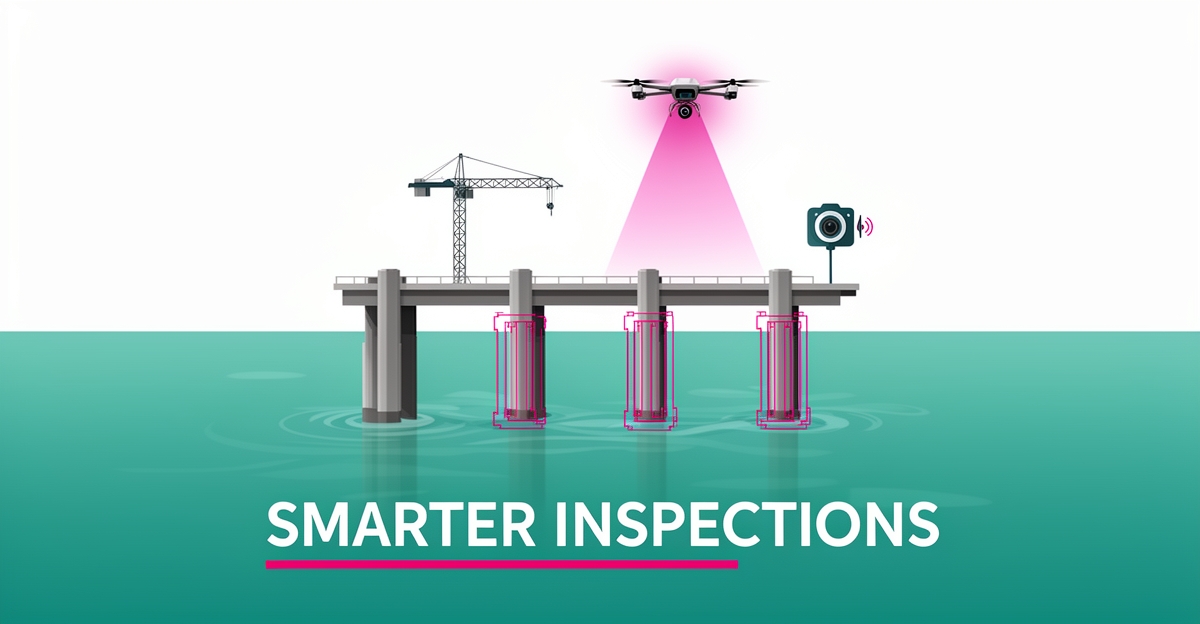
AI-driven quality control systems analyze visual data from fixed and mobile cameras to identify structural anomalies such as corrosion, misalignments, or material degradation as they occur. This capability allows teams to intervene early, reducing rework and improving safety compliance on-site. AI-powered planning tools further support better resource allocation when defects are detected early, and AI-powered drones conduct regular 3D site mapping and progress tracking, reducing the need for frequent manual site visits while improving measurement accuracy across large or hard-to-reach marine structures.
- Continuous monitoring of weld integrity and coating conditions using AI vision models
- Automated change detection between scheduled scans to flag unauthorized alterations
- Real-time alerts for safety zone breaches or equipment proximity risks
- Historical trend analysis to predict maintenance needs before failures occur
- Integration with project management tools to update schedules based on actual progress
By combining aerial drone surveys with ground-based AI camera feeds, marine construction firms gain a comprehensive, real-time view of site conditions. This integrated approach not only cuts down on labor-intensive inspections but also ensures that data is consistently captured, analyzed, and acted upon, leading to fewer delays, lower operational risks, and more predictable project timelines. AIQ Labs supports this transformation by building custom AI workflows that process marine-specific visual data, ensuring accurate, repeatable reporting tailored to tidal conditions, saltwater exposure, and structural complexity without relying on generic, one-size-fits-all platforms.
From Footage to Automated Reports: Building Custom AI Workflows for Marine Environments
Marine construction sites present unique challenges for inspection workflows, where harsh environments and complex structures demand precision and consistency. AI-powered cameras and drones are transforming how teams monitor site conditions, turning raw footage into actionable intelligence without constant manual oversight. By leveraging custom AI workflows, marine construction companies can automate the detection of structural anomalies, corrosion, and safety hazards in real time, reducing reliance on frequent field visits while maintaining rigorous compliance standards. Industry research consistently shows that AI-driven quality control and defect detection can identify potential risks earlier and improve resource allocation, directly supporting safer and more efficient marine projects.
Building these workflows requires more than off-the-shelf tools, it demands a tailored approach that accounts for saltwater exposure, tidal variations, and limited accessibility. AIQ Labs develops custom AI systems that process drone and camera feeds through specialized models trained on marine-specific failure patterns, ensuring accurate identification of cracks, misalignments, or material degradation. Unlike generic solutions, these workflows are designed for repeatability, generating standardized reports that align with regulatory requirements and project timelines. This level of precision helps teams shift from reactive inspections to proactive maintenance, catching issues before they escalate into costly delays or safety incidents.
The true value lies in the ownership and adaptability of the system. With AIQ Labs' payment models, Start Monthly, Build in Milestones, or Own It Outright, marine companies retain full control over their AI workflows: no vendor lock-in, no hidden dependencies, and the freedom to evolve the system as project needs change. Systems in this sector must perform reliably under high-pressure, dynamic conditions, a standard met by AI architectures built for real-world deployment. By integrating multi-agent reasoning, contextual analysis, and automated reporting, these workflows deliver consistent, auditable outputs that typically cut hours of manual documentation per week, freeing skilled personnel for higher-value tasks. Linking inspection data to schedule adjustments and resource planning creates a closed-loop system for continuous improvement. The result is not just faster reporting, but a foundation for safer, more predictable marine construction operations.
Implementation Roadmap for Marine Construction Teams
Marine construction teams can move from manual inspections to automated AI workflows without disrupting active projects when the rollout is staged and tied to real operational needs.
Start by mapping where manual fieldwork creates risk and cost. AI-driven quality control and defect detection can identify potential risks and improve resource allocation, which directly supports safety compliance on dynamic waterfront sites. Clarify which inspection types, structural checks, and reporting steps will be automated first.
Select solutions built for maritime conditions. The maritime industry demands IT systems that perform reliably in high-pressure, dynamic environments, so budget discipline and tailored integration matter. AIQ Labs builds custom AI workflows tailored to marine environments, ensuring accurate, repeatable, and actionable reporting without vendor lock-in.
Deploy drones and cameras for continuous data capture. AI-powered drones are increasingly used for 3D site mapping and progress tracking, reducing manual site visits and improving accuracy. Pair aerial mapping with fixed cameras at piers, barges, and staging areas to feed real-time site condition monitoring into the same pipeline.
A practical rollout sequence helps teams stay aligned:
- Identify needs for AI planning and quality control across planning, defect detection, and compliance reporting
- Select and implement tailored AI solutions for maritime challenges with reliable connectivity and edge processing
- Deploy drones for mapping and progress tracking to reduce manual site visits
- Train personnel on automated reporting, exception handling, and model feedback loops
Training is essential because AI is not a silver bullet and requires careful planning, implementation, and maintenance to achieve its full potential. Teams need clear ownership for data validation, escalation paths for anomalies, and routines for model retraining with new site conditions.
With planning grounded in past project data and labor productivity rates, AI-powered planning tools can create better schedules and budgets while inspection automation reduces field exposure. Early defect detection also improves material efficiency, less waste, fewer rework cycles, and a smaller environmental footprint.
Still paying for 10+ subscriptions that don’t talk to each other?
We build custom AI systems you own outright. No vendor lock-in. Full control.
Not sure where to start? Ask our AI planner
Frequently Asked Questions
Will AI cameras and drones actually work on a wet, tidal marine site?
How much manual inspection time can we realistically cut?
Isn't AI just another expensive IT subscription we can't afford?
Will this help with safety and compliance on barges and piers?
Can AI inspections reduce our environmental impact?
Do we need to rip out our current systems to start?
From Manual Checks to AI-Powered Clarity: The Path Forward for Marine Construction
Marine construction teams no longer need to choose between safety, schedule, and budget when manual inspections drain time and increase risk. By leveraging AI-powered cameras, drones, and custom workflows built for saltwater exposure and tidal rhythms, companies gain real-time visibility into structural integrity, automate defect detection, and reduce fieldwork without compromising compliance. AIQ Labs helps marine firms own their AI transformation, designing systems that process marine-specific visual data, integrate with project timelines, and deliver auditable reporting tailored to operational needs. The result is fewer delays, lower exposure to hazards, and skilled crews focused on building, not documenting. To explore how this applies to your site, [start with a free Fit Check](/apply) and a 30-minute strategy call to map your biggest inspection bottleneck, no obligation, just clarity on your opportunity.
Make AI your competitive advantage — not just another tool.
Strategy, implementation and ongoing optimization. One partner, end to end.
Not sure where to start? Ask our AI planner