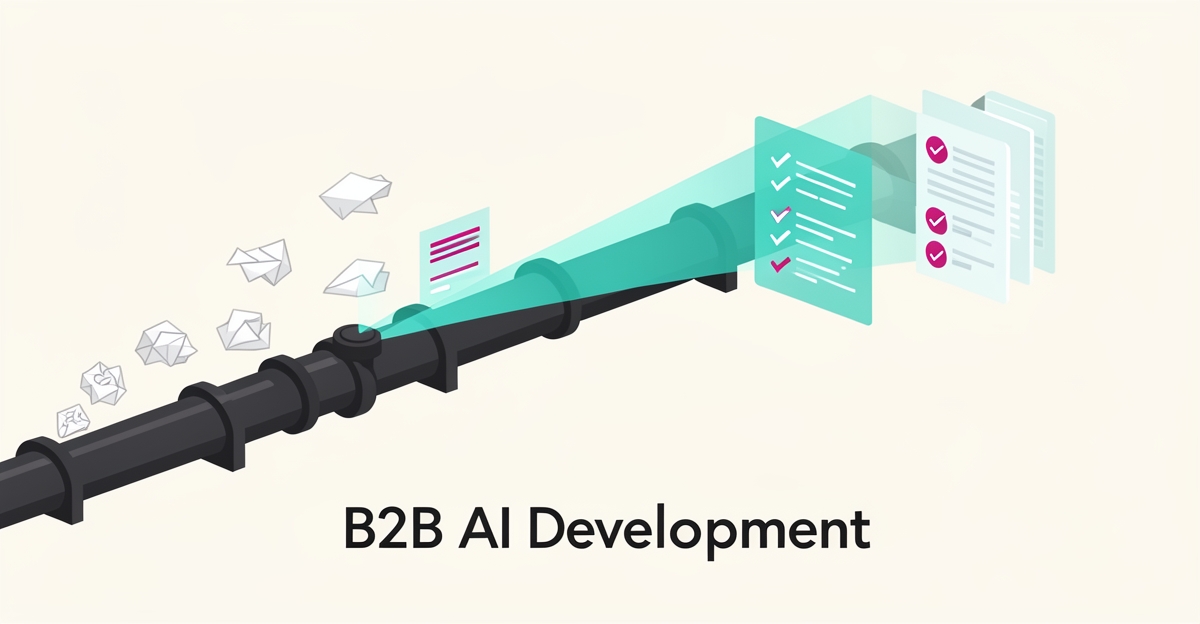
How Pipeline Inspection Companies Can Reduce Field Report Errors with AI-Powered Documentation
Key Facts
- AIQ Labs has deployed 200+ multi-agent systems in production environments
- AIQ Labs runs 4 live SaaS products daily, so its AI systems are proven in revenue-generating operations, not just demos
- AI Employees (managed AI staff across 99+ roles) typically cost around 80% less than a comparable human hire
- Custom AI workflow builds target the single workflow that costs the most, delivered at a fixed price in phases
- AIQ Labs clients own their systems outright, no vendor lock-in or platform dependencies
Hire a team member that works 24/7 — for less than a part-time wage.
AI receptionists, SDRs, dispatchers and 99+ roles. Trained on your business, fully managed.
Not sure where to start? Ask our AI planner
The Hidden Cost of Manual Field Reporting in Pipeline Inspection
A single transcribed digit on a pipeline inspection form can trigger hours of rework, a delayed integrity decision, or a compliance finding that follows a company into its next audit. Manual field reporting, handwritten notes, retyped forms, inconsistent terminology across crews, remains one of the most underestimated cost drivers in pipeline inspection operations today.
The problem compounds quietly. An inspector records a wall thickness reading on paper in the field, a coordinator re-enters it into a system at the office, and a reviewer interprets it weeks later. At each handoff, errors creep in: transposed values, illegible handwriting, missing context, and inconsistent units. By the time the data reaches decision-makers, no one can be certain it reflects what actually happened in the field.
The downstream costs show up in three predictable ways:
- Compliance exposure: Regulators expect accurate, traceable inspection records. Inconsistent or incomplete field reports create gaps that are expensive to reconstruct after the fact.
- Rework loops: When a report fails validation, someone must return to the source, often re-contacting field crews or re-checking data, multiplying labor hours on work that should have been done once.
- Delayed decisions: Reports that sit in a backlog waiting for manual entry delay integrity assessments, repair scheduling, and client deliverables.
These are not clerical nuisances. They are business problems with direct implications for revenue, liability, and reputation. Data quality determines whether downstream systems and decisions can be trusted at all, and errors introduced early propagate through every stage of analysis that follows. That principle is well established in data engineering: a data pipeline is only as reliable as its weakest entry point.
The same pattern holds in any context where documentation quality drives outcomes. When data enters a system accurately at the point of origin, everything downstream accelerates, validation, analysis, reporting, and decisions. When it doesn't, every downstream step inherits the error and the cost of finding and fixing it.
This is why leading inspection companies are rethinking documentation as a system rather than a chore. AI-powered platforms can automate the capture, validation, and storage of field reports, reducing human error, standardizing formats, and ensuring compliance-ready records without adding administrative burden to inspectors. Firms like AIQ Labs build these custom systems to integrate with the field devices and mobile workflows inspection crews already use, delivering accurate, real-time documentation while eliminating manual data entry entirely.
The question is no longer whether manual reporting creates risk, it does, predictably and measurably. The question is how quickly inspection companies can replace it before the next error becomes the next audit finding.
How AI-Powered Documentation Captures, Validates, and Stores Reports Automatically
Field reports are the backbone of pipeline integrity, yet manual capture in harsh conditions creates errors that compound downstream. AI-powered documentation replaces fragmented notes and delayed entry with a continuous, verified record from the moment inspection begins.
Automated capture pulls data directly from field devices and mobile workflows without retyping. Sensors, gauges, GPS tags and photos feed into a custom AI system that structures the report in real time, eliminating transcription mistakes and lost attachments. AIQ Labs builds custom AI systems that integrate with existing field devices and mobile workflows to deliver accurate, real-time documentation without manual data entry.
Once captured, AI-driven validation flags errors and inconsistencies before submission. The system checks for missing fields, out-of-range readings, mismatched timestamps and contradictory observations, prompting the inspector immediately for correction. That real-time guardrail prevents bad data from entering the system and improves data quality by reducing errors and inconsistencies in field reports.
Validation also enforces compliance rules at the point of entry. Required regulatory fields, photo evidence and sign-offs are verified automatically, creating a complete package for auditors. Automated storage then writes the validated report to the central repository with full audit trails for regulatory compliance. Every change, approval and access event is logged immutably, giving inspectors and managers confidence in traceability.
The productivity gains from this three-stage approach are consistent across AI deployments that remove routine documentation work: teams typically reclaim hours previously lost to re-entry, reconciliation, and chasing missing information. For inspection teams, that means less time fixing reports and more time on analysis and remediation.
Error classes eliminated by the approach include:
- Transcription and re-entry errors from manual mobile entry
- Missing or incomplete data fields caught by real-time validation
- Inconsistent units, timestamps and location tags standardized automatically
- Compliance gaps from late or undocumented approvals
By capturing, validating and storing reports automatically, companies achieve improved data quality, increased productivity and enhanced decision-making. The system ensures data is accurate and reliable while providing insights and recommendations to support decision-making.
The Business Case: Better Data Quality, Productivity, and Decision-Making
Pipeline inspection companies face persistent challenges with field report accuracy, where manual data entry introduces errors that compromise compliance and operational decisions. AI-powered documentation transforms this process by automating capture, validation, and storage, directly addressing the root causes of data quality issues. The gains parallel those seen wherever AI eliminates transcription errors and standardizes report formats: fewer rejected reports, faster turnaround, and a foundation for trustworthy analytics and regulatory adherence.
By removing the burden of routine data entry, AI enables inspectors to redirect their focus toward high-value activities like anomaly detection and preventive maintenance planning. Automation frees capacity for strategic engagement, in pipeline inspection, that translates to more time spent interpreting sensor data, assessing corrosion risks, or advising on maintenance priorities. These are tasks that require human expertise but are often delayed by paperwork. The result is a measurable lift in productivity without increasing headcount or extending work hours.
Beyond efficiency gains, AI-generated insights enhance decision-making by transforming raw field data into actionable intelligence. AI excels at identifying patterns and recommending next steps that might be overlooked in manual reviews. For pipeline operators, this means AI can flag subtle trends in wall thickness measurements, surface anomalies based on historical data, or suggest optimal inspection intervals, turning static reports into dynamic decision support. When combined with AIQ Labs' custom development services, these capabilities integrate seamlessly into existing field devices and mobile workflows, ensuring that insights are delivered in real time where they matter most. The cumulative effect is stronger data integrity, higher team productivity, and decisions grounded in accurate, timely information, all critical for maintaining pipeline safety and operational continuity.
Implementation Roadmap: From Pilot to Production AI Documentation
The gap between a successful AI pilot and a failed one usually comes down to planning, not technology. Pipeline inspection companies that rush into AI documentation tools without assessing readiness often stall at the trial stage, while those that follow a structured path move from pilot to production with confidence.
Start with an honest assessment of your data quality and existing field systems. AI requires high-quality data to function effectively, so audit current report formats, error patterns, and how inspectors actually work in the field before selecting any tool. This baseline also gives you a way to measure improvement later.
Integration is the second checkpoint. The most common failure mode is buying a standalone platform that forces inspectors to abandon the mobile devices and workflows they already use. The better approach is to integrate AI with current systems rather than replacing them, AI-powered documentation should automate the capture, validation, and storage of field reports within the tools your crews already carry. This is exactly how custom AI systems are built at AIQ Labs: connecting to existing field devices and mobile workflows so accurate, real-time documentation happens without manual data entry or a disruptive switchover.
Training and adoption come next, and they matter more than most operators expect. Staff may require training and support to adopt AI-powered tools, so plan for role-specific onboarding, feedback loops, and a phased rollout that lets inspectors build trust with the system. The principle is simple: AI isn't about replacing people, it's about equipping them with better tools, and the same applies to inspection crews. Keep humans in the loop with configurable review controls so inspectors validate AI-generated entries before final submission.
Finally, establish governance before you scale. A production-ready deployment needs:
- Complete audit trails and documentation for every AI-assisted report entry
- Human-in-the-loop controls for critical compliance decisions
- Data security and privacy protections aligned with regulatory requirements
- Clear escalation paths when AI output falls below confidence thresholds
These governance frameworks ensure responsible use and give compliance teams the paper trail regulators expect. The payoff for getting this sequence right is substantial: teams that move beyond pilots typically report faster reporting cycles, fewer validation failures, and materially less time spent on rework.
The path from pilot to production is a sequence: assess, integrate, train, govern. Companies that respect that order turn AI documentation from an experiment into a durable operational advantage.
What to Look for in an AI Documentation Partner
Choosing the wrong partner can turn AI documentation from a compliance advantage into another integration headache. Pipeline inspection teams need a system that works in the field, not a prototype that stalls after the pilot.
A production-proven track record matters more than a demo. Look for teams that already run live, revenue-generating AI systems daily and build with engineering excellence, not no-code wrappers. AIQ Labs, for example, has deployed 200+ multi-agent systems and runs 4 live SaaS products the company relies on daily. True ownership is also non-negotiable; you should receive full ownership of custom-built systems with no vendor lock-in or platform dependencies.
Deep integration with existing field tools determines adoption. AI-powered documentation should automate the capture, validation, and storage of field reports directly within mobile workflows and devices teams already use. Where routine coordination can be handled by managed AI staff, scheduling, dispatch, follow-ups, AI Employees extend the same integration-first approach across 99+ roles at a fraction of a human hire's cost.
Evaluation criteria that reduce risk and reporting errors include:
- Production-proven systems with multi-agent architectures running at scale, not proofs-of-concept
- Deep two-way API integrations that create seamless operational workflows with field devices and mobile apps
- True ownership model with complete control over customization and future development
- Lifecycle support from strategy through execution to ongoing optimization and adoption
The impact shows up in data quality and speed: fewer rejected reports, faster cycle times, and audit-ready records by default.
AIQ Labs builds custom AI systems that integrate with existing field devices and mobile workflows to deliver accurate, real-time documentation without manual data entry. The focus is on production-ready, scalable applications built for long-term growth with lifecycle partnership rather than point solutions. Flexible payment models, start monthly, build in milestones, or own it outright, keep the engagement aligned with your budget and risk tolerance.
Map your biggest reporting bottleneck now. Start the two-minute Fit Check at https://aiqlabs.ai/apply, then book a free 30-minute strategy call at https://aiqlabs.ai/book to identify high-ROI automation opportunities for field reports.
Still paying for 10+ subscriptions that don’t talk to each other?
We build custom AI systems you own outright. No vendor lock-in. Full control.
Not sure where to start? Ask our AI planner
Frequently Asked Questions
How does manual field reporting create errors in pipeline inspection?
Can AI really reduce field report errors without replacing inspectors?
What kind of productivity gains do companies see with AI documentation?
How does AI-powered documentation improve data quality in the field?
What should I look for in an AI documentation partner for pipeline inspection?
Is AI documentation hard to implement with existing field systems?
Ready to Turn Field Reports into a Competitive Edge?
Manual field reporting is not just a hassle. It leads to compliance risks, costly rework, and delayed decisions that hurt your bottom line. AI-powered documentation changes this by automatically capturing, validating, and storing reports from the devices your crews already use. This means fewer errors, faster insights, and audit-ready records. The path forward is clear: assess your data quality, integrate with existing field tools, and establish strong governance. AIQ Labs specializes in building these custom, production-ready systems that you own outright, with no vendor lock-in, backed by 200+ multi-agent systems deployed and 4 live SaaS products the company runs daily. If you are ready to eliminate manual entry errors and unlock real-time documentation, start with the two-minute Fit Check at https://aiqlabs.ai/apply to identify your highest-ROI automation opportunity. Questions first? Reach the team at [email protected].
Make AI your competitive advantage — not just another tool.
Strategy, implementation and ongoing optimization. One partner, end to end.
Not sure where to start? Ask our AI planner