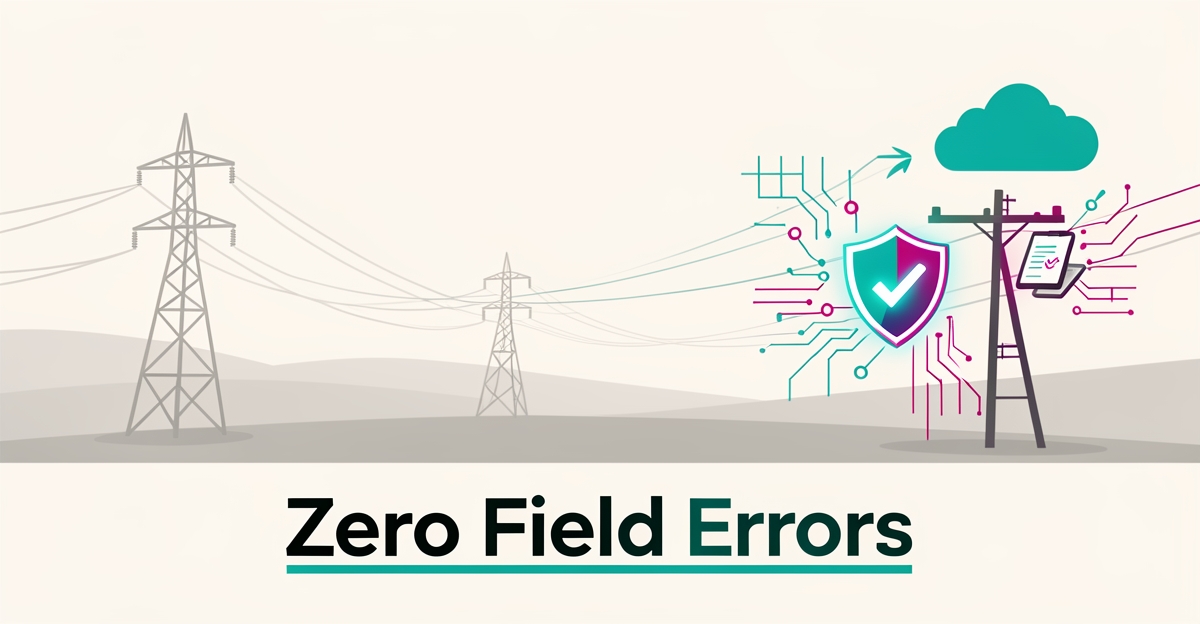
How Power Line Construction Companies Can Cut Field Call Errors with AI-Powered Work Order Verification
Key Facts
- Construction demand has grown steadily in recent years, driven by manufacturing, transportation, and clean energy infrastructure according to Deloitte
- Roughly 45% of construction, architecture, engineering, and real estate businesses in the Asia-Pacific region use Building Information Modelling (BIM) per Statista
- Around 37% of firms in the Asia-Pacific region plan to use robots in the future per Statista
- Only about 22% of construction companies in the EU currently use artificial intelligence technologies per Statista
- Field call errors in power line construction can consume a significant share of a crew's daily productivity through rework and remobilization, per industry analyses
Hire a team member that works 24/7 — for less than a part-time wage.
AI receptionists, SDRs, dispatchers and 99+ roles. Trained on your business, fully managed.
Not sure where to start? Ask our AI planner
The Hidden Cost of Field Call Errors in Power Line Work
Infrastructure demand has grown steadily in recent years, driven by manufacturing, transportation, and clean energy projects that rely heavily on accurate field execution. Yet despite this growth, field call errors remain a persistent and costly challenge in power line construction. Manual verification of work orders, still common across many crews, introduces avoidable risks that compound quickly in high-stakes environments where precision directly impacts safety and schedule integrity.
Human errors in field documentation, such as incorrect pole locations, mislabeled equipment specs, or missed clearance requirements, often go undetected until after work begins. These oversights trigger rework that, according to industry analyses of construction inefficiencies, can consume a substantial share of a crew's daily productivity. When combined with ongoing labor shortages, where skilled linemen are increasingly difficult to retain and replace, each error not only delays timelines but also strains limited personnel who must divert attention from new tasks to fix preventable mistakes.
The financial and operational toll extends beyond immediate rework. Errors discovered mid-project frequently require crew remobilization, equipment repositioning, and additional safety briefings, all of which disrupt workflow continuity. In power line work, where weather windows and regulatory approvals are tightly constrained, even small delays can cascade into significant schedule slips. Furthermore, inaccurate work orders increase the likelihood of safety incidents, such as accidental contact with live lines or improper grounding procedures, which carry both human and liability costs that far exceed the time spent on initial verification.
A recent study found that only about 22% of construction companies in the EU are using artificial intelligence (AI) technologies, indicating early but growing recognition of AI's role in reducing preventable errors. For power line operations specifically, AI-powered work order verification offers a proactive safeguard, validating critical data points like voltage ratings, clearance distances, and crew assignments against master plans and regulatory standards before crews leave the yard. This real-time validation doesn't just catch mistakes; it builds a layer of accountability that supports consistent execution across shifts and teams.
By minimizing reliance on manual checks, AI verification helps preserve the expertise of seasoned workers for complex judgment tasks rather than routine data validation. As the industry faces worsening skilled labor shortages, tools that reduce avoidable rework become essential not just for cost control, but for maintaining crew morale and retention. When field teams trust that their work orders are accurate from the start, they can focus on execution, knowing that safety, compliance, and progress are aligned from the first pole set to the final line energized.
How AI-Powered Verification Eliminates Work Order Errors in Real Time
Field crews in power line construction move fast, and a single missed field on a work order can cascade into safety incidents, compliance gaps, and costly rework. Real-time verification closes that gap before the crew leaves the yard.
AI-powered verification validates work orders instantly against project specs, permits, and safety checklists the moment they are submitted from the field. Multi-agent systems cross-reference drawings, material tickets, and crew credentials in parallel, flagging mismatches without interrupting workflow. This approach ensures accuracy, compliance, and scheduling are confirmed while the work is still in progress.
According to the Deloitte industry outlook, construction growth is being driven by manufacturing, transportation infrastructure, and clean energy infrastructure, sectors where field accuracy is non-negotiable and work order volume keeps rising.
Digital adoption is accelerating even as human error remains a risk. Construction technology research shows roughly 45% of construction, architecture, engineering, and real estate businesses in the Asia-Pacific region are using Building Information Modelling. The same analysis notes about 37% of firms in the region are planning to use robots in the future, signaling appetite for automation that reduces manual checks.
In power line operations, verification is not a back-office task. It is a real-time control point that protects crews, assets, and timelines. AI agents can:
- Validate work order details against live BIM and as-built data before sign-off
- Check safety compliance requirements and required PPE or permits for the specific site
- Confirm crew qualifications, equipment availability, and sequencing constraints
- Auto-update scheduling systems when verification passes or escalate exceptions instantly
The system works with existing field tools and does not require crews to change how they capture data. Voice, mobile form, or tablet inputs are parsed by specialized agents, reasoned over project context, and returned as clear pass/warn/fail signals. This keeps field teams moving while documentation stays clean.
AIQ Labs builds these verification workflows as custom, owned systems for power line operations, embedding multi-agent orchestration into the specific processes a contractor or utility already uses. With 200+ multi-agent systems deployed and four live SaaS products the company runs daily, the approach is proven in production, not theoretical. The result is fewer callbacks, auditable compliance trails, and schedules that reflect reality rather than assumptions.
As industry commentary on AI in construction highlights, intelligent systems are automating, predicting, and improving operations across industrial environments. For field work orders, that means errors are caught in seconds, not days.
Verification becomes a continuous safeguard rather than a post-job audit. Crews get immediate guidance, managers get reliable data, and the project maintains momentum without compromising safety or compliance.
Implementing AI Verification in Power Line Operations: A Practical Guide
The hardest part of AI adoption isn't the technology, it's the first ninety days of getting crews, dispatchers, and office staff to trust it. For power line construction companies, a phased rollout that starts with one workflow, proves its value, and scales deliberately beats a big-bang deployment every time.
The economics support moving now. Only about 22% of construction companies in the EU currently use AI, meaning early adopters gain a genuine operational edge. Deloitte's outlook also points to growth tied to manufacturing, transportation, and clean energy infrastructure, which puts power line contractors squarely in the path of rising work order volume.
A practical rollout follows four steps:
- Map the current workflow. Document how work orders are created, dispatched, verified, and closed today, including every manual re-entry and error-prone handoff between field crews and the office.
- Integrate with existing tools. AI verification should connect to the systems already in place, CRM, scheduling, project management, and dispatch platforms, rather than forcing crews onto new software they'll resist.
- Pilot with one crew or region. Run AI-powered verification on a limited set of work orders, measuring error rates, documentation accuracy, and time-to-dispatch against baseline.
- Scale with governance. Once the pilot proves out, expand across departments with audit trails, human-in-the-loop controls for critical decisions, and role-specific training for field supervisors and back-office staff.
Change management matters as much as the build. Field teams in an industry facing a worsening skilled-labor shortage need to see AI as a safeguard against rework, not surveillance. Training customized to each role, clear escalation paths, and feedback loops from crews into system tuning drive the adoption that separates successful deployments from stalled pilots.
This is where implementation partner selection matters. AIQ Labs rebuilds the one workflow that costs you the most through its AI Workflow Builds service, fixed price, phased, and delivered on enterprise-grade multi-agent frameworks rather than no-code limitations. For companies ready to go further, AI Operating Systems connect verification, dispatch, and reporting into one operating layer built in phases and owned outright. Clients own what's built, no vendor lock-in.
Payment structure can de-risk the decision. A single work order verification workflow fits a "Build in Milestones" model, where you approve and pay per phase and keep everything built if you stop. Broader department-level automation can run on a flat monthly plan that includes training, integrations, monitoring, and improvements, with the ability to pause or adjust anytime. Real pricing is provided in writing after a free strategy call, so there are no artificial price anchors.
For a power line company staring down a busy construction season, the path forward is deliberately unglamorous: pick one broken workflow, verify it with AI, measure the results, and scale what works.
Still paying for 10+ subscriptions that don’t talk to each other?
We build custom AI systems you own outright. No vendor lock-in. Full control.
Not sure where to start? Ask our AI planner
Frequently Asked Questions
How much does a field call error actually cost a power line crew?
Will AI work order verification force my crews to learn new software?
Is anyone else in construction actually using AI yet?
Can real-time verification really prevent safety incidents?
Is AI verification just a back-office audit tool?
How do we start AI verification without a big bang rollout?
From First Pole to Final Energization: Build Verification Into Your Workflow
Field call errors don't announce themselves, they compound quietly until rework eats your crew's day, safety protocols fray under schedule pressure, and skilled linemen burn out fixing preventable mistakes instead of building infrastructure. AI-powered work order verification stops this cycle before it starts, validating voltage ratings, clearance distances, and crew assignments against live project data the moment work orders are submitted. With only about 22% of EU construction firms deploying AI and infrastructure demand surging across manufacturing, transportation, and clean energy sectors, the competitive window for early adopters is narrowing. The path forward isn't a rip-and-replace overhaul, it's a phased rollout starting with one workflow, one crew, one measurable win. AIQ Labs builds these verification systems as custom, owned assets that integrate with your existing dispatch and project management tools, so you control the code and the roadmap. Ready to see where verification fits in your operation? Start the Fit Check, a two-minute assessment that leads to a free 30-minute strategy call where we'll map your biggest bottleneck and identify the highest-ROI starting point. No obligation, just clarity on your next move.
Make AI your competitive advantage — not just another tool.
Strategy, implementation and ongoing optimization. One partner, end to end.
Not sure where to start? Ask our AI planner