How Private K-12 Schools Can Automate Parent Survey Collection and Feedback Analysis
Key Facts
- AI analysis can reduce parent feedback review time from a full working day to roughly 30–60 minutes per cycle, based on typical implementations as of late 2026
- AI theme clustering organizes thousands of open-ended responses into coherent categories like curriculum satisfaction and communication effectiveness
- Sentiment analysis captures emotional nuance in parent feedback that raw scores often miss, enabling targeted improvements
- AI-powered summaries distill large volumes of parent input into concise overviews reflecting both satisfaction levels and specific pain points
- Automated survey generation cuts design time from hours to minutes while improving accessibility and participation rates
- Parent acceptance of AI in school processes generally improves when schools lead with transparency and clear privacy safeguards
Hire a team member that works 24/7 — for less than a part-time wage.
AI receptionists, SDRs, dispatchers and 99+ roles. Trained on your business, fully managed.
Not sure where to start? Ask our AI planner
The Hidden Cost of Manual Parent Feedback in Private Schools
Private schools often underestimate the true cost of manual parent feedback analysis. What appears as a simple task, reading surveys and noting comments, typically consumes 8 to 12 hours per feedback cycle in practice. That time drain pulls administrators and teachers away from strategic priorities like curriculum development or student support, creating delays in identifying emerging concerns or satisfaction trends. By the time insights are compiled, opportunities for timely intervention may have passed.
The inefficiency extends beyond time spent. Manual review introduces risks of human error, inconsistent interpretation, and overlooked patterns buried in qualitative responses. Administrators might miss subtle shifts in sentiment across grade levels or programs because they're processing feedback one response at a time. Without automated theme clustering, connections between comments about homework load, teacher communication, or extracurricular access remain fragmented, limiting the school's ability to act on holistic insights. These hidden costs compound over multiple survey cycles each year.
AI-powered analysis transforms this bottleneck into a streamlined process, reducing review time to roughly 30–60 minutes while improving accuracy and depth of insight. By automatically clustering responses into meaningful themes and generating sentiment-rich summaries, AI reveals patterns that manual review often misses, such as recurring concerns about transition grades or unmet demand for STEM enrichment. This speed and precision allow school leadership to shift from reactive reporting to proactive planning, using feedback to refine programs before small issues grow into systemic challenges. For schools aiming to strengthen parent engagement and program effectiveness, automating feedback analysis isn't just about saving time, it's about unlocking the full value of every parent's voice.
AI-Powered Feedback Systems: From Collection to Actionable Insights
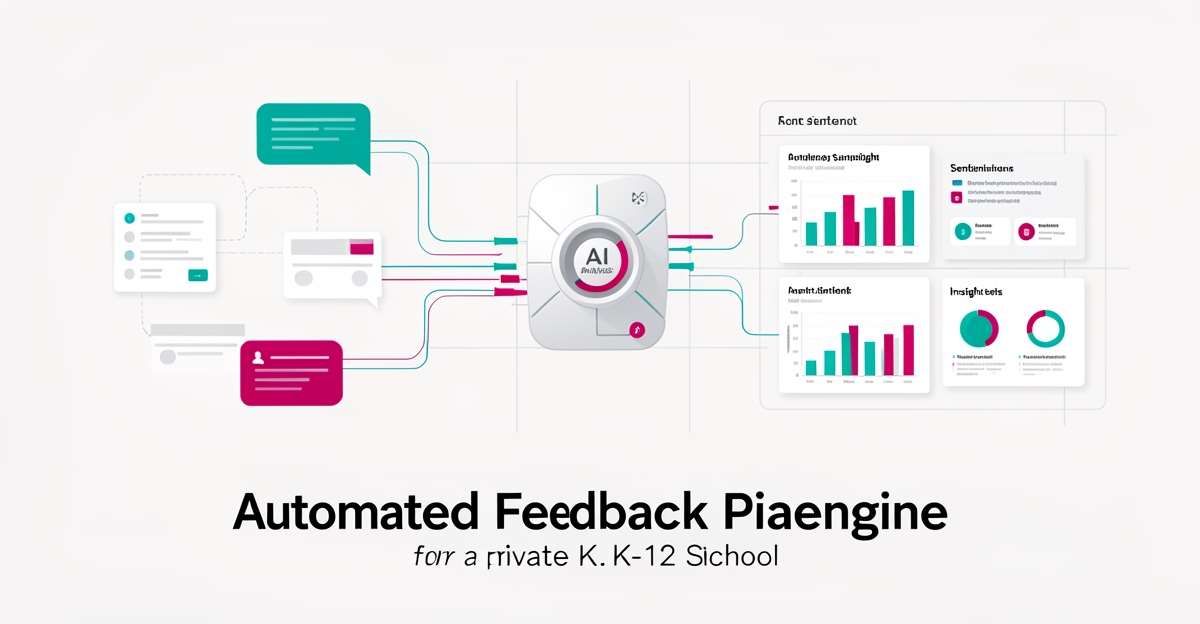
AI-powered feedback systems transform how schools gather and act on parent input by automating every step of the feedback loop. From generating tailored survey questions to deploying them across email, SMS, and school portals, AI reduces manual effort while increasing response rates. Once collected, responses are instantly processed using natural language understanding to detect sentiment and extract meaningful patterns.
AI theme clustering organizes thousands of open-ended responses into coherent categories such as curriculum satisfaction, communication effectiveness, or extracurricular concerns. This eliminates the fragmentation of manual review and ensures no insight is overlooked. Schools gain a complete theme map that highlights both strengths and areas needing attention, turning scattered feedback into strategic priorities.
Sentiment analysis goes further by summarizing the emotional tone behind parent feedback, capturing nuances that raw scores miss. AI-powered summaries distill voluminous input into concise, textured overviews that reflect both satisfaction levels and specific pain points. This enables leadership to grasp community sentiment at a glance and respond with targeted improvements.
Parent attitudes toward AI in education have warmed considerably as of 2026, and many families are open to its use in improving feedback processes, particularly when schools are upfront about how the tools work. This growing acceptance allows schools to adopt AI tools confidently, knowing families see them as supportive rather than intrusive. When implemented with privacy safeguards, AI strengthens trust by demonstrating responsiveness to parent voices.
- Automated survey generation reduces design time from hours to minutes
- Multi-channel deployment increases accessibility and participation rates
- Real-time theme clustering reveals trends invisible in manual review
- Sentiment summarization turns qualitative data into actionable leadership insights
By closing the loop between collection and action, AI empowers schools to move beyond periodic surveys to continuous improvement. Feedback becomes a living resource that informs program adjustments, resource allocation, and strategic planning, all while saving staff significant time. For institutions aiming to enhance engagement and accountability, AI-powered feedback systems offer a scalable, insight-driven path forward. Start the Fit Check to explore how AIQ Labs can help your school build a custom feedback automation system that delivers clarity, confidence, and measurable impact.
Implementation Roadmap: Secure, Confidential AI Deployment for School Leadership
Private K-12 schools seeking to implement AI for parent survey analysis must prioritize security, confidentiality, and equitable outcomes from the outset. A thoughtful, phased approach ensures that technology adoption supports, not complicates, existing workflows while building trust among staff, parents, and leadership.
Begin with a comprehensive readiness assessment that evaluates current data infrastructure, staff technical capacity, and existing feedback collection practices. This foundational step identifies gaps in data quality, system compatibility, and training needs before any AI tools are deployed. Schools should then establish clear data governance policies that define how parent feedback is collected, stored, anonymized, and accessed, ensuring compliance with privacy regulations and reinforcing confidentiality commitments to families. In practice, parent acceptance of AI in school feedback processes rises sharply when transparency and safeguards are prioritized.
Next, pilot the AI analysis system with a limited, representative sample of survey responses to test accuracy, bias mitigation, and usability. During this phase, involve diverse stakeholders, including equity officers, language support staff, and parent representatives, to review AI-generated insights for cultural sensitivity and representative accuracy. Use theme clustering and summarization features to validate that AI captures nuanced concerns across demographics, not just dominant voices. AI-powered analysis can reduce manual review time to roughly 30–60 minutes per cycle, but only if outputs are regularly audited for fairness and completeness.
Finally, integrate the AI system into existing school communication platforms, such as email portals or student information systems, through secure APIs, enabling seamless survey deployment and real-time feedback routing to appropriate departments. Pair this technical integration with ongoing change management: train leadership and staff on interpreting AI outputs, establish feedback loops for continuous improvement, and schedule regular equity reviews to ensure insights remain actionable and inclusive. Successful AI adoption in education hinges not on technology alone, but on structured implementation, human oversight, and a commitment to using insights to drive meaningful improvements in school programs and services. AIQ Labs supports this journey at whichever scale fits: a single Workflow Build to rebuild your feedback process at a fixed price, AI Employees to handle survey administration and response triage, or a full AI Operating System that connects feedback to admissions, communications, and program planning, built in phases and owned outright.
Still paying for 10+ subscriptions that don’t talk to each other?
We build custom AI systems you own outright. No vendor lock-in. Full control.
Not sure where to start? Ask our AI planner
Frequently Asked Questions
How much time can AI actually save compared to manual survey analysis?
Are parents comfortable with schools using AI to analyze their feedback?
How does AI protect the confidentiality of parent survey responses?
What specific insights can AI identify that manual review might miss?
How do we prevent AI bias from misrepresenting certain parent voices?
Can AI integrate with our existing school communication systems?
From Feedback to Forward Motion
Parent feedback holds untapped potential for private schools, yet manual analysis often leaves insights buried under hours of work. By automating survey collection and analysis, schools can compress processing time to under an hour, uncovering trends like shifting sentiment or unmet program demands with precision. AI-powered theme clustering and sentiment analysis transform raw responses into actionable priorities, enabling leadership to address concerns proactively and strengthen community trust. With parent acceptance of AI in education continuing to grow, schools can adopt these tools confidently, knowing families value transparency and responsiveness. AIQ Labs builds custom, secure systems, whether a single Workflow Build, managed AI Employees, or a full AI Operating System, that integrate into your workflows, ensuring confidentiality while delivering clarity. Ready to turn feedback into strategic impact? Start the Fit Check to explore how AIQ Labs can help your school save time, enhance engagement, and make data-driven decisions with confidence.
Make AI your competitive advantage — not just another tool.
Strategy, implementation and ongoing optimization. One partner, end to end.
Not sure where to start? Ask our AI planner