How QSRs Can Use AI to Improve Customer Feedback Collection and Response
Key Facts
- Customers increasingly switch to competitors after repeated bad experiences, industry research consistently shows the majority will not return after multiple failures
- Customer expectations for response and resolution speed have risen sharply across service industries as of late 2026
- AI-driven personalization at scale has helped major QSR chains lift revenue and engagement while cutting loyalty-program operating costs, per industry analyses
- Data quality is widely cited by customer service teams as the biggest obstacle to AI implementation
- Perception gaps between leadership and frontline staff remain a key change-management challenge for AI adoption
Hire a team member that works 24/7 — for less than a part-time wage.
AI receptionists, SDRs, dispatchers and 99+ roles. Trained on your business, fully managed.
Not sure where to start? Ask our AI planner
Why Traditional Feedback Systems Fail QSRs Today
Quick-service restaurants still rely heavily on outdated feedback methods that fail to capture real-time customer sentiment. Manual surveys and scattered data sources create blind spots where issues like slow service or incorrect orders go unnoticed until it's too late. As a result, QSRs miss critical opportunities to intervene before dissatisfaction turns into churn.
This fragmentation is costly. Industry research consistently shows that most customers will switch to a competitor after multiple bad experiences, making timely feedback essential for retention. Yet traditional systems often delay responses by hours or days, falling far short of today's expectations for immediacy. Customers increasingly expect faster responses and faster resolutions across service industries, a trend that has only accelerated as of late 2026.
Without AI-driven automation, QSRs cannot keep pace. Feedback sits siloed in comment cards, delayed online reviews, or overburdened staff logs, preventing real-time analysis. Teams spend valuable time manually reviewing feedback instead of acting on it. This reactive approach means problems persist, loyalty erodes, and operational improvements lag, exactly when agility and responsiveness define competitive advantage in the QSR space. AIQ Labs helps bridge this gap by enabling automated, intelligent feedback loops that turn insights into immediate action.
How Agentic AI Enables Real-Time Feedback Collection and Sentiment Analysis
Customer feedback is no longer a weekly report; it is a live signal that decides whether a guest returns. Agentic AI turns scattered post-order comments into an immediate operational response, closing the gap between experience and action.
Agentic systems automate post-order surveys across POS, mobile apps, delivery platforms and loyalty channels, then unify the data into a single customer view. Instead of manual review, AI analyzes sentiment in real time to flag recurring issues like slow service or incorrect orders and surface emerging opportunities for service improvement. Customers share experiences across multiple channels, and without the right tools those insights remain scattered and difficult to analyze comprehensively.
The shift is from reactive to proactive engagement. AI-driven chatbots and automated workflows can intervene while the experience is still fresh, offering tailored assistance and instant order support. This matters because most customers will not return after multiple bad experiences, and expectations for response and resolution speed keep rising.
Agentic AI differs from traditional automation by acting autonomously and adapting to real-time scenarios. It can:
- Trigger automated post-order surveys immediately after pickup or delivery and route responses by sentiment score
- Unify feedback from social media, online reviews, websites and delivery apps into a 360-degree view
- Detect patterns such as long wait times or inaccurate orders and alert store managers with context
- Initiate real-time recovery, like a personalized apology or replacement offer, without human delay
Speed and availability drive satisfaction. Most large companies now use chatbots or AI in customer-facing service roles, and round-the-clock availability is consistently cited as AI's biggest benefit for support teams. That always-on coverage is critical for QSRs where feedback arrives outside business hours.
In practice, agentic workflows reduce analysis time and improve decision quality. Industry analyses of major QSR chains show AI-driven personalization cutting analysis time significantly and enabling rapid, informed decision-making. The same principle applies to feedback: sentiment analysis turns static dashboards into dynamic, conversational analytics that teams can act on instantly.
For SMB QSRs, this capability can start with an AI employee handling feedback intake and follow-up around the clock, at a fraction of the cost of a dedicated human hire, while a workflow build rebuilds the one feedback process that costs you the most. AIQ Labs designs agentic systems that manage both collection and response end-to-end, so early detection of slow service or poor food quality leads to faster improvements without adding headcount. The result is real-time intervention that protects loyalty and turns feedback into measurable operational gains.
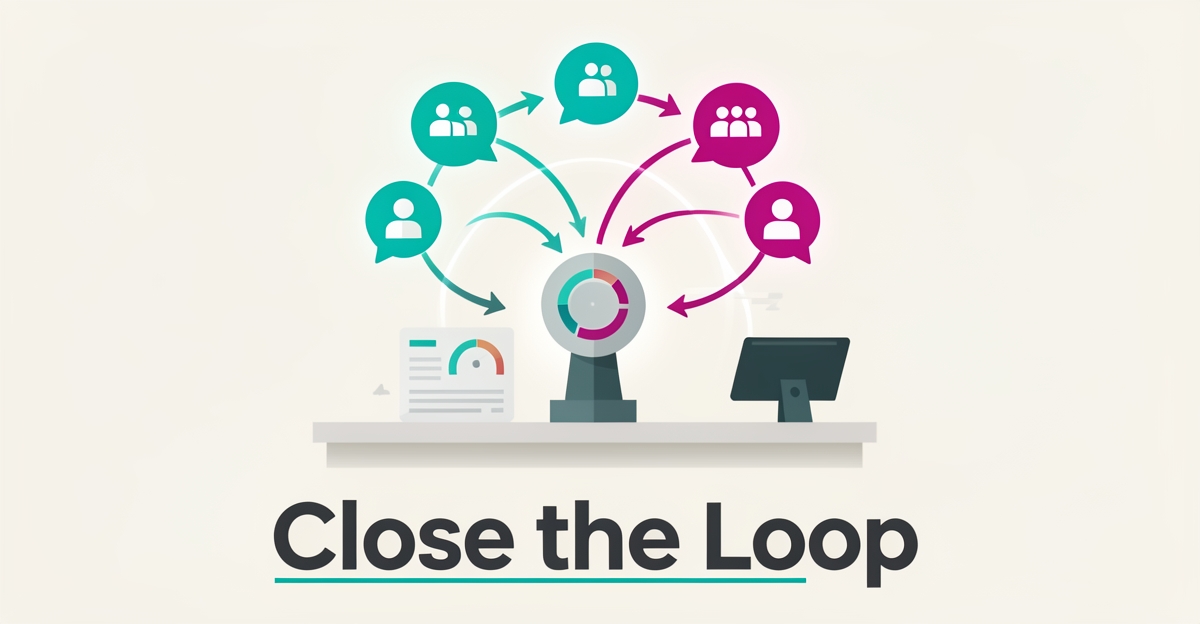
From Insight to Action: Automating Response and Closing the Feedback Loop
Collecting feedback means little if it sits in a dashboard while customers wait for a resolution that never comes. The true power of AI lies in its ability to close the loop instantly, transforming a negative review into a recovered customer before they even leave the drive-thru.
Modern AI agents do more than flag complaints; they trigger immediate, personalized responses that acknowledge specific issues. When a customer reports a cold order or slow service, AI-driven systems can automatically generate a tailored apology, offer a replacement item, or escalate to a manager while the interaction is still fresh. This speed matters because customers now expect near-instant responses, and 24/7 availability is one of AI's most valuable benefits for support teams.
The most sophisticated implementations go further by integrating feedback directly into loyalty ecosystems. Rather than generic "we're sorry" coupons, AI analyzes individual purchase histories and preferences to deliver hyper-personalized recovery offers. Industry research on QSR growth documents major U.S. chains delivering tens of millions of personalized emails weekly using AI, achieving meaningful revenue and engagement lifts while cutting loyalty operation costs substantially.
Real-time intervention capabilities allow QSRs to shift from reactive damage control to proactive experience management:
- Triggering immediate service recovery offers when sentiment analysis detects frustration in post-order surveys
- Launching gamified challenges tailored to individual behaviors, one fast-growing brand reported significant increases in opt-ins and revenue per challenge using this approach
- Re-engaging at-risk customers with personalized incentives before they defect to competitors
- Dynamically adjusting rewards based on real-time feedback to maximize retention impact
These automated workflows require sophisticated orchestration between feedback channels, CRM systems, and loyalty platforms. AIQ Labs builds these integrated AI agents, whether as a single fixed-price workflow build or as part of a broader AI operating system you own outright, to manage the entire feedback lifecycle, from initial sentiment detection through personalized follow-up, ensuring no customer concern goes unaddressed while maintaining the compliance and scalability growing QSRs demand.
When feedback loops operate autonomously, every transaction becomes an opportunity to deepen loyalty rather than risk a permanent departure.
Implementing AI Feedback Systems: A Practical Roadmap for QSRs
Implementing AI feedback systems requires a structured approach that addresses both technical and organizational readiness. QSRs should begin by auditing their technology stack for agent readiness, ensuring data from POS systems, mobile apps, and feedback channels is unified and machine-readable to support accurate AI analysis. This foundational step is critical, data quality is widely cited by customer service teams as the biggest obstacle to efficient AI implementation. Next, organizations must verify the agent behind transactions and prove shopper permission to maintain trust and compliance, particularly as AI-driven interactions become more prevalent in post-order surveys and sentiment analysis.
Human-AI collaboration strategies are equally vital for successful deployment. While AI can automate feedback collection and initial response, most CX leaders agree human agents remain essential for nuanced issue resolution. QSRs should design workflows where AI handles routine sentiment analysis and automated follow-ups, escalating complex complaints, such as food quality concerns or service delays, to trained staff. This balanced approach also requires change management and training to bridge perception gaps between leadership and frontline staff, who often assess AI's impact differently. AIQ Labs supports this transition with a phased approach: start monthly with a single AI employee, build in milestones with a fixed-price workflow rebuild, or own an AI operating system outright, each model designed to sustain long-term value without lock-in. By combining data unification, agent readiness audits, and thoughtful human-AI role definition, QSRs can implement feedback systems that are both scalable and responsive to evolving customer expectations.
Every Order Is a Second Chance, If You're Listening in Real Time
The gap between hearing about a bad experience and fixing it is where QSR loyalty is won or lost. Traditional feedback systems leave you reacting days later, while agentic AI closes that gap, collecting post-order surveys automatically, analyzing sentiment in real time, and triggering personalized recovery before frustration turns into a lost customer. The path forward starts with three steps: audit your tech stack for data readiness, define where AI handles routine follow-up and where your team escalates, and automate the feedback loop end-to-end. That's exactly where AIQ Labs comes in, we build AI agents that manage both feedback collection and response, compliant and scalable, with flexible models from a single workflow fix to a full system you own outright. Start with the two-minute Fit Check at aiqlabs.ai/apply, then a free 30-minute strategy call to map your highest-ROI opportunity. No pitch, just clarity on whether there's a real win here for your QSR.
Make AI your competitive advantage — not just another tool.
Strategy, implementation and ongoing optimization. One partner, end to end.
Not sure where to start? Ask our AI planner