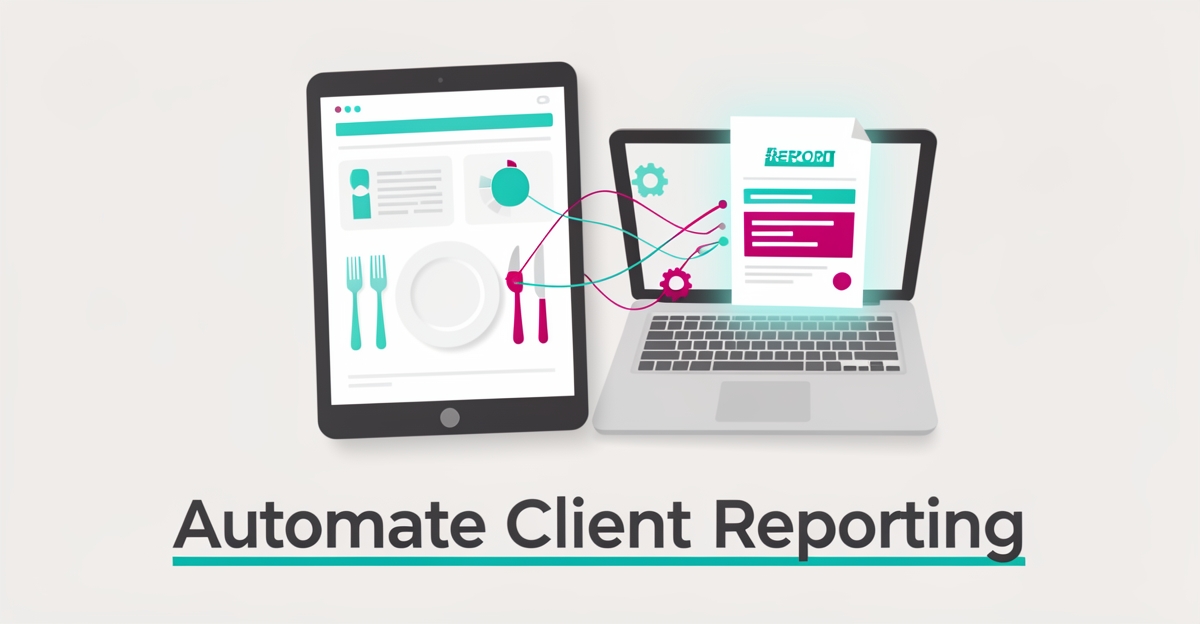
How Restaurant Consulting Firms Can Automate Weekly Client Reporting with AI
Key Facts
- Manual monthly MIS reporting typically takes restaurants several days to assemble, and weekly cycles compress that into constant firefighting.
- Manual reporting built on spreadsheets and fragmented exports is error-prone, and accuracy degrades as data volume grows.
- Industry benchmarks as of late 2026 suggest AI can reduce monthly reporting cycles by 60-80% in many deployments.
- AI reporting shortens financial closing cycles and improves cash flow visibility for multi-unit operators.
- AI-powered inventory management is widely reported to reduce food costs, with typical claims in the 5-15% range.
- Automation of routine workflows is commonly associated with meaningful labor cost reductions for restaurant groups.
Hire a team member that works 24/7 — for less than a part-time wage.
AI receptionists, SDRs, dispatchers and 99+ roles. Trained on your business, fully managed.
Not sure where to start? Ask our AI planner
The Manual Reporting Burden in Restaurant Consulting
Weekly client reporting is the invisible drag on restaurant consulting firms. Consultants pull numbers from POS, inventory, labor and sales systems, clean spreadsheets, and stitch together narratives, all while clients expect real-time answers.
Manual reporting in the restaurant industry relies heavily on human effort, spreadsheets, and disparate systems. This approach is time-consuming, prone to errors, and struggles to keep pace with fast-changing dynamics. The process often involves manual data extraction, validation, and reconciliation, leading to delays in insights and hindering timely decision-making.
For most restaurants, assembling a full monthly management report takes days, and for larger groups it can take longer. For consultants delivering weekly updates, that cycle compresses client work into constant firefighting instead of strategic advisory.
Accuracy compounds the problem. Reporting built on manual spreadsheet reconciliation is error-prone, and accuracy tends to degrade as data volume and client count grow. In restaurant consulting, that means revenue, food cost and labor insights shared with SMB owners can be outdated or wrong before the meeting ends.
The burden shows up as operational drag across the firm:
- Data gathering from multiple restaurant systems takes days each week
- Spreadsheet reconciliation introduces errors that erode client trust
- Consultants spend billable hours on reporting instead of service delivery and growth
- Reactive reporting prevents proactive interventions on margins and performance
Manual reporting also provides a retrospective view of performance, making it difficult to take proactive measures. AI-powered systems enable a shift toward proactive operations through real-time alerts and insights, letting managers identify and address potential problems before they escalate.
The scale problem worsens as firms grow. As data volumes increase, the inefficiencies of manual reporting become increasingly apparent. Consultants serving multiple SMB restaurants hit a scalability ceiling where headcount must rise roughly linearly with client count.
This is where AI Workflow Builds change the economics of service delivery. Industry benchmarks as of late 2026 suggest AI can reduce monthly reporting cycles by 60-80% in many deployments. That time shift moves consultants from report builders to strategic advisors.
At AIQ Labs, we see this pattern repeatedly with professional services firms supporting restaurants. The question changes from ‘Is the report ready?’ to ‘What does the data say right now?’, a shift from manual reporting to automated weekly reporting on client progress, service delivery, and revenue.
Without automation, reporting remains slow, error-prone, and labor-intensive while the industry moves toward real-time, integrated intelligence.
AI-Powered Automation: Proven Benefits for Real-Time Restaurant Insights
Weekly client reporting for restaurant consulting firms is still a manual bottleneck that delays decisions.
Manual reporting relies on spreadsheets and fragmented POS exports, which means insights arrive late and with errors. A monthly management reporting process can take days to assemble, and longer for larger groups, time that consultants serving restaurants simply don't have.
AI automation replaces that lag with real-time synthesis across POS, inventory, labor and sales systems. Reports on client progress, service delivery and revenue are generated automatically, freeing consultants to advise instead of compile.
The shift is measurable. Reporting benchmarks as of late 2026 indicate AI reporting can cut time to report by 60-80% in many deployments, shorten financial closing cycles, and improve cash flow visibility, moving insights from retrospective to actionable.
Accuracy improves as data integration becomes seamless. AI systems pull from multiple sources and validate in real time, reducing errors and enabling near real-time dashboards for management and consultants. That reliability supports proactive decision-making instead of reactive firefighting.
For restaurant operations specifically, automation compounds value beyond reporting:
- Inventory management with demand forecasting that is widely reported to reduce food costs, often in the 5-15% range
- Compliance reporting that automates collection and analysis to ensure adherence and reduce penalty risk
- Financial reporting that provides real-time visibility into revenue, expenses and profitability
Consultants can now deliver weekly updates that reflect what happened yesterday, not last week. Alerts surface stockouts, labor overruns or sales drops before they impact the P&L, shifting the conversation from “Is the report ready?” to “What does the data say right now?”
AIQ Labs approaches this through AI Workflow Builds: we rebuild the one workflow that costs your firm the most, for many restaurant consultancies, that's weekly client reporting, at a fixed price, in phases. The result is faster reporting, higher accuracy and a consulting engagement built on real-time insight rather than delayed summaries.
Implementation Framework: From Data Integration to Automated Delivery
Restaurant consulting firms can transform their weekly client reporting from a time-consuming manual task into an automated, insight-driven process by following a structured implementation framework. The journey begins with identifying all relevant data sources across the restaurant's technology stack, including POS systems, accounting software, inventory platforms, and labor management tools. This foundational step ensures that the AI system has access to complete, accurate data for generating meaningful reports, addressing a key limitation of manual processes, which suffer from fragmented data and reconciliation errors.
Next, firms should select AI tooling capable of seamless integration with these systems, prioritizing solutions that support real-time data synchronization and multi-agent workflows. AIQ Labs' implementation methodology emphasizes building coordinated agents that handle data extraction, analysis, and report generation as a connected system. Once selected, the AI system is integrated with existing infrastructure through secure APIs, ensuring data flows smoothly between POS, accounting, and reporting layers without disrupting daily operations.
Staff training follows, focusing on how to interpret AI-generated insights and act on automated alerts, shifting the team's role from data compilation to strategic decision-making. Finally, continuous optimization involves monitoring report accuracy, refining KPIs based on client feedback, and expanding automation to adjacent workflows such as inventory forecasting or compliance tracking. This iterative approach is what turns reporting from a backward-looking chore into a forward-looking operational advantage.
- Audit data sources for completeness and reliability
- Select AI tools with native POS and accounting integrations
- Train staff on insight interpretation, not just tool usage
- Establish feedback loops for continuous report refinement
- Scale automation to related workflows like inventory or labor forecasting
By embedding this framework into their service offering, restaurant consulting firms not only save hours of manual work but also deliver higher-value, real-time insights that empower clients to make proactive, data-driven decisions, directly supporting the shift from reactive to proactive operations.
Still paying for 10+ subscriptions that don’t talk to each other?
We build custom AI systems you own outright. No vendor lock-in. Full control.
Not sure where to start? Ask our AI planner
Frequently Asked Questions
How long does manual weekly reporting typically take for restaurant consultants?
Why is manual reporting so error-prone in restaurant consulting?
How much time can AI automation save in weekly reporting for restaurant consultants?
Can AI automation improve inventory management for restaurants beyond just reporting?
Is AI reporting only for large restaurant chains, or can small consulting firms benefit too?
What's the first step in implementing AI-powered weekly reporting for a restaurant consulting firm?
From Spreadsheet Drudgery to Real-Time Strategy
Restaurant consulting firms no longer need to sacrifice billable hours to manual reporting cycles that deliver outdated insights and erode client trust. By automating weekly reports through AI Workflow Builds, consultants shift from data compilers to strategic advisors, gaining substantial time savings, near real-time accuracy, and the ability to flag issues like stockouts or labor overruns before they impact the P&L. This isn't just about faster reports; it's about delivering proactive, data-driven guidance that strengthens client relationships and scales service delivery without linear headcount growth. Ready to see where your firm's reporting bottleneck hides and how AI can unlock strategic time? Start with a free two-minute Fit Check, then book a no-obligation 30-minute strategy call with an AIQ Labs engineer to map your highest-ROI automation opportunity, no pitch, just clarity.
Make AI your competitive advantage — not just another tool.
Strategy, implementation and ongoing optimization. One partner, end to end.
Not sure where to start? Ask our AI planner