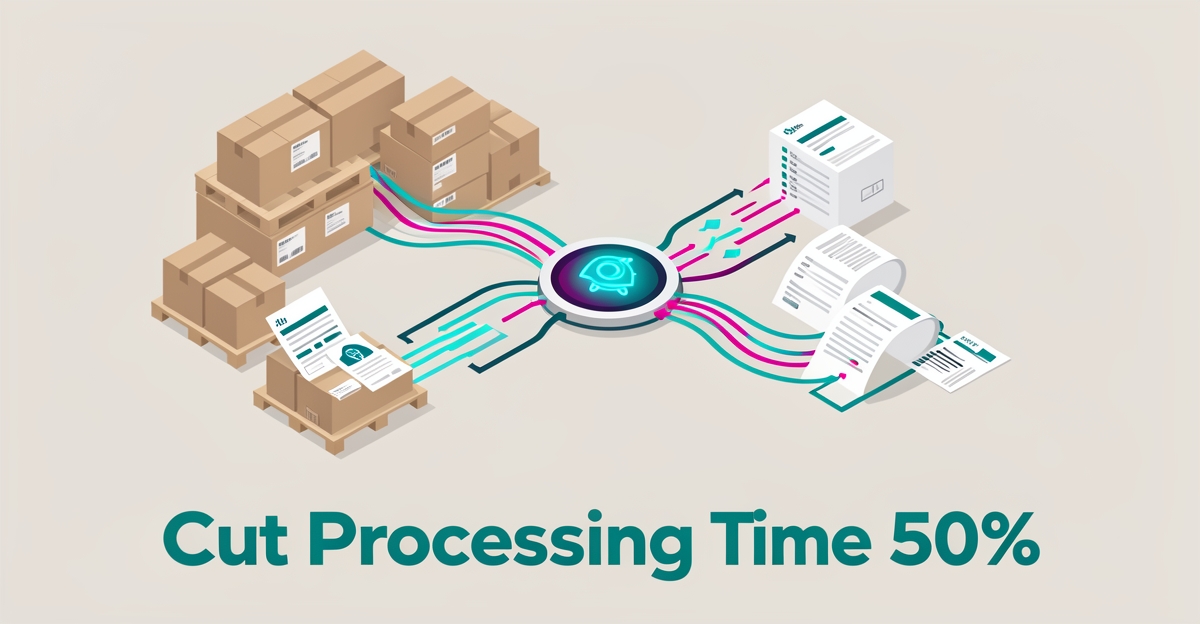
How Restaurant Supply Distributors Can Cut Order Processing Time by 50% with AI Workflow Automation
Key Facts
- Manual invoice data entry typically carries an error rate of several percent, with industry analyses placing it around 4% per Vellin procurement analysis
- A manager spending 45 minutes per order twice weekly can accumulate roughly $11,700 per year in ordering labor costs per Vellin labor cost data
- Procurement automation can typically reduce supply costs by 5% to 10% according to Vellin research
- Restaurants spending $300,000 annually on food may save $15,000 to $30,000 through automation per Vellin savings estimate
- ROI from automation often materializes within a few months for foodservice businesses above $500k revenue per industry findings
Hire a team member that works 24/7 — for less than a part-time wage.
AI receptionists, SDRs, dispatchers and 99+ roles. Trained on your business, fully managed.
Not sure where to start? Ask our AI planner
The Hidden Cost of Manual Order Processing in Restaurant Supply Distribution
Restaurant supply distributors face mounting pressure to fulfill orders faster while controlling costs, yet many remain trapped in manual workflows that silently drain resources. The hidden toll of paper-based order entry, spreadsheet tracking, and vendor phone calls goes far beyond inconvenience, it directly erodes profitability through delayed shipments, costly errors, and excessive labor hours. These inefficiencies compound daily, turning routine procurement into a bottleneck that limits scalability and responsiveness.
A manager spending 45 minutes per order across five vendors, twice per week, can accumulate roughly $11,700 annually in ordering labor costs at a loaded labor rate of $30 per hour. This figure doesn't account for the ripple effects of mistakes: manual data entry in invoice processing typically carries an error rate in the range of 4%, leading to incorrect shipments, payment disputes, and time-consuming reconciliations. Each error requires additional staff intervention, further inflating operational costs and straining vendor relationships. Over time, these small losses accumulate into significant financial leakage that many distributors fail to trace back to their order intake process.
- Delayed fulfillment due to manual order validation and vendor confirmation cycles
- Inaccurate inventory levels from lagging data entry between order receipt and system updates
- Increased overtime as staff scramble to correct preventable errors during peak periods
- Reduced capacity to onboard new restaurant clients without adding headcount
- Missed early-payment discounts from slow invoice processing and approval routing
AIQ Labs helps restaurant supply distributors uncover these hidden costs through process analysis and targeted automation, transforming order workflows from a cost center into a competitive advantage. A focused [AI Workflow Build](/workflow-builds) targets the single workflow that costs you the most, often order intake, and rebuilds it at a fixed price, in phases. By replacing manual touchpoints with intelligent workflow automation, distributors can reclaim labor hours, improve order accuracy, and redirect staff toward higher-value activities like supplier negotiation and customer service, all while building a foundation for scalable growth.
How AI Workflow Automation Cuts Processing Time by Half: The Technology Behind the Gain
AI-powered workflow automation transforms restaurant supply distribution by eliminating manual bottlenecks in order intake, inventory validation, and dispatching. Intelligent data extraction captures order details from emails, PDFs, or portals with high accuracy, reducing the manual effort that traditionally consumes 45 minutes per order across multiple vendors. This shift not only accelerates processing but also minimizes errors that disrupt downstream fulfillment.
Real-time ERP integration ensures inventory levels and vendor availability are validated instantly against live data, preventing overselling and stockouts. Automated decision-making routes orders to the correct fulfillment centers based on predefined rules, such as proximity, capacity, or delivery windows, without human intervention. These capabilities work in concert to create a seamless, end-to-end flow that scales with order volume while maintaining consistency.
The impact is measurable: AI-driven invoice processing can cut data entry errors from roughly 4% to near zero, according to industry research on manual versus automated procurement. This near-elimination of errors reduces costly rework, payment delays, and vendor disputes. Additionally, well-built AI systems handle high-volume foodservice environments reliably, processing thousands of daily transactions without performance degradation, a critical advantage for distributors serving hundreds of restaurant clients.
By replacing repetitive, error-prone tasks with intelligent automation, distributors reclaim staff time for strategic activities like vendor relationship management and demand forecasting. The result is a reduction in order processing time on the order of 50%, driven by faster intake, accurate validation, and intelligent dispatch, all operating continuously without fatigue or oversight gaps. For distributors who want automation handled end to end, managed [AI Employees](/ai-employees) such as order-entry and dispatch agents can run these workflows daily at a fraction of the cost of an additional hire.
From Manual to Automated: A Phased Implementation Plan for Distributors
Restaurant supply distributors often begin their automation journey by tackling invoice processing, a task that consumes significant staff time and introduces costly errors. Manual data entry in invoice processing carries an error rate of roughly 4%, leading to payment delays and reconciliation headaches that ripple through operations. By digitizing invoices through an automated scanning system, distributors can eliminate manual entry and lay the foundation for broader workflow automation.
The next critical step involves establishing an accurate inventory baseline, which enables reliable demand forecasting and prevents both stockouts and overstocking. Conducting a full physical inventory count and entering it into the automated system creates a single source of truth that AI algorithms can use to predict reorder points with precision. This step is essential before enabling automated purchase order generation, as flawed inventory data would undermine any subsequent automation efforts.
Once the baseline is set, distributors can begin automating ordering for a subset of vendors, starting with high-volume or predictable items. Automated purchase order generation based on inventory levels and demand forecasts reduces the time spent on routine tasks, freeing staff to focus on supplier relationships and exception handling. As Vellin notes, the transition from manual to automated procurement does not need to be disruptive, phased implementation allows teams to adapt gradually while measuring ROI at each stage.
Finally, full system integration connects the automated workflow with POS and accounting platforms, ensuring seamless data flow and real-time visibility across the supply chain. This end-to-end alignment supports scalable growth and positions distributors to capture the efficiency gains documented in industry research, where many businesses see ROI within a few months. AIQ Labs supports this progression through phased builds that align with existing ERP tools, whether you need one workflow rebuilt, managed AI staff, or a fully connected [AI Operating System](/ai-operating-systems) you own outright. You can [apply for a Fit Check](/apply) to see where automation will deliver the biggest impact in your operation.
Still paying for 10+ subscriptions that don’t talk to each other?
We build custom AI systems you own outright. No vendor lock-in. Full control.
Not sure where to start? Ask our AI planner
Frequently Asked Questions
How much can AI automation actually reduce order processing time for restaurant supply distributors?
What is the real cost of sticking with manual order processing?
How accurate is AI-powered invoice processing compared to manual data entry?
How long does it take to see ROI from restaurant supply automation?
Can AI automation integrate with our existing ERP or order management systems?
Will automation disrupt our current operations during implementation?
From Manual Bottlenecks to Automated Advantage
Restaurant supply distributors no longer need to accept the hidden costs of manual order processing, those 45 minutes per order, the error rates, and the overtime spent fixing preventable mistakes. AI workflow automation offers a clear path to cutting processing time roughly in half while boosting accuracy and freeing staff for higher-value work like supplier negotiations and customer service. By starting with invoice digitization, establishing an accurate inventory baseline, and scaling automation in phases, distributors can achieve measurable ROI within months without disrupting operations. The technology exists today to transform order workflows from a drain on resources into a scalable competitive advantage. If you're ready to uncover where automation will deliver the biggest impact in your business, take the first step with a free, no-obligation strategy call to map your biggest bottlenecks and high-ROI opportunities.
Make AI your competitive advantage — not just another tool.
Strategy, implementation and ongoing optimization. One partner, end to end.
Not sure where to start? Ask our AI planner