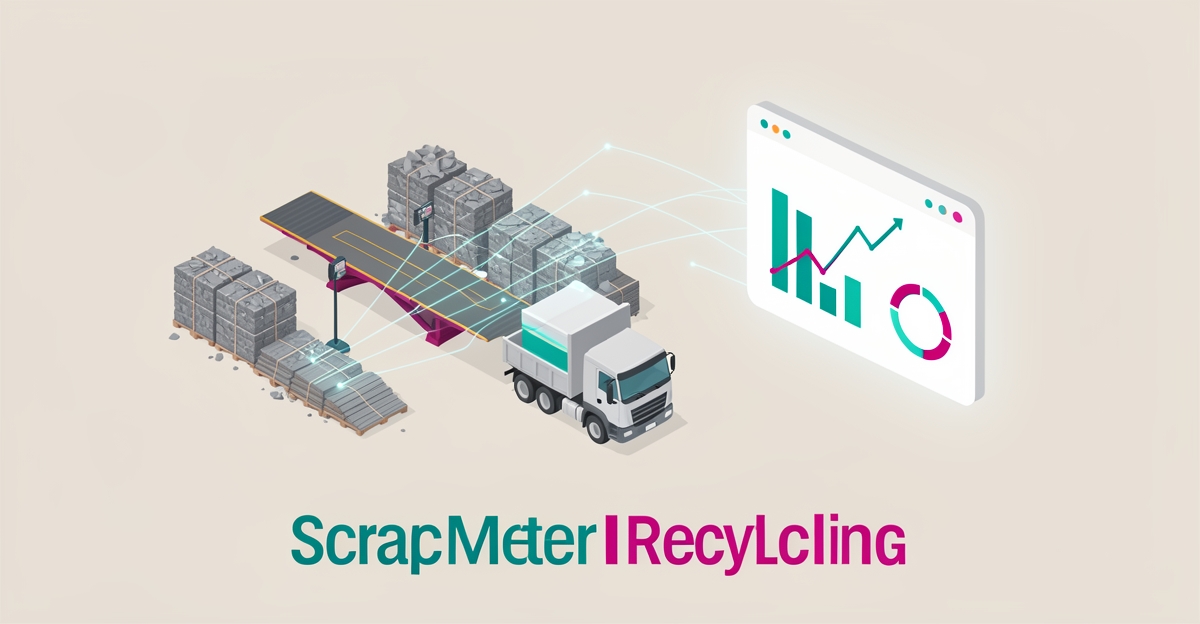
How Scrap Metal Businesses Can Automate Daily Reports with AI-Powered Dashboards
Quick Answer: Tired of manual daily reports eating up your scrap metal business? AI-powered dashboards automate data from weigh stations, apps, and logs, delivering real-time insights on material, revenue, and fleet use in minutes, not hours. Start the free Fit Check to see how AIQ Labs builds custom dashboards you own, no data science team needed.
Key Facts
- AI-powered sorting systems typically achieve accuracy well above manual sorting, which is prone to double-digit error rates in waste and recycling operations
- Sensor and route-data integration can meaningfully reduce unnecessary pickups and idle fleet time in comparable logistics-heavy operations
- Predictive maintenance powered by AI can substantially reduce equipment breakdowns by shifting work from reactive fixes to scheduled interventions
- Labor is typically the largest line item in waste and recycling operations, often consuming the majority of total budgets
- AI implementation can reduce manual data processing by a significant margin, freeing staff for higher-value tasks
- Focused pilots tend to validate far faster than enterprise-wide rollouts
Hire a team member that works 24/7 — for less than a part-time wage.
AI receptionists, SDRs, dispatchers and 99+ roles. Trained on your business, fully managed.
Not sure where to start? Ask our AI planner
Table of Contents
- The Hidden Cost of Manual Daily Reporting in Scrap Metal Operations
- How AI-Powered Dashboards Automate the Report Lifecycle
- From Data to Decisions: KPIs That Drive Scrap Yard Profitability
- Implementation Roadmap: From Pilot to Full Automation in 90 Days
- Why Custom-Built Dashboards Beat Off-the-Shelf BI Tools for Scrap Metal
The Hidden Cost of Manual Daily Reporting in Scrap Metal Operations
Manual daily reporting in scrap metal operations creates significant operational drag by consuming valuable labor hours on repetitive, error-prone tasks. Employees spend time reconciling weigh station tickets, delivery app exports, and driver logs, activities that could be automated to free up capacity for higher-value work. This manual effort not only delays insights but also introduces avoidable costs that accumulate over time.
Labor is typically the largest cost category in waste and recycling operations, a reality that closely mirrors the labor-intensive nature of scrap metal reporting, where staff manually key data from multiple sources. When employees are tied up entering weigh station data or matching delivery logs, they're not analyzing trends, optimizing routes, or improving customer service. This misallocation of effort directly impacts profitability and scalability.
Human error in data entry acts as a form of "data contamination." Hand-keyed weigh station tickets, misread delivery app exports, and illegible driver logs introduce inaccuracies that distort daily revenue reports, material received summaries, and vehicle utilization metrics. These errors compound when generating end-of-day summaries, leading to flawed decisions about pricing, routing, and inventory.
The delay between close-of-day and actionable visibility further exacerbates inefficiencies. Without automated aggregation, scrap metal businesses often wait hours, or until the next morning, to see a clear picture of daily performance. This lag prevents real-time adjustments to truck scheduling, pricing based on material type, or immediate follow-up on discrepancies. In an industry where margins are tight and material prices fluctuate, delayed visibility means missed opportunities and reactive rather than proactive management.
AI-powered dashboards eliminate this drag by automatically pulling data from weigh stations, delivery apps, and driver logs into a unified view. AIQ Labs builds these as AI Workflow Builds, fixed-price, phased rebuilds of the workflow that costs you the most, turning the manual reporting burden into instant, accurate insights without requiring internal data science teams. By automating report generation, scrap metal operations gain real-time visibility into material received, revenue streams, and fleet utilization, turning reporting from a cost center into a strategic advantage.
How AI-Powered Dashboards Automate the Report Lifecycle
Scrap metal businesses face a daily grind of manual reporting, pulling data from weigh station CSVs, delivery app APIs, and telematics systems to calculate material received by grade, revenue per truck, and vehicle utilization. AI-powered dashboards automate this entire lifecycle by connecting these disparate sources into a unified data pipeline, eliminating the need for internal data science teams.
The technical architecture begins with connectors that ingest weigh station logs, API feeds from logistics platforms, and real-time telematics data into a centralized stream. AI agents then normalize inconsistent units, converting pounds to tonnes or adjusting for material density, while flagging anomalies like unexpected weight discrepancies or duplicate entries. These agents calculate core KPIs such as material received by metal grade, revenue generated per truck trip, and fleet utilization rates, transforming raw operational logs into actionable business intelligence.
The dashboard layer serves real-time views through an intuitive interface, presenting live summaries of material flow, revenue trends, and asset performance without requiring businesses to hire data scientists or maintain complex analytics infrastructure. This end-to-end automation ensures reports are generated consistently, accurately, and on schedule, turning what was once a reactive, error-prone process into a proactive operational advantage.
For scrap metal operators, this means daily reports reflect actual conditions, not estimates, enabling faster decisions on pricing, routing, and resource allocation. By removing manual bottlenecks and enhancing data reliability, AI-powered dashboards turn routine reporting into a strategic lever for profitability and scalability. AIQ Labs builds these custom systems as owned assets, ensuring businesses retain full control over their data pipelines and insights without ongoing vendor dependencies.
- Connectors pull weigh station CSVs, delivery app APIs, and telematics data into a unified pipeline
- AI agents normalize units, flag anomalies, and calculate KPIs like material received by grade and revenue per truck
- Dashboard layer serves real-time views without requiring internal data science headcount
The result is a self-sustaining reporting engine that scales with the business, delivering precision, speed, and clarity where manual processes once caused delays and uncertainty.
From Data to Decisions: KPIs That Drive Scrap Yard Profitability
Scrap yard owners face daily decisions that hinge on real-time data, from adjusting prices for different metal grades to optimizing truck dispatches and scheduling maintenance. Automated dashboards transform raw data from weigh stations, delivery apps, and equipment logs into clear, actionable insights that support these critical choices. By continuously monitoring key performance indicators, owners can respond swiftly to market fluctuations and operational bottlenecks.
Predictive maintenance insights, powered by AI analyzing sensor data from collection vehicles and sorting equipment, can substantially reduce breakdowns, directly increasing vehicle uptime and minimizing costly disruptions. This proactive approach shifts maintenance from reactive fixes to scheduled interventions, extending asset life and improving fleet reliability. Similarly, fill-level-style logic applied to container tracking enables yard managers to optimize space utilization by identifying underused or overfilled bins in real time.
These automated systems also streamline compliance documentation by automatically logging material grades, weights, and timestamps, reducing manual entry errors and ensuring audit-ready records. With AI handling data aggregation and analysis, owners gain the clarity needed to make confident, profitable decisions without requiring in-house data science expertise. AIQ Labs builds custom dashboards that turn this operational intelligence into a competitive advantage for scrap yards of any size.
Implementation Roadmap: From Pilot to Full Automation in 90 Days
Scrap metal businesses face unique challenges in tracking daily material flows, revenue, and equipment utilization across multiple yards and streams. Manual data collection from weigh stations, delivery apps, and operational logs creates delays and errors that hinder timely decision-making. AI-powered dashboards can automate these reports by integrating disparate data sources into a single, real-time view of business performance, and AI implementation in comparable sectors has been shown to cut manual data processing significantly, freeing staff for higher-value tasks.
The path to full automation follows a proven adoption curve, starting with a clear assessment of current data sources and pain points. During weeks 1-2, businesses should map all material intake points, weigh station integrations, and existing reporting workflows to identify gaps and inefficiencies. This foundational step ensures the pilot targets the highest-impact areas, such as a single material stream like copper or aluminum, or one operational yard with consistent daily volume. Focused pilots tend to validate much faster than enterprise-wide rollouts.
Weeks 3-6 focus on launching the pilot with AI-driven dashboards that automatically pull data from scales, delivery apps, and yard management systems for the selected stream or location. The system generates daily summaries of material received, revenue by grade, and vehicle utilization without manual compilation. By weeks 7-10, the dashboard integrates with accounting or ERP platforms to sync financial data and connects to driver mobile apps for real-time job completion tracking. This creates a closed loop where operational data flows directly into financial reporting. Scrap metal's higher material value tends to compress payback timelines relative to other waste-sector AI projects, thanks to immediate revenue visibility and reduced sorting errors.
The final phase, weeks 11-12, centers on training yard managers, dispatchers, and accounting staff on interpreting the AI-generated insights and acting on exceptions. Go-live occurs once users confirm the dashboard accurately reflects daily operations and reduces report generation time from hours to minutes. Ongoing optimization then expands the system to additional streams and yards, leveraging the same integration framework, this is where an AI Operating System approach pays off: one connected layer, built in phases and owned outright, that grows yard by yard. The result is a self-sustaining system where daily reports become a strategic asset rather than an administrative burden.
Why Custom-Built Dashboards Beat Off-the-Shelf BI Tools for Scrap Metal
Generic BI platforms often force scrap yards into rigid data schemas that don't reflect the nuances of metal grades, fluctuating commodity pricing, or multi-yard operational hierarchies. These tools typically require per-seat licensing fees that scale with headcount rather than value, and they lack built-in logic for industry-specific workflows like weigh station integration or grade-based revenue recognition. As a result, businesses end up spending significant time and resources adapting the tool to their processes instead of gaining insights from them.
AIQ Labs' owned-asset model flips this dynamic by delivering custom dashboards engineered around the realities of scrap metal operations. This includes purpose-built connectors for weigh station vendors, grade-specific pricing logic that auto-adjusts based on LME indices or regional spot markets, and multi-yard rollup capabilities that consolidate receiving, shipping, and vehicle utilization data across locations into a single source of truth. Unlike subscription-based BI tools, these systems are designed to evolve with the business, adding new material types, integrating additional scales, or supporting new pricing models without dependency on vendor roadmaps.
The true advantage lies in ownership and flexibility. With AIQ Labs, clients receive full title to the code, data models, and integrations, eliminating vendor lock-in and the creeping cost of subscription sprawl. Payment models like Start Monthly and Build in Milestones allow yards to begin with a focused scope, such as automating daily receiving reports from scale tickets and delivery apps, and prove ROI through tangible improvements in data accuracy and reporting speed before expanding to broader use cases like predictive inventory forecasting or yard-level performance benchmarking. This approach ensures investment aligns with demonstrated value, not vendor commitments.
- AI-powered identification and sorting typically outperforms manual methods, which are prone to double-digit error rates
- Sensor and route-data integration can meaningfully reduce unnecessary pickups, directly improving the vehicle utilization metrics tracked in custom dashboards
- Predictive maintenance powered by AI can substantially reduce breakdowns, minimizing downtime for critical assets like scales and conveyors
By anchoring dashboard development in actual operational workflows, rather than forcing workflows to fit a generic tool, scrap metal businesses gain not just visibility, but actionable control over their most complex and variable processes. AIQ Labs ensures that insight leads to action, and that the system delivering it remains firmly in the hands of the business that uses it.
Still paying for 10+ subscriptions that don’t talk to each other?
We build custom AI systems you own outright. No vendor lock-in. Full control.
Not sure where to start? Ask our AI planner
Frequently Asked Questions
How much time does manual daily reporting actually waste in scrap metal operations?
Manual reporting ties staff to reconciling weigh station tickets, delivery exports and driver logs, which pulls labor away from higher-value work. Labor is typically the largest cost category in waste and recycling operations, a reality that closely mirrors scrap metal reporting workloads. Automating the aggregation turns reporting from a cost center into real-time visibility.
Will AI dashboards make my existing weigh station and delivery apps work together?
Yes. Connectors ingest weigh station CSVs, delivery app APIs and telematics into a unified pipeline, then AI agents normalize units and flag anomalies. The dashboard layer serves live views of material received, revenue and fleet utilization without needing an internal data science team.
Are AI-powered reports really more accurate than what my team does manually?
Manual data entry introduces contamination-style errors that compound in end-of-day summaries. AI-driven pipelines normalize units, flag anomalies and eliminate hand-keying, which typically produces materially cleaner revenue and utilization data than manual compilation.
Can automation help with predictive maintenance for trucks and scales?
AI analysis of sensor data from collection vehicles and sorting equipment can substantially reduce breakdowns, increasing uptime and minimizing disruptions. Predictive maintenance shifts work from reactive fixes to scheduled interventions, extending asset life and improving fleet reliability.
How long does it take to move from pilot to full automated reporting?
A proven 90-day roadmap starts with mapping data sources in weeks 1-2, pilots AI dashboards for a single stream in weeks 3-6, integrates accounting/ERP and driver apps in weeks 7-10, and trains teams in weeks 11-12. AI implementation can cut manual data processing significantly, freeing staff for higher-value tasks.
Why choose a custom dashboard over an off-the-shelf BI tool for scrap yards?
Generic BI tools force rigid schemas and per-seat licensing that don't reflect metal grades, commodity pricing or multi-yard hierarchies. Custom dashboards deliver purpose-built connectors, grade-specific pricing logic and full ownership with no vendor lock-in, so the system evolves with your operations.
Turn Daily Reporting Into Your Competitive Edge
Manual daily reporting is quietly eroding scrap metal margins, labor tied up reconciling weigh tickets, delivery exports and driver logs, error-prone data that contaminates revenue and utilization metrics, and visibility that arrives too late to act on pricing or routing. AI-powered dashboards eliminate that drag by automatically ingesting weigh station CSVs, delivery app feeds and telematics, normalizing units, flagging anomalies and surfacing real-time KPIs like material received by grade, revenue per truck and fleet utilization without needing an internal data science team. With a focused 90-day pilot to a full rollout, operators move from reactive summaries to proactive decisions on pricing, dispatch and maintenance, while custom-built systems ensure the data pipeline and insights remain owned assets rather than subscription dependencies. AIQ Labs builds these custom dashboards for scrap operations, turning routine reporting into a strategic lever for profitability and scalability. Start the two-minute Fit Check at aiqlabs.ai/apply, then book a free 30-minute strategy call to map your biggest reporting bottleneck and identify a high-ROI automation path. If there isn't a clear win, we'll tell you that too.
Make AI your competitive advantage — not just another tool.
Strategy, implementation and ongoing optimization. One partner, end to end.
Not sure where to start? Ask our AI planner