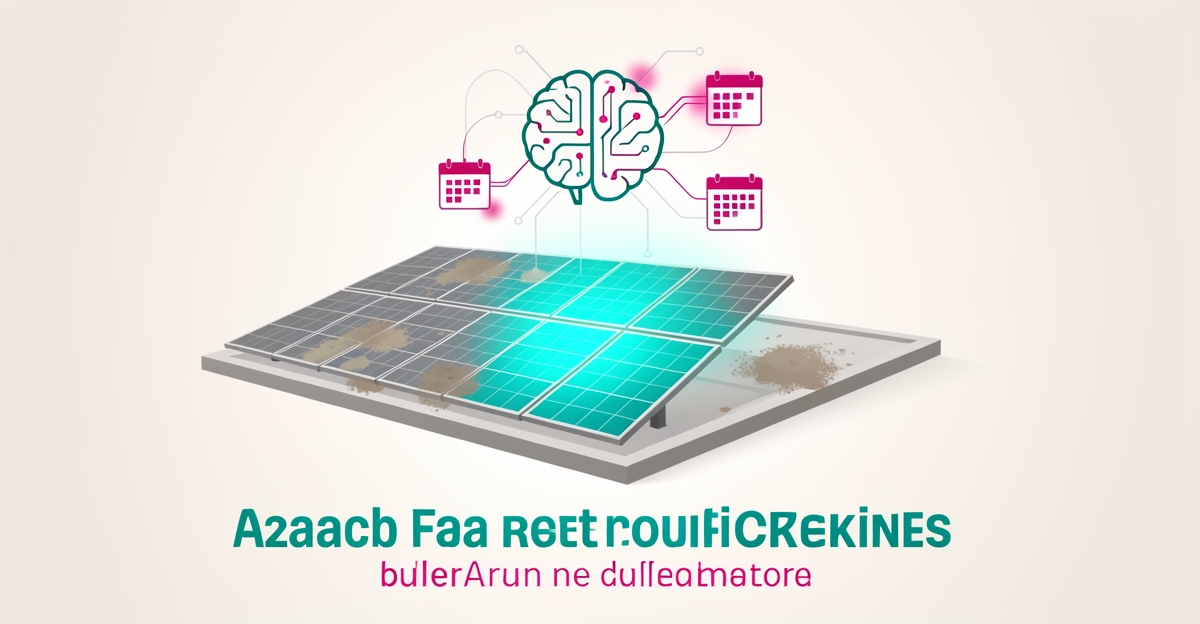
How Solar Installers Can Automate Solar Panel Maintenance Scheduling with AI
Key Facts
- Dust and soiling accumulation can cause significant energy loss on solar panels, commonly cited in the range of 20–50% in heavily soiled conditions.
- A 2025 study on AI-integrated cleaning robots reported an average cleaning efficiency above 90% per the published research.
- The same study reported substantial energy output recovery on heavily soiled panels after automated cleaning per Nature 2025 research.
- CNN-LSTM fault detection models have reported accuracy above 90% in AI-integrated robotic testing.
- Edge AI inference can run significantly faster than cloud processing, enabling near-real-time field decisions per the same study.
- Industry reports have documented multi-million-dollar annual losses at large solar farms due to poor maintenance practices.
Hire a team member that works 24/7 — for less than a part-time wage.
AI receptionists, SDRs, dispatchers and 99+ roles. Trained on your business, fully managed.
Not sure where to start? Ask our AI planner
Introduction
Solar panel maintenance is no longer just about cleaning, it's a critical factor in long-term energy yield and system reliability. As global photovoltaic capacity continues to expand year over year, the need for smarter, proactive maintenance keeps growing. Dust accumulation alone can cause meaningful energy loss in heavily soiled conditions, directly impacting performance and return on investment for both installers and system owners.
AI-integrated autonomous robotics are changing how solar farms approach upkeep, combining real-time fault detection with predictive scheduling. A 2025 study on these systems reported average cleaning efficiency above 90%, with substantial energy recovery on heavily soiled panels. Fault detection models in the same research achieved accuracy above 90%, while edge AI processing ran considerably faster than cloud-based alternatives.
For solar installers, this means shifting from reactive service calls to automated, data-driven maintenance workflows. AI can analyze environmental data, historical performance, and soiling patterns to schedule visits only when needed, reducing unnecessary trips and extending panel lifespan. When integrated with existing service management tools, these systems send proactive alerts, track completion, and ensure consistent customer communication.
AIQ Labs builds custom AI workflow systems that connect with your current platforms to enable this level of intelligent scheduling. By automating reminders, tracking maintenance history, and optimizing technician routes, installers can reduce operational overhead while improving service reliability. This approach not only cuts costs, industry reports have documented multi-million-dollar annual losses at large, poorly maintained farms, but also strengthens client trust through consistent, predictable system performance.
The result is a maintenance strategy that scales with your business, adapts to changing conditions, and keeps solar arrays operating at peak efficiency year after year.
Key Concepts
Solar installers face mounting pressure to maintain system performance as global photovoltaic capacity keeps climbing, driven by expanding residential and commercial deployments. Dust accumulation can cause significant energy loss in the right conditions, directly impacting ROI and customer trust in solar investments. Proactive maintenance scheduling is no longer optional, it's essential for protecting long-term yield and system integrity.
AI-integrated autonomous robotics offer a newer approach to maintenance, combining real-time fault detection with adaptive cleaning schedules. A 2025 study demonstrated these systems can achieve high cleaning efficiency and meaningful energy recovery on heavily soiled panels, with fault detection models enabling predictive interventions before performance degrades.
- Continuous monitoring of soiling levels and environmental triggers
- Dynamic rescheduling based on weather patterns and energy yield forecasts
- Automated work order generation integrated with service management platforms
- Proactive customer alerts for upcoming maintenance visits
- Performance tracking post-service to validate energy recovery
For solar installers, implementing AI-driven maintenance automation requires more than just deploying robots, it demands seamless integration with existing operational workflows. AIQ Labs specializes in building custom systems that connect autonomous maintenance triggers with dispatch, invoicing, and customer communication tools, ensuring end-to-end visibility without disrupting current processes. This approach transforms maintenance from a reactive cost center into a predictable, value-driven service that enhances system longevity and client satisfaction. By anchoring scheduling in real-time performance data rather than fixed intervals, installers can optimize resource allocation while keeping panels operating at peak efficiency year-round.
Best Practices
AIQ Labs helps solar installers transform reactive maintenance into proactive, data-driven workflows that protect system performance and customer trust. By integrating AI with existing service tools, teams can automate scheduling, reduce missed visits, and extend panel lifespan through timely interventions.
Dust accumulation can cause significant energy loss in solar panels, directly impacting ROI and customer satisfaction according to field research. AI-powered scheduling systems analyze environmental data, historical soiling rates, and weather forecasts to predict optimal cleaning times before performance drops significantly. This predictive approach prevents avoidable yield loss and reduces unnecessary service trips.
Proactive maintenance scheduling increases system uptime and strengthens client relationships by demonstrating consistent care. AI tools can automatically generate work orders, assign technicians based on location and skill, and send customer notifications ahead of visits. These workflows integrate with the CRM and dispatch platforms solar installers already use.
- Use AI to analyze local weather, pollution, and tilt angle data for soiling prediction
- Trigger maintenance alerts when predicted energy loss crosses your threshold
- Sync AI-generated schedules with field service tools like Google Calendar or ServiceTitan
- Send automated SMS/email reminders to customers 24 and 2 hours before visits
- Track completion rates and technician feedback to continuously improve scheduling accuracy
AIQ Labs builds custom systems that unify these functions, connecting AI prediction engines with your existing operational tools to create a closed-loop maintenance process. This eliminates manual tracking and ensures no system falls through the cracks, especially across large geographic service areas. If scheduling coordination is your biggest bottleneck, an AI Workflow Build rebuilds that one workflow at a fixed price.
With solar PV capacity continuing to grow globally, scalable maintenance automation is no longer optional, it's essential for long-term performance and competitiveness. Installers who adopt AI-driven scheduling today position themselves to deliver higher reliability, lower operational costs, and stronger customer retention in a growing market.
Implementation
Solar maintenance scheduling stops being reactive when AI connects performance data to field actions in real time.
Installers start by ingesting production telemetry, weather forecasts, soiling models, and service history into a unified workflow. The system builds risk scores per site and triggers work orders before losses compound. With proactive alerts instead of manual checklists, crews focus on high-impact visits and customers see consistent output.
Automation begins with data integration and model tuning. AI maps panel layout constraints and safety requirements, then normalizes inverter and plant controller signals. Standardized models reduce measurement lag and conflicting control objectives. The workflow syncs with existing service management tools so dispatch, CRM, and technician apps stay aligned.
Predictive scheduling uses fault detection and soiling forecasts. According to AI-integrated autonomous robotics research, CNN-LSTM fault detection has reported accuracy above 90%. The same study shows robotic cleaning achieving high cleaning efficiency and meaningful energy recovery on heavily soiled panels, with edge AI inference running considerably faster than cloud processing, enabling near-real-time decisions.
Implementation follows a practical sequence:
- Connect monitoring, weather, and work order systems via API for a single source of truth
- Train models on site-specific soiling, shading, and fault patterns
- Define automated rules for inspection, cleaning, and repair triggers
- Deploy AI Employees for scheduling, reminders, and technician coordination
- Track KPIs like energy recovered, visit adherence, and customer satisfaction
AIQ Labs builds custom systems that integrate with existing service management tools and send proactive alerts, keeping the scheduling logic owned by the installer. The workflow automates reminders to customers, confirms technician availability, and updates records after completion. Continuous learning refines timing as new performance data arrives.
Results compound over time. Automated scheduling reduces missed maintenance and supports long-term performance guarantees. Installers gain visibility into fleet health, crews spend less time on admin, and customers receive transparent updates without manual follow-up.
Conclusion
Solar maintenance is shifting from reactive visits to predictable, data-driven operations. Installers who automate scheduling now protect long-term performance and customer trust while reducing wasted truck rolls.
AI-integrated autonomous robotics can effectively detect faults, schedule cleaning, and predict maintenance needs. A 2025 study reported high average cleaning efficiency from an AI-integrated autonomous robotic system, with substantial dust reduction after cleaning and meaningful energy recovery on heavily soiled panels.
Fault detection accuracy drives the reliability of those schedules. The same research documented strong accuracy for CNN-LSTM-based fault detection, enabling installers to prioritize visits where performance loss is real rather than assumed. Edge AI inference latency supports real-time decisions in the field.
These gains matter as solar scales. With global PV capacity continuing to climb, manual oversight no longer matches system complexity. Dust accumulation can cost a meaningful share of energy generation in soiled conditions, and industry reports have documented multi-million-dollar annual losses at large farms due to poor maintenance.
Automation also addresses engineering realities installers face daily: optimizing array orientation, prioritizing fire safety, managing module efficiency, and balancing active power, reactive power, and frequency response under dynamic conditions at the plant controller level.
For solar installers, the next step is turning these capabilities into an operational workflow. An AI Workflow Build can schedule, remind, and track maintenance visits for solar systems, ensuring long-term performance and customer satisfaction, built in phases at a fixed price, and owned outright when complete.
A practical rollout looks like this:
- Connect monitoring data and service management tools to a central AI scheduler
- Set proactive alerts for soiling thresholds, fault probability, and weather windows
- Automate technician dispatch with route optimization and parts pre-staging
- Log results and restore performance metrics back to the customer portal
AIQ Labs builds custom systems that integrate with existing service management tools and send proactive alerts, allowing teams to own the workflow rather than rent a generic platform. With true ownership and production-ready integration, installers can scale maintenance without scaling headcount.
Start with one territory or fleet, measure restored output and visit efficiency, then expand. The installers who automate now will deliver the predictability customers pay for over the life of the system.
Still paying for 10+ subscriptions that don’t talk to each other?
We build custom AI systems you own outright. No vendor lock-in. Full control.
Not sure where to start? Ask our AI planner
Frequently Asked Questions
How much energy can dust accumulation actually cause solar panels to lose?
How effective are AI-integrated robotic systems at cleaning solar panels?
What accuracy do AI systems have at detecting faults in solar panels?
Is edge AI processing faster than cloud-based alternatives for solar maintenance decisions?
Can AI maintenance scheduling really reduce operational costs for solar installers?
Do I need to replace my current service management tools to use AI for maintenance scheduling?
Turn Maintenance from a Cost Center into Your Competitive Edge
The shift from reactive service calls to predictive, automated scheduling is no longer a luxury, it's the baseline for solar installers who want to protect margins and customer trust. With soiling capable of cutting energy output significantly in the right conditions, and 2025 research showing AI-driven systems recovering meaningful energy on heavily soiled panels, the case for intelligent scheduling is clear. By connecting performance data, weather forecasts, and field operations into a single automated workflow, you eliminate guesswork, reduce wasted truck rolls, and keep every panel operating at peak efficiency year after year. AIQ Labs builds custom systems that integrate with your existing service management tools to make this transition seamless, sending proactive alerts and tracking completion without disrupting your current processes. Start with one territory, measure the recovered output, and scale what works. Ready to see what automation looks like for your fleet? Take the two-minute Fit Check at https://aiqlabs.ai/apply to map your biggest scheduling bottleneck, then book a free 30-minute strategy call to identify your highest-ROI opportunity.
Make AI your competitive advantage — not just another tool.
Strategy, implementation and ongoing optimization. One partner, end to end.
Not sure where to start? Ask our AI planner