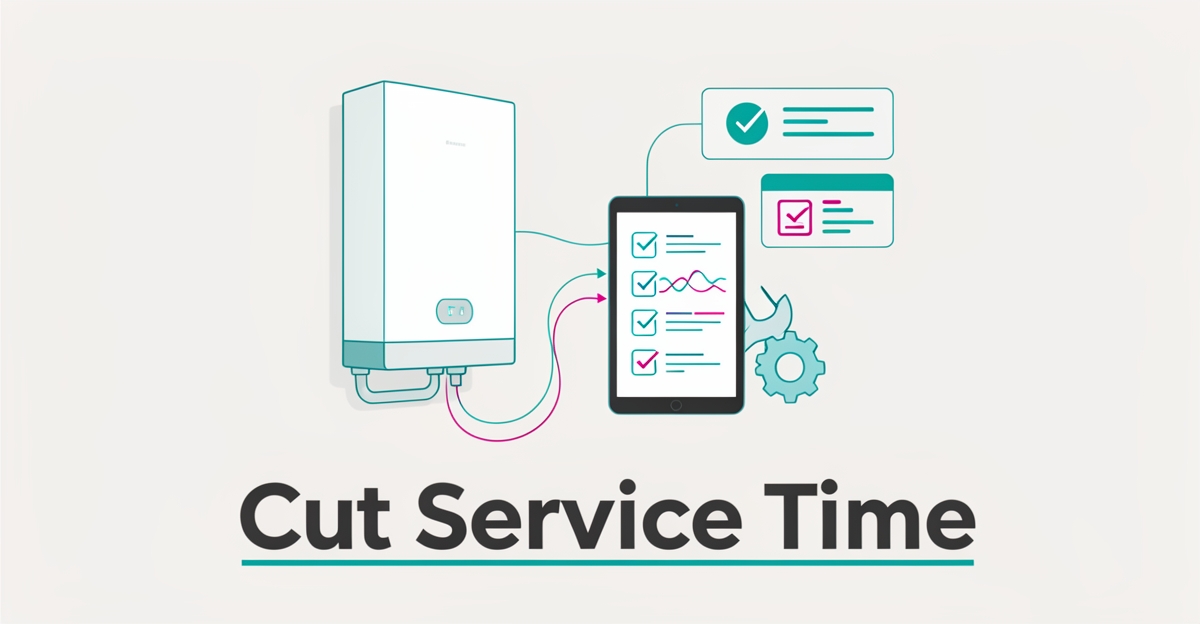
How Tankless Water Heater Installers Can Cut Service Time by Automating Pre-Visit Inspections
Key Facts
- A majority of tankless water heater installers report wasting hours on dead-end leads that never convert according to industry research
- Installers commonly lose 20+ hours weekly to manual data entry, transferring customer information between systems based on workflow automation research
- AI-powered knowledge management can dramatically reduce time spent on repetitive technical questions per industry research
- Automated report writing can deliver a strong return on investment by improving speed and accuracy per inspection data analysis
- Smart pre-visit recommendations include sizing validation from home square footage, occupancy, and fixture count per workflow automation guides
- AI automates pre-visit research by pulling customer history, home size, and usage patterns into a single inspection workflow based on lead enrichment research
- Fewer dead-end visits matter because installer surveys report most installers waste hours on unqualified prospects per installer survey data
Hire a team member that works 24/7 — for less than a part-time wage.
AI receptionists, SDRs, dispatchers and 99+ roles. Trained on your business, fully managed.
Not sure where to start? Ask our AI planner
The Hidden Time Drain in Tankless Water Heater Installations
Every minute a tankless water heater installer spends on a dead-end lead or manual data entry is a minute not spent on billable work. The cumulative effect is a silent profit killer that extends service times and reduces first-visit success rates.
According to industry research, a large share of installers, by some accounts as many as 70%, report wasting hours on leads that never convert. These dead-end prospects often require multiple phone calls, preliminary site visits, and detailed estimates before revealing themselves as unqualified, directly cutting into time that could be spent on paying jobs.
The administrative burden compounds the problem. Installers frequently report losing 20+ hours weekly to manual data entry, transferring customer information between systems, updating CRMs, and documenting site conditions. This workflow inefficiency creates a backlog that delays follow-ups and extends the overall service timeline.
Technical knowledge gaps create another layer of delay. Installers frequently spend valuable time answering repetitive questions about gas line sizing, venting requirements, and electrical capacity. Research on knowledge management suggests AI-powered systems can substantially reduce time spent on these repetitive technical questions, freeing senior technicians for complex installations.
These inefficiencies manifest in several specific ways:
- Unqualified leads that consume sales and administrative resources
- Manual transfer of customer data between estimating, scheduling, and billing systems
- Technicians arriving on-site without complete home specifications or usage history
- Repeated explanations of technical requirements to homeowners
- Time-consuming report generation after each service call
The result is a direct impact on first-visit success rates. When installers lack comprehensive pre-visit data, they arrive unprepared for the specific requirements of the home. This leads to return trips for additional parts, rescheduling due to inadequate electrical or gas capacity, and extended installation times that frustrate customers.
AI-powered workflow automation addresses these bottlenecks by analyzing customer history, home size, and usage patterns before the truck rolls. By generating smart pre-visit recommendations, these systems ensure installers arrive with the right equipment, parts, and technical specifications for each specific job.
AIQ Labs builds these automated systems to guide installers through efficient inspection workflows. The technology integrates with existing CRMs to eliminate manual data entry while providing technicians with instant access to manufacturer specifications and local code requirements.
The financial impact of these inefficiencies is substantial. Research on AI versus manual inspection reports indicates that automated report writing can deliver a strong return on investment, suggesting that similar gains are possible across the entire pre-visit workflow.
Forward-thinking installation companies are already addressing these hidden time drains. By automating lead qualification, data entry, and pre-visit planning, they reduce service time while improving the accuracy of first-time installations. The result is a more efficient operation that serves more customers without increasing headcount.
How AI Automates Smart Pre-Visit Recommendations
Pre-visit prep is where tankless jobs lose time before the truck even rolls. Installers arrive without the right sizing data, chase missing history, and spend the first hour asking questions that should have been answered ahead of time.
AI automates the pre-visit research loop by pulling customer history, home size, and usage patterns into a single inspection workflow. The system analyzes prior service notes, water demand signals, and property details to generate smart pre-visit recommendations that guide the technician to the right parts, tools, and time allocation. This reduces unnecessary site trips and improves first-time success rates.
With AI-powered knowledge management, teams report a dramatic reduction in time spent on repetitive technical questions, freeing installers to focus on execution rather than information gathering. According to industry research on automated knowledge bases, installers gain faster access to manufacturer bulletins and local code amendments before arrival. The result is fewer callbacks and cleaner installs.
Report generation also compresses the admin burden. AI-powered report writing software improves the speed and accuracy of pre-visit documentation. Pre-visit insights are compiled automatically from CRM, scheduling, and historical data, so the technician reviews a concise brief instead of piecing together notes.
AIQ Labs builds automated systems that guide installers through the most efficient inspection workflows, typically starting with a single AI Workflow Build that rebuilds the one process costing the most time. The approach aligns with how installers already work, integrating with existing CRM and dispatch tools rather than replacing them.
Smart pre-visit recommendations typically include:
- Sizing validation from home square footage, occupancy, and fixture count
- Customer history summary with prior issues, warranties, and service notes
- Usage pattern analysis to flag high-demand periods or venting constraints
- Parts and tool checklist generated from the predicted scope
The workflow cuts the manual data entry that can consume 20+ hours weekly. Workflow automation guides show how unified data sync reduces errors and standardizes prep across crews.
Fewer dead-end visits matter because installer surveys report that a majority of tankless water heater installers waste hours on dead-end leads. Pre-visit AI filters readiness before dispatch, ensuring the team arrives prepared and the customer experience stays smooth.
Implementing AI Workflow Automation Without Disruption
Adopting AI-powered pre-visit inspections doesn’t have to mean overhauling your entire operation overnight. The key is to introduce automation incrementally, ensuring your team stays productive while the new system learns from real-world data.
Start by mapping your existing workflow to identify where manual bottlenecks occur. Many installers lose valuable hours on repetitive administrative tasks; in fact, workflow automation can eliminate over 20 hours of manual data entry each week in typical cases. By pinpointing these friction points, you can target the specific areas where AI will deliver immediate relief without disrupting daily service calls.
Next, focus on seamless integration with your current tools rather than forcing a platform switch. A robust AI system should connect directly with your existing CRM, scheduling software, and communication channels to create a single source of truth. This ensures that customer history, home size data, and usage patterns flow automatically into pre-visit recommendations, eliminating the need for technicians to toggle between disconnected apps.
Staff training is equally critical for adoption. Technicians need to understand how AI-generated insights improve their first-time fix rates rather than replace their expertise. According to industry data, AI-powered knowledge management can significantly reduce time spent on repetitive technical questions, freeing your team to focus on complex installations. When staff see the system as a support tool that handles routine inquiries, they embrace it faster.
Consider a phased rollout to minimize risk. AIQ Labs structures implementations using milestone-based approaches, allowing you to:
- Pilot the AI system on a single workflow, such as lead qualification or pre-visit sizing
- Validate performance against current service times before expanding
- Scale to a full AI Operating System only after confirming ROI on the initial phase
- Maintain ownership of all custom code and data without vendor lock-in
Finally, commit to ongoing optimization. AI systems improve as they process more job data, refining their recommendations for tankless water heater sizing and installation requirements. Regular reviews ensure the automation evolves alongside changing manufacturer specs and local code amendments, keeping your pre-visit inspections accurate and efficient for the long term.
Still paying for 10+ subscriptions that don’t talk to each other?
We build custom AI systems you own outright. No vendor lock-in. Full control.
Not sure where to start? Ask our AI planner
Frequently Asked Questions
How much time do tankless water heater installers typically waste on dead-end leads?
Can AI really reduce the time spent on manual data entry for installers?
Will using AI for pre-visit recommendations actually improve first-time installation success?
How much time can AI save on answering repetitive technical questions during installations?
Is there proof that AI-generated inspection reports provide a strong return on investment?
Do I need to replace my current CRM or scheduling tools to use AI for pre-visit planning?
Turn Pre-Visit Prep into Your Competitive Edge
Tankless water heater installers lose valuable hours every week to unqualified leads, manual data entry, and repetitive technical questions, time that could be spent on billable installations. By automating pre-visit inspections with AI, companies can cut service time, improve first-visit success rates, and free technicians to focus on complex work instead of chasing missing information. The result is a more efficient operation that serves more customers without adding headcount. If you're ready to identify where automation can deliver immediate relief in your workflow, start with a free strategy session to map your biggest bottlenecks and explore high-ROI opportunities. Schedule your 30-minute strategy call to see how AI-powered pre-visit recommendations can transform your installation process.
Make AI your competitive advantage — not just another tool.
Strategy, implementation and ongoing optimization. One partner, end to end.
Not sure where to start? Ask our AI planner