How to Automate Cleaning Reports and Client Feedback Collection in Janitorial Businesses
Key Facts
- Cleaning businesses using AI for follow-up and review automation typically report meaningful gains in quote-to-booking conversion, with industry analyses citing figures in the 20–35% range according to industry analysis
- AI adoption in the cleaning industry has grown sharply since 2022, with market trackers reporting growth of roughly 340% based on market tracking
- Industry research suggests around 35% of organizations are using AI to automate business processes per industry research
- Service business research commonly finds that most sales happen after multiple follow-ups, often cited as 60–80% occurring after the 5th touch per service business research
- AI-powered tools can respond to leads near-instantly, often within 60 seconds compared to inconsistent manual replies
- Businesses with 10+ Google reviews typically see improved local ranking making automated review requests a sustainable visibility engine
- Automated feedback collection can trigger SMS or email within minutes of job completion ensuring timely client engagement
Hire a team member that works 24/7 — for less than a part-time wage.
AI receptionists, SDRs, dispatchers and 99+ roles. Trained on your business, fully managed.
Not sure where to start? Ask our AI planner
The Manual Reporting Trap Costing Janitorial Businesses Retention
Janitorial businesses often lose valuable client feedback not because they don’t care, but because manual reporting systems break down under daily operational pressure. Teams juggling multiple sites, tight schedules, and inconsistent handoffs struggle to complete post-service reports on time, let alone follow up for reviews. This delay creates a silent erosion of trust, clients notice when no one checks in after a deep clean or special request, and over time, that silence reads as indifference. Without timely feedback loops, recurring issues go unnoticed until they escalate into complaints or cancellations, directly impacting retention.
The cost of this manual trap is amplified by how modern sales and service cycles actually work. Service business research commonly finds that most sales happen only after multiple follow-ups, often cited as 60–80% occurring after the 5th touch, meaning janitorial teams relying on one or two check-ins are leaving the majority of retention opportunities on the table. At the same time, market tracking reports AI adoption in the cleaning industry has grown sharply since 2022, roughly 340%, signaling a widening gap between businesses using automated systems to close that follow-up gap and those still dependent on spreadsheets, paper logs, or memory. The longer teams wait to collect feedback, the less accurate and actionable it becomes, turning what should be a retention tool into a missed signal.
Common pain points include delayed report generation, forgotten review requests, and inconsistent formatting across teams or locations. Supervisors spend hours chasing down missing notes instead of analyzing trends, while clients receive generic or late requests that feel transactional rather than caring. These inefficiencies don’t just waste time, they actively damage the client experience. When feedback collection is haphazard, businesses lose the chance to reinforce positive experiences, correct small issues before they grow, or demonstrate responsiveness that builds long-term loyalty. In an industry where trust is built through consistency, manual reporting isn’t just inefficient, it’s a silent retention risk.
How AI Automates Post-Service Reports and Feedback Loops
Post-service follow-up is where janitorial businesses lose retention without realizing it. Manual checklists and delayed feedback requests create gaps that competitors fill.
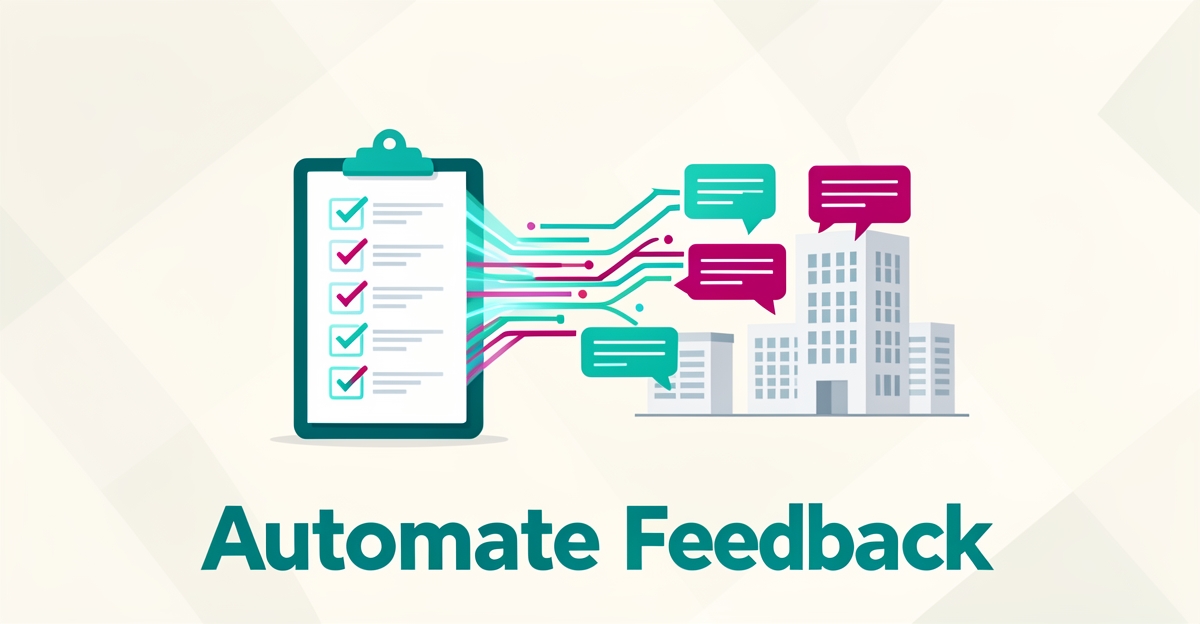
AI automates the entire post-service loop from checklist completion to review collection without human intervention. Agents generate digital cleaning checklists for crews, capture completion photos and notes, and trigger automated client feedback requests immediately after service. Recurring issues are flagged automatically when the same room, task, or crew note appears across multiple visits.
This automation directly improves the metrics that drive growth. Industry analyses of AI tools for cleaning businesses report that teams using AI for follow-up and review automation typically see quote-to-booking conversion improvements in the 20–35% range. Response speed also changes dramatically, with AI-powered tools responding to leads within 60 seconds versus inconsistent manual replies.
Adoption is accelerating as the pressure mounts. Current industry statistics suggest around 35% of organizations are using AI to automate business processes, and market tracking reports AI adoption in the cleaning industry has grown sharply since 2022.
In practice, the AI-driven workflow replaces paper and memory with consistent data capture:
- Digital checklists are auto-generated per client site and service type, with task verification and photo evidence logged automatically
- Feedback collection is triggered by SMS or email within minutes of job completion, with sentiment analysis scoring responses
- Recurring issue flagging identifies repeat deficiencies by room, cleaner, or supply and creates alerts for managers
- Automated rebooking and review requests are sent to satisfied clients, feeding Google Business Profile growth
The result is consistent client satisfaction and retention without adding admin headcount. AI handles the routine follow-up that humans skip when busy, ensuring every client is contacted and every issue is tracked.
AIQ Labs handles this kind of post-service loop through its AI Employees, managed AI staff that handle client communication, data capture, and follow-up with professionalism and consistency, at a fraction of the cost of a human hire. For operators whose reporting workflow is the single biggest operational drag, a Workflow Build rebuilds that one workflow at a fixed price, in phases.
Businesses that embed post-service automation see fewer churn surprises and more actionable operations data. The loop becomes self-improving: feedback informs checklists, flagged issues trigger training, and positive reviews compound local visibility.
Implementation Roadmap for AI-Powered Reporting in Cleaning Operations
Manual reporting and chasing feedback is where janitorial teams lose hours every week. Automating post-service reports and client feedback collection turns that drag into a retention engine without adding headcount.
Start with a workflow audit. Map every touchpoint after a clean: crew checklist completion, photo capture, supervisor sign-off, client notification, and review request. Identify the manual steps that cause delays or drop-offs. Industry research suggests around 35% of organizations are already using AI to automate business processes, and adoption in cleaning has grown sharply since 2022.
Design AI agents for the reporting loop. An AI Employee can generate digital checklists from service notes, prompt crews for photos via SMS, compile a client-facing report, and send it within minutes of job completion. The same agent can trigger personalized feedback requests and route negative sentiment for immediate human follow-up. This mirrors recent analysis showing AI-powered follow-up and review automation typically improving quote-to-booking conversion rates.
Personalize communication at scale. Use service history, property type, and past feedback to tailor report language and next-service suggestions. Personalization keeps the human feel while removing repetitive drafting. AIQ Labs’ AI Employees handle customer interactions and data capture with professionalism and consistency across phone, email, and chat.
Monitor results and refine. Track completion time, report delivery speed, feedback response rate, and recurring issues flagged by the agent. Use those signals to adjust checklists and messaging.
A practical rollout looks like this:
- Audit current reporting workflows and pinpoint manual bottlenecks in checklists, approvals, and feedback requests
- Set up AI agents for automated checklists, post-service reports, and timed feedback collection with natural language responses
- Personalize client communication using property history and service notes for relevant recommendations
- Monitor key metrics like response time, review volume, and repeat issue detection to optimize the loop
Implementation can follow the Start Monthly model for a managed AI Employee that works around the clock, or Build in Milestones for a custom workflow built in phases with approval at each stage. For teams wanting full control, Own It Outright delivers a complete AI operating system they own outright, no subscriptions, no lock-in.
With near-instantaneous response, AI closes the gap between service and feedback. Businesses with 10+ Google reviews typically see improved local ranking, and automated review requests make that threshold sustainable. The result is faster reporting, higher client satisfaction, and cleaner retention data to guide operations.
Still paying for 10+ subscriptions that don’t talk to each other?
We build custom AI systems you own outright. No vendor lock-in. Full control.
Not sure where to start? Ask our AI planner
Frequently Asked Questions
How does AI automate post-service cleaning reports without adding staff?
What improvement in quote-to-booking conversion rates do cleaning businesses see with AI-powered follow-up automation?
How fast can AI respond to client leads compared to manual methods?
Can AI flag recurring cleaning issues across multiple visits?
Is AI adoption growing quickly in the janitorial cleaning industry?
Why is timely feedback collection critical for client retention in janitorial services?
Turn Silent Gaps into Retention Strength
Manual reporting and delayed feedback aren’t just inconvenient, they’re quietly eroding trust and retention in janitorial businesses. As this article showed, AI automation closes those gaps by generating digital checklists, triggering instant feedback requests, and flagging recurring issues, all without adding headcount. The result is faster response times, higher review volumes, and actionable insights that improve service consistency and client loyalty. For cleaning operators ready to stop chasing paperwork and start building retention, the next step is simple: take the 2-minute Fit Check, then book a free 30-minute strategy call to explore how an AI Employee can handle your post-service loop, no obligation, just clarity on where automation delivers real value.
Make AI your competitive advantage — not just another tool.
Strategy, implementation and ongoing optimization. One partner, end to end.
Not sure where to start? Ask our AI planner