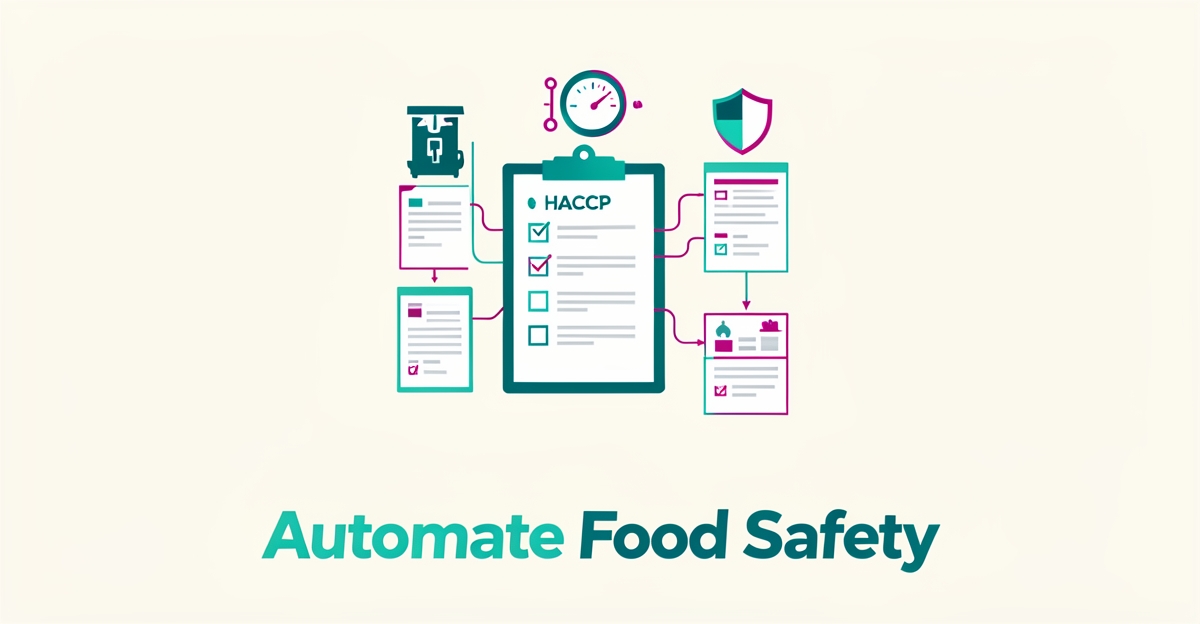
How to Automate Food Safety Training Materials with AI-Generated Content
Key Facts
- Building a HACCP plan manually can take one to two months for a QA manager with a full workload according to a detailed comparison
- The WHO estimates 600 million people fall ill from contaminated food annually globally, with 420,000 deaths per WHO data
- A large majority of foodservice operators rate real-time visibility into food safety compliance as extremely or somewhat important per operator surveys
- HACCP implementation in the US has been linked to meaningful reductions in foodborne illness over its first years of adoption per historical data
- AI-generated content can accelerate HACCP plan creation from weeks to days by parsing SOPs and ingredient lists via automated document parsing
- AI systems enable dynamic updates that re-evaluate affected sections when products, suppliers, or processes change for continuous compliance
- Personalized learning paths based on quiz results and behavior patterns can minimize training time while reinforcing gaps through adaptive learning models
Hire a team member that works 24/7 — for less than a part-time wage.
AI receptionists, SDRs, dispatchers and 99+ roles. Trained on your business, fully managed.
Not sure where to start? Ask our AI planner
The Hidden Costs of Manual Food Safety Training
Manual food safety training looks compliant on paper until an audit, an outbreak, or a recall exposes the gaps underneath. Teams spend months building HACCP plans by hand, then struggle to keep them current as menus, suppliers, and regulations change.
Building a HACCP plan from scratch manually can take one to two months for a QA manager with a full workload, according to a detailed comparison of manual versus AI-generated HACCP plans. Continuous updates are required whenever processes, suppliers, or regulations change, creating a never-ending cycle of documentation that pulls experts away from risk judgment.
Human error compounds the time cost. Manual entries are prone to transcription mistakes, missed logs during busy periods, and retrospective documentation that is filled in after the fact. Industry analysis of manual HACCP planning flags retrospective logging as a common audit finding that undermines trust in the entire system.
Real-time visibility is almost impossible with paper and spreadsheets. A refrigeration failure detected only at the next manual check, potentially hours later, can compromise an entire production run. Research on manual food safety limitations notes the lack of immediate alerts as a critical weakness in manual systems.
The human cost is measurable. WHO data cited in food safety research estimates 600 million people fall ill from contaminated food annually, resulting in 420,000 deaths, with roughly 1 in 10 people globally affected by foodborne illness. In the US, the CDC has estimated millions of illnesses and tens of thousands of hospitalizations each year from a handful of major pathogens.
Scalability breaks down as operations grow. Manual systems suffer from information overload where important signals like recurring temperature deviations get lost in paper trails. Analysis of manual planning constraints highlights that as monitoring data multiplies, the system becomes harder to manage, not more robust.
The hidden costs show up across the operation:
- Time intensity: HACCP plans take weeks to build and require constant manual revision
- Human error and retrospective logging that fail during audits
- No real-time visibility, delaying response to temperature or sanitation deviations
- Expertise barriers that force small manufacturers to defer planning or pay expensive consultants
Operators recognize the gap. Foodservice operators surveyed overwhelmingly agree it is extremely or somewhat important to have real-time visibility into food safety compliance. Yet manual tools cannot deliver it consistently.
This is why organizations are moving from static documents to dynamic, role-specific training materials that stay aligned with actual processes. AIQ Labs builds custom AI content engines tailored to food safety standards that can parse existing SOPs and generate compliant training for different handling roles, reducing creation time and ensuring standards are consistently applied. For teams that want this handled end to end, our [AI Workflow Builds](/workflow-builds) rebuild the one workflow that costs you the most at a fixed price.
How AI-Generated Content Transforms Food Safety Compliance
Manual HACCP planning can take one to two months for a QA manager with a full workload, and updates never end. Manual processes create checklist fatigue, retrospective logs, and audit failures that put food safety culture at risk.
AI-generated content engines change the documentation layer so human experts can focus on judgment. Systems can parse existing SOPs, process descriptions, and ingredient lists to extract steps and identify hazards relevant to the operation, eliminating manual re-entry. Automated document parsing can accelerate plan creation from weeks to days and ensures consistency across sites and roles.
The shift aligns with the FDA's "New Era of Smarter Food Safety" blueprint, which centers on tech-enabled traceability, smarter prevention tools, and a robust food safety culture. The FDA blueprint explicitly calls for leveraging AI, IoT, and sensor technologies to create a digital, traceable food system.
Compliance becomes audit-ready by design. AI systems generate complete HACCP packages with hazard analysis, CCP tables, and monitoring procedures structured exactly as auditors expect. Dynamic updates and gap detection re-evaluate affected sections when a product, supplier, or process changes and flag missing corrective actions automatically. Dynamic updating replaces static documents that become obsolete between reviews.
Real-time visibility matters because most operators rate it as extremely or somewhat important to their compliance program. Operator surveys show demand for immediate alerts instead of discovering a refrigeration failure hours later at the next manual check.
Personalization moves training beyond one-size-fits-all. AI analyzes quiz results, assessments, and behavior patterns to build learner profiles and deliver tailored content in real time. Adaptive learning models adjust to individual needs, minimizing time spent on training while reinforcing gaps.
The stakes are high. HACCP implementation in the US has been linked to significant reductions in foodborne illness during its early years of adoption. Historical data underscores why scalable, accurate training matters when 600 million people fall ill from contaminated food annually globally, resulting in 420,000 deaths.
AI content generation supports food safety by:
- Parsing SOPs and ingredient lists to auto-identify hazards and CCPs
- Generating audit-ready training materials customized by role and location
- Enabling dynamic updates when processes or regulations change
- Personalizing learning paths based on performance data and gaps
AIQ Labs builds industry-specific AI content engines tailored to food safety standards, helping teams generate accurate, customizable, and compliant training materials for different food handling roles while reducing creation time and ensuring standards are consistently applied. Where training content needs to connect to scheduling, monitoring, and reporting systems, an [AI Operating System](/ai-operating-systems) ties those pieces into one connected layer you own outright.
Implementing AI for Food Safety Training: A Practical Workflow
Moving from concept to execution requires a structured approach that respects both regulatory rigor and operational reality. The FDA's "New Era of Smarter Food Safety" blueprint explicitly calls for tech-enabled traceability and smarter prevention tools, making AI adoption a strategic imperative rather than an experimental luxury. Building a compliant, scalable system starts with treating your existing documentation as data assets rather than static files.
- Digitize and centralize SOPs: Gather every process description, ingredient list, and historical log. These documents fuel the AI engine, allowing it to extract process steps and identify specific hazards relevant to your operation without manual re-entry.
- Validate with human expertise: AI can generate draft HACCP plans and training modules in hours instead of the one to two months manual creation typically requires, but a qualified professional must review outputs for accuracy, regulatory alignment, and contextual nuance before deployment.
- Deploy personalized learning paths: Distribute role-specific content and use performance analytics to assign adaptive follow-up training. Research shows AI can analyze quiz results and behavior patterns to create learner profiles that minimize time spent on training while maximizing retention.
- Enable continuous monitoring: Configure the system to re-evaluate affected sections automatically whenever a new product, supplier, or process change occurs, flagging necessary updates to keep documentation audit-ready at all times.
This workflow mirrors the implementation philosophy AIQ Labs applies across regulated industries: architecting custom AI content engines that parse proprietary documentation, enforce brand and compliance guardrails, and integrate directly with existing operational tools. The result is a living training ecosystem that scales across locations, adapts to regulatory shifts, and reduces the documentation burden that drives checklist fatigue. With most operators rating real-time compliance visibility as critical, the advantage belongs to organizations that automate the paperwork so their experts can focus on safety culture.
Still paying for 10+ subscriptions that don’t talk to each other?
We build custom AI systems you own outright. No vendor lock-in. Full control.
Not sure where to start? Ask our AI planner
Frequently Asked Questions
How long does it actually take to build a HACCP plan manually versus using AI?
Will AI-generated training materials actually pass a regulatory audit?
How does AI personalize food safety training for different roles instead of using a one-size-fits-all approach?
What happens when we change a supplier or add a new menu item, do we have to redo all the training materials?
Is real-time visibility into compliance actually achievable, or is that just marketing?
We're a smaller operation, is AI food safety automation only for big enterprises with huge budgets?
Turning Food Safety Compliance from a Burden into a Business Advantage
The shift from manual to AI-powered food safety training isn't just about efficiency, it's about building a resilient, audit-ready operation where experts spend less time on documentation and more on proactive risk management. By automating HACCP plan creation, enabling real-time visibility, and personalizing training based on performance data, businesses can reduce human error, scale compliance across locations, and align with the FDA's New Era of Smarter Food Safety. The path forward starts with digitizing your SOPs and letting AI handle the heavy lifting, so your team can focus on what truly matters: keeping food safe. To see how this works in your operation, complete the [2-minute Fit Check](/apply) and book a free 30-minute strategy call to map your biggest bottleneck and find where AI delivers the fastest return.
Make AI your competitive advantage — not just another tool.
Strategy, implementation and ongoing optimization. One partner, end to end.
Not sure where to start? Ask our AI planner