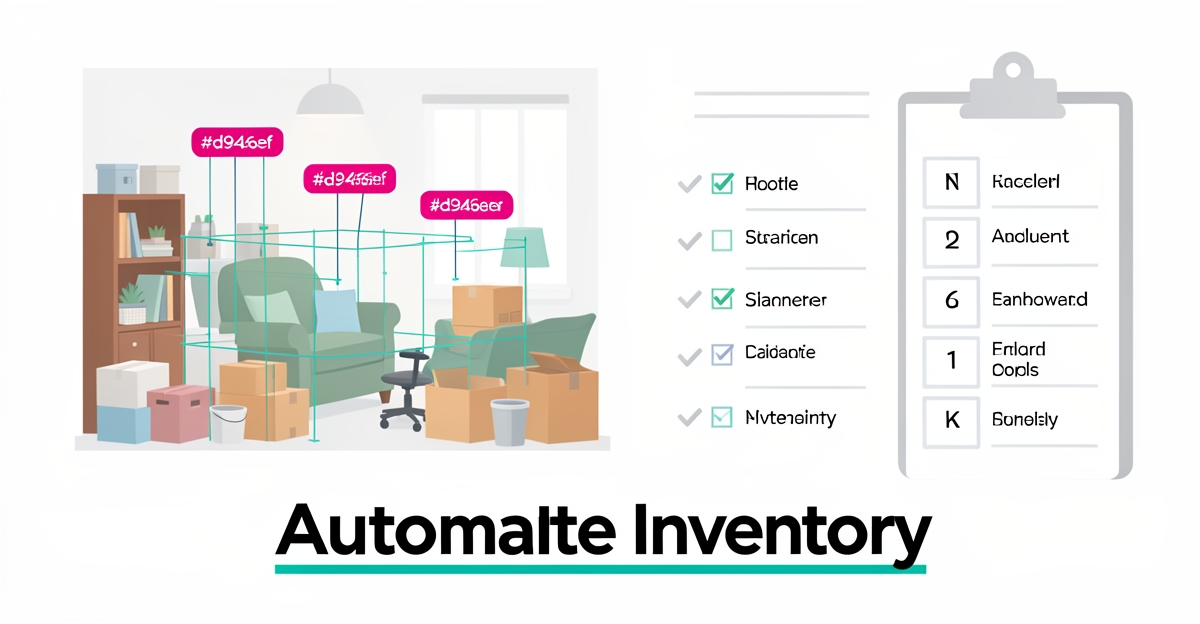
How to Automate Home Inventory Documentation in Hoarding Cleanup
Key Facts
- AI-powered home inventory tools can reduce time spent on data entry by 70-80% according to industry research
- Manual documentation can consume roughly 25% of a team's working hours as shown in documentation research
- Creating a comprehensive manual document can take around 25 hours according to documentation studies
- AI data entry typically achieves 99%+ accuracy versus 96-98% for manual entry per comparative analysis
- Manual data entry typically costs $1.00 to $1.60 per document in labor alone based on industry analysis
- AI data entry can cost as little as $0.07 to $0.29 per document according to cost comparison research
- Teams can reclaim a meaningful share of working hours previously lost to manual documentation with AI systems as documented in efficiency studies
Hire a team member that works 24/7 — for less than a part-time wage.
AI receptionists, SDRs, dispatchers and 99+ roles. Trained on your business, fully managed.
Not sure where to start? Ask our AI planner
The Manual Inventory Bottleneck in Hoarding Cleanup
Hoarding cleanup projects stall long before the first box leaves the room. The real bottleneck is documentation, and manual photo logs and spreadsheets turn a fast-moving job into a weeks-long admin drag.
Teams photograph items room by room, then manually transcribe descriptions, conditions, and estimated values into spreadsheets. That process eats capacity. Research on manual documentation suggests roughly 25% of a team's working hours go to manual documentation. Creating a comprehensive manual document can take around 25 hours, illustrating how labor-intensive detailed records become at scale.
The time cost compounds with accuracy risk. Manual data entry typically runs 96-98% accuracy, while comparative analysis of AI versus manual entry finds AI data entry reaches 99%+. In hoarding inventories, a single missed item or misvalued category can trigger rework, client disputes, and compliance questions later.
Planning delays follow directly from slow, error-prone logs. Crews cannot finalize disposal, donation, or storage decisions until the inventory is complete and reviewed. Supervisors wait on updated spreadsheets, and estimators re-check photos because descriptions are inconsistent. The result is idle labor and extended project timelines.
Manual workflows create predictable friction points:
- Photo-to-spreadsheet transcription that takes 3-5 minutes per document
- Inconsistent naming and categorization across team members
- Re-keying values and conditions for insurance or estate reporting
- Version control issues when multiple logs are merged late in the project
AI-powered home inventory tools change the math. Industry research on AI home inventory apps notes they can scan a room, identify items, estimate values, and organize everything automatically, reducing time spent on data entry by 70-80%. That 70-80% time savings potential is the gap between photo logs and actionable plans.
For cleanup operators, the shift is from documentation as overhead to documentation as a planning engine. When photos and documents are processed automatically, item lists, categories, and replacement estimates populate job plans without retyping. AIQ Labs builds exactly this kind of system through [AI Workflow Builds](/workflow-builds), we rebuild the one workflow that costs you the most, at a fixed price, in phases. If inventory documentation is that workflow, teams move from capture to clearance faster.
The manual bottleneck is not a staffing problem. It is a process design problem, and it is measurable in hours lost, errors introduced, and projects delayed.
How AI Scans, Identifies and Categorizes Home Inventories
Hoarding cleanup teams lose hours to manual cataloging, and the paperwork often becomes the bottleneck for planning and insurance claims. AI changes that by turning photos and documents into structured inventory data without the repetitive typing.
AI scans a room and identifies items through image recognition, then estimates replacement values and places each object into room and category hierarchies automatically. According to industry research, AI home inventory apps can scan a room, identify items, estimate values, and organize everything automatically, reducing the time spent on data entry by 70-80%. That speed matters when crews need a clear job plan before work begins.
Identification starts with a photo capture. Machine learning models recognize objects from images, extract attributes like brand, condition and quantity, and match them against product databases for value estimation. The system then organizes belongings by room and category and generates insurance-ready reports that can be stored securely. This mirrors how AIQ Labs builds systems that extract data from photos and documents to create detailed, accurate job plans automatically.
The accuracy and cost difference versus manual work is stark. A recent analysis found manual data entry typically runs 96-98% accuracy at $1.00 to $1.60 per document in labor alone, while AI data entry reaches 99%+ at $0.07 to $0.29 per document. Speed also improves from 3-5 minutes per document manually to 2-5 seconds with AI.
For cleanup planning, that translates into faster, more reliable documentation:
- Image recognition for item identification from photos and scanned documents
- Automatic value estimation and condition tagging for insurance and disposal decisions
- Room and category organization that builds a navigable inventory map
- Insurance-ready report generation with standardized templates and audit trails
Manual documentation provides precision and contextual judgment, but it is time-consuming and prone to errors. AI documentation automation reduces drafting time, enforces structured templates, and improves standardization at scale. This capability fits naturally into broader business process automation for service operations.
The result is a cleaner workflow: crews photograph high-value areas, the AI extracts structured inventory data, and planners receive categorized reports to prioritize removal, donation and disposal. Accuracy above 99% and dramatically lower per-document cost make the process scalable across multiple homes without adding headcount.
Teams can start with a focused pilot and expand as volume grows. For organizations evaluating how to automate intake and planning, AIQ Labs offers a free 30-minute strategy call, start with the [2-minute Fit Check](/apply) and we'll map bottlenecks and identify high-ROI automation opportunities.
From Photos to Job Plans: Automating Cleanup Planning
Photos turn into actionable cleanup plans when inventory data is extracted, categorized, and prioritized automatically. In hoarding remediation, speed and accuracy determine safety, cost, and client trust.
AI-powered home inventory tools can scan a room, identify items, estimate values, and organize everything automatically, reducing the time spent on data entry by 70-80% according to smart home research. That reduction shifts crews from manual logging to decision-making.
Extracted data feeds directly into job planning workflows. Images are processed for object recognition, replacement value estimation, and room/category tagging. Structured fields are created in seconds with 99%+ accuracy compared to 96-98% for manual data entry, reducing errors that cascade into disposal mistakes.
Prioritization becomes data-driven. The system flags high-value or sensitive items for special handling, separates hazardous materials, and estimates disposal vs. storage based on condition, value, and client goals. Automated job plans are generated with item lists, photos, location maps, and recommended actions per zone.
Cost efficiency compounds across the project. AI data entry can cost $0.07 to $0.29 per document versus $1.00 to $1.60 per document in labor alone for manual entry per industry analysis. Speed also improves: 2-5 seconds per document with AI versus 3-5 minutes manually.
For hoarding cleanup operators, this means:
- Inventory capture from photos and documents with automatic categorization
- Value and sensitivity scoring to prioritize handling and documentation
- Auto-generated disposal, donate, and store recommendations per item
- Detailed job plans with crew assignments, PPE requirements, and time estimates
AIQ Labs builds systems that extract data from photos and documents to create detailed, accurate job plans automatically. The extracted inventory becomes the single source of truth for the entire remediation workflow, and if you want it connected to scheduling, invoicing, and reporting rather than living in its own silo, that's what an [AI Operating System](/ai-operating-systems) is for: one connected operating layer, built in phases and owned outright.
Manual documentation provides precision and contextual judgment, but it is time-consuming and prone to errors as noted in documentation research. Automation enforces structured templates and standardization at scale, which is critical when teams work across multiple homes and crews.
The result is faster planning, fewer missed items, and clearer client communication. Crews arrive with a plan instead of a blank sheet, and documentation is audit-ready from day one.
Implementing an Owned AI Inventory System for Cleanup Teams
Implementing an owned AI inventory system transforms how cleanup teams approach hoarding documentation, turning chaotic manual processes into streamlined, accurate workflows. Cleanup businesses can begin by defining a capture workflow where technicians use smartphones or tablets to photograph rooms and belongings during initial assessments, ensuring consistent lighting and angles for optimal AI recognition. This visual data feeds directly into a custom-built system trained specifically on hoarding-specific categories, such as stacked newspapers, expired medications, or mixed-material piles, allowing the AI to identify, categorize, and estimate replacement values with 99%+ accuracy, well above the 96-98% typical precision of manual entry. Teams then integrate this system with existing job management tools using deep two-way APIs, enabling automatic sync of inventory data into scheduling, invoicing, and client reporting platforms without duplicate data entry. Security and compliance are addressed through role-based access controls, audit trails for all data actions, and encryption both in transit and at rest, meeting privacy standards for sensitive residential environments.
AIQ Labs offers three ways to build this, with no fake prices and no lock-in games: Start Monthly for rapid deployment with ongoing support, Build in Milestones to validate each phase before proceeding, or Own It Outright for full control of the code, agents, and data. Every build is phased, fixed-price where scoped, and owned by you when it's done. By grounding the system in proven AI data entry efficiencies, reducing per-document labor costs from $1.00–$1.60 to as little as $0.07–$0.29, cleanup teams reclaim a meaningful share of working hours previously lost to manual documentation, accelerating job planning and improving client transparency from the first assessment. With 200+ multi-agent systems deployed and four live SaaS products we run daily, AIQ Labs builds this kind of system as a working product, not a slide deck. Ready to see what it looks like for your operation? Take the [2-minute Fit Check](/apply), then [book a free 30-minute strategy call](/book), or reach the team at [email protected].
Still paying for 10+ subscriptions that don’t talk to each other?
We build custom AI systems you own outright. No vendor lock-in. Full control.
Not sure where to start? Ask our AI planner
Frequently Asked Questions
How much time can AI-powered home inventory tools actually save in hoarding cleanup documentation?
Is AI data entry really more accurate than manual entry for home inventories?
How much does AI data entry cost per document compared to manual entry?
Can AI inventory systems integrate with our existing job management tools?
What kinds of items can AI recognize in hoarding cleanup photos?
Will using AI for inventory make our team lose the contextual judgment needed in hoarding cleanup?
Turn Your Inventory Into Action, Not Admin
Hoarding cleanup teams lose valuable time not to the physical work, but to the manual documentation that stalls planning and inflates costs. As we've seen, photo-to-spreadsheet transcription can eat up to 25% of working hours, introduces avoidable errors, and delays critical decisions about disposal, donation, and storage. AI-powered inventory tools flip this script, scanning rooms, identifying items, estimating values, and organizing data automatically with 99%+ accuracy and at a fraction of the cost. The result isn't just faster paperwork; it's clearer job plans, safer workflows, and client-ready documentation from the first assessment. For cleanup operators ready to reclaim those lost hours and build a scalable, owned system, the next step is simple: take the 2-minute Fit Check at aiqlabs.ai/apply, then book a free 30-minute strategy call to map your biggest bottleneck and see where AI can deliver real, measurable relief, no obligation, just clarity.
Make AI your competitive advantage — not just another tool.
Strategy, implementation and ongoing optimization. One partner, end to end.
Not sure where to start? Ask our AI planner