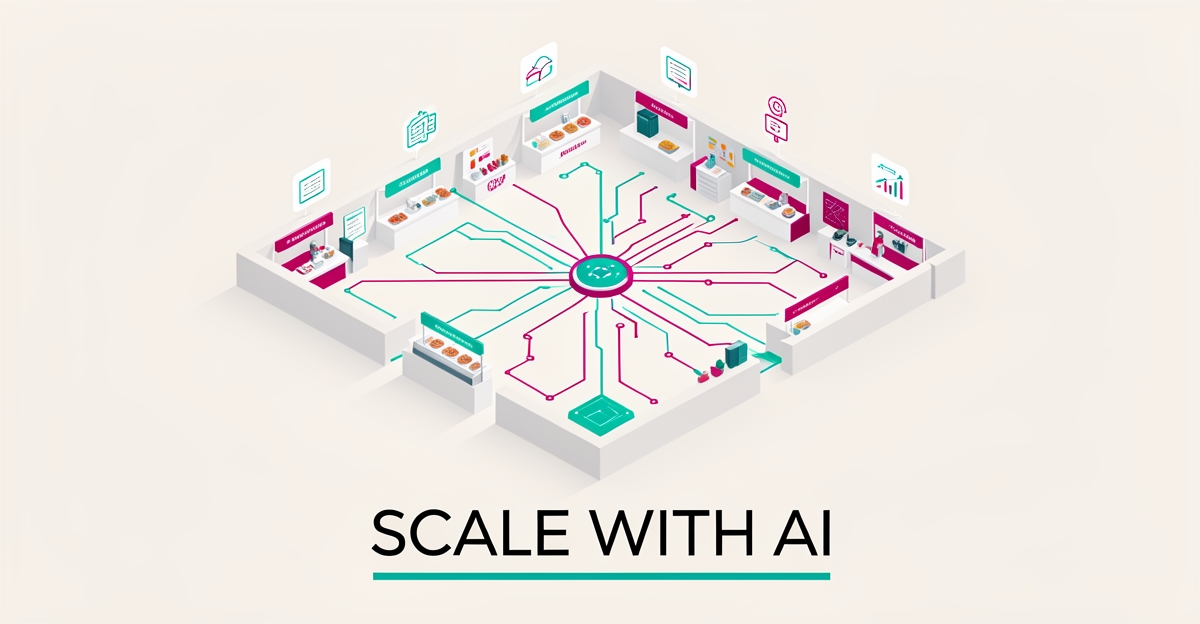
How to Build a Scalable AI System for Your Growing Food Hall (A Step-by-Step Guide)
Key Facts
- Running AI in production typically costs far more on infrastructure than on model access alone, budget for compute, storage, and networking, not just API calls
- Model choice drives cost: premium frontier models can cost roughly ten times more than lighter alternatives, so match model tier to task criticality
- AI infrastructure combines compute, storage, networking, and software to enable reliable deployment of AI models at scale
- Scalability is critical for food halls to handle increasing customer demand and data volume across vendors and locations
- Observability, logging, alerting, and human-in-the-loop controls, is what keeps AI systems reliable during peak service
- AIQ Labs has deployed 200+ multi-agent systems and runs 4 live SaaS products daily, so these patterns are proven in production
Hire a team member that works 24/7 — for less than a part-time wage.
AI receptionists, SDRs, dispatchers and 99+ roles. Trained on your business, fully managed.
Not sure where to start? Ask our AI planner
Assessing Your Food Hall’s AI Readiness and Key Automation Opportunities
Food halls grow fast, and manual workflows break first. Before investing in agents or automation, owners need a clear picture of where AI will actually move the needle.
Start with an honest operational audit. Map order flow from vendor stall to customer pickup, track inventory touches per day, and log repeat customer service questions. This baseline reveals bottlenecks and data gaps that determine AI readiness. AIQ Labs uses a readiness assessment framework to evaluate your current technology stack, data infrastructure, and team capabilities, then prioritizes the workflows with the strongest ROI potential. The quickest way to get this read is the 2-minute Fit Check, followed by a free 30-minute strategy call.
Scalability is critical for food halls to handle increasing customer demand and data volume. A well-structured AI system needs a robust compute layer, storage layer, and networking layer as essential components. AI infrastructure combines compute, storage, networking, and software to enable the reliable deployment of AI models at scale.
Run cost reality checks early. Running AI in production typically costs far more on infrastructure than on model access alone, industry estimates have put infrastructure spend at orders of magnitude above model spend for large deployments. Model choice matters too: premium frontier models can cost roughly ten times more than lighter alternatives. Those numbers shape which use cases justify premium models versus efficient ones.
High-impact automation opportunities typically cluster around three areas:
- Order processing and kitchen display integration to reduce ticket errors and speed fulfillment
- Inventory forecasting across multiple vendors to cut waste and stockouts
- Customer service and wayfinding to handle FAQs, stall recommendations, and real-time updates
Reliability at scale is non-negotiable for peak service. Modern agent frameworks can deliver high task reliability in production, but consistency only holds when agents are built with proper observability, logging, and human-in-the-loop controls. That matters most when agents touch orders, payments, or inventory.
Observability and monitoring are essential for reliable, high-performing AI systems in production. Without logging, alerting, and human-in-the-loop controls, small errors compound during lunch rushes.
A practical readiness scorecard covers data quality, integration points, and change capacity. Food halls with clean POS data, API-accessible inventory systems, and defined service level expectations are ready for workflow automation pilots. Those with fragmented spreadsheets and manual handoffs need data consolidation first.
Prioritization should follow impact versus effort. Start with one broken workflow that is high-volume, repeatable, and measurable, then expand. This step-by-step approach keeps AI adoption business-ready and sustainable. AIQ Labs' Workflow Builds service is built around exactly this: rebuild the one workflow that costs you the most, at a fixed price, in phases.
Choosing the Right AI Infrastructure and Tools for Scalability and Cost Efficiency
Building an AI system that scales with your food hall starts with infrastructure choices that balance performance, reliability, and long-term cost efficiency. Many operators underestimate how much infrastructure drives total AI spending, running models in production typically costs far more on infrastructure than on model access alone, making foundational decisions critical from the outset. A well-structured stack must integrate compute, storage, and networking layers designed to handle fluctuating workloads during peak dining hours without over-provisioning resources.
Selecting the right platforms involves evaluating trade-offs between ease of implementation, scalability, and task reliability. For food hall applications like dynamic menu optimization or real-time queue management, look for agent frameworks with proven production reliability and fast time to value. Visual prototyping tools can be useful for testing concepts like inventory forecasting or staff scheduling before full-scale rollout, while more customizable environments suit teams that need deep control, though they demand more technical expertise. The practical shortcut: work with a partner that has already deployed 200+ multi-agent systems, like AIQ Labs, rather than evaluating every framework yourself.
To ensure sustained performance, prioritize observability from day one, monitoring compute utilization, storage latency, and network throughput helps identify bottlenecks before they impact customer experience. AIQ Labs recommends designing infrastructure with horizontal scaling in mind, using modular components that can expand as your food hall adds vendors or locations. This approach aligns with industry best practices for AI infrastructure, which combines compute, storage, networking, and software to enable reliable deployment of large-scale models, ensuring your system grows efficiently without unexpected cost spikes or performance degradation. Payment models matter here too: AIQ Labs lets you start monthly, build in milestones, or own your system outright, no fake prices, no surprises.
Implementing, Monitoring, and Optimizing Your AI System for Long-Term Growth
Deploying AI across a food hall isn't a single event, it's a phased rollout that begins with one high-impact workflow, proves reliability, and expands systematically. Well-architected agents can achieve high task reliability at scale, but reaching that threshold requires observability baked in from day one.
- Start with a pilot agent handling vendor invoice reconciliation or stall scheduling
- Integrate directly with your POS, payment gateway, and staffing platform via API
- Establish real-time dashboards tracking latency, error rates, and human-handoff triggers
- Set automated alerts when task success dips below your reliability threshold
- Schedule weekly optimization sprints using production data, not assumptions
Infrastructure costs can balloon quickly, running models in production typically costs far more on infrastructure than on model access alone. Choosing the right model tier matters: premium frontier models can run roughly ten times more expensive than lighter alternatives, so match model complexity to task criticality. AIQ Labs structures rollouts around this principle, embedding monitoring, governance, and continuous improvement into phased builds that scale with your hall, whether you're adding three stalls or thirty. When you're ready to connect everything into one operating layer, AI Operating Systems builds that layer in phases, owned outright.
Still paying for 10+ subscriptions that don’t talk to each other?
We build custom AI systems you own outright. No vendor lock-in. Full control.
Not sure where to start? Ask our AI planner
Frequently Asked Questions
How do I know if my food hall is ready for AI automation?
What are the most impactful areas to automate first in a food hall?
How reliable are AI agents for food hall operations at scale?
Why does AI infrastructure cost so much more than model access?
Are premium AI models worth the cost for food hall use cases?
What’s the best way to start implementing AI without disrupting operations?
Scale Smart, Serve Faster
Building a scalable AI system for a growing food hall starts with honest readiness work, then moves to infrastructure that can flex with peak demand and costs that stay under control. Map order flow, inventory touches and repeat questions first, prioritize one high-volume repeatable workflow, and design compute, storage and networking layers with observability baked in from day one so reliability holds during the lunch rush. Matching model tiers to task criticality and proving reliability with pilots keeps infrastructure costs from eroding ROI. With the right foundation, automation can cut ticket errors, reduce waste, and keep customers moving without adding headcount, AIQ Labs' AI Employees can even take on roles like receptionists, SDRs, and dispatchers at roughly 80% less cost than a human hire. AIQ Labs partners with food halls through three entry points, AI Employees, Workflow Builds, and AI Operating Systems, with payment models that fit: Start Monthly, Build in Milestones, or Own It Outright. Start the Fit Check at https://aiqlabs.ai/apply for a free 30-minute strategy call to map your biggest bottleneck and identify high-ROI automation opportunities, or reach the team at [email protected]. Well-built agents deliver reliable performance at scale when observability and human-in-the-loop controls are part of the design from day one.
Make AI your competitive advantage — not just another tool.
Strategy, implementation and ongoing optimization. One partner, end to end.
Not sure where to start? Ask our AI planner