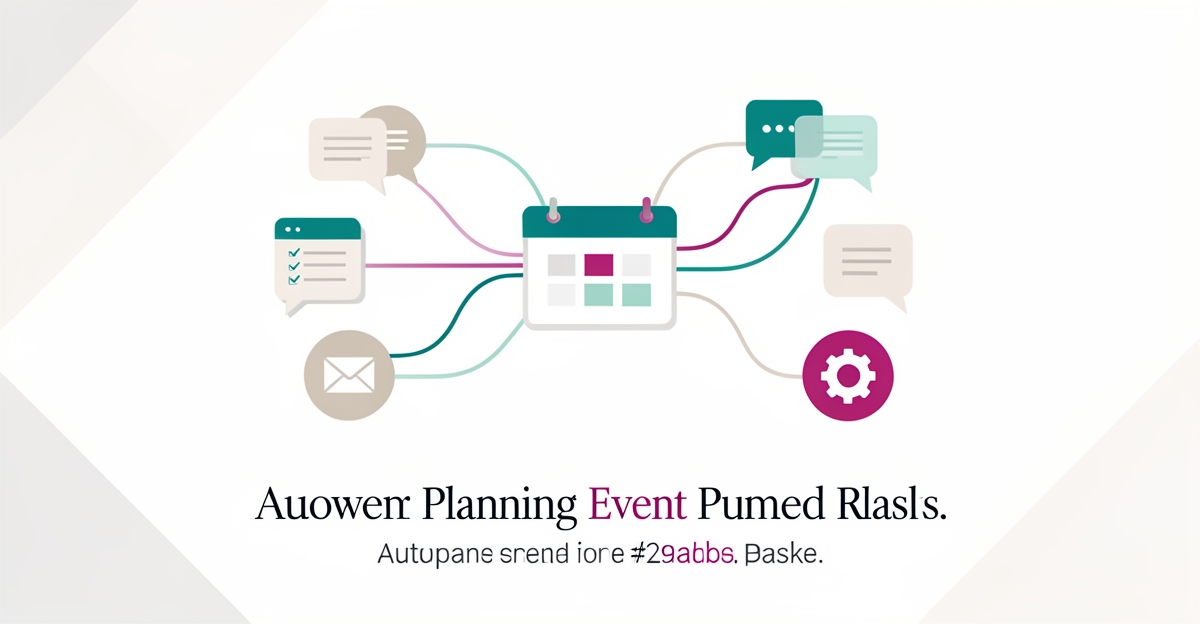
How to Build an AI-Powered Event Planning Workflow from Scratch
Key Facts
- AI can typically eliminate a large share of repetitive planning work, data entry, follow-ups, scheduling, and logistics coordination
- AI-powered chat and voice agents handle routine attendee inquiries instantly, improving response times and satisfaction during high-volume periods
- AI tools optimize logistics and surface attendee behavior patterns for real-time adjustments
- Post-event AI analysis creates a continuous improvement cycle, each event informs the next
- AIQ Labs has deployed 200+ multi-agent systems and runs 4 live SaaS products daily, so these workflows are proven in production, not theory
Hire a team member that works 24/7 — for less than a part-time wage.
AI receptionists, SDRs, dispatchers and 99+ roles. Trained on your business, fully managed.
Not sure where to start? Ask our AI planner
The Hidden Time Drain in Manual Event Planning
Event planners often underestimate how much time gets lost in manual processes, time that could be spent creating meaningful attendee experiences. From juggling spreadsheets to chasing down vendor confirmations, repetitive tasks silently erode productivity and scalability.
Automating the most tedious aspects of planning typically frees up a substantial portion of a planner's week. This isn't just about convenience, it's a critical lever for growth, especially when managing multiple events or scaling operations without expanding headcount.
The most common time drains include manual data entry across disconnected tools, fragmented communication channels, and inefficient follow-up sequences that require constant human oversight. Planners spend hours copying attendee details from registration forms into CRMs, updating spreadsheets with payment statuses, and sending reminder emails one by one, tasks that are not only tedious but prone to error.
- Manually entering attendee data from forms into multiple systems
- Switching between email, spreadsheets, and project tools to track tasks
- Sending individual follow-ups for RSVPs, payments, and session selections
- Reconciling budgets and vendor contracts across separate documents
- Tracking real-time changes without a centralized source of truth
These inefficiencies don't just waste time, they increase the risk of miscommunication, delayed responses, and attendee dissatisfaction. When planners are buried in administrative work, they have less capacity to focus on creative elements, speaker engagement, or last-minute problem-solving, all of which directly impact event success.
AI-powered chat and voice agents do more than answer attendee questions. When integrated into a broader workflow, they handle routine inquiries, qualify leads, and trigger automated actions, freeing planners to focus on strategy rather than surveillance.
For businesses looking to transform their event planning approach, AIQ Labs offers [AI Workflow Builds](/workflow-builds) to rebuild the one workflow that costs you the most, fixed price, delivered in phases. We map your pain points, identify automation opportunities, and deploy custom AI tools that work with your existing systems, turning hidden time drains into measurable efficiency gains.
Designing Your AI-Powered Event Workflow: From Lead Capture to Post-Event
Designing an AI-powered event workflow begins with reimagining every touchpoint, from the moment a lead expresses interest to the final post-event follow-up, through intelligent automation that reduces manual effort while enhancing personalization. AIQ Labs helps event planners architect these end-to-end systems by mapping each lifecycle stage to proven AI capabilities, such as multi-agent research for trend analysis, personalized content generation for attendee engagement, and AI voice agents for scalable outreach. This approach transforms fragmented processes into a cohesive, intelligent workflow that learns and adapts over time.
AI can automate repetitive tasks like scheduling, data entry, and routine communications, often the majority of a planner's administrative load, freeing teams to focus on strategic decision-making and attendee experience. AI-powered tools optimize logistics, surface attendee behavior patterns, and enable real-time adjustments, critical advantages in dynamic event environments. By integrating AI across lead capture, promotion, registration, and onsite operations, planners create a self-improving system where each event informs the next through continuous data feedback.
Key stages of the workflow include:
- Using AI lead generation and enrichment to identify and qualify prospects based on behavioral and demographic signals
- Deploying personalized content agents that tailor invitations, session recommendations, and follow-ups using individual attendee profiles
- Leveraging AI voice agents for 24/7 outreach, qualification, and appointment booking with natural, empathetic conversations
- Applying multi-agent research systems to monitor trends, analyze competitor events, and surface evergreen content for ongoing engagement
- Implementing AI-powered chat agents for instant support during registration and event days, reducing response times and improving satisfaction
AI-powered chat agents improve attendee satisfaction by delivering instant, context-aware responses to common inquiries about schedules, venues, and logistics. Such tools not only improve efficiency but also build trust through consistent, accurate communication, especially valuable during high-volume periods like registration opens or event day. When paired with AI-driven personalization, these interactions feel less like automation and more like attentive service, strengthening attendee loyalty and increasing the likelihood of repeat participation.
The true power of an AI-powered event workflow lies in its ability to close the loop: post-event, AI systems analyze feedback, attendance patterns, and engagement metrics to automatically refine future planning. This creates a virtuous cycle where each iteration becomes more targeted, efficient, and impactful, without requiring additional manual analysis. For event planners seeking to scale their impact without scaling their workload, this integrated approach offers a sustainable path forward, grounded in real-world AI capabilities that deliver measurable results today.
Implementation: Integrating AI Tools Without Disrupting Your Stack
Implementing AI tools without disrupting your existing stack requires a deliberate, phased approach that prioritizes compatibility and ownership. AIQ Labs begins by assessing your current technology landscape, CRM, calendar, and payment systems, to design integrations that preserve workflow continuity while introducing intelligent automation. Using enterprise-grade agent frameworks, we build AI agents that interact with tools such as HubSpot, Google Calendar, and Stripe through secure, two-way APIs, ensuring data flows bidirectionally without requiring system overhauls. This method eliminates vendor lock-in and maintains full control over customizations, when you [own it outright](/ai-operating-systems), you retain the IP and code upon completion.
A core principle of our implementation methodology is seamless adoption through incremental deployment. Rather than replacing legacy systems all at once, we deploy [AI Employees](/ai-employees) or custom workflows in isolated phases, such as automating lead capture from event registration forms into your CRM, allowing teams to validate outcomes before scaling. These gains are only achievable when AI augments, not replaces, human oversight, which is why we embed human-in-the-loop controls for critical decisions like contract approvals or high-value vendor negotiations.
Compliance and governance are woven into every integration step, particularly for regulated industries handling payments or attendee data. Our AI systems include validation layers, audit trails, and role-based guardrails that meet standards for data security and ethical AI use, addressing key concerns around transparency and accountability. For example, when connecting to payment processors like Stripe, we implement real-time validation to prevent erroneous transactions while maintaining PCI compliance. This structured approach ensures AI enhances trust rather than introducing risk.
To sustain long-term value, we provide ongoing monitoring and optimization as part of our Start Monthly, Build in Milestones, or Own It Outright engagement models. Performance metrics track efficiency gains, such as reduced manual data entry or faster response times, while regular retraining adapts AI to evolving event patterns, like shifting attendee preferences or new regulatory requirements. This continuous improvement cycle transforms AI from a one-time tool into a scalable capability, enabling event planners to reallocate saved time toward strategic activities like speaker curation or sponsorship development. By anchoring integration in ownership, compliance, and measurable outcomes, AIQ Labs delivers AI that works within your stack, not against it, turning operational complexity into a competitive advantage. Ready to see if this fits your operation? Start with the [2-minute Fit Check](/apply).
Still paying for 10+ subscriptions that don’t talk to each other?
We build custom AI systems you own outright. No vendor lock-in. Full control.
Not sure where to start? Ask our AI planner
Frequently Asked Questions
How much time can AI actually save event planners on repetitive tasks?
Can AI-powered chatbots really improve attendee satisfaction?
Will implementing AI disrupt my current event planning tools and workflows?
What specific tasks in event planning are most time-consuming and ripe for AI automation?
How does AI improve event planning beyond just saving time?
Is AI in event planning just about chatbots, or does it handle more complex workflows?
Make AI your competitive advantage — not just another tool.
Strategy, implementation and ongoing optimization. One partner, end to end.
Not sure where to start? Ask our AI planner